


Syllabus: GS3/ Economy
Context
- Over eight years since its enactment, India’s Insolvency and Bankruptcy Code (IBC), 2016 has significantly altered the country’s credit landscape.
Insolvency and Bankruptcy Code (IBC) 2016
- IBC was introduced in 2016 to address rising Non Performing Assets and ineffective debt recovery mechanisms in India.
- It aims to overhaul the corporate distress resolution system, replacing debtor-controlled regimes with creditor-in-control mechanisms for time-bound resolutions.
- Objectives of the IBC resolution are;
- Business Revival: To save businesses through restructuring, changes in ownership, or mergers,
- Maximization of Asset Value: To preserve and maximize the value of the debtor’s assets,
- Promoting Entrepreneurship and Credit: To encourage entrepreneurship, improve credit availability, and balance the interests of stakeholders, including creditors and debtors.
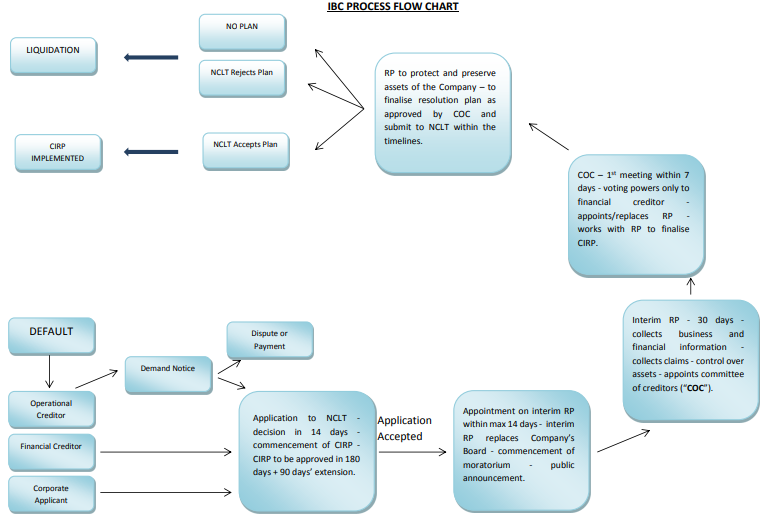
- Currently a maximum 330 days is allowed to find a resolution for a company admitted into the insolvency resolution process.
- Otherwise, the company goes into liquidation.
Resolution Process under the Insolvency and Bankruptcy Code (IBC)
- Initiation of Process: The creditor or the debtor can file an application for initiating the Corporate Insolvency Resolution Process (CIRP) before the Adjudicating Authority (NCLT).
- If the application is admitted by NCLT, it appoints an Interim Resolution Professional (IRP) to manage the affairs of the corporate debtor.
- A moratorium is declared, i.e., a legal stay on all recovery proceedings, foreclosures, etc., and public announcement is made to invite claims from creditors.
- The IRP identifies financial creditors and constitutes a Committee of Creditors (CoC), consisting mainly of financial creditors.
- The CoC may confirm the IRP as the Resolution Professional (RP) or appoint a new one.
- The RP invites resolution plans from interested resolution applicants. The CoC evaluates and negotiates the resolution plan, which include:
- Restructuring debt
- Changing management
- Mergers or acquisitions
- Reduction in interest rates, extension of loan tenure, etc.
- The resolution plan must be approved by at least 66% of the voting share of the CoC members.
- Once approved by CoC, the resolution plan is submitted to the NCLT for final approval. After approval by NCLT, the plan is binding on all stakeholders.
- Liquidation: If no resolution plan is approved within the prescribed timeline (330 days), or if the CoC decides to liquidate, then liquidation proceedings are initiated.
How has IBC helped improve resolutions?
- Since the introduction of IBC, India has improved its Ease of Doing Business ranking (basis World Bank report 2020), particularly in ‘Resolving Insolvency’, from 136 in 2016 to 52 in 2020.
- According to the Trend and Progress of Banking in India 2024 report published by the Reserve Bank of India, IBC accounted for 48% of the total recoveries made by banks in the financial year 2023–24.
What are the Concerns?
- Delays at the NCLT: A major challenge is the delay in completing insolvency cases.
- As of March 31, 2025, nearly 78% of ongoing Corporate Insolvency Resolution Process (CIRP) cases had exceeded the 270-day mark, despite a 330-day statutory limit.
- These delays often occur even after approval by the Committee of Creditors (CoC).
- Judicial interventions after resolution, such as in the Bhushan Power and Steel case, have raised concerns. Such interventions may discourage resolution applicants and reduce investor confidence.
- High Haircuts for Creditors: On average, creditors face haircuts of around 67%, recovering only about one-third of their admitted claims.
- The IBC lacks clear provisions for handling issues unique to modern firms, such as intellectual property valuation, employee claims, and technology continuity.
- This limits effective resolution of non-traditional enterprises.
- Capacity Constraints: The NCLT and NCLAT continue to suffer from manpower shortages and limited infrastructure.
Source: TH
Previous article
UNFPA State of World Population 2025
Next article
Rapid Expansion of Gig Workforce in India
