



Sylheti Language
Syllabus: GS1/ Indian Society, GS2/ Polity and Governance
Context
- Sylheti was recently in the news, after a remark linking it to Bangladeshi dialects, sparking debate over its distinct identity and Indian roots.
What Is Sylheti?
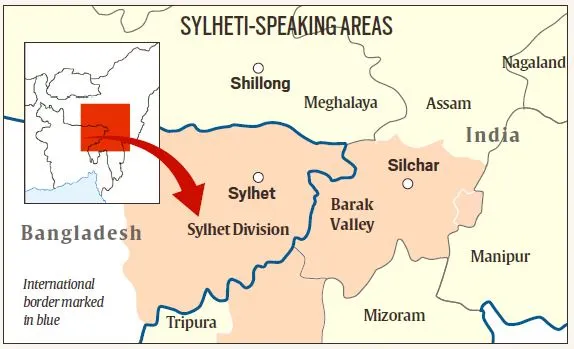
- Sylheti is a language (or dialect) spoken in South Assam’s Barak Valley, as well as in the Sylhet Division of present-day Bangladesh.
- It also has a presence in neighbouring regions of Meghalaya and Tripura.
- Despite being closely related to standard Bengali, Sylheti has distinct phonetics, vocabulary, and syntax.
- Linguistically, the status of Sylheti is contested. Some argue it is a dialect of Bengali due to mutual intelligibility, while others, including many scholars and native speakers, regard it as a separate language.
- Areas where Sylheti is spoken are often characterised by diglossia , with standard Bengali used in formal domains like education and literature, and Sylheti in informal, everyday speech.
Source: IE
Mount Kilimanjaro
Syllabus: GS1/Geography
Context
- Kabak Yano, a mountaineer from Arunachal Pradesh, has successfully summited Mount Kilimanjaro.
About
- Location: Tanzania, East Africa.
- Height: Approx. 5,895 meters (19,340 feet), Africa’s tallest mountain. It is also the largest free-standing mountain rise in the world, meaning it is not part of a mountain range.
- Type: Stratovolcano – composed of layers of ash, lava, and rock.
- Volcanic Cones:
- Kibo – the highest and only dormant cone (summit point).
- Mawenzi and Shira – extinct cones.
- Glacial Retreat: Has lost over 90% of its ice cap since 1900, making it a symbol of climate change.
- Conservation Status:
- In 1973, the mountain and its six surrounding forest corridors were named Kilimanjaro National Park.
- Designated a UNESCO World Heritage Site in 1987.
Source: AIR
Hepatitis D virus Labelled Cancer-Causing Agent
Syllabus: GS2/ Health
Context
- The World Health Organization (WHO) and the International Agency for Research on Cancer (IARC) has reclassified the Hepatitis D virus (HDV) as carcinogenic to humans, placing it alongside Hepatitis B and C as known causes of liver cancer.
About HDV and Global Burden
- Hepatitis B, C, and D affect over 300 million people worldwide, contributing to 1.3 million deaths annually, mainly from liver cirrhosis and cancer.
- HDV infects nearly 5% of people with chronic HBV, equating to around 12 million individuals globally.
- High-Risk Populations: Residents of Asia, Africa, the Amazon Basin (high HBV prevalence), People who inject drugs, Haemodialysis patients.
- The virus spreads through infected blood, unprotected sex, unsafe injections, or occasionally passes from mother to child during birth.
- Symptoms include fatigue, nausea, abdominal discomfort, dark urine or yellowing of the skin.
- Treatment: HBV can be controlled with life-long antivirals. The antiviral bulevirtide has emerged in Europe as an approved therapy alongside pegylated interferon.
Why is hepatitis D considered dangerous?
- HDV can only infect individuals who already carry HBV.
- Co-infection or superinfection with HBV increases liver cancer risk 2 to 6 times compared to HBV alone.
- Up to 75% of chronic HDV patients develop liver cirrhosis within 15 years.
- Prevention:
- There is no separate vaccine for HDV.
- The only way to eliminate HDV is through universal HBV vaccination and testing.
Source: BS
US Hikes Levy on Indian Imports to 50%
Syllabus: GS2/IR
Context
- The US President has issued an order imposing an additional 25% tariff over India’s purchases of Russian oil.
- It will raise the total tariff on Indian imports to the United States to 50%.
About
- The new rate will come into effect in 21 days.
- The additional tariff would mean a steep 50% duty on key Indian exports like textiles, gems and jewellery, auto parts, and seafood, hitting major job-creating sectors.
- Electronics, including iPhones, and pharma remain exempt for now.
- Oil and gas are Russia’s biggest exports, and China, India and Turkey are the largest importers of these.
- Russia is now the biggest seller of oil to India, accounting for more than 35% of India’s overall supplies.
- India’s foreign ministry said that India had already made clear its stance on imports from Russia, and reiterated that the tariff is “unfair, unjustified and unreasonable”.
Source TOI
Hand, Foot and Mouth Disease (HFMD)
Syllabus :GS2/Health
In News
- Schools in Delhi have issued advisories urging parents to isolate children showing symptoms of Hand, Foot and Mouth Disease (HFMD).
Hand, Foot and Mouth Disease (HFMD)
- About: HFMD is a common illness that usually causes fever, mouth sores, and skin rash. It can spread quickly at schools and day care centers.
- Transmission: HFMD spreads through contact with infected droplets, surfaces, blister fluid, or poop.
- Prevention: There’s no specific treatment for hand-foot-and-mouth disease. Most people get better in 7 to 10 days.
- But certain medicines can ease pain and general discomfort in the meantime.
| Do you know? – Hand, Foot and Mouth Disease (HFMD) is different from Foot and mouth disease (FMD) which is a severe, highly contagious viral disease of livestock that has a significant economic impact. |
Source :IE
BharatGen AI
Syllabus: GS3/ S&T
In News
- India’s ‘BharatGen’ AI Models to support all 22 scheduled languages by June 2026.
About BharatGen AI initiative
- The BharatGen AI initiative is a flagship program launched by the Government of India to develop sovereign, foundational artificial intelligence (AI) models tailored specifically for Indian languages and societal contexts.
- It is implemented under the National Mission on Interdisciplinary Cyber-Physical Systems (NM-ICPS) of the Department of Science and Technology, with the Technology Innovation Hub (TIH) for IoT and IoE at IIT Bombay leading the project.
- BharatGen aims to cover all 22 scheduled Indian languages, creating AI models that are ethical, inclusive, and rooted in Indian values.
Source: Print
Krill
Syllabus: GS3/ Species in News
Context
- The krill fishery in the Southern Ocean was shut down earlier than scheduled after the seasonal catch limit of 620,000 metric tonnes was surpassed, marking the first-ever breach of the quota.
About Krill
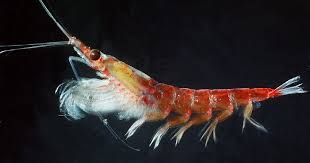
- Krill are small, shrimp-like crustaceans belonging to the order Euphausiacea, found in oceans worldwide.
- Habitat: Found across all oceans; Antarctic krill dominate the Southern Ocean ecosystem.
- Krill are keystone species. It acts as a trophic bridge, as they feed on phytoplankton and are in turn consumed by larger marine animals like; Baleen whales, Seals, penguins, squid, seabirds, and fish.
Significance
- Krill oil is a popular dietary supplement rich in omega-3 fatty acids like DHA and EPA, which krill obtain from their algae-rich diet.
- A study found that krill removes 20 million tons of carbon from the atmosphere each year.
Source: IE
Starfish
Syllabus: GS3/ Species in News
Context
- Since 2013, over 5 billion sea stars have died along North America’s Pacific coast due to Sea Star Wasting Syndrome (SSWS). Scientists have now identified the bacterium Vibrio Pectenicida as the cause.
About
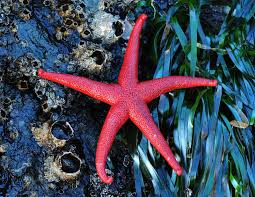
- Starfish, also known as sea stars, are star-shaped marine invertebrates belonging to the class Asteroidea.
- Not True Fish: Despite the name, starfish are not fish as they lack backbones, gills, and fins.
- Habitat: Found in all oceans, from tidepools to deep-sea floors.
- Regeneration: They can regenerate lost arms, and in some cases, a severed arm can regenerate into a new starfish.
- Carnivorous Diet: Starfish are carnivorous, feeding on a variety of marine invertebrates, including bivalves, coral, and other small animals.
- Unique Digestive System: They can extend their stomach outside their body to digest food externally.
- Water Vascular System: A unique hydraulic system used for locomotion, feeding, and gas exchange.
Source: IE
PM Surya Ghar: Muft Bijli Yojana
Syllabus: GS3/Renewable Energy
Context
- The Minister of New and Renewable Energy has said that around 16.51 lakh households have benefited from rooftop solar installations under the PM Surya Ghar: Muft Bijli Yojana (PMSG:MBY).
PM Surya Ghar: Muft Bijli Yojana
- It was launched in 2024 and aims to provide free electricity to households by facilitating the installation of rooftop solar panels.
- The scheme has an outlay of Rs 75,021 crore and is to be implemented till FY 2026-27.
- Installation Targets:
- By March 2025: To exceed 10 lakh,
- By October 2025: Doubling reaching 40 lakh,
- March 2027: 1 crore households.
- The scheme offers a subsidy of up to 40% to households, making renewable energy more affordable and accessible.
- Model Solar Village:
- An allocation of ₹800 crore has been designated for this component, with ₹1 crore provided to each selected Model Solar Village.
- To qualify as a candidate village, it must be a revenue village with a population of over 5,000 (or 2,000 in special category states).
- This initiative aims to promote solar energy adoption and empower village communities to achieve energy self-reliance.
Source: IE
Previous article
First-Ever Auction for Procurement of Green Ammonia Under National Green Hydrogen Mission
Next article
Birth Centenary of M.S. Swaminathan
