


Tatya Tope
Syllabus: GS1/ Modern History
Context
- A rare handwritten and signed letter of Tatya Tope dating back to 1857 has been discovered in the archives of Madhya Pradesh.
About Tatya Tope
- Early Life: Tatya Tope, originally named Ramachandra Pandurang Tope, was born in 1814 in Nashik, Maharashtra.
- His father served as a noble in the court of Baji Rao II, the last Maratha Peshwa.
- He shared a close association with Nana Sahib, the adopted son of Baji Rao II, which later shaped his role in the revolt.
- Role in the Revolt of 1857: He emerged as one of the most capable military commanders during the Revolt of 1857.
- He played a key role in major centres of resistance such as Kanpur and Gwalior.
- He worked closely with leaders like Rani Lakshmibai, helping sustain the rebellion against British forces.
- Military Tactics: He was known for his effective use of guerrilla warfare, rapid mobility, and surprise attacks.
- He was eventually captured by the British and executed in Shivpuri in 1859 after a formal trial.
Source: TOI
Changes to Citizenship Rules Notified by Centre
Syllabus: GS2/Governance
Context
- The government has notified the Citizenship (Amendment) Rules, 2026, introducing revised provisions related to Overseas Citizen of India (OCI) cardholders and citizenship applications.
About
- The Ministry of Home Affairs has made changes to the Citizenship Rules, 2009.
- It has introduced a digital shift across various processes for Overseas Citizen of India (OCI) cardholders and citizenship applications.
Provisions
- A minor child cannot, at any time, hold the passport of any other country while also holding an Indian passport.
- All applications for OCI card registration and renunciation will now be submitted electronically through the official portal.
- On the declaration of renunciation of OCI status, individuals must surrender the original physical card to the nearest Indian Mission, Post, or Foreigners Regional Registration Officer.
- The government has also removed the previous requirement for applicants to submit documents in duplicate and introduced electronic OCI (e-OCI), under which registered individuals may now be issued either a physical OCI card or an electronic OCI registration.
- OCI applicants will now have to sign a new consent form to opt into the Fast Track Immigration Programme by agreeing to the collection of their biometric information during registration.
The OCI Scheme
- The OCI scheme was introduced through an amendment to the Citizenship Act, 1955, in 2005.
- The scheme provides for the registration of Persons of Indian Origin as Overseas Citizens of India, provided they were citizens of India on or after 26th January 1950, or were eligible to become citizens on that date.
- However, individuals who are or have been or whose parent, grandparent or great-grandparent was a citizen of Pakistan or Bangladesh are not eligible.
Source: AIR
Sikkim Becomes India’s First Paperless Judiciary State
Syllabus: GS2/Judiciary
Context
- The Chief Justice of India, Surya Kant, declared Sikkim as the first paperless judiciary state in India.
About
- It marks a shift towards a faster, transparent, and technology-driven justice system, where e-filing and digital case management enhance efficiency and access to justice, especially in remote areas, aligning with the vision of Viksit Bharat 2047.
High Courts in India
- The institution of the High Court originated in India in 1862 when the high courts were set up at Calcutta, Bombay and Madras.
- At present, there are 25 High Courts in India, with some having jurisdiction over more than one State/UT. Union Territories like Delhi, Jammu & Kashmir, and Ladakh have their own High Courts.
- Articles 214 to 231 (Part VI) of the Constitution deal with their organisation, powers, and jurisdiction.
Source: AIR
CuraTeQ Secures Regulatory Nod for Bevacizumab Biosimilar
Syllabus: GS3/ Science & Technology
Context
- Aurobindo Pharma’s subsidiary CuraTeQ Biologics has received a Notice of Compliance (NOC) from Health Canada for its bevacizumab biosimilar Bevqolva.
What is Notice of Compliance (NOC)?
- A Notice of Compliance (NOC) is a formal regulatory approval granted after evaluating a drug’s safety, efficacy, and quality.
- The issuance of an NOC allows a pharmaceutical company to legally market and distribute the drug within the concerned jurisdiction.
- The NOC reflects adherence to stringent regulatory standards comparable to those followed in advanced pharmaceutical markets.
What are Biosimilars?
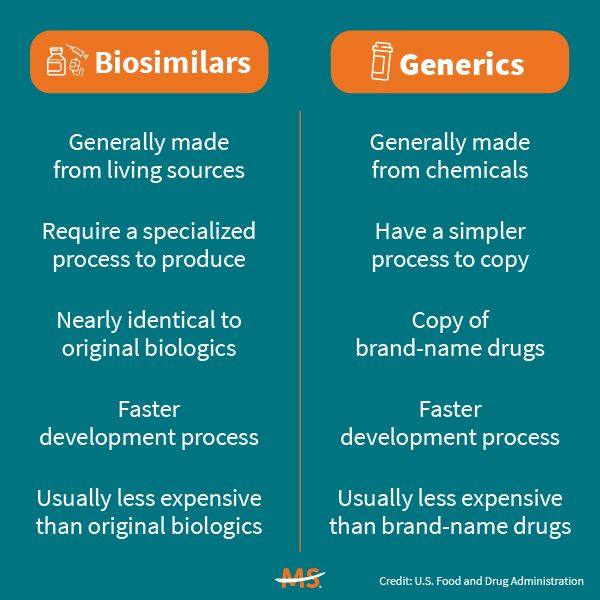
- Biosimilars are biological products that are highly similar to an already approved reference biologic medicine in terms of safety, efficacy, and quality.
- Biosimilars are not entirely new drugs but are developed as equivalent versions of well-established biologic medicines that have been used for years in treating various diseases.
- Biosimilars are complex biologic products developed using similar living cell systems as reference biologics, ensuring close similarity in structure and function while being more technically challenging to produce than generic drugs.
Source: ET
Centre Eyes New E-bus Scheme
Syllabus: GS3/Environment
Context
- The Centre may roll out a fresh electric bus scheme for States after completing the tendering and allocation of all 14,000 buses under the PM E-DRIVE programme.
About PM E-DRIVE Scheme
- The scheme was launched in 2024 by The Ministry of Heavy Industry.
- The scheme duration was from October, 2024 till 31st March, 2026 and is now extended to March 31, 2028.
- The EMPS-2024 (Electric Mobility Promotion Scheme) was also subsumed under the PM E-DRIVE scheme.
- The PM E-DRIVE scheme is proposed to be implemented through the following components:
- Subsidies: Demand Incentives for e-2W, e-3W, e-ambulances, e-trucks and other new emerging EV categories.
- Grants for creation of capital assets: e-buses, establishment of network of charging stations & upgradation of testing agencies of MHI, and;
- Administration of the Scheme including IEC (Information, Education & Communication) activities and fee for project management agency (PMA).
- The following categories of vehicles are eligible for support:
- Buses (only electric buses) (e-bus);
- Three-Wheelers (electric) including registered e-rickshaws & e-carts and L5 (e-3W);
- Two wheelers (electric) – e-2W;
- e-ambulances (electric, plug in hybrid & strong hybrid); and
- e-trucks and other new emerging EV categories (to be notified subsequently).
- Charging Stations: The scheme addresses range anxiety of EV buyers by promoting in a big way the installation of electric vehicle public charging stations (EVPCS).
Source: TH
Cyborg Botany
Syllabus: GS3/ Environment
Context
- Scientists have advanced the field of cyborg botany, which enables plants to communicate their internal health in real time by converting biological signals into electronic data.
About Cyborg Botany
- Cyborg botany is an emerging interdisciplinary field that integrates living plants with electronic components, creating hybrid systems at the intersection of biology, materials science, and engineering.
- The term “cyborg” refers to a cybernetic organism, highlighting the fusion of natural biological processes with artificial electronic functionality.
- The objective is to transform plants into living circuit boards capable of sensing, processing, and transmitting information.
Working Mechanism
- Embedding Nanowires and Transistors: Scientists insert nanowires and electronic transistors into plant cell walls, where they function as biosensors that detect biochemical changes in real time.
- Conductive Polymers as Living Wires: Materials such as PEDOT (a biodegradable, electrically conductive polymer) act as internal wiring, carrying signals from plant cells to external devices.
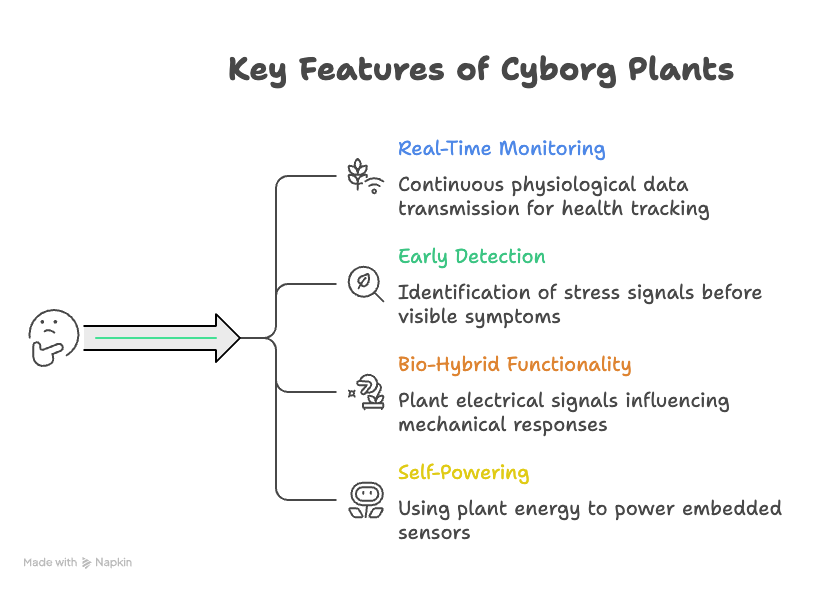
- Signal Conversion: The system captures plant responses to light, moisture, nutrients, and pests, and converts these biochemical signals into digital data.
Source: TH
Sacred Groves in India
Syllabus: GS3/ Environment
Context
- The Kerala State Biodiversity Board has launched a pilot programme to restore sacred groves.
About Sacred Groves
- Sacred groves are patches of forest or natural vegetation protected by local communities due to religious beliefs and traditional practices.
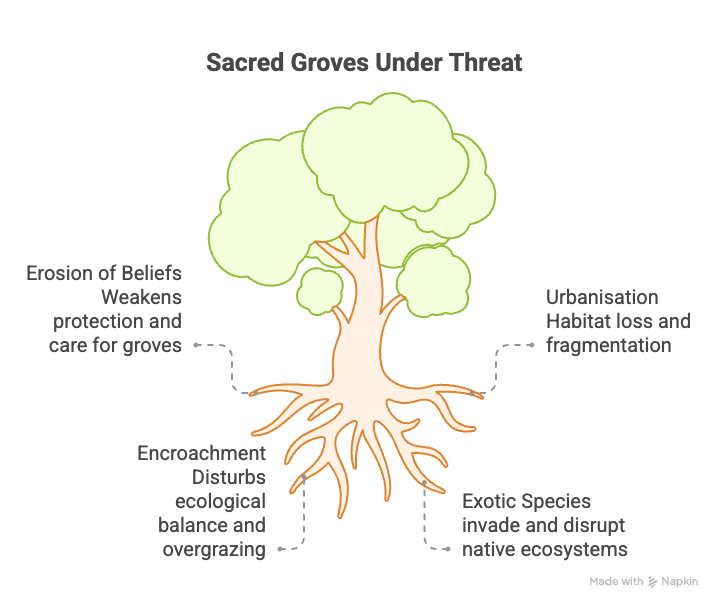
- They function as community-conserved ecosystems, often associated with temples, rituals, and indigenous traditions.
- India has an estimated 100,000–150,000 sacred groves, reflecting their widespread cultural and ecological significance.
- Suitable groves may be notified as Biodiversity Heritage Sites under the Biological Diversity Act, 2002.
Significance
- Sacred groves act as biodiversity hotspots, preserving rare, endemic, and medicinal plant species.
- They contribute to soil conservation and prevent erosion, especially in fragile ecosystems like the Western Ghats and Himalayas.
- Culturally, they are centres of rituals, festivals, and community identity, reinforcing conservation through belief systems.
Source: TH
Previous article
Recalibrating Food Systems to Hydrological Realities
Next article
Inland Waterways: Fortifying Supply Chains
