


Doppler Weather Radars
Syllabus: GS1/ Geography
In News
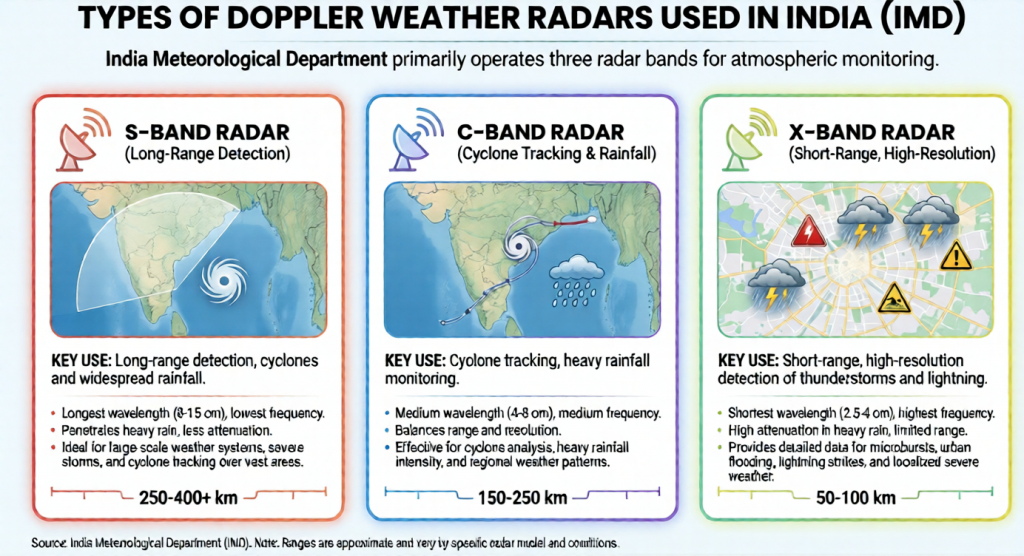
- The Government of India informed Parliament that 47 Doppler Weather Radars (DWRs) are currently operational across the country, covering about 87% of India’s geographical area.
What is a Doppler Weather Radar (DWR)?
- Named after the Doppler Effect, discovered by Christian Doppler.
- Similar to how a train whistle sounds higher when approaching and lower when moving away.
- In DWRs, the frequency/phase change of radio waves helps determine motion of weather systems.
- A Doppler Weather Radar is an advanced meteorological instrument used to:
- Detect precipitation (rain, snow, hail)
- Track movement of clouds and storms
- Estimate rainfall intensity
- Provide short-term forecasts (nowcasting) for extreme weather events
How Does a Doppler Weather Radar Work?
- The radar emits radio wave pulses from an antenna.
- When these waves hit atmospheric particles (raindrops, snowflakes, hail), part of the energy is reflected back to the radar.
- The time taken for the signal to return helps calculate the distance of precipitation.
Source: TH
Netherlands
Syllabus: GS2/IR
Context
- The Defence Minister of India met the Foreign Minister of the Netherlands reaffirming the strong and steadily expanding defence partnership between the two nations.
Netherlands
- Location: Northwestern Europe, bordering Germany and Belgium; North Sea coast.
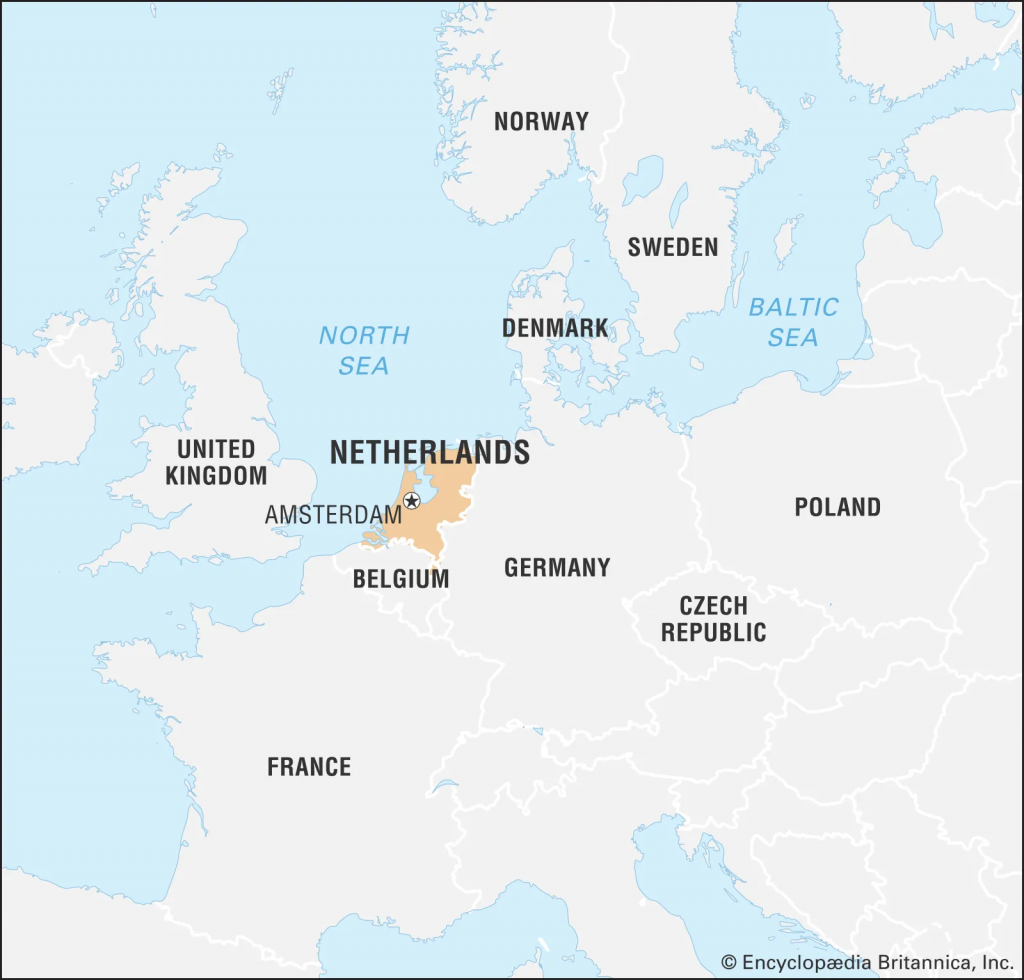
- The name Netherlands means “low countries.”
- Political system: Constitutional monarchy with a parliamentary democracy.
- Ports: Port of Rotterdam located in the Netherlands is Europe’s largest port and a global trade gateway.
Source: TH
Autophagy
Syllabus: GS2/Health
Context
- Researchers from the Jawaharlal Nehru Centre for Advanced Scientific Research (JNCASR), discovered a critical protein complex (exocyst complex) involved in the early stages of autophagy.
What is Autophagy?
- Autophagy is a fundamental cellular process through which cells degrade and recycle damaged organelles, misfolded proteins, and pathogens.
- Often described as “self-eating,” it helps maintain cellular homeostasis, especially in long-lived cells such as neurons.
- The process involves the formation of double-membraned vesicles called autophagosomes, which engulf cellular waste and deliver it to lysosomes for degradation.
Autophagy and Disease Linkages
- Neurodegenerative diseases: Disruption of autophagy is linked to Alzheimer’s, Parkinson’s, and Huntington’s diseases, where waste clearance mechanisms fail.
- Cancer: In early stages, autophagy acts as a tumor suppressor by maintaining genome integrity and cellular balance.
- In advanced cancers, tumor cells may hijack autophagy to survive stress and promote growth, making it a double-edged sword.
Source: PIB
‘Support to Poor Prisoners’ Scheme
Syllabus: GS2/Governance
In News
- The Ministry of Home Affairs (MHA) revised the guidelines of the ‘Support to Poor Prisoners’ scheme due to sub-optimal implementation by several States and Union Territories.
- The Scheme aims to provide financial assistance to States/UTs for extending relief to poor prisoners who are unable to secure bail or release from prison due to non-payment of fine, on account of financial constraints.
Revised framework
- The revised framework introduces fixed timelines and mandates the involvement of senior officials to strengthen institutional mechanisms and ensure swift execution.
- District-level Empowered Committees, including a nominee of the District Collector and the judge in-charge of the prison, will scrutinize and approve eligible cases.
- Jail Superintendents must report cases to the District Legal Services Authority (DLSA) Secretary, who verifies financial status and recommends assistance of up to ₹25,000 to facilitate release; similar provisions apply to eligible undertrial prisoners.
- Exemptions: the scheme excludes persons accused of offences under the Prevention of Corruption Act, Prevention of Money Laundering Act, the Narcotic Drugs and Psychotropic Substances Act, and the Unlawful Activities (Prevention) Act, and any other laws that may be notified later.
- The benefit is also denied to those accused of heinous crimes, including dowry deaths, rape, human trafficking, and offences under the Protection of Children from Sexual Offences (POCSO) Act.
Source :TH
GI-Tagged Indi Lime from Karnataka Enters Oman Market
Syllabus: GS3/Economy
In News
- India’s agricultural exports received a boost with the export of 3 metric tonnes of GI-tagged Indi Lime from Vijayapura, Karnataka, to Oman.
Indi Lime
- Indi Lime is known for its distinctive aroma, high juice content and longer shelf life.
- It represents the agricultural heritage of northern Karnataka.
- The GI status of Indi Lime has played a crucial role in positioning the fruit competitively in global markets.
- The export of GI-tagged Indi Lime to Oman gains significance under the India-Oman Comprehensive Economic Partnership Agreement (CEPA) / Free Trade Agreement (FTA), which aims to strengthen economic ties and expand market access for Indian products.
| Do you know? – The Agricultural and Processed Food Products Export Development Authority (APEDA) has been actively supporting the promotion, branding and export of GI-tagged agricultural products, recognising the importance of promoting region-specific produce in international markets while ensuring compliance with global quality and phytosanitary standards. |
Source :PIB
Tundra Biome
Syllabus: GS3/ Environment
In News
- A recent scientific study from Arctic Alaska reveals that wildfires in the tundra biome have become more frequent in the last century than at any time in the past 3,000 years.
About Tundra Biome
- Overview:
- The tundra is a cold, treeless biome found in high-latitude (Arctic) and high-altitude (Alpine) regions. The word tundra comes from a Finnish term meaning “treeless plain.”
- Types of Tundra:
- Arctic Tundra: Found in northern Alaska, Canada, Greenland, Siberia
- Alpine Tundra: Found at high altitudes on mountains (Himalayas, Andes, Rockies). No permafrost, but very cold conditions
- Climatic Characteristics:
- Temperature: Extremely low; winters can reach −30°C to −50°C
- Precipitation: Very low (150–250 mm/year).
Source: TH
Bureau of Port Security (BoPS)
Syllabus: GS3/Internal Security
In News
- The Union Home Minister convened a high-level meeting to initiate the constitution of a dedicated Bureau of Port Security (BoPS) to enhance the security of vessels and port facilities across the country.
- Under the revamped security framework, the Central Industrial Security Force (CISF) has been designated as a Recognised Security Organisation for ports.
Bureau of Port Security (BoPS)
- It will be established as a statutory body under Section 13 of the newly promulgated Merchant Shipping Act, 2025.
- It will function under the aegis of the Ministry of Ports, Shipping and Waterways
- It will be headed by a Director General of the rank of an IPS officer at Pay Level-15 and will be modelled on the lines of the Bureau of Civil Aviation Security (BCAS).
- During the initial transition period of one year, the Director General of Shipping will function as the Director General of the Bureau of Port Security.
- It will be responsible for regulatory oversight and coordination related to the security of ships and port infrastructure.
- It will focus on timely collection, analysis, and exchange of security-related information, with a special emphasis on cybersecurity.
Source:TH
Previous article
Government to Increase Reservation for Agniveers in CAPFs to 50%
Next article
Where Does India Stand on Child Marriage?
