

Gulf of Oman
Syllabus: GS2/ International Relation; GS1/ Places
In News
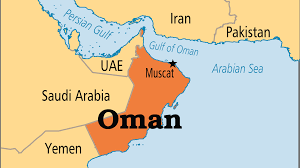
- Iran seizes foreign oil tanker carrying 6 million litres of smuggled Diesel in the Gulf of Oman.
About Gulf of Oman
- The Gulf of Oman is the north-western arm of the Arabian Sea.
- It forms a vital maritime corridor connecting the Indian Ocean with the Persian Gulf through the Strait of Hormuz.
- Through the Strait of Hormuz, it provides access to the Persian Gulf, making it vital for global oil and LNG trade.
Source: TH
PM Modi Received Ethiopia’s Highest Civilian Honour
Syllabus: GS2/ International Relation
Context
- PM Modi was conferred with Ethiopia’s highest award, ‘The Great Honour Nishan of Ethiopia’, by his Ethiopian counterpart Abiy Ahmed Ali.
About Ethiopia
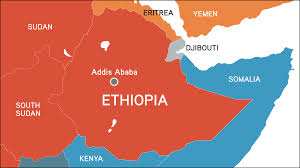
- Location: Ethiopia is a landlocked country located in the Horn of Africa.
- It shares borders with Eritrea, Djibouti, Somalia, Kenya, South Sudan, and Sudan.
- Geography: The country has diverse topography, including the Ethiopian Highlands, the Great Rift Valley, and the Danakil Depression (one of the hottest places on Earth).
- The Blue Nile originates from Lake Tana in Ethiopia.
- Demography: Ethiopia is the second-most populous country in Africa.
- Cultural Significance: Ethiopia has its own calendar, which is seven years and around three months behind the Gregorian calendar.
- Ethiopia is widely recognised as the birthplace of coffee.
- Archaeological Importance: It is the Cradle of Humankind, with some of the oldest hominid fossils discovered here.
- “Lucy” (Dinkinesh), a 3.2-million-year-old hominid fossil, was found in Ethiopia.
- “Ardi”, a 4.4-million-year-old early hominid skeleton, was also discovered in the country.
Source: DD News
ASPIRE Scheme
Syllabus: GS2/ Welfare Scheme
In News
- The Ministry of Micro, Small and Medium Enterprises (MSME) is implementing the ASPIRE scheme to promote entrepreneurship and livelihood opportunities in rural areas.
About the Scheme
- Launch: In 2015 by the Ministry of Micro, Small and Medium Enterprises.
- Aim: To create an enabling ecosystem for job creation through skill development, incubation and support to micro-enterprises.
- As of now, 109 Livelihood Business Incubators (LBIs) have been approved across the country.
- Key Components:
- Livelihood Business Incubators (LBIs): Support agro-based ventures with grants up to ₹75 lakh (private) or ₹1 crore (government institutions) for training in food processing, handicrafts, and rural trades.
- Technology Business Incubators (TBIs): Focus on tech-driven rural innovation with similar funding.
- Fund of Funds: Managed by SIDBI with ₹200 crore corpus to back startups in agro-rural sectors.
Do you Know?
- Vendor Development Programmes for SC/ST and women entrepreneurs are being organised under the Public Procurement Policy for MSMEs.
- The ‘Yashasvini Campaign’ was launched in June 2024 to empower women entrepreneurs through awareness on formalisation, access to credit, capacity building and mentorship.
- The ministry is also implementing the Prime Minister’s Employment Generation Programme (PMEGP), a credit-linked subsidy scheme to generate self-employment opportunities through micro-enterprises.
Source: DD News
Trade Deficit
Syllabus: GS3/Economy
Context
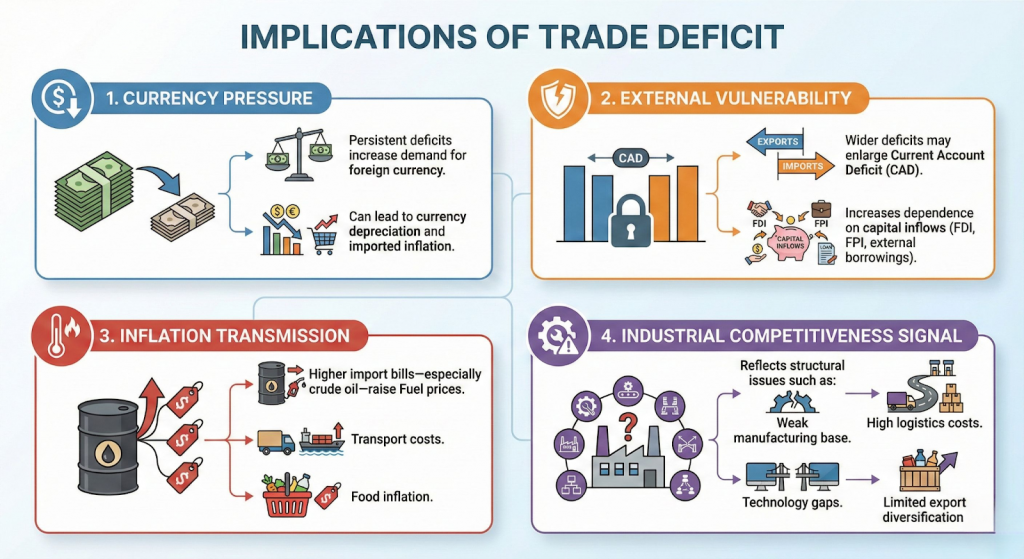
- India’s trade deficit dropped by more than 61% in November 2025 to $6.6 billion, due to strong growth in merchandise exports and a fall in merchandise imports.
Trade Deficit
- Definition: A trade deficit occurs when the value of a country’s imports exceeds the value of its exports during a given period, leading to a negative Balance of Trade (BoT).
- Balance of Trade (BoT) = Total Exports − Total Imports
- Types of Trade Deficit:
- Merchandise (Goods) Trade Deficit: Difference between exports and imports of physical goods.
- Services Trade Deficit / Surplus: Difference between services exports (IT, tourism, finance) and services imports. India typically runs a services surplus.
- Bilateral Trade Deficit: Trade deficit with a specific country (e.g., India–China trade deficit)
- Indicator of net external demand: Shows whether a country is a net importer or exporter in global trade.
Source: TH
Commodity Derivatives
Syllabus: GS3/ Economy
Context
- A panel set up by Securities and Exchange Board of India (SEBI) will recommend easing curbs on commodity derivatives and suggest steps to make it more attractive to institutional investors in a final report to be submitted early next year.
What is a Commodity Derivative Market?
- The commodity derivatives market deals in financial contracts whose value is derived from underlying physical commodities such as crude oil, gold, silver, wheat, natural gas, copper, and aluminium.
- These contracts enable participants to buy or sell a commodity at a predetermined price on a future date, without necessarily engaging in physical delivery.
- The market serves two core functions;
- Hedging Price Risk: Producers hedge against price falls by locking in future selling prices and consumers hedge against price rises by fixing future purchase prices.
- Speculation: Traders take positions based on anticipated price movements to earn profits. Speculative activity enhances market liquidity and efficiency.
Types of Commodity Derivatives
- Futures Contracts: A futures contract is a standardized agreement between two parties to buy or sell an asset at a specific future date for a predetermined price.
- Both buyer and seller are obligated to execute the contract on the specified future date.
- Investors pay only a margin (a fraction of the total value) upfront, not the full cost of the underlying asset.
- Options Contracts: An options contract gives the buyer the right, but not the obligation, to buy (call option) or sell (put option) an asset at a pre-set price before or on the contract’s expiration date.
- The buyer of the option has the flexibility to exercise the contract if it benefits them, or let it expire if not.
- The buyer pays a premium for this right.
- Forwards Contracts: Forward contracts are privately negotiated agreements between two parties to buy or sell a commodity at a future date at an agreed price.
- These contracts are not traded on exchanges and are customised in terms of quantity, quality, and delivery conditions.
- Swaps: Commodity swaps involve the exchange of cash flows between two parties based on commodity price movements.
- They allow participants to hedge long-term price exposure without owning the physical commodity.
Source: BS
Jumping Genes
Syllabus: GS3/ Science & Technology
In News
- Polar bears in Southern Greenland show rapid genetic changes linked to jumping genes that may help them survive warming Arctic conditions.
About Jumping Genes
- Jumping genes, scientifically called Transposable Elements (TEs), are DNA sequences that can move (transpose) from one location to another within the genome.
- They were discovered by Barbara McClintock in maize (corn), for which she received the Nobel Prize (1983).
- In humans, they constitute 45% of the genome.
- Once considered “junk DNA,” now known to have regulatory and evolutionary roles.
Source: Money Control
AH-64E Apache Attack Helicopters
Syllabus: GS3/Defence
Context
- The Indian Army received the final batch of three AH-64E Apache attack helicopters.
About
- The Apaches were contracted in 2020 under a $600 million deal with the United States.
- The AH-64E Apache is regarded as the world’s most advanced multi-role combat helicopter.
- It is equipped with cutting-edge avionics, sensors and weapon systems, and capable of operating in all weather and terrain conditions.
Source: TH
Previous article
NCAER Reports Rise in Skilled Workforce
Next article
India-Oman Trade and Investment Ties Deepen
