

Fungus Infections Rise in India
Syllabus: GS2/Health
Context
- Studies suggest that fungal infections would overtake the annual incidence of tuberculosis in India.
About
- A study in 2022 had estimated that India has the largest burden of fungal diseases per capita in the world.
- This means over 57 million people (4.1% of the population) are affected by serious fungal diseases.
- The report also flagged how diagnostic limitations across the country had already inhibited some high-quality epidemiological studies.
Fungal Infections
- Fungal infections also called mycoses are diseases caused by fungi.
- Fungi are eukaryotic organisms (cells with nuclei) that differ from bacteria and viruses.
- They thrive in warm, moist environments and can live on skin, mucous membranes, or inside the body.
- Fungal infections range from mild to life-threatening.
- People with weakened immune systems are at higher risk for most fungal infections.
Source: IE
Dumpsite Remediation Accelerator Programme (DRAP)
Syllabus:GS2/Governance
In News
- The Dumpsite Remediation Accelerator Programme (DRAP) has been launched by the Ministry of Housing and Urban Affairs (MoHUA).
Dumpsite Remediation Accelerator Programme (DRAP)
- It is a year-long, mission-mode initiative which aims to fast-track the remediation of remaining dumpsites and reclaim valuable urban land for community and infrastructure development, advancing India’s vision of achieving “Lakshya Zero Dumpsites” by September 2026.
- The Dumpsite Remediation Action Plan (DRAP) is guided by the 5P framework from the Swachh Bharat Mission, ensuring comprehensive oversight, funding, and community engagement:
- Political Leadership: Senior leaders adopt specific dumpsites to drive progress
- Public Finance: Additional financial support is provided to cities with significant legacy waste, supplementing existing funds.
- Partnerships: Collaborations include corporates/PSUs for funding, PWDs/NHAI for using inert waste in road construction, technical experts for engineering, and NGOs for community outreach.
- Public Advocacy: Focus on awareness and health initiatives for affected communities, including SafaiMitras and nearby residents.
- Project Management: Site-specific micro-action plans with defined timelines, resource allocation, and monitoring mechanisms ensure effective execution.
Source:HT
YBRANT Programme
Syllabus:GS2/Governance; GS3/Economy
In News
- The Indian Institute of Corporate Affairs (IICA), in partnership with WNS Global Services, launched the YBRANT programme.
YBRANT programme
- It is a strategic collaboration between government, industry, and academia.
- It is designed to instill sustainable development values in future CEOs.
- It is a six-month blended learning program that includes 15 modules, 22.5 hours of academic instruction, and 18 hours of fieldwork, delivered via IICA’s online platform.
Objectives and Need
- India’s CSR spending has grown significantly—from ₹10,065.93 crore in FY 2014–15 to ₹34,908.75 crore in FY 2023–24—highlighting the need for professionals who balance profit with responsible conduct.
- Therefore the YBRANT programme aims to cultivate socially responsible and sustainability-oriented business leaders.
Source: PIB
Lucifer Bee
Syllabus: GS3/Species in News
Context
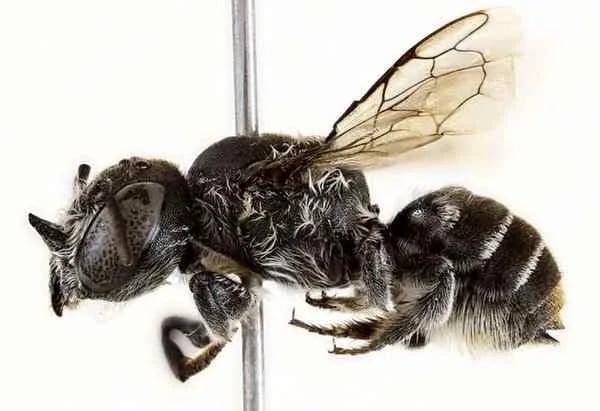
- Australian scientists have discovered a new native bee species named Lucifer.
About
- The new species – dubbed Megachile (Hackeriapis) Lucifer – was first discovered in 2019 in the state of Western Australia.
- It’s the first new member of this bee group to be described in more than 20 years.
- Australia has around 2,000 native bee species, more than 300 of which are yet to be scientifically named and described.
- The highly distinctive, upward-pointing horns on the female bee’s face inspired its name.
- Each of the horns on the bee measure about 0.9 millimetres and scientists note could be used to access flowers, compete for resources, and defend nests.
- Interestingly, the species’ male bees lack the horns.
Significance
- The discovery will raise awareness about the number of undiscovered species that may still exist, especially in areas threatened by mining.
- Many mining companies still don’t survey for native bees, including those that play crucial roles in supporting threatened plants and ecosystems.
- Almost all flowering plants depend on wild pollinators, particularly bees, but habitat loss and climate change are driving many vital species to the brink of extinction.
Source: TH
Gaganyaan Mission
Syllabus: GS3/Space
In News
- ISRO successfully conducted a critical parachute test for its upcoming human spaceflight mission, Gaganyaan.
- ISRO will next conduct three uncrewed flights with Vyomitra, a half-humanoid robot, aiming for a crewed mission by early 2027.
Gaganyaan Mission
- The Gaganyaan Programme was approved in December 2018.
- It is a mission of Indian Space Research Organisation (ISRO) and was approved with a financial outlay of approximately ₹20,193 crore.
- It is India’s first indigenous human spaceflight initiative.
- It aims to demonstrate India’s human spaceflight capability by sending a crew to 400 km low-Earth orbit for three days, with a safe return and sea landing in Indian waters.
- The Human Rated LVM3, a modified version of ISRO’s reliable LVM3 rocket, is identified as the launch vehicle for Gaganyaan mission.
- It features a Crew Escape System (CES) with high-thrust solid motors to safely evacuate the crew during launch emergencies.
Source :IE
International Cryosphere Climate Initiative
Syllabus: GS3/ Environment
In News
- The “2025 State of the Cryosphere Report” underscores that Earth’s glaciers and ice sheets are rapidly melting.
Key Highlights
- Critical Thresholds: Earth’s cryosphere (glaciers and ice sheets) is nearing critical temperature thresholds, with irreversible melting likely at just 1°C of warming, and many glaciers could melt irreversibly at even lower temperatures.
- Global Ice Loss: Rapid melting of polar ice sheets and glaciers, notably in Greenland and Antarctica, is accelerating sea-level rise and causing significant impacts on ocean currents and ecosystems.
- Sea Ice Decline: Both Arctic and Antarctic sea ice have hit record lows in 2025, affecting global climate patterns and marine food webs.
- Sea-Level Rise: Staying at current warming levels (~1.2°C) could lead to several meters of sea-level rise over centuries, threatening coastal cities and small islands, but limiting warming to 1.5°C or below can slow this process.
- Impact on Water Resources: Melting glaciers and ice sheets have already released large volumes of water, roughly 13% of global annual water consumption in 2023, with future reductions threatening water security for billions.
- Ocean Changes: Melting polar ice and warmer waters are disrupting ocean currents, slowing the Atlantic Meridional Overturning Circulation, and potentially causing colder temperatures in northern Europe.
- Increased Risks: Loss of permafrost, increased ocean acidification, and declining snow cover are further aggravating climate change effects, threatening ecosystems and human livelihoods.
Source: TH
National Water Awards 2024
Syllabus: Miscellaneous
Context
- Maharashtra has secured the first position in the Best State category of the 6th National Water Awards for 2024.
- Gujarat and Haryana have been placed second and third respectively.
About
- Instituted in 2018 by the Department of Water Resources, River Development, and Ganga Rejuvenation (DoWR, RD &GR), the National Water Awards aim to encourage sustainable water management and support the government’s ‘Jal Samridh Bharat’ vision.
- This year, 46 winners have been selected across ten categories, including Best District, Best Village Panchayat, Best Urban Local Body, and Best Institution.
Source: PIB
Previous article
Tropical Forest Forever Facility (TFFF)
Next article
India’s First MWh-Scale Vanadium Flow Battery
