


Syllabus: GS3/Environment
Context
- Recently, the Tropical Forest Forever Facility (TFFF) was launched on the sidelines of the COP30 Climate Summit in Belém, Brazil.
| What is the Conference of the Parties (COP) of UNFCCC? – It is the highest decision-making body that reviews implementation and adopts necessary decisions for effective execution. – The venue and presidency rotate among the five UN regional groups — Africa, Asia, Latin America & the Caribbean, Central & Eastern Europe, and Western Europe & Others. – It meets annually, typically in Bonn (Germany) unless hosted elsewhere by a Party nation. – The first COP was held in Berlin, Germany (1995). |
About Tropical Forests Forever Facility (TFFF)
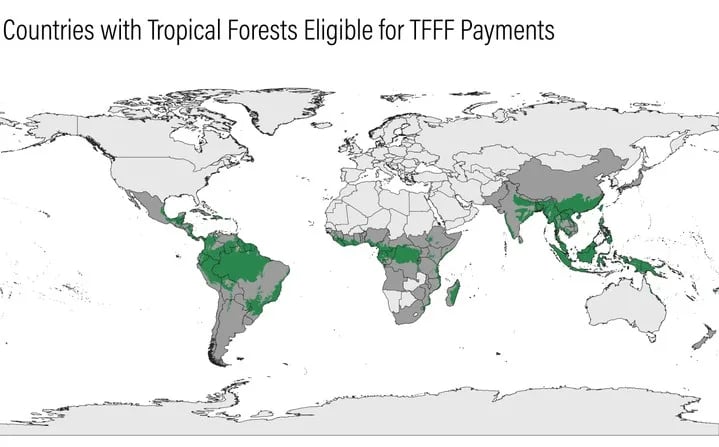
- Overview: It is an investment fund designed as a permanent, self-financing vehicle through which net returns aim to be awarded to up to 74 developing tropical forest countries for keeping their existing old-growth forests intact.
- Rationale: It aims to recognise and encourage Tropical Forest Countries to continue protecting and conserving Tropical Forest at the right scale and speed, especially given significant opportunity and implementation costs.
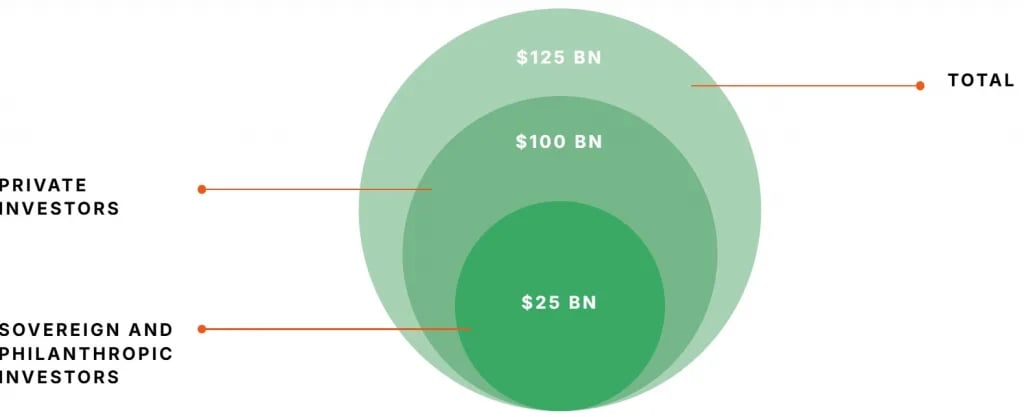
- Funding Structure: It aims to raise$25 billion from wealthy nations and philanthropists, and an additional $100 billion in private investment, based on satellite remote sensing data forest cover.
- It focuses at least 20% of payments flow directly to Indigenous Peoples and local communities.
- Significance of TFFF: It is hailed as a groundbreaking initiative that empowers the Global South to lead tropical forest conservation, provides enduring financial incentives for forest protection, and redefines intact tropical forests as valuable ecological assets.
India’s Perspective
- India welcomed Brazil’s initiative to establish the TFFF, and joined the Facility as an Observer.
- India is pursuing ambitious goals — green budgeting, sovereign green bonds, and a national carbon market (by 2026).
- India’s indigenous and local knowledge like traditional seed systems, community-based water harvesting, and ecosystem restoration models offer valuable lessons for globally adaptable resilience strategies.
What are the concerns?
- Volatility of Financial Markets: TFFF plans to invest in bonds in developing nations that have historically been prone to fluctuations.
- For instance, the TFFF may not be able to pay returns to countries if markets crash like COVID-19 pandemic, and the 2008-09 financial crisis.
- Diluting Legal Obligations: TFFF is not officially part of the UNFCCC, and is not subject to the same responsibilities that govern the UN climate negotiations, where the onus falls on developed countries.
Other Global Initiatives for Forest Conservation
- Convention on Biological Diversity: The Convention was opened for signature in 1992 at the United Nations Conference on Environment and Development (Rio Earth Summit).
- The Convention on Biological Diversity (CBD) entered into force on 29 December 1993.
- UN-REDD Programme (Reducing Emissions from Deforestation and Forest Degradation): Launched in 2008, it provides financial incentives to developing countries for reducing emissions by conserving and sustainably managing forests.
- Paris Agreement: It is a legally binding international treaty on climate change. It was adopted by 195 Parties at the UN Climate Change Conference (COP21) in Paris, France, in 2015. It entered into force on 4 November 2016.
Way Forward
- Integrate with UNFCCC mechanisms to ensure accountability and sustained contributions from developed nations.
- Guarantee long-term stability by insulating the fund from market shocks.
- Enhance transparency via open-access forest monitoring data and independent audits.
Source: IE
Previous article
3rd International Conference on Green Hydrogen (ICGH 2025)
Next article
News in Short – 12 November, 2025
