

Syllabus: GS3/ Internal Security
In News
- The Ministry of Home Affairs extended the Armed Forces (Special Powers) Act in parts of Manipur, Arunachal Pradesh, and Nagaland for another six months.
What is AFSPA?
- About:
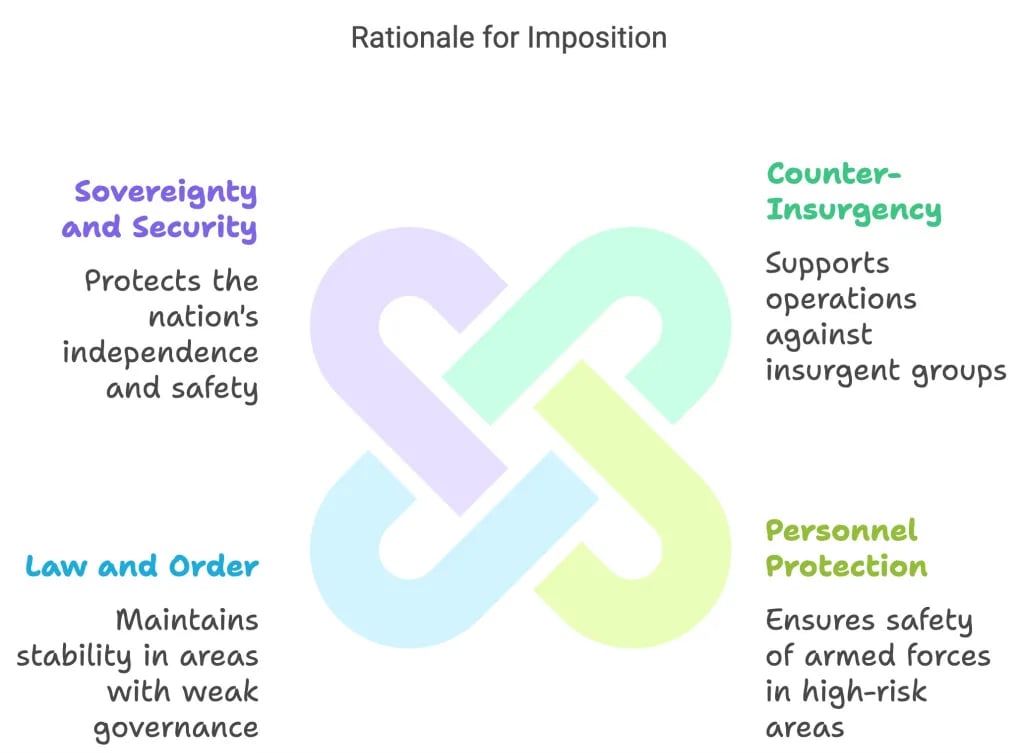
- The Armed Forces (Special Powers) Act, 1958 (AFSPA) is a powerful law enacted to empower the armed forces in counter-insurgency operations.
- Important Provisions
- Section 3: The Governor of a State or UT can declare the whole or part of the territory as a “disturbed area”.
- Section 4: Empowers armed forces to search premises, arrest individuals without warrants, and use force (even to the extent of causing death) against those violating prohibitions.
- Section 6: Arrested persons and seized property must be handed over to the local police promptly.
- Section 7: Provides immunity to armed forces—prosecution or legal proceedings can begin only with prior sanction of the Central Government.
Criticisms
- Alleged human rights violations including cases of extrajudicial killings, torture, and disappearances.
- Considered against democratic ethos, limiting fundamental rights such as life and liberty (Article 21).
- Limited success in addressing insurgency, often seen as fuelling resentment among local populations.
Committee Recommendations
- Justice Jeevan Reddy Committee (2005): Recommended repeal of AFSPA, suggesting incorporation of essential provisions into the Unlawful Activities (Prevention) Act (UAPA).
- Santosh Hegde Commission (2013): Reported misuse of AFSPA in Manipur, stating many “encounters” were fake.
Way Forward
- Enhance transparency and accountability by amending vague provisions.
- Ensure checks on human rights violations through independent oversight.
- Focus on socio-economic development of Northeastern states to address root causes of insurgency.
- Establish a balanced framework between security imperatives and protection of citizens’ rights.
Source: TH
Previous article
Desertification in India & Farming Technology
Next article
News In Short – 27 September, 2025
