


National Fellowship for Scheduled Tribes (NFST)
Syllabus: GS2/Government Schemes
Context
- Research scholars from Scheduled Tribe communities across the country have reported months-long delays and irregularities in the disbursement of funds under the National Fellowship for Scheduled Tribes (NFST).
About National Fellowship for Scheduled Tribes (NFST).
- It is a scholarship programme administered by the Union Ministry of Tribal Affairs.
- It is a Central Sector Scheme and it offers 750 scholarships each year for ST candidates (only in Psychiatric Social Work/ M.Phil. in Clinical Psychology), Integrated M.Phil.+ Ph.D. and Ph. D. Courses, which are to be paid in quarterly installments for a maximum period of five years.
- The applications are invited online on the National Fellowship Portal.
- The objective of the scheme is to encourage the Scheduled Tribe (ST) students to acquire higher education by providing financial assistance in the form of fellowships.
- The candidate must be registered for regular and full time M.Phil./Ph.D courses in recognized University/ Institute/ Colleges by UGC.
Source: TH
ISRO Inks Agreement with HAL for Transfer of SSLV Technology
Syllabus: GS3/Economy/Space
Context
- The Indian Space Research Organisation signed a formal agreement with Hindustan Aeronautics Ltd. for the transfer of technology for production of small satellite launch vehicles (SSLV).
Key Highlights of agreement
- It marks a significant step in industry participation in the space sector.
- It is the 100th transfer of technology agreement facilitated by the space sector promoter INSPACe.
- ISRO will complete the entire technology transfer process within 24 months from the date of signing the agreement.
- During this period, the ISRO will provide training and technical support to the HAL for acquiring the know-how of the SSLV.
- The agreement would allow the HAL to independently build the SSLV for both domestic and international markets.
Small Satellite Launch Vehicles (SSLV)
- The SSLV is a three-stage all-solid vehicle designed to launch satellites weighing up to 500 kg into Lower Earth Orbit (LEO).
- SSLV was developed by ISRO as a quick turnaround, on-demand launch vehicle that is amenable to industrial production and is targeted to cater to the global small satellite launch vehicle market.
Source: TH
AI-Based Mental Health Program ‘Never Alone’ Launched at AIIMS Delhi
Syllabus: GS2/Health
Context
- All India Institute of Medical Sciences, launched an AI-based mental health and wellness program called “Never Alone” to tackle student suicides and improve mental health awareness.
About ‘Never Alone’ program
- It was launched on World Suicide Prevention Day (10 September).
- It offers 24/7 virtual and offline consultations with mental health experts through a web-based app accessible via WhatsApp.
- The program aims to minimise stigma surrounding suicide and increase awareness among students.
Objectives and Need
- The app provides personalised and secure mental health screening for just 70 paise per student per day for institutions with 5 thousand students.
- As per the data of the National Crime Records Bureau (NCRB), in 2022, over 1.7 lakh people died by suicide in India, with young adults aged 18-30 years accounting for 35 percent of all suicides.
| World Suicide Prevention Day (WSPD) – It was established in 2003 by the International Association for Suicide Prevention in partnership with the World Health Organization. – Each year, on 10 September, WSPD focuses global attention on suicide prevention, uniting communities, organizations, and governments with the shared belief that suicides are preventable. |
Source: AIR
Melioidosis
Syllabus: GS2/Health; GS3/Science & Tech
Context
- Andhra Pradesh has reported its first confirmed case of melioidosis in Turakapalem village, linked to 23 unexplained deaths since July.
About Melioidosis
- Cause: Bacterial infection caused by Burkholderia pseudomallei.
- Transmission & Reservoir:
- The bacteria live in soil and water, and can persist for years in contaminated environments.
- Person-to-person transmission is very rare; animal-to-human or insect-to-human are not documented.
- Vulnerability:
- Usually non-lethal in healthy individuals.
- Severe in patients with diabetes, chronic kidney/liver disease, alcohol dependence, or cancer.
- Higher risk of exposure in military personnel, adventure travellers, eco-tourists, and workers in construction, rice farming, fishing, and forestry.
- Geographic prevalence:
- Endemic in Southeast Asia and Northern Australia.
- Prevalent but under-diagnosed and underreported in India. First indigenous Indian case detected in Mumbai (1991).
- Seasonality: 75–85% of cases occur during the rainy season.
- Symptoms:
- Range from flu-like fever and headache to severe pneumonia, persistent cough, chest pain, skin sores, or organ abscesses.
- Resemble tuberculosis and misdiagnosis is common.
- Prevention & Management:
- Safe water, protective gear, and hygiene practices.
- At present, there is no vaccine available for melioidosis.
Source: DTE
Stablecoins
Syllabus: GS3/ Economy
Context
- Stablecoins have grown rapidly, with their market capitalization more than doubling in the past 18 months to nearly $280 billion.
What are stablecoins?
- Stablecoins are cryptocurrencies designed to maintain price stability by pegging their value to underlying assets such as:
- Fiat currencies (e.g., USD, Euro),
- Commodities (e.g., gold),
- Other cryptocurrencies, or
- Algorithm-based systems.
- Stablecoins are different from CBDCs, or Central Bank Digital Currencies, which are digital currencies officially issued and controlled by a government’s central bank.
- Meanwhile, stablecoins can be privately issued and can also be pegged to foreign currencies.
Global Scenario in stablecoins
- The U.S. passed the Genius Act, which mandates that stablecoins be fully backed by liquid assets (like cash or Treasury bills) and requires regular disclosures.
- Japan & Singapore have introduced targeted regulations for stablecoins.
- China has long prioritized the development of its sovereign digital yuan, however it is now also examining the rising use of yuan-backed stablecoins.
Source: TH
Autism risk due to paracetamol
Syllabus :GS2/Health
In News
- The US Health Secretary is planning to announce a possible link between autism and prenatal exposure to Tylenol (acetaminophen/paracetamol), a widely used over-the-counter pain and fever medication.
| Medical guidelines from leading bodies recommend paracetamol as the first-line treatment for pain and fever during pregnancy. – Untreated maternal fever and pain pose serious risks to fetal development—including heart and neural tube defects, preterm birth, and miscarriage—as well as health complications for the mother. – Experts advise pregnant women to use paracetamol judiciously, at the lowest effective dose and for the shortest duration, under medical guidance. |
Autism
- It is also referred to as autism spectrum disorder ̶ constitutes a diverse group of conditions related to development of the brain.
- It is a range of conditions marked by difficulties in social interaction, communication, and atypical behaviors such as sensitivity to sensations and resistance to change.
Causes
- Scientific evidence shows that autism is likely caused by a combination of genetic and environmental factors.
- Vaccines, including the MMR vaccine, do not cause autism.
- Studies suggesting a link were flawed and biased. Research also confirms that vaccine ingredients like thiomersal and aluminium do not increase autism risk.
Effect
- Autism can affect education, employment, and family life, and early signs may appear in childhood but are often diagnosed later.
- Co-occurring conditions like epilepsy, anxiety, ADHD, and sleep issues are common.
Assessment and care
- Autistic individuals benefit from early, evidence-based interventions to improve communication, social skills, and overall quality of life.
- Care must be tailored to individual needs and include coordinated support across health, education, and social sectors.
- Despite having the same health rights, autistic people often face stigma, discrimination, and unmet healthcare needs, partly due to limited provider awareness.
- Accessible and inclusive services are essential to ensure their well-being.
Source :IE
Adi Sanskriti
Syllabus :GS1/Culture
In News
- The Ministry of Tribal Affairs launched the Beta version of Adi Sanskriti at the National Conference on Adi Karmayogi Abhiya.
Adi Sanskriti
- It is a digital learning platform aimed at preserving tribal art forms, promoting heritage, enabling livelihoods, and connecting tribal communities globally.
- It is envisioned as the world’s first Digital University for preserving and promoting tribal culture and traditional knowledge.
- It includes three key components: Adi Vishwavidyalaya – A Digital Tribal Art Academy offering 45 courses on tribal dance, painting, crafts, music, and folklore.
- Adi Sampada – A socio-cultural repository with over 5,000 curated documents on tribal art, dance, textiles, artefacts, and livelihoods.
- Adi Haat – An evolving online marketplace (currently linked with TRIFED) to support tribal artisans through direct consumer access and sustainable livelihoods.
Relevance
- Adi Sanskriti is a key initiative for cultural preservation and tribal empowerment under Viksit Bharat @2047.
- Its long-term goal is to evolve into a Tribal Digital University offering certifications, research, and transformative learning.
- By combining cultural preservation, education, and economic empowerment, Adi Sanskriti aims to celebrate and uplift India’s tribal communities in the digital era.
Source :PIB
AdFalciVax
Syllabus: GS3/Science and Technology
Context
- The Indian Council of Medical Research (ICMR) has granted non-exclusive rights for its multi-stage malaria vaccine, AdFalciVax, to five pharmaceutical companies.
About
- AdFalciVax is India’s first indigenous multi-stage malaria recombinant vaccine developed by the Regional Medical Research Centre (RMRC), under the ICMR.
- The vaccine is designed to prevent Plasmodium falciparum infection in individuals and reduce community transmission.
- Plasmodium falciparum is the deadliest malaria parasite, difficult to control and responsible for widespread devastation.
- How does it work? AdFalciVax targets the parasite before it enters the bloodstream, stopping the infection at the transmission stage.
- The vaccine uses Lactococcus lactis, a genetically engineered food-grade bacterial host, as its core technology.
Source: BS
Pallas’s Cat
Syllabus: GS3/Species in News
Context
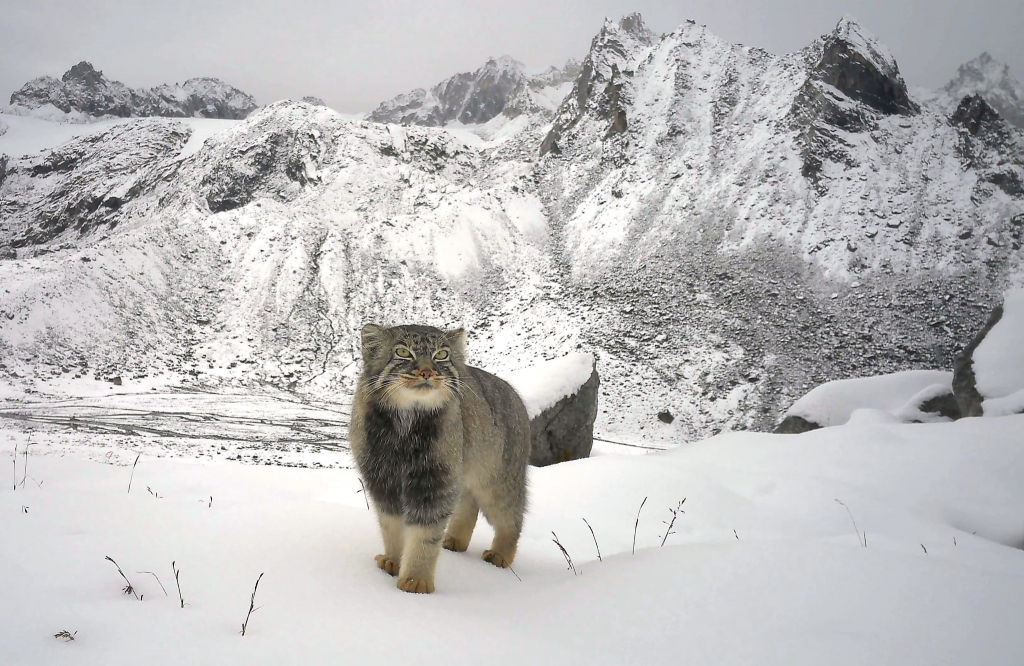
- A wildlife survey conducted in Arunachal Pradesh has brought out first-ever photographic evidence of the elusive Pallas’s cat in the state.
About
- Name: Pallas’s cat (Otocolobus manul).
- It is one of the most elusive and rarely photographed wild cats, and remains one of the least studied feline species.
- Appearance: Its coat is usually gray or light tan, but it can change color with the seasons to better blend into the local landscape.
- Distribution: Its documentation in Arunachal Pradesh extends the known distribution of the species in the eastern Himalaya, adding to earlier confirmed records from Sikkim, Bhutan, and eastern Nepal.
- They are found in Turkmenistan, Iran, Kyrgyzstan, Kazakhstan, Bhutan, Nepal, India, Pakistan, Afghanistan, China, Mongolia, and Russia.
- It is nocturnal, and an ambush predator, meaning it waits at the exits of rodent burrows until its prey appears.
- IUCN Status: Least Concern.
Source: TOI
Assam Government Approves SOP to Expel Illegal Migrants under 1950 Expulsion Act
Syllabus: GS2/Citizenship
Context
- The Assam Cabinet approved an SOP to implement the Immigrants (Expulsion from Assam) Act, 1950, in a move to expedite the process of detection and push-back of illegal migrants.
About
- Under the SOP, the District Commissioner (DC) will be empowered to issue an expulsion Order to any person who, in the view of the DC, is a foreigner.
- Through this Act, the DC will serve a 10-day notice to the suspect, and if he or she cannot prove his/her citizenship within this period, the DC will immediately issue an order to evacuate the person.
- In the case of illegal migrants detected within 24 hours of illegal entry into the State, no notice will be required.
The Immigrants (Expulsion from Assam) Act, 1950
- It was enacted by the Indian Parliament in the wake of Partition, when large numbers of people crossed into Assam from East Pakistan (now Bangladesh).
- The Act empowers the Central Government to order the removal of individuals whose presence in Assam is deemed “detrimental to the interests of the general public or any Scheduled Tribe.”
- Despite its existence, the Act has rarely been implemented in the past.
- Successive governments instead relied on the Foreigners Act, 1946, and the extensive network of Foreigners’ Tribunals in Assam.
- The new SOP marks the first structured attempt to operationalise the 1950 law in the state’s modern context.
Section 6A of the Citizenship Act
- Section 6A of the Citizenship Act, 1955, confers citizenship to immigrants who entered Assam after January 1, 1966 but before March 24, 1971.
- The provision was inserted into the Act in furtherance of a Memorandum of Settlement called the “Assam Accord”.
- Under Section 6A, foreigners who had entered Assam before January 1, 1966, and been “ordinarily resident” in the State, would have all the rights and obligations of Indian citizens.
Source: AIR
Sariska Tiger Reserve
Syllabus: GS3/Environment
Context
- The Ministry of Environment, Forest and Climate Change (MoEFCC) has decided to invite public objections before finalising Rajasthan’s proposal to alter the boundaries of the Critical Tiger Habitat (CTH) in Sariska Tiger Reserve.
More about the news
- The plan, prepared by a state-appointed panel, sought to retreat CTH boundaries in multiple stretches, potentially placing around 50 mines outside the one-kilometre no-mining zone.
About the Sariska Tiger Reserve (Sariska National Park)
- Located in Alwar district, Rajasthan.
- One of the largest and most renowned tiger reserves in Northern India.
- Historical timeline:
- Pre-Independence: Hunting ground of the princely state of Alwar.
- 1955: Notified as a Wildlife Reserve.
- 1978: Declared the 11th Tiger Reserve in India.
- 1982: Sariska Wildlife Sanctuary redesignated as Sariska National Park.
Source: IE
Previous article
GST Reforms to Boost India’s Drone Ecosystem
