

Syllabus: GS3/Environment; Climate Change
Context
- A recent study has found that geotubing technology deployed at Poonthura, Kerala, has been highly effective in controlling coastal erosion.
Geo-Tubing Technology for Coastal Erosion
- Geotubes are large fabric containers filled with sand or slurry, placed strategically along the coast.
- They act as wave barriers, diminishing the force of incoming waves and preventing shoreline erosion.
- The multi-layered geotube system ensures long-term stability, even under intense sea motion.
Coastal Erosion in India
- India’s coastline is facing severe erosion, with 33.6% of its shoreline classified as vulnerable.
| Do You Know? – India’s coastline length has been revised to 11,098.81 km following a new methodology for measurement. 1. Previously, the official coastline length was 7,516.60 kms. |
- The Indian mainland coast includes 9 coastal states and 2 Union Territories (UTs) having 66 coastal districts.
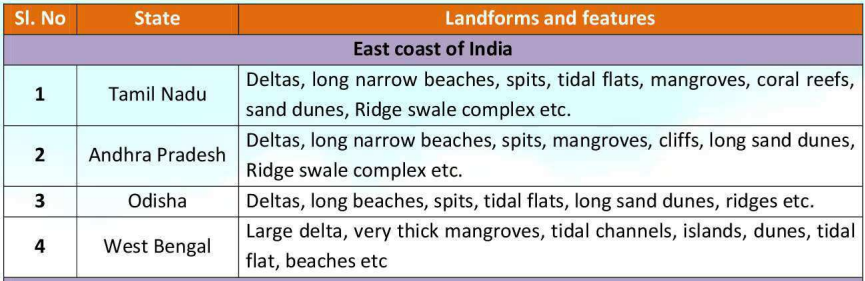
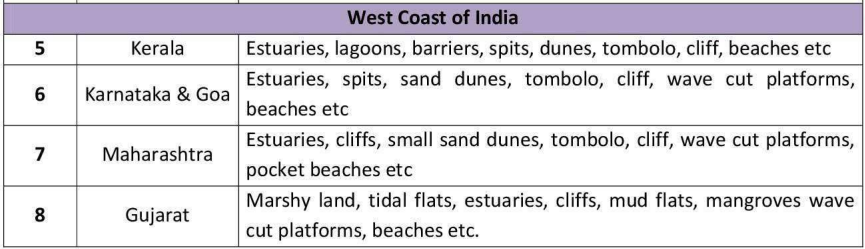
- Morphology of the Coast:
- It consists of 43% sandy beach, 11% rocky coast, 36% of muddy flats, 10% of marshy coast, 97 major estuaries and 34 lagoons.
- The National Centre for Coastal Research (NCCR)(an attached office of the Ministry of Earth Sciences) has been monitoring shoreline changes since 1990, using remote sensing and GIS mapping techniques. According to the NCCR:
- 33.6% of India’s coastline is eroding, impacting coastal communities and infrastructure.
- 26.9% of the coastline is experiencing accretion, meaning land is expanding due to sediment deposition.
- 39.6% of the coastline remains stable, showing minimal changes in shoreline position.
- West Bengal (60.5%), Kerala (46.4%), and Tamil Nadu (42.7%) are among the most affected Indian states.
Causes of Coastal Erosion
- Climate Change and Rising Sea Levels: Melting glaciers and thermal expansion contribute to higher sea levels, intensifying coastal erosion.
- Extreme Weather Events: Cyclones, storm surges, and monsoonal variations accelerate shoreline retreat.
- Human Activities: Unregulated coastal development, sand mining, and port construction disrupt natural sediment flow.
- Loss of Natural Barriers: Mangrove deforestation and coral reef degradation reduce coastal resilience against erosion.
Government Initiatives and Mitigation Measures
- Integrated Coastal Zone Management Project (ICZMP): It is a World Bank-assisted project aimed to protect and conserve coastal and marine environments through sustainable practices, implemented in Gujarat, Odisha, and West Bengal.
- Coastal Regulation Zone (CRZ) Notification (2019): It aims to conserve and protect coastal stretches, ensuring livelihood security for fisher and local communities while permitting erosion control measures.
- It provides for No Development Zones (NDZ) along various categories of coastal areas to protect India’s coastline from encroachment and erosion.
- It includes the Shoreline Management Plan and Coastal Zone Management Plan.
- Coastal Vulnerability Index (CVI): The Indian National Centre for Ocean Information Services (INCOIS) has developed the CVI to assess and map the vulnerability of different coastal regions based on various parameters.
- Shoreline Protection Measures: The National Assessment of Shoreline Changes provides erosion control guidelines.
- 15th Finance Commission Allocation: ₹2,500 crore earmarked for resettlement of displaced communities and erosion mitigation measures.
Innovative Engineering Solutions
- Geo-Tube Installation: In areas like Pentha Village in Odisha, and recently in Poonthura, Kerala, geo-tubes have been installed to create artificial barriers that protect the coast from erosion.
- Artificial Reefs: Constructing artificial reefs can dissipate wave energy and protect the shoreline.
- Eco-friendly Breakwaters: Using materials that blend with the natural environment can provide effective protection without harming marine ecosystems.
- Mangrove and Shelterbelt Plantations: Planting mangroves and other vegetation along the coast helps stabilize the shoreline and reduce the impact of waves and storm surges.
Previous article
India’s Rising E-Waste and the Need to Recast Its Management
