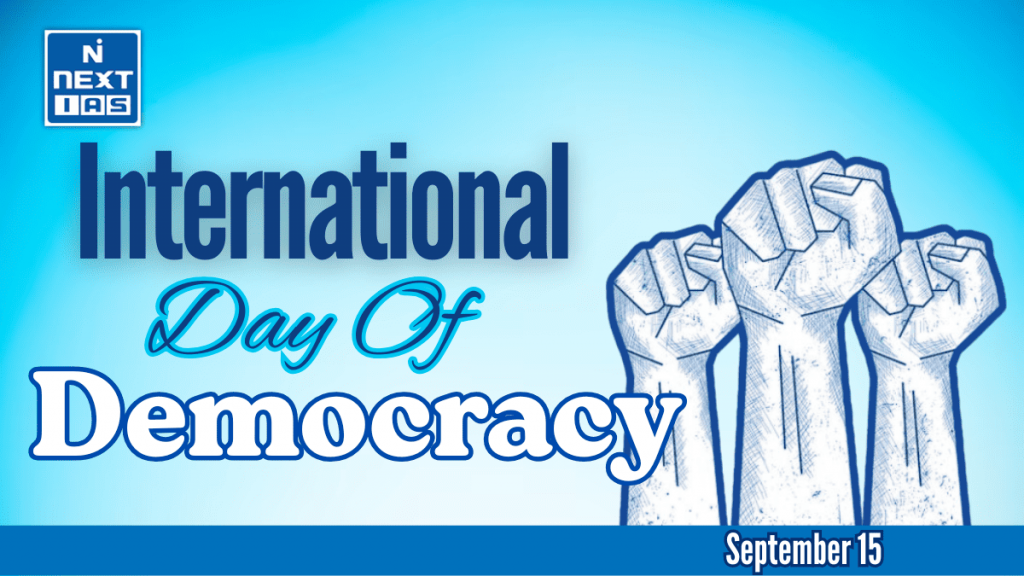
September 15 marks the International Day of Democracy, a global observance dedicated to promoting democratic principles, upholding human rights, encouraging participation, and fostering inclusive societies. This day highlights the importance of protecting freedoms and ensuring that all voices can contribute to shaping fair and equal government systems.
History and Origin of International Day of Democracy
- The International Day of Democracy, observed on September 15, was established by the United Nations General Assembly in 2007 to promote and uphold the principles of democracy.
- The origins of this day trace back to the International Conferences on New and Restored Democracies (ICNRD) which began in 1988, and a major milestone was the Universal Declaration on Democracy adopted by the Inter-Parliamentary Union (IPU) on September 15, 1997.
- Qatar played a significant role in leading the campaign for the day, culminating in a UN resolution that invited nations and organizations to commemorate democracy and raise public awareness each year.
- The inaugural celebration took place in 2008, and September 15 was chosen to align with the anniversary of the Universal Declaration on Democracy, reflecting democracy’s universal values of participation, equality, and the freely expressed will of the people.
About The Theme of International Day Of Democracy
- The theme of the International Day of Democracy 2025 is “Achieving Gender Equality, Action by Action.” It emphasizes empowering youth to promote fairness, inclusion, and equal opportunities in democratic processes.
- The theme highlights the vital role of young people in challenging social norms, advocating for inclusive policies, and fostering equal participation in governance.
- It calls for global collaboration to address gender disparities, strengthen democratic governance, and ensure democracy becomes more representative and inclusive for all.
Core Principles of International Day of Democracy
- Core principles of the International Day of Democracy center around freedom, equality, and participation. Democracy is built on respecting human rights, upholding the rule of law, and protecting civil liberties such as free speech and press freedom.
- It emphasizes the importance of periodic, genuine elections by universal suffrage, ensuring all members of society can contribute actively and equally to public life and governance.
- Inclusive participation—from individuals, civil society, and governing bodies—is vital for democracy to thrive, as it relies on dialogue, mutual respect, and accountability within society.
- The principles also include fostering trustworthy institutions, enabling broad civic involvement, and safeguarding democracy against threats to these freedoms, especially in times of crisis or major societal change.
Global Observance of International Day of Democracy
- The International Day of Democracy on September 15 is globally observed to celebrate and promote democratic governance and values.
- Countries across the world organize various activities such as conferences, seminars, and public discussions to raise awareness about the importance of democracy and the need for active citizen participation.
- National governments, civil society organizations, and educational institutions collaborate to highlight democratic principles like transparency, accountability, and human rights.
- Campaigns and media programs are also launched to engage people, especially youth, in understanding their role in democratic processes.
- The day serves as a platform to reflect on the challenges democracy faces, including political instability, corruption, and erosion of freedom.
- It encourages strengthening democratic institutions and fostering inclusive governance.
- International bodies like the United Nations also use the occasion to promote development goals linked to democracy, peace, and justice.
- Through collective efforts worldwide, the day reinforces the significance of democracy as essential for peace, development, and human dignity.
Current Challenges of International Day of Democracy
- The International Day of Democracy faces several critical challenges in 2025. One major issue is the rise of democratic backsliding, where elected leaders undermine institutions, judicial independence, and media freedom while maintaining a façade of democracy.
- Populism and political polarization further threaten democratic legitimacy worldwide. Digital technology, while enabling participation, also facilitates misinformation, surveillance, and division, complicating democratic integrity.
- Globally, trust in democratic institutions is declining, leading some citizens to support authoritarian alternatives.
- Additionally, social and economic inequalities and the rapid spread of disinformation deepen societal divisions, undermining democratic cohesion.
- External geopolitical pressures, violent conflicts, and repression in certain regions further strain democratic practices.
- Furthermore, powerful elites using political capture and disinformation pose existential threats, shifting power away from people to oligarchs.
- Despite these challenges, democratic resilience persists through civic engagement and local reforms, but safeguarding democracy requires global and national efforts to address these multifaceted threats.
Way Forward
The way forward for International Day of Democracy is to strengthen democratic institutions, promote inclusive participation, protect human rights, and foster transparency. Encouraging education, civic engagement, and global cooperation will ensure democracy thrives and adapts to new challenges, securing a fair and just future for all.
Read this article in Hindi: अंतर्राष्ट्रीय लोकतंत्र दिवस (15 सितंबर)