
 80813-00200

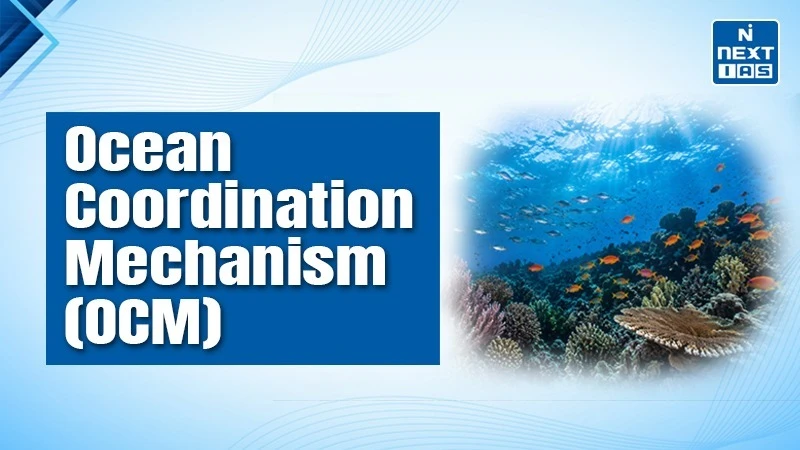
The Ocean Coordination Mechanism (OCM) is a landmark initiative for sustainable marine management in the Wider Caribbean and North Brazil Shelf Large Marine Ecosystems (LME). It was launched by UNESCO’s Intergovernmental Oceanographic Commission (IOC) in 2025. The mechanism builds on the 10-year CLME+ Strategic Action Programme endorsed in 2014.
Origin and Background of OCM Initiative
- The Ocean Coordination Mechanism (OCM) emerged from the CLME+ SAP which is a regional effort by Caribbean nations to tackle transboundary marine challenges.
- A Memorandum of Understanding (MoU) was signed and formalized in January 2025.
- The mechanism addresses fragmented governance in a biodiversity hotspot spanning about 37 countries.
- Such a region boasts the Meso-american Barrier Reef, the world's second-largest and the Cayman Trough, the Atlantic's deepest point at 7,686 meters.
- Fisheries alone generate $610 million annually, underscoring economic stakes amid threats like overfishing and pollution.
- Prior mechanisms such as the CLME+ Interim Coordination Arrangement proved effective but were temporary; therefore, the OCM provides endurance.
Objectives of the Mechanism
The objectives of the Ocean Coordination Mechanism are mentioned below.
- The Mechanism supports regional collaboration for a coordinated approach to the conservation and sustainable use of marine and coastal ecosystems and their goods & services.
- It supports coordinated and interactive ocean governance in support for attaining sustainable development (ocean-based).
- OCM promotes actions towards the achievement of the long-term vision articulated in the CLME & SAP, and other ocean-related international and regional goals and Signatories commitments.
- The mechanism promotes partnerships with stakeholders from civil society and the private sector to facilitate and enhance efforts for the ecosystem-based conservation and sustainable usage of marine and coastal resources and to support intersectoral coordination & collaboration.
Structure and Governance
OCM operates in a tripartite framework as mentioned below.
| Group | Composition | Role and Responsibilities |
|---|---|---|
| Executive Group | IGOs (UNESCO-IOC's IOCARIBE, UNDP-GEF, CARICOM) | Leads the implementation, coordinates activities, and drives strategic execution in the regions. |
| Steering Group | Country representatives | Approves budgets and work plans by consensus, and ensures political alignment and oversight. |
| Working Groups | Technical experts and stakeholders | Addresses specific issues like sustainable fisheries, marine spatial planning, and pollution control. |
This inclusive framework ensures that technical advice informs political decision-making, with IOCARIBE being the IOC Sub-Commission for the Caribbean and Adjacent Regions responsible for implementation.
Regional Focus: Caribbean and North Brazil Shelf
- The Wider Caribbean region has a variety of ecosystems, from coral reefs, mangroves, and seagrass to open ocean.
- The major features include the Gulf of Venezuela, Honduras, Darien, & the pelagic zones are rich in tuna and billfish.
- Few prominent Challenges are mentioned below.
| S.No. | Challenges | Description |
|---|---|---|
| 1 | Habitat loss from coastal development | Urban expansion and infrastructure erode mangroves, reefs, and seagrass beds. |
| 2 | Plastic pollution and nutrient runoff | Marine litter and agricultural/urban runoff cause eutrophication and dead zones. |
| 3 | Climate impacts like bleaching and acidification | Rising temperatures and CO2 levels ruin coral ecosystems and shellfish. |
| 4 | IUU fishing threatens $610M livelihoods | Illegal & unreported fishing depletes stocks, undermining regional fisheries economy. |
OCM targets these challenges via Large Marine Ecosystem (LME) approaches, integrating science, policy, and community action.
Key Initiatives and Activities of Ocean Coordination Mechanism
- The Ocean Coordination Mechanism (OCM) prioritizes the following initiatives & activities.
- It follows on from PROCARIBE+ (UNDP-GEF-UNOPS), promoting investment in the blue economy.
| S.No. | Initiative | Description |
|---|---|---|
| 1 | Sustainable Fisheries | Fisheries stock assessment and management to address overfishing and promote sustainable fishing. |
| 2 | Ecosystem Restoration | Coral reef restoration and mangrove planting to address ecosystem degradation. |
| 3 | Pollution Control | Marine litter management practices to address plastic and nutrient pollution. |
| 4 | Blue Carbon | Seagrass conservation to promote carbon sequestration and address climate change. |
| 5 | Marine Protected Areas (MPAs) | MPA network expansion to address biodiversity hotspots. |
| 6 | Spatial Planning | Multi-use zoning to address conservation and blue economy goals. |
Significance and Global Relevance
- The Ocean Coordination Mechanism (OCM) focuses on “cooperative governance” for transboundary seas which is important as oceans absorb 90% of excess heat and produce 50–80% of Earth's oxygen.
- In the Caribbean, it safeguards 10% of global coral reefs & supports tourism and fisheries for many people.
- For India, similar efforts exist in Bay of Bengal initiatives such as BIMSTEC ocean cooperation.
- Globally, the mechanism aligns with the UN Decade of Ocean Science (2021–2030), High Seas Treaty, and BBNJ Agreement.
Conclusion
The Ocean Coordination Mechanism (OCM) is a game-changer in the Caribbean’s ocean management. The tool addresses the issues of fisheries depletion, pollution, and climate change. The OCM brings together IGOs, governments, and professionals to achieve sustainable blue economies and the realization of SDG 14.
FAQs about OCM
What is the Ocean Coordination Mechanism (OCM)?
OCM is a regional platform for the wider Caribbean, coordinating ocean governance via MoU among 37 countries and IGOs to implement sustainable fisheries and ecosystem restoration.
Who leads OCM's Executive Group?
UNESCO-IOC's IOCARIBE, UNDP-GEF, and CARICOM spearhead implementation, ensuring technical and strategic execution.
What does the Steering Group do?
Country representatives approve budgets and work plans by consensus, providing political oversight and alignment.
What challenges does OCM address?
Overfishing, habitat loss, plastic pollution, and climate impacts in biodiversity hotspots like the Mesoamerican Reef.
How does OCM support the blue economy?
OCM supports the blue economy by means of marine spatial planning, MPAs, and blue carbon projects, which will increase $610M fisheries.
