
 80813-00200


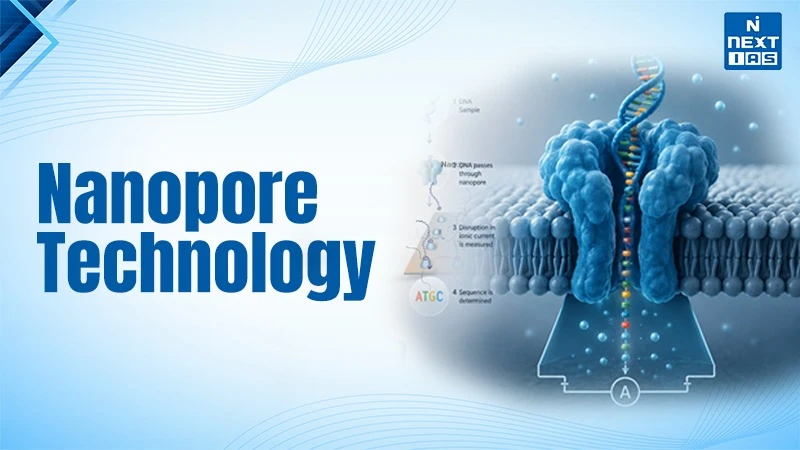
Nanopore technology is a third-generation sequencing method which uses single-molecule real-time sequencing to detect DNA and RNA through measurement of ionic current changes as molecules travel through a nanopore protein embedded in a membrane. The technology provides long-read sequencing through its amplification-free system which supports testing from portable MinION devices to high-throughput PromethION systems for various purposes such as clinical diagnostics and pathogen monitoring and genomic analysis.
Main Aspects of Nanopore Technology
The organization Oxford Nanopore develops this technology to perform DNA and RNA sequencing through its nanopore system which analyzes molecular samples as they pass through protein nanopores embedded in electro-resistant membranes. The ionic current flowing through each nanopore gets interrupted when nucleotides enter the system, creating a squiggle pattern that basecalling software uses to identify the nucleotide sequence.
Principle of Operation
A constant voltage is applied across a membrane, creating an ionic current through the nanopore. As DNA/RNA moves through the pore, different nucleotides partially block this flow, creating unique electrical signatures (or "squiggles") that are decoded into the sequence in real time.
Core Components
The system consists of essential elements which include engineered nanopores that contain a reader region for base discrimination and motor proteins which include helicases to regulate strand movement and polymer membranes that protect electrodes and ASIC chips which enable hardware to process signals. The flow cells operate as containers that support multiple scalable nanopore array systems.
Mechanism
The system uses voltage to move negatively charged strands through the system while the motor system unzips DNA and RNA strands to feed single bases to the reader system which performs native analysis without amplification. The system enables users to read lengthy content while detecting chemical modifications such as methylation.
How Does it Work?
- Nanopore Creation: A single or a few tiny pores are embedded in a membrane, which can be made of materials like silicon, graphene, or biological membranes (such as lipid bilayers).
- Molecule Passage: Molecules, such as DNA strands, are driven through these nanopores, often by applying an electric field. As the molecule passes through, it partially obstructs the flow of ions.
- Signal Detection: The obstruction creates a change in electrical current that is proportional to the size and structure of the molecule. This can reveal vital information such as:
- The sequence of bases in DNA or RNA
- The size of proteins or other large molecules
- The conformation or shape of the molecule
Advantages of Nanopore Technology
The DNA/RNA sequencing process receives revolutionary benefits from Nanopore Technology which outmatches existing sequencing techniques.
Real-Time Analysis
The system streams data directly during its sequencing process which enables the fast detection of pathogens within a few minutes making it suitable for both outbreak situations and diagnostic testing.
Ultra-Long Reads
The system generates reads which extend to millions of bases because it can read through lengthy sequences while detecting structural variants that short-read technology fails to identify.
Native Molecule Sequencing
The system investigates unaltered DNA and RNA samples through a process which keeps all base modifications intact while cutting down on experimental errors.
Portability and Scalability
The MinION device which fits in a pocket enables field operations while the PromethION system supports population-based testing through its affordable initial investment and 10-minute setup time.
Versatility
The system supports three different types of inputs which include genomic DNA cDNA and RNA to perform epigenetics and metagenomics and all sequencing applications.
Way Forward
Nanopore Technology will advance its operations through three main paths which include AI-based basecalling systems that achieve over 99.9% accuracy together with protein sequencing solutions and single-cell research capabilities.
The company will develop worldwide portable diagnostic solutions while establishing cost-effective systems through its scalable flow cell technology, which will work together with CRISPR for swift genetic modifications. The 2030 genomics landscape will see hybrid short and long-read sequencing pipelines become the dominant technology, transforming personalized medicine and continuous monitoring systems.
Conclusion
Nanopore Technology redefines genomics with real-time, portable, long-read sequencing of native DNA/RNA. Its advantages—speed, accuracy, and versatility—promise breakthroughs in diagnostics, personalized medicine, and surveillance. As AI refines it further, expect widespread adoption, transforming healthcare and research globally by 2030.
FAQs
What is Nanopore sequencing?
Unique method passing DNA/RNA through protein nanopores; ionic current changes identify bases in real-time.
What are its main advantages?
Real-time data, ultra-long reads, portable devices, native molecule analysis without amplification.
What are limitations?
Homopolymer errors possible; improving with AI basecalling, often paired with short-read tech.
