


Mohenjodaro Dancing Girl
Syllabus: GS1/ Ancient History
Context
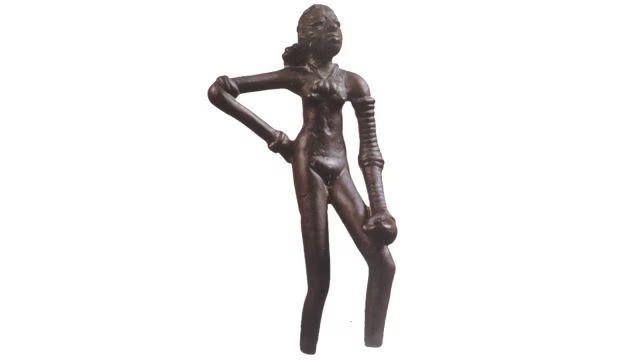
- A professor from Haryana, was booked for allegedly stealing a replica of the Mohenjodaro ‘Dancing Girl’ bronze figurine from the National Museum in Delhi.
About
- The “Dancing Girl” is a 4,500-year-old bronze statuette from the Indus Valley Civilization.
- Discovery: Unearthed in 1926 at Mohenjo-daro (present-day Pakistan) by archaeologist Ernest Mackay.
- Material and Technique: Made of bronze using the lost-wax casting technique, the statuette reflects the advanced metallurgical knowledge of the Harappans.
- The statue is around 10.5 centimetres tall and is adorned with a necklace and a large number of bangles stacked on her arms.
Source: IE
Tirah Valley
Syllabus: GS1/ Geography
Context
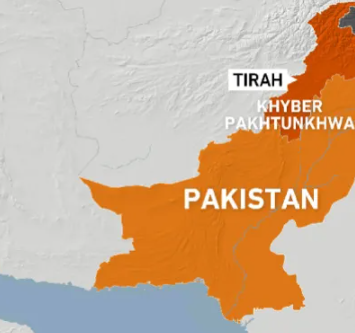
- Pakistan’s air force launched eight LS-6 precision-guided glide bombs on villages in the Tirah Valley of Khyber Pakhtunkhwa.
About Tirah Valley
- Location: The Tirah Valley is a mountainous and strategically important region in Khyber Pakhtunkhwa, Pakistan, located near the Pakistan–Afghanistan border.
- It lies between the Khyber Pass and the Khanki Valley and stretches across the Khyber and Orakzai districts.
- Tribal Inhabitants: The valley is primarily inhabited by Afridi and Orakzai Pashtun tribes.
- Terrain: The landscape is rugged and mountainous, with several sub-valleys, including Maidan, Rajgul, Waran, Bara, and Mastura.
- Militancy and displacement: After the U.S. invasion of Afghanistan in 2001, the valley became a battleground between state forces and various militant groups.
Source: AIR
Viksit Bharat Buildathon 2025
Syllabus: GS2/ Education; Governance
Context
- The Union Education Ministry has launched the Viksit Bharat Buildathon 2025, a nationwide virtual innovation contest for school students, with a prize pool of ₹1 crore.
About
- Participants: Open to students from Classes 6 to 12 across six lakh government and private schools.
- Objective: Encourage students to develop innovative ideas and products focusing on self-reliance, indigenous knowledge, and sustainability, contributing to India’s vision of Viksit Bharat by 2047.
- Organisers: Department of School Education & Literacy, in collaboration with Atal Innovation Mission (NITI Aayog) and AICTE.
- Background: Builds upon the success of School Innovation Marathon 2024, which led to programmes like the Student Innovator Programme (SIP) and Student Entrepreneurship Programme (SEP), along with patents and startup ventures from the Atal Tinkering Labs.
Source: TH
Huge Scope for Indian Tea Sector
Syllabus: GS3/Economy
Context
- The Executive Director of the International Tea Committee has said that India can become the superpower of the tea industry.
About
- India is the second-largest producer and consumer of tea and the third-largest exporter.
- Of the total global tea output of 7.074 billion kg and consumption of 6.97 billion kg in 2024, India produced 1.303 billion kg and consumed 1.22 billion kg.
India’s Tea Industry
- Types of tea exported: Primarily black tea (96%), with small quantities of regular, green, herbal, masala, and lemon tea.
- India’s Export destinations: Over 25 countries, including UAE, Iraq, Iran, Russia, US, and UK.
- Prominent tea regions: Assam (Assam Valley, Cachar) and West Bengal (Dooars, Terai, Darjeeling).
- Global reputation: Indian teas, especially Assam, Darjeeling, and Nilgiri, are renowned for their quality.
| Tea Board of India – It was set up as a statutory body in 1954 under the Tea Act, 1953. – It was established for the purposes of regulating the Indian tea industry and protecting the interests of tea producers in India. 1. All teas produced in the tea growing areas of India are administered by the Tea Board. – The Board consists of 32 Members, including Chairman and Deputy Chairman appointed by the Government of India representing different sections of the Tea industry. – The Board’s Head Office is situated in Kolkata. |
Source: TH
Oju Hydroelectric Project
Syllabus: GS3/Infrastructure
Context
- An expert panel of the Union Environment Ministry has recommended environmental clearance for the 2,220 MW Oju hydroelectric project.
About
- Proposed on the Subansiri river in Taksing near the China border in Arunachal Pradesh.
- This will be India’s third largest hydel project.
- The other hydro projects planned in the Subansiri basin are Niare, Naba, Nalo, Dengser, upper Subansiri and Lower Subansiri.
- The main power plant will have a capacity of 2,100 MW while the dam-toe plant will have a capacity of 120MW.
Source: IE
Astronomers Detect Quasi-Moon Near Earth
Syllabus: GS3/ Science and Technology
Context
- Astronomers have recently identified 2025 PN7, a tiny asteroid that is a “quasi-moon” of Earth and has been following our planet for about 60 years.
About 2025 PN7
- The asteroid is approximately 62 feet in diameter and was observed by the Pan-STARRS observatory in Hawaii.
- The object follows a near-Earth orbital path around the Sun, maintaining a distance that ranges from 2.8 million miles to 37 million miles from Earth.
About Quasi-Moons
- A quasi-moon differs fundamentally from a natural satellite such as Earth’s Moon.
- While Earth’s Moon is gravitationally bound to the planet and revolves directly around it, a quasi-moon is gravitationally bound to the Sun.
- The orbit of a quasi-moon is synchronized with Earth’s orbital trajectory, creating the observational impression that it is a companion of the planet.

Source: CNN
Mission Mausam
Syllabus: GS3/Environment
In News
- The National Centre for Medium Range Weather Forecasting (NCMRWF) and New Space India Limited (NSIL) signed an MoU to set up two Direct Broadcast Network (DBNet) stations in Delhi/NCR and Chennai under the Mission Mausam project.
Direct Broadcast Network (DBNet)
- It is a global operational framework designed for the real-time acquisition of satellite data from Low Earth Orbit (LEO) satellites.
- It plays a critical role in Numerical Weather Prediction (NWP) and supports a wide range of applications, including weather forecasting, cyclone monitoring, and climate research.
- It ensures rapid data availability by directly receiving and processing satellite signals within minutes of transmission.
- It aims to improve the accuracy and timeliness of weather forecasts and related services.
Mission Mausam
- It was approved by the Union Cabinet in September 2024.
- It is a ₹2,000 crore initiative by the Ministry of Earth Sciences to make India “Weather Ready” and “Climate Smart.”
- It is aimed at enhancing weather and climate forecasting, especially for sectors like agriculture and disaster management.
- It leverages advanced technologies like high-resolution models and supercomputing.
- It promotes collaboration with national and global research bodies to position India as a global leader in weather and climate science.
Source :PIB
State Of The Rhino Report
Syllabus :GS3/Species
In News
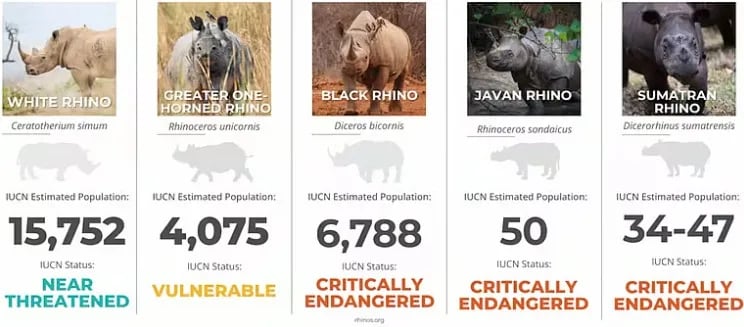
- Rhino populations have stabilised at around 27,000 globally, down from 500,000 a century ago, according to the latest State of the Rhino report by the International Rhino Foundation.
Rhinoceroses
- They are large, herbivorous mammals that can be identified by their characteristic horned snouts.
- Types : There are five rhino species spread throughout Asia and Africa.
- These include two African rhino species – black and white rhinos.
- The remaining three are Asian rhino species, which include greater one–horned, Sumatran and Javan rhinos.
- Habitats: Tropical and subtropical grasslands, savannahs and shrublands, tropical moist forests, deserts and shrublands.
- Threats: Poaching, habitat loss, population fragmentation, and climate change further endanger rhinos.
- Protection status :
Source :DTE
Production Gap Report 2025
Syllabus: GS3/ Environment
Context
- The 2025 Production Gap Report, presents a stark picture of the growing disconnect between climate commitments and governments’ fossil fuel production plans.
- The report is produced by Stockholm Environment Institute (SEI), Climate Analytics, and the International Institute for Sustainable Development (IISD).
Key Findings
- Alarming Production Gaps: Planned fossil fuel production in 2030 is projected to exceed 1.5°C-aligned levels by 120% and 2°C levels by 77%.
- Coal shows the largest misalignment, with 2030 output expected to be 500% above 1.5°C pathways and 330% above 2°C benchmarks.
- Countries Driving Expansion: Major producers ramping up extraction include China, the United States, Saudi Arabia, Brazil, and Nigeria.
- Fossil fuel production has grown instead of peaking in the early 2020s, locking in new infrastructure and delaying urgent cuts.
- To align with the Paris Agreement, coal use must be nearly phased out by 2040, while oil and gas production must fall by around 75 per cent by 2050 compared to 2020 levels.
- Call for Transition: The report stresses policies for a “just transition” to support workers and communities dependent on fossil fuels.
- Legal and Expert Warnings: The International Court of Justice ruled that failure to curb fossil fuel expansion could constitute an internationally wrongful act.
Source: DTE
Next article
Ladakh Statehood Protests
