


Syllabus: GS2/IR
Context
- India and Croatia have agreed to develop a long-term defence cooperation plan.
Major Highlights
- Both sides agreed to develop a long-term Defence Cooperation Plan including:
- Joint military training.
- Personnel exchanges.
- Industry-level defence partnerships.
- Emphasis on cooperation in cybersecurity and defence production.
- MoUs Signed on Agriculture, Cultural Exchange, Science & Technology and setting up of an ICCR Chair of Hindi in Zagreb.
- India-EU FTA: India and Croatia have discussed the long-pending India-EU Free Trade Agreement.
- Croatia has reiterated its strong support for the early conclusion of the FTA.
- Investment: Commitment to enhance investment in Croatia’s critical industries, including pharmaceuticals, agriculture, information technology, clean technology, digital technology, and semiconductors.
- Academic and cultural exchanges: Academic institutes from both countries would carry out joint research projects.
- The two sides finalised a five-year plan for cultural exchange programs, institutionalising the people-to-people connections.
- Enhanced mobility and diplomatic engagement: India and Croatia would “soon” sign a mobility agreement to facilitate the movement of people between the two countries.
- This agreement is expected to boost tourism, educational exchanges, and business cooperation.
- Space and Academic Collaboration: Joint work in space ventures announced.
- India to share its space expertise with Croatia.
Significance of the Engagement
- Evolving European Strategy: PM Modi’s visit reflects India’s expanding European outreach beyond traditional Western partners.
- The focus is on newer EU members like Croatia that influence the EU’s consensus-driven decision-making.
- Importance of Croatia in India’s Strategic Vision: Croatia’s neutral stance on major global conflicts and tech cooperation willingness align with India’s values.
- Minimal dependence on China and skepticism toward BRI make Croatia ideal for India’s vision of democratic, sustainable development.
- Eastern & Central Europe Access: Croatia shares borders with Hungary, Slovenia, Bosnia & Herzegovina, and Serbia.
- Strengthening ties offers a gateway to Central European markets and emerging sectors.
- Enhances India’s regional presence in the Balkans and Central Europe.
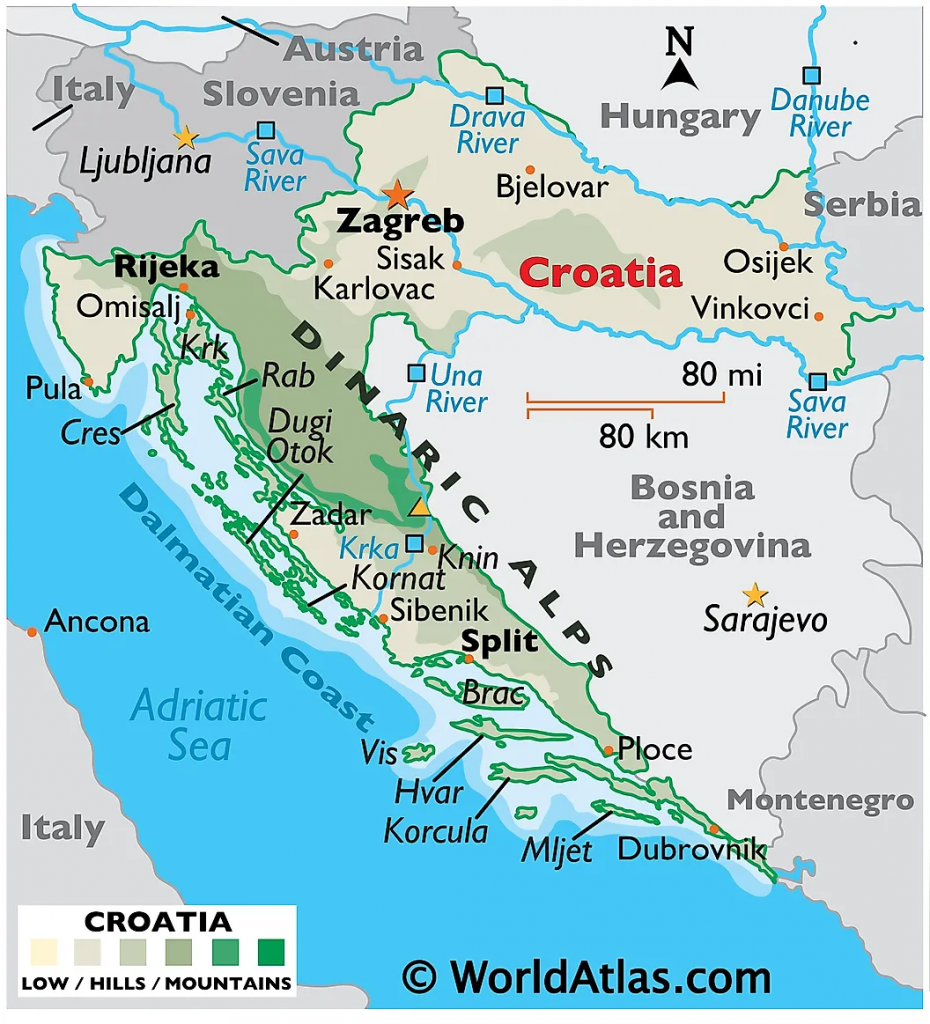
- Maritime and Logistics Significance: Croatia is located on the eastern Adriatic coast, a key maritime gateway to Europe.
- Strategic for India amid Red Sea/Suez disruptions and global supply chain rebalancing.
- Role in India–Middle East–Europe Economic Corridor (IMEC): Croatia viewed as a critical node in the IMEC trade corridor.
- Offers alternative trade routes to Central and Eastern Europe bypassing traditional Western European ports.
- Influence in EU and NATO: Croatia is a full member of the EU and NATO, increasing its institutional weight.
- Provides India with indirect access to European regulatory systems and policy debates.
- Supports India’s FTA with EU; valuable for overcoming FTA negotiation roadblocks.
- Diplomatic Alignment and Multilateral Support: Croatia supports India’s UNSC permanent membership bid.
- India’s position on Jammu and Kashmir (non-interventionist approach).
- Acts as a predictable and consistent partner, unlike some larger EU countries.
Conclusion
- The visit marks a new chapter in India’s European diplomacy.
- Rooted in shared values, mutual respect, and complementary capabilities.
- Demonstrates that small but influential nations can be vital in India’s multipolar global strategy.
Source: AIR
Previous article
India-Canada Ties
Next article
Lateral Entry Policy Still Active
