


Sri Lanka Acts as a Natural Shield for India’s Southeast Coast: INCOIS
Syllabus: GS1/Geography
Context
- According to the Indian National Centre for Ocean Information Services (INCOIS), Sri Lanka acts as a natural land barrier shielding the southeastern coast of the country from the long-period swell waves generated in the Southern Ocean.
What the Study Found
- The team studied swell waves.
- These are the long ocean waves formed by storms in the Southern Ocean.
- These waves can travel thousands of kilometres without losing much energy.
- Such waves often cause flooding and coastal erosion along Kerala’s coast, but the eastern coast of India, including Tamil Nadu and southern Andhra Pradesh, remains mostly safe.
- Using data from wave rider buoys placed near Kollam (west coast) and Pondicherry (east coast), and computer models known as WAVEWATCH III, scientists found that over 96% of these waves stop before reaching Pondicherry.
- When they removed Sri Lanka’s landmass in a computer simulation, the waves travelled freely and hit India’s east coast. This confirmed that Sri Lanka blocks most of the swells, acting as a “swell shield.”
Significance
- Findings are valuable for India’s coastal zone management, disaster risk reduction, and climate adaptation planning under frameworks like the National Coastal Mission and Blue Economy initiatives.
Source: TH
Supermoon
Syllabus: GS1/Geography
Context
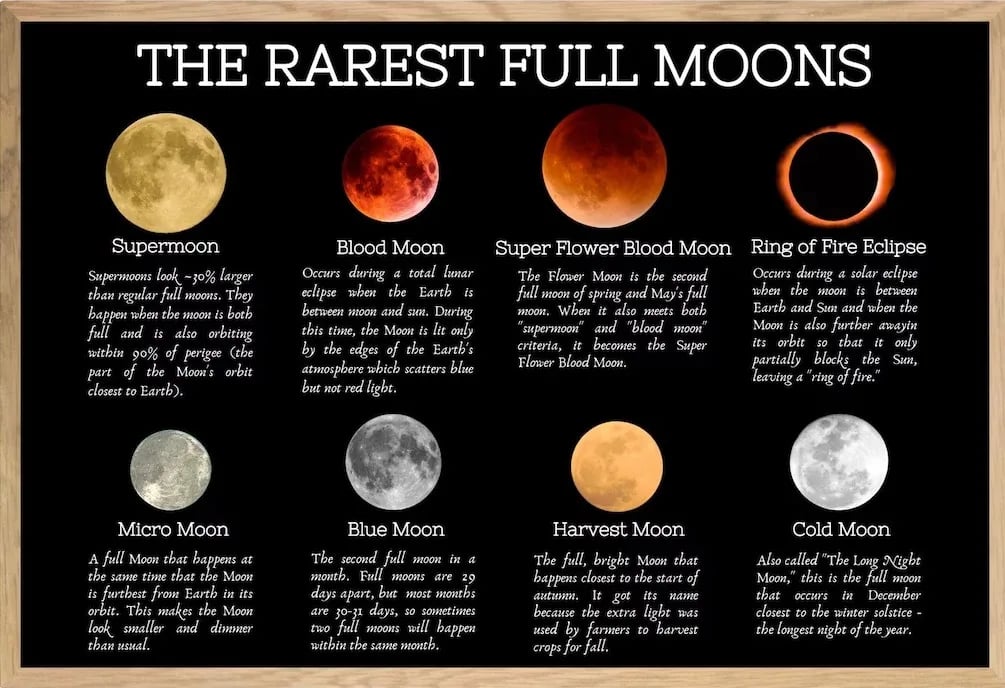
- The Supermoon, also known as the Harvest Moon, was observed recently.
About the Supermoon
- A supermoon occurs when a full moon or new moon coincides with the moon’s closest approach to the earth in its elliptical orbit — a point known as the perigee.
- Because the moon’s orbit is not a perfect circle, its distance from the earth varies throughout the month by around 50,000 km.
- When the moon is near its perigee and also directly opposite the sun, the full moon appears about 14% larger and 30% brighter than when it is at its farthest point. This is the supermoon.
- Culturally, supermoons have long captured human imagination, inspiring folklore and spiritual observances across civilisations.
- The term “supermoon” was first used by astrologer Richard Nolle in the 1970s and is now common in astronomy and the media.
Do you know?
- Supermoons also influence the tides, creating perigean spring tides. These tides are slightly higher and lower than usual because the moon’s stronger gravitational pull acts in concert with that of the sun.
- While the changes are typically modest, they can exacerbate coastal flooding when combined with storm surges.
Source: TH
Moscow Format Talks
Syllabus: GS2/ International Relation
In News
- India, China, Pakistan attend 10-nation Moscow Format talks that inducts Mr. Muttaqi, as an “official” member for the first time.
About
- The Moscow Format is a regional diplomatic initiative established in 2017 to address the Afghanistan conflict, promote stability, and foster national reconciliation.
- It serves as a platform for regional countries to coordinate on Afghan peace and stability.
- Its members are India, Afghanistan, China, Iran, Kazakhstan, Kyrgyzstan, Pakistan, Russia, Tajikistan, and Uzbekistan.
Source: TH
Polar Silk Road
Syllabus: GS2/ International Relation
In News
- The Chinese ship “Istanbul Bridge” became the first commercial vessel to sail from Ningbo-Zhoushan (China) to Felixstowe (UK) via the Arctic in 18 days, marking the operational launch of the Polar Silk Route.
About Polar Silk Road
- The Polar Silk Road is a part of China’s broader Belt and Road Initiative (BRI), envisioned as a “blue economic corridor” through the Arctic Ocean.
- It focuses on developing navigable Arctic sea routes connecting East Asia, North America, and Western Europe via the Northern Sea Route (NSR) along Russia’s coast.
- It establishes a new shipping corridor between Asia and Europe — shorter and more cost-effective than the Suez Canal route.
Source: TH
US’s Insurrection Act
Syllabus: GS2/IR
In News
- Donald Trump has threatened to invoke the Insurrection Act to deploy military forces domestically, aiming to bypass opposition from courts and Democratic-led cities that are blocking his efforts to control the National Guard.
What is the Insurrection Act?
- The Insurrection Act is a U.S. federal law that allows the President to deploy the military or federalize the National Guard for domestic law enforcement during emergencies like uprisings or rebellions.
- Though typically barred from civilian law enforcement, troops can make arrests and conduct searches if the Act is invoked.
Past Usage
- The Insurrection Act has been used during the 1960s civil rights movement, notably by Eisenhower in Little Rock, and in 1992 by George H.W. Bush during the Los Angeles riots. Its use has since become very rare.
Controversies
- The Insurrection Act is controversial because it allows the president to bypass state authority and use the military in civilian affairs, which challenges long-standing American principles and the Posse Comitatus Act.
- Civil rights groups warn it risks eroding civil liberties and democratic norms.
Source:IE
PM Surya Ghar Muft Bijli Yojana
Syllabus: GS2/ Government policies & interventions
In News
- More than 5 lakh loan applications worth over ₹10,907 crore have been sanctioned by public sector banks to support the widespread adoption of this scheme in 2025.
About the Scheme
- Objective: To supply up to 300 units of free electricity per month to 1 crore households by enabling them to install rooftop solar panels. It is the world’s largest domestic rooftop solar initiative.
- Nodal Ministry: Ministry of New and Renewable Energy
- Subsidy & Financial Support: Households receive a central government subsidy covering up to 40% of the solar panel installation cost (₹30,000 per kW up to 2 kW, ₹18,000 per extra kW up to maximum ₹78,000 for systems larger than 3 kW).
- Eligibility: Any Indian citizen who owns a house with a suitable roof and has not previously installed rooftop solar benefitting from similar subsidy schemes.
Source: PIB
Operation HAECHI-VI
Syllabus: GS2/International Institutions; GS3/Cybersecurity
Context
- The Central Bureau of Investigation (CBI) has arrested eight accused and identified 45 suspects as part of Interpol’s Operation HAECHI-VI.
About Operation HAECHI-VI
- The operation focused on seven categories of offences: cyber-enabled financial crime, voice phishing, love and romance scams, online sextortion, investment fraud, money laundering linked to illegal online gambling, business email compromise, and e-commerce fraud.
- Investigators worked together to detect and disrupt online fraud as well as money laundering activities, blocking over 68,000 associated bank accounts and freezing close to 400 cryptocurrency wallets.
Source: TH
PM Gati Shakti National Master Plan
Syllabus: GS3/Infrastructure
Context
- The Union Cabinet on Economic Affairs approved four multi-tracking projects under the PM Gati Shakti National Master Plan.
- These projects span across Maharashtra, Madhya Pradesh, Gujarat, and Chhattisgarh, adding about 894 km to the Indian Railways network.
PM GatiShakti National Master Plan (PMGS-NMP)
- It was launched in 2021 for providing multimodal connectivity infrastructure to various economic zones and improving logistics efficiency across India.
- It is not under a single ministry but is coordinated by the Department for Promotion of Industry and Internal Trade (DPIIT) under the Ministry of Commerce and Industry.
- PM GatiShakti is driven by seven engines: Railways, Roads, Ports, Waterways, Airports, Mass Transport and Logistics Infrastructure.
- 57 Central Ministries/Departments including 8 Infrastructure, 22 Social and 27 Economic & other Ministries/Departments have been onboarded on PMGS NMP.
Source: TH
Carbon Capture and Storage (CCS)
Syllabus: GS3/Environment
In News
- A new report by Climate Analytics warns that Asia’s growing reliance on carbon capture and storage (CCS) could backfire, locking the region into prolonged fossil fuel use and adding up to 25 billion tonnes of CO₂ emissions by 2050.
Carbon Capture and Storage (or “Sequestration”)
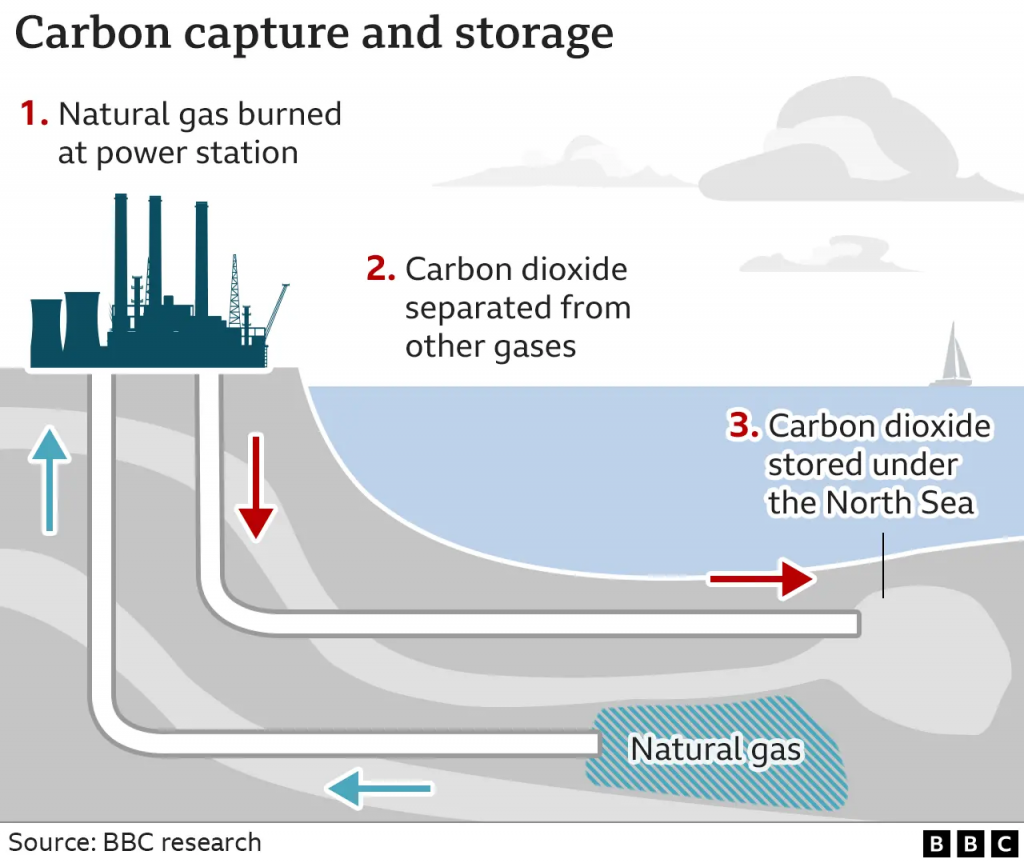
- It refers to technologies that capture the greenhouse gas carbon dioxide (CO₂) with the aim of storing it safely underground (sequestration) for permanent isolation.
- It could be one of the key tools to help tackle global warming.
- It is promoted as a climate solution, and most projects in countries like China, India, Japan, and South Korea aim to extend fossil fuel use rather than cut emissions.
Benefits
- CCS helps reduce CO₂ emissions in industries like cement and steel by capturing and storing CO₂.
- Combined with bioenergy (BECCS), it can remove CO₂ from the atmosphere, aiding efforts to limit global warming.
Criticism
- CCS is criticized as costly and ineffective, often used to extend fossil fuel use.
- Renewables are cheaper and more efficient in Asia, offering a faster and more reliable path to net zero without undermining climate goals.
Source :DTE
Previous article
Evolution of Bat Wings
