


Teesta River
Syllabus: GS1/Geography
In News
- Bangladesh has renewed its request to move forward on the long-pending Teesta water-sharing agreement.
Teesta River
- It is a tributary of the Brahmaputra
- It originates from the Tso Lhamo Lake at an elevation of about 5,280 metres in north Sikkim.
- It travels for about 150 km in Sikkim and 123 km in West Bengal, before entering Bangladesh from Mekhligunj in Cooch Behar district.
- It flows another 140 km in Bangladesh and joins the Bay of Bengal.
Importance for India and Bangladesh
- Teesta is Bangladesh’s fourth largest trans-boundary river and its floodplain covers an area of 2,750 square kilometres in Bangladesh.
- But 83% of the river’s catchment area lies in India and the remaining 17% is in Bangladesh, supporting 8.5% of its population and 14% of its crop production
Agreement
- India and Bangladesh had reached an in-principle agreement in 2011 to share the Teesta river waters, but it was never finalized due to coordination issues between the Centre and the West Bengal government .
- Bangladesh has now expressed hope that the 2011 agreement can be reconsidered in the present political context.
Source:TH
Prevention of Insults To National Honour Act, 1971
Syllabus: GS2/ Polity and Governance
Context
- The Union Cabinet gave the go-ahead to amend The Prevention of Insults To National Honour Act, 1971.
About
- Aim: To make any insult or obstruction to the singing of National Song Vande Mataram a punishable offence.
- At present, insults to the National Anthem, the National Flag and the Constitution of India is mentioned in the 1971 Act and is punishable by an imprisonment of up to three years or a fine or both.
Vande Mataram
- Vande Mataram was composed by Bankim Chandra Chatterjee in Sanskrit and first appeared in the novel Anandamath in 1882.
- Anandamath is set against the backdrop of the 1769–73 Bengal famine and the Sanyasi Rebellion.
- First sung by Rabindranath Tagore at the 1896 Indian National Congress session gave it national exposure.
- During the Swadeshi Movement of 1905, Vande Mataram emerged as the anthem of civil resistance.
- Vande Mataram, as a political slogan, was first used on 7 August 1905.
- National Song: On 24 January 1950, the Vande Mataram was adopted as India’s National Song.
Constitutional Provisions
- Article 51A(a) Fundamental Duties: Mandates every citizen to abide by the Constitution and respect its ideals and institutions, the National Flag and the National Anthem.
- Absence of Explicit Constitutional Protection: Unlike the national anthem, Vande Mataram is not explicitly protected by any constitutional provision.
- Its status flows from Constituent Assembly resolutions, not from enforceable constitutional text.
Source: TH
Emergency Credit Line Guarantee Scheme (ECLGS) 5.0
Syllabus: GS3/Economy
In News
- The Union Cabinet chaired by the Prime Minister Shri Narendra Modi has approved Emergency Credit Line Guarantee Scheme (ECLGS) 5.0.
Emergency Credit Line Guarantee Scheme (ECLGS 5.0)
- It will provide additional financial support to businesses facing liquidity pressures due to the ongoing West Asia situation.
- The scheme aims to facilitate an additional credit flow of ₹2,55,000 crore to help MSMEs and the airline sector tide over financial instabilities.
- It will enable banks and financial institutions to extend additional credit to eligible borrowers with government-backed guarantees through the National Credit Guarantee Trustee Company Limited.
- The scheme provides 100% credit guarantee for MSMEs and 90% for non-MSMEs, including the airline sector, to Member Lending Institutions (MLIs). This guarantee is extended by National Credit Guarantee Trustee Company Limited (NCGTC) on the amount in default under additional credit facilities given to eligible borrowers, helping them manage short-term liquidity stress arising from the West Asia crisis.
Salient features of the scheme
- Eligible borrowers: MSMEs and non-MSMEs with existing working capital limits and scheduled passenger airlines having outstanding credit facilities, as of March 31, 2026, provided their accounts are standard.
- Guarantee coverage: 100% for MSMEs and 90% for non-MSMEs as well as the airline sector.
- Guarantee Fee: Nil.
- Quantum of Support: Additional credit up to 20% of peak working capital utilised during Q4 FY 26 (capped at Rs.100 crore).
- For airlines up to 100% (capped at Rs.1,500 crore per borrower, subject to satisfying certain specific conditions).
- Tenor of Loan:For MSMEs/Non MSMEs (except Airline sector): 5 years from the date of first disbursement including a moratorium of 1 year.
- For the airline sector: 7 years from the date of first disbursement including a moratorium of 2 years.
- Tenure of Guarantee Cover: Maximum period of guarantee cover shall be co-terminus with the tenor of the loan.
- Duration of the Scheme: The Scheme would be applicable to all loans sanctioned during the period from the date of issue of these guidelines by NCGTC upto 31.03.2027
Source: DD
UDGAM Portal
Syllabus: GS3/ Economy
Context
- The Reserve Bank of India informed the Supreme Court of India that 30 banks have been integrated into the UDGAM portal.
What is the UDGAM Portal?
- The UDGAM (Unclaimed Deposits – Gateway to Access Information) portal has been developed by the Reserve Bank of India to provide a centralised search facility for unclaimed bank deposits.
- It enables citizens to identify unclaimed balances across multiple participating banks through a single platform.
- The portal does not settle claims; instead, it facilitates the process by directing users to the respective banks where the deposits are held.
What Are Unclaimed Financial Assets?
- Unclaimed financial assets arise when money held with financial institutions is not claimed by the account holder or their legal heirs for a prolonged period.
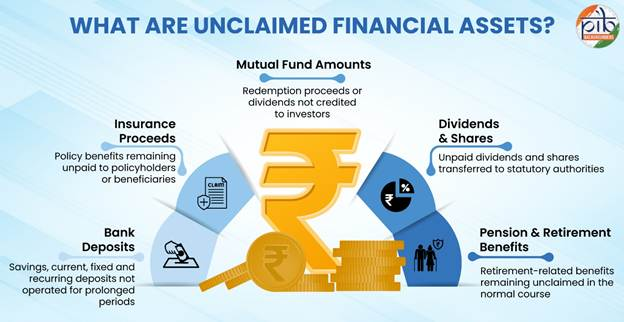
- If a bank deposit remains unclaimed for 10 years or more, it is transferred to the Depositor Education and Awareness Fund (DEA Fund).
- Even after transfer to the DEA Fund, the ownership of the money remains with the depositor. There is no time limit for the depositor or their legal heirs to claim the funds.
Source: TH
FRP for Sugarcane for 2026–27 Season
Syllabus: GS3 /Economy
In News
- The Cabinet Committee on Economic Affairs, chaired by the Prime Minister, has approved the Fair and Remunerative Price (FRP) of sugarcane for 2026–27 at ₹365 per quintal for a 10.25% recovery rate.
Fair and Remunerative Price (FRP)
- FRP is the minimum price mandated by the Government that sugar mills are obligated to pay farmers for their produce.
- The FRP for sugarcane is decided every year by the Centre’s Cabinet Committee on Economic Affairs (CCEA) headed by the Prime Minister, on the recommendation of the Commission for Agricultural Costs and Prices (CACP) after consultation with State Governments and other stake-holders
- The payment of FRP across the country is governed by the Sugarcane Control order, 1966 which mandates payment within 14 days of the date of delivery of the cane, failing which the cane commissioner may act against the miller.
- Failure to clear farmers’ due can even lead to the attachment of mill properties.
Mechanism
- The FRP for sugarcane is decided using the same mechanism as the one that is used to calculate the Minimum Support Price (MSP) of 23 other crops.
- However, while the MSP is not legally guaranteed, sugar mills are legally obligated to pay the FRP.
- The FRP is based on the recovery of sugar from the cane.
- Sugar recovery is the ratio between sugar produced versus cane crushed, expressed as a percentage.
- The higher the recovery, the higher is the FRP, and higher is the sugar produced.
Source:PIB
South Coast Railway (SCoR) zone
Syllabus: GS3/ Infrastructure
Context
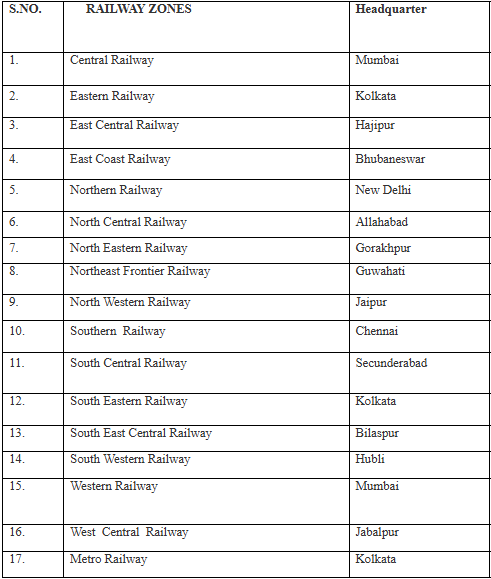
- The Ministry of Railways has issued the gazette notification constituting the South Coast Railway (SCoR) zone, India’s 18th railway zone, headquartered at Visakhapatnam.
About
- Formalization: The Zone was formed under Section 3(4) of the Railways Act, 1989, following a gazette notification.
- Structure: The new SCoR zone will consist of the existing Vijayawada, Guntakal, and Guntur divisions, plus a new division formed from the reorganization of the current Waltair division.
- It will have a total route length of around 3,300 km across Andhra Pradesh and parts of Telangana, Tamil Nadu and Karnataka.
Existing Railway Zones in India
Source: TH
Jamaica
Syllabus: GS1/Places in News
Context
- India and Jamaica signed three Memoranda of Understanding (MoUs) in health cooperation, solarisation, and broadcasting during the External Affairs Minister official visit.
About
- India and Jamaica discussed expanding cooperation in sectors including healthcare, infrastructure, digitalisation, agriculture, education, tourism and capacity building
- They also discussed capacity building through ICCR scholarships and digital learning platforms such as E-Vidyabharati and iGOT Karmyogi.
Jamaica
- Jamaica is a mountainous island in the Caribbean Sea, situated south of Cuba.
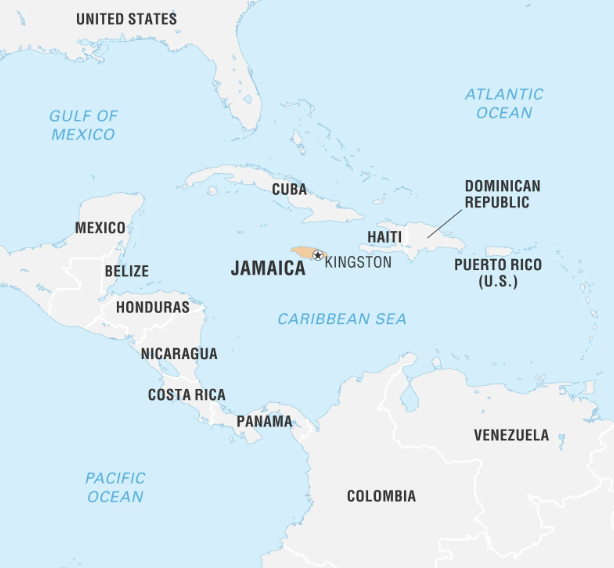
- It is part of the chain of Caribbean islands called the Greater Antilles, along with Cuba, Hispaniola, and Puerto Rico.
- It is the third largest island in the Caribbean Sea, after Cuba and Hispaniola.
- Jamaica became independent from the United Kingdom in 1962 but remains a member of the Commonwealth.
- Jamaica was formed when the North American and Caribbean tectonic plates collided about 25 million years ago.
- Major Mountain Ranges: Blue Mountains, John Crow Mountains, Don Figuero Mountains, Cockpit Country.
- Major Rivers: Black River, Rio Cobre, Rio Grande.
Source: DD
Pulitzer Prize 2026
Syllabus: Miscellaneous
Context
- Two Indian journalists named Anand RK and Suparna Sharma along with Natalie Obiko Pearson won the Pulitzer Prize 2026 in the Illustrated Reporting and Commentary category for their Bloomberg project ‘trAPPed’, exposing “digital arrest” fraud in India.
Pulitzer Prize
- The Pulitzer Prize was established in 1917, named in honour of newspaper publisher Joseph Pulitzer, and is administered by America’s Columbia University.
- There are 23 categories. In 22 of them, winners get a certificate and 15,000 US dollars. But only one category, Public Service, gets a gold medal.
- It recognises excellence across journalism, literature and music composition.
Previous Indian Winners
- Gobind Behari Lal: First from India to win the Pulitzer Prize for journalism in 1937. He was the member of the Ghadar Party in America.
- Siddhartha Mukherjee: Won the Pulitzer Prize for General Non-Fiction for his demystification of cancer in The Emperor of All Maladies: A Biography of Cancer.
- Danish Siddiqui: Photojournalist and atwo-time Pulitzer Prize winner, awarded in 2018 for Rohingya crisis coverage and in 2020 for his powerful images capturing the human toll of COVID-19 in India.
Source: AIR
Previous article
India’s e-waste Management
Next article
Recognising and Strengthening India’s Care Economy
