


Syllabus: GS3/Energy
Context
- Artificial intelligence (AI) can be a game changer for India’s rapidly expanding distributed renewable energy, said the Ministry of New and Renewable Energy (MNRE) at India AI Impact Summit.
Distributed Renewable Energy (DRE)
- Distributed renewable energy (DRE) refers to small-scale, decentralised power generation systems typically ranging from a few kilowatts to megawatts that produce electricity from renewable sources directly.
- Unlike conventional centralized power plants that require extensive transmission infrastructure, DRE systems operate independently or connect to the local distribution network.
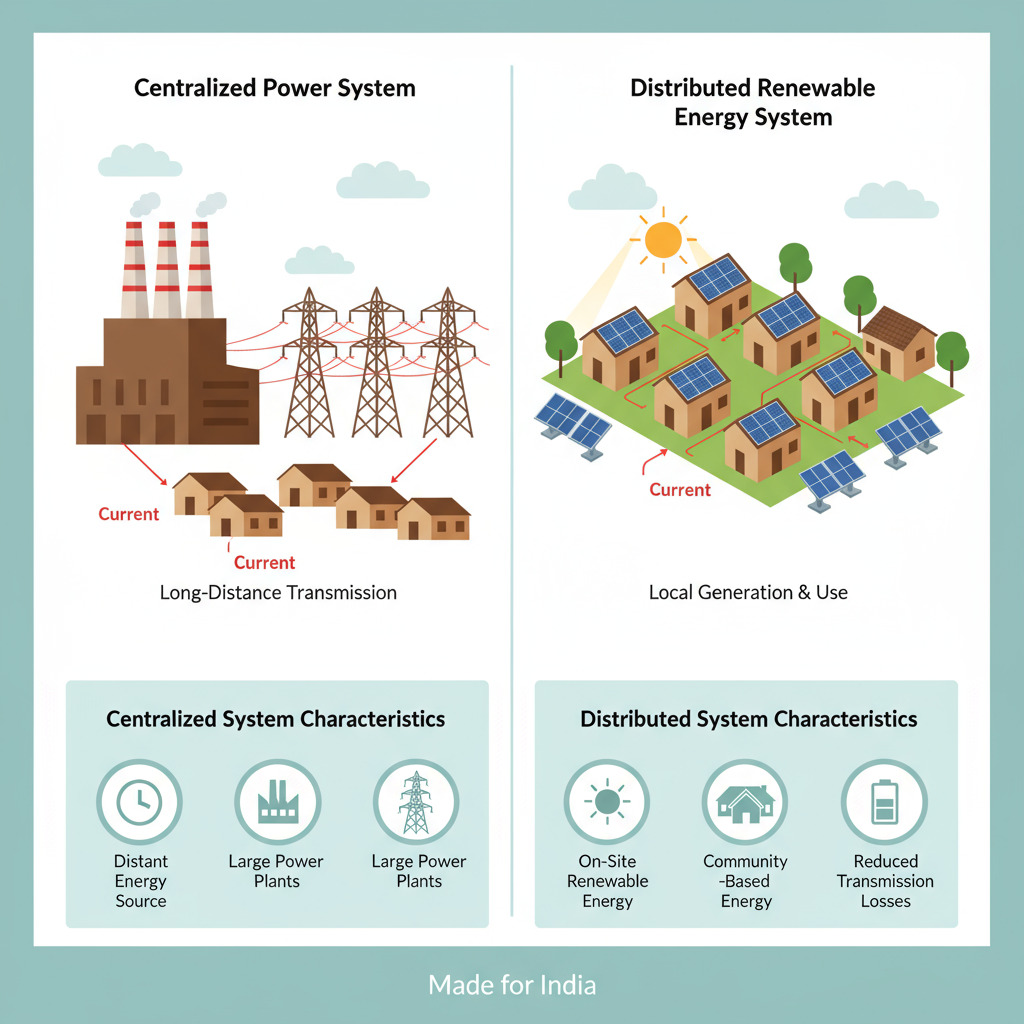
- Sources: rooftop solar, small wind turbines, or biomass.
- India has around 140 gigawatts (GW) of solar power capacity, of which DRE is about 35 GW.
- In the last 15 months, India has added close to 18 GW to DRE, both under the PM Surya Ghar and PM-KUSUM.
- Advantages of DRE in India:
- Rapid deployment in remote areas without waiting for grid extension.
- Reduced transmission and distribution losses.
- Enhanced energy security through diversification.
- Lower environmental impact compared to fossil fuels.
- Job creation and economic development in rural areas.
- Empowerment of local communities through energy ownership.
Use of AI in DRE
- Optimising Energy Systems: AI helps forecast solar and wind better, enabling higher renewable integration and reducing curtailment.
- AI-managed smart grids, batteries, and demand-response systems reduce energy wastage.
- Efficiency in Industries: AI-driven optimization reduces emissions in transport (fuel routing, logistics), buildings (smart HVAC), and manufacturing (process automation).
- Policy Framework: Energy Conservation Building Code & National Energy Efficiency Roadmap integrate AI in renewable energy, and sustainable design.
- Smart Real Estate: AI-driven solutions such as smart lighting, predictive Heating, Ventilation, and Air Conditioning (HVAC), automated building controls energy savings up to 25%.
Challenges
- Data Scarcity and Poor Quality: Limited availability of high-resolution, real-time data from rooftop solar, microgrids, and rural systems reduces the accuracy of AI forecasting and optimisation models.
- High Initial Costs: Deployment of smart sensors, AI software platforms, and skilled manpower increases upfront investment, making small DRE projects less financially viable.
- Skill and Capacity Constraints: Lack of trained professionals in AI–energy integration, especially at the local utility and DISCOM level, limits effective implementation.
- Cybersecurity and Interoperability Risks: AI-enabled DRE systems are vulnerable to cyberattacks and often face compatibility issues due to diverse hardware vendors and legacy grid infrastructure.
Key DRE Solutions Transforming India’s Energy
- Rooftop Solar Systems: These systems range from 1-10 kW for residential installations to larger capacities for commercial and industrial users.
- Solar + Storage Solutions: Integrated solar and battery storage systems address the intermittency challenge of solar power.
- Solar Agricultural Pumps: These systems eliminate farmers’ dependence on diesel pumps or unreliable grid electricity.
- Biomass and Small Hydro: Biomass gasification plants convert agricultural waste into electricity, providing a reliable baseload power source complementary to solar.
- Small hydro projects (up to 25 MW) harness flowing water in hilly regions.
Government Policies and Incentives Driving DRE Adoption
- PM-KUSUM Scheme: The Pradhan Mantri Kisan Urja Suraksha evam Utthaan Mahabhiyan (PM-KUSUM) aims to add 30.8 GW of solar capacity through:
- Component A: 10 GW of decentralized ground-mounted solar plants.
- Component B: Installation of 20 lakh standalone solar pumps.
- Component C: Solarization of 15 lakh grid-connected agricultural pumps.
- The scheme offers 30-90% subsidies depending on the component and beneficiary category.
- Pradhan Mantri Surya Ghar Yojana: This scheme targets one crore households with rooftop solar installations by providing:
- Subsidy of 40% for systems up to 3 kW.
- Subsidy of 20% for systems between 3-10 kW.
- Simplified application process through national portal
- Low-interest loans through partner banks.
- The initiative aims to save households up to ₹15,000 annually in electricity bills.
- State-Level Initiatives: Several states have introduced similar complementary policies.
Conclusion
- Distributed Renewable Energy represents a transformative approach to addressing India’s energy challenges.
- By generating clean power close to the point of use, DRE systems enhance energy access, improve reliability, reduce environmental impact, and create economic opportunities.
- The declining costs of technologies, supportive government policies, and innovative business models are accelerating DRE adoption across India.
Source: IE
Previous article
Single Genome-editing Strategy Can Help Treat Multiple Disorders
Next article
Calls For Reform of Global Trading System
