


Syllabus: GS3/Fisheries
Context
- The Comprehensive Economic and Trade Agreement (CETA) between India and UK removes import tariffs on a wide range of seafood products, enhancing Indian exporters’ competitiveness in the UK market.
About
- India’s key seafood exports to the UK currently include Vannamei shrimp, frozen squid, lobsters, frozen pomfret, and black tiger shrimp.
- These products previously attracted tariffs ranging from 0% to 21.5%, all of which are now removed, substantially improving cost competitiveness in the UK market.
- Indian seafood now competes on par with countries like Vietnam and Singapore, which already benefit from FTAs with the UK.
- India’s share in the UK’s $5.4 billion seafood import market is just 2.25%.
- With CETA now in force, industry estimates project a 70% surge in marine exports to the UK in the coming years.
India’s Seafood Industry
- India is the third-largest fish and aquaculture-producing country.
- It accounts for 8% of the total global fish production.
- India mainly has eight major fish-producing states: Andhra Pradesh, Gujarat, Karnataka, Kerala, Maharashtra, Odisha, Tamil Nadu, and West Bengal.
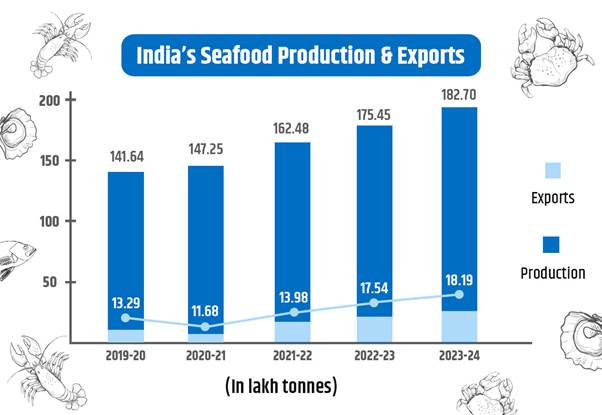
- India’s total seafood exports in 2024–25 reached $7.38 billion, amounting to 1.78 million metric tonnes.
- Frozen shrimp remained the top export, accounting for 66% of earnings with $4.88 billion.
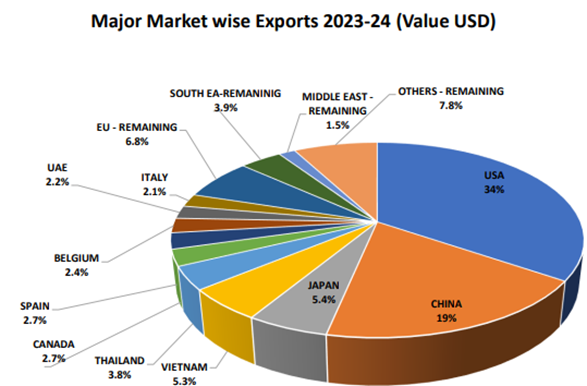
- India exported marine products to 132 countries, demonstrating its extensive reach in the global seafood market. Top five destinations are: USA, China, Japan, Vietnam and Thailand.
Government Initiatives to Boost Seafood Exports:
- Infrastructure Development: The Marine Products Export Development Authority (MPEDA) offers assistance to upgrade processing facilities, establish quality testing laboratories, and participate in international trade fairs.
- This helps enhance the quality and competitiveness of Indian seafood products in global markets.
- Aquaculture Support: This support includes the transfer of advanced technologies and best practices to increase production and productivity.
- Duty Reduction: The government in Budget 2024-25 has reduced import duties on essential ingredients used in seafood feed.
- Key reductions include the complete removal of duties on fish lipid oil, algal prime, crude fish oil, and pre-dust breaded powder.
- Additionally, import duties on krill meal, mineral and vitamin premixes, and prawn/shrimp and fish feed have been significantly lowered.
- Export Incentives: The government has enhanced the Remission of Duties and Taxes on Export Products (RoDTEP) scheme.
- The refund rate for various seafood products has been increased from 2.5% to 3.1% of the export value, with a higher cap of Rs. 69 per kilogram.
- Pradhan Mantri Matsya Sampada Yojana (PMMSY): This flagship scheme aims to modernize the fisheries sector, including developing cold chain infrastructure, reducing post-harvest losses, and improving overall productivity.
Challenges and existing Issues
- Overfishing: Excessive catch limits and unsustainable practices are threatening marine biodiversity and long-term productivity.
- Climate Change and Pollution: Rising ocean temperatures, acidification, and coastal pollution are disrupting breeding cycles and lowering catch volumes.
- Infrastructure and Export Hurdles – Inadequate cold chain infrastructure, poor handling practices, and stringent international quality standards hamper seafood exports.
Conclusion
- India’s seafood industry has demonstrated robust growth and resilience over the past five years, significantly enhancing its position in the global market.
- India has not only increased its production and export volumes but also expanded its market reach to 132 countries.
- With India’s vast production capacity, skilled manpower, and improved traceability systems, CETA enables Indian exporters to seize a larger share of the UK market and diversify beyond traditional partners like the US and China.
Source: PIB
Previous article
Textile Sector in India
