


Syllabus: GS3-Economy/GS2-Governance
Context
- President Droupadi Murmu emphasized the importance of inclusive development for all regions, including those affected by Maoist extremism in Chhattisgarh.
About
- She stressed the need to balance modern development with environmental protection and the inclusion of all sections of society in the development process.
- Naxalism or Left Wing Extremism (LWE) is one of the major challenges to India’s internal security.
- Naxalites seek to overthrow the State through violent means.
- Naxal affected areas in India are known as the ‘Red Corridor’.
- The States of Chhattisgarh, Jharkhand, Orissa and Bihar are considered severely affected.
- She emphasized the “saturation approach” to ensure that no citizen is left behind in India’s development journey.
What is Inclusive Development?
- Inclusive Development refers to a development approach that ensures all segments of society have equal access to opportunities, resources, and benefits of economic, social, and political progress.
- It focuses on reducing inequality and addressing the needs of diverse populations.
- The Indian model of inclusive growth, viewed from a development economics perspective, has three pillars: Market economics, Empowerment, and Pragmatism.
- India ranked 62nd out of 74 emerging economies in the World Economic Forums’ Inclusive Development Index (IDI), last released in 2018.
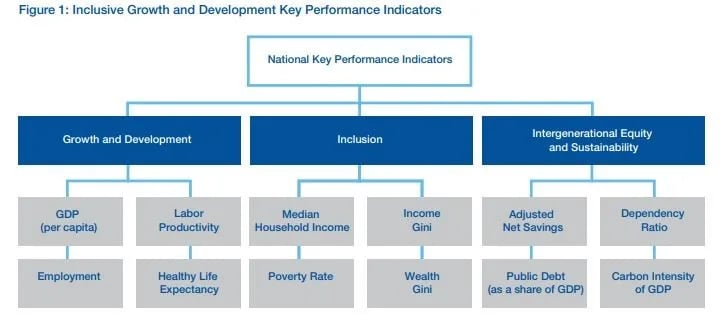
- The three key approaches for inclusive development include:
- Good governance (progressive politics, effective management and successful engagement in the global economy;
- Structural transformation, (economic, social and demographic), and;
- Multi-pronged policy and programme mix (macroeconomic policies, sound institutions, public-private sector development, effective economic policy management).
Identified Segments for Inclusive Development
- Tribal and Rural Communities: Assimilation of communities in society; educating at grassroot level; electricity, network connectivity; connectivity through roads; pucca houses; introduction to new basic technologies etc.
- Physically Disabled: Providing facilities such as wheelchairs and audio-visual aids; installation of ramps and tactical paths for easy accessibility; training of individuals on interacting with differently abled; skilling specially-abled, etc.
- Streamlining Unbanked Section: Awareness should be provided related to the importance of bank accounts in rural and tribal areas, financial literacy, mobile banking etc.
- Women: Pre- and post-pregnancy care, healthcare, education, childcare, skill-development, opportunities for financial improvement etc.
Difference Between Inclusive Growth and Development:
| Aspect | Inclusive Growth | Inclusive Development |
|---|---|---|
| Focus | Primarily focuses on economic aspects such as income and employment. | Broader scope, including social justice, healthcare, education, and infrastructure. |
| Measurement | Often measured by GDP growth, income levels, and employment rates. | Measured by indicators such as HDI (Human Development Index), quality of life, and social equity. |
| Policy Approach | Promotes policies to create equal economic opportunities. | Advocates for policies that provide both economic and social empowerment, including welfare schemes. |
Need for Inclusive Development in India
- Addressing Inequality: India has significant disparities in income, education, healthcare, and living standards, particularly between urban and rural areas, and among different social groups.
- Empowering Marginalized Communities: Large sections of society, including tribal communities, women, and the differently-abled, remain excluded from mainstream development and opportunities.
- Promoting Social Justice: Inclusive development ensures that every citizen, regardless of their background, has access to the benefits of growth, promoting fairness and reducing social tensions.
- Economic Growth: India can unlock the full potential of its population, leading to more sustainable and equitable economic growth.
- Global Competitiveness: A more inclusive society leads to a more productive, skilled, and innovative workforce, enhancing India’s global competitiveness.
- Sustainable Development: It aligns with the goal of long-term, sustainable growth, considering the needs of all sections of society, including future generations.
Constitutional Framework for Inclusive Development
- Fundamental Rights (Part III):
- Equality Before Law (Article 14): Guarantees equality for all citizens.
- Prohibition of Discrimination (Article 15): Ensures no discrimination on grounds of religion, race, caste, sex, or place of birth.
- Equality of Opportunity (Article 16): Ensures equal opportunities in public employment.
- Right to Education (Article 21A): Guarantees free education for children aged 6 to 14.
- Protection of Minorities (Articles 29 & 30): Safeguards the cultural and educational rights of minorities.
- Directive Principles of State Policy (Part IV):
- Social Justice (Article 38): Promotes the welfare of the people, focusing on justice and reducing inequalities.
- Promotion of Weaker Sections (Article 46): Aims to protect and promote the interests of SCs, STs, and OBCs.
- Reservation and Affirmative Action: Articles 15(4) and 16(4) allow for affirmative action, such as reservations in education and employment for SCs, STs, and OBCs.
- Panchayats and Local Governance (Part IX): Article 243N strengthens local self-governance, ensuring the participation of marginalized communities.
- Legal Protection for Vulnerable Groups: Laws like the Protection of Civil Rights Act, 1955 and the SC/ST (Prevention of Atrocities) Act, 1989 protect disadvantaged communities from discrimination and violence.
- Judicial Oversight: The Supreme Court and High Courts ensure that policies align with the constitutional values of equality and justice.
Conclusion
- There are many Government initiatives focused on providing opportunities, resources, and social security for marginalized communities, ensuring broad-based growth and well-being.
Source: TH
Previous article
Judiciary’s In-House Inquiry Against Delhi High Court Judge
Next article
Govt Notifies Revised Criteria for Classifying MSMEs
