


Syllabus: GS3/ Climate Change
Context
- According to the US National Snow and Ice Data Center (NSIDC) the combined sea ice extent in the Arctic and Antarctic has reached a record low of 15.76 million sq km in February 2025.
What is Sea ice?
- Sea ice refers to the free-floating ice in the polar regions. While it generally expands during the winter and melts in the summers, some sea ice remains year-round.
- Sea ice is different from icebergs, glaciers, ice sheets, and ice shelves, which form on land.
- Sea ice plays a crucial role in cooling the planet by trapping existing heat in the ocean, and thus precluding it from warming the air above.
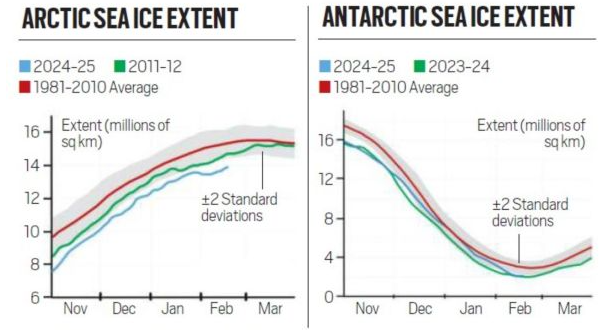
Reasons for the Decline in Global Sea Ice Cover
- Rising Global Temperatures: The Arctic and Antarctic regions are warming at an accelerated pace, with the Arctic experiencing warming four times faster than the global average.
- Ongoing ocean warming is setting the backdrop for sea ice decline, as warmer waters delay freezing and accelerate melting.
- The ice-albedo feedback effect worsens the situation—as ice melts, darker ocean water absorbs more solar radiation, leading to further warming and ice loss.
- Wind Patterns and Storms: In the Arctic, storms have broken apart ice around the Barents Sea (near Norway and Russia) and the Bering Sea (between Alaska and Russia).
- Antarctic sea ice is surrounded by the ocean instead of continents, making it more mobile and thinner.
Implications of Low Sea Ice Cover
- Climate Change: Less sea ice cover means that more ocean water is exposed to the Sun, leading to greater heat absorption and a rise in temperatures.
- Disruption of Ocean Currents: The influx of freshwater from melting ice is slowing down the circulation of water in the world’s oceans.
- Rising Sea Levels: While melting sea ice does not directly raise sea levels, its loss exposes glaciers and ice sheets to warmer waters, speeding up their melting.
- Disruption of Marine Ecosystems: The loss of sea ice affects marine food chains, particularly species such as krill, seals, and polar bears, which depend on ice for survival.
Way Ahead
- Countries must adhere to Paris Agreement targets and work towards limiting global average temperature to 1.5°C.
- Satellite observations and scientific expeditions must be expanded to better understand polar ice changes.
- International agreements on protecting marine ecosystems and polar biodiversity should be enhanced.
- Strict regulations on industrial activities, fishing, and resource exploitation in the polar regions are needed.
Concluding remarks
- The record low global sea ice cover is a stark reminder of the accelerating impacts of climate change.
- Immediate global action is essential to mitigate its cascading effects on climate, ocean currents, ecosystems, and human livelihoods.
- Without urgent intervention, the loss of sea ice could push the Earth closer to irreversible climate tipping points.
Source: IE
Previous article
Peatlands: A Vital Yet Underprotected Carbon Reservoir
Next article
Committee to Review India’s Insurance Sector
