


Syllabus: GS3/Science and Technology
In News
- Neurotechnology will soon deepen understanding of the brain and may even allow it to influence its functioning.
What is Neurotechnology?
- It refers to tools that directly interact with the brain by recording or influencing neural activity, enabling new ways to study, repair, or enhance brain function.
- Central to this field are Brain-Computer Interfaces (BCIs), which decode brain signals to control devices like cursors, wheelchairs, or robotic arms through either non-invasive sensors or implanted electrodes.
- BCIs support diagnostics, neuroprosthetics, and treatments for conditions such as paralysis, depression, and Parkinson’s disease.
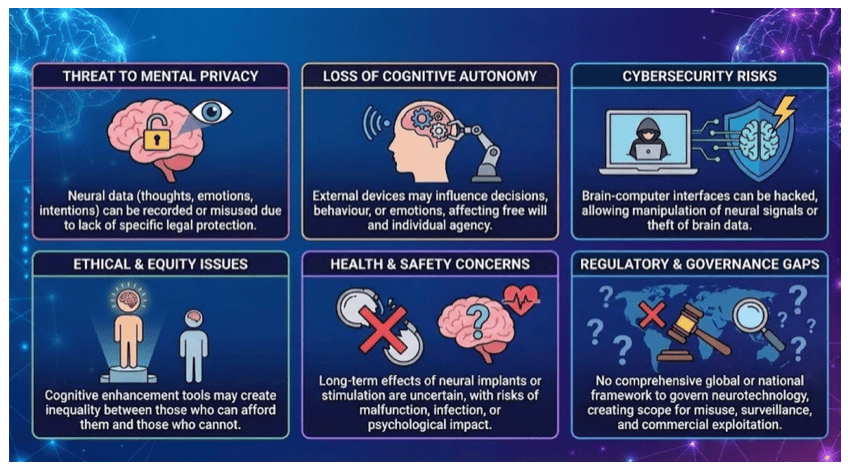
- While experiments have shown brain-to-brain communication in animals, human uses remain largely therapeutic, with future enhancement or military applications raising significant ethical concerns.
Benefits and Need
- India faces a growing neurological disease burden, especially from strokes, spinal injuries, Parkinson’s disease, and depression.
- Neurotechnology offers promising solutions—neuroprosthetics can help paralysed individuals regain movement or communication, and targeted brain stimulation can reduce reliance on long-term medication for mental health conditions.
- Beyond healthcare, neurotechnology aligns with India’s strengths in biotechnology, engineering, and AI, creating broader opportunities for innovation and growth.
Progress
- IIT Kanpur has developed a BCI-powered robotic hand for stroke patients, while major neuroscience research is underway at the National Brain Research Centre in Manesar and IISc’s Brain Research Centre.
- Startups like Dognosis are exploring innovative uses—such as analysing dog brain signals to detect cancer-related scents—showing how animal-focused neurotech could eventually transform human cancer screening.
| Status Across the globe – The U.S. leads global neurotechnology efforts, driven by the NIH’s BRAIN Initiative, which supports advanced neurotech innovation. – In 2024, Neuralink received FDA approval for human trials and has shown its BCIs can help paralysed patients regain some motor function. – China’s Brain Project (2016–2030) focuses on cognition research, brain-inspired AI, and neurological treatments. – Meanwhile, the EU and Chile are at the forefront of creating laws to regulate BCIs and protect neurorights. |
Way Ahead for India
- Neurotechnologies offer India opportunities in healthcare, recreation, and the economy, leveraging its genomic diversity, expertise, and growing interest in brain research. However, their growth depends on strong regulatory support.
- Public engagement on BCI benefits and risks, along with tailored regulations assessing technical and ethical aspects—such as data privacy and user autonomy—are essential to promote safe and effective BCI development in India.
Source :TH
Previous article
IndiGo Crisis: Compulsory Resource Mapping & DGCA Overhaul
Next article
Chile’s Lesson for India’s Coal Conundrum
