



Sree Narayana Guru
Syllabus: GS1/ Personalities
In News
- Recently, the birth anniversary of Sree Narayana Guru was observed.
About Sree Narayana Guru (1856–1928)
- He was born in 1856 in Kerala into the Ezhava community, which faced severe caste disabilities.
- He was a saint, philosopher, and one of the foremost social reformers in modern India who challenged caste oppression and emphasized spiritual reform as the path to social reform.
- Sree Narayana Guru known for blending Advaita Vedanta with a call for social justice.
Key Contributions
- Social Philosophy: Propagated the radical message: “One Caste, One Religion, One God for Man”.
- Rejected birth-based caste hierarchy and promoted dignity of labour.
- Institution Building: Founded Sree Narayana Dharma Paripalana Yogam (SNDP, 1903) to advance education, social empowerment, and reform.
- Aruvipuram Movement (1888): Consecrated a Shiva idol himself, breaking the Brahmin monopoly over temple rituals. Built temples, schools, and ashrams for the common people with egalitarian access.
- Political & Social Movements: Extended moral and ideological support to the Vaikom Satyagraha (1924–25) for temple entry rights of lower castes.
- Educational Upliftment: Stressed education as the foundation of empowerment and upliftment.
Source: PIB
Blood Moon
Syllabus: GS1/Geography; GS3/Space
Context
- A total lunar eclipse, popularly called a “Blood Moon”, was recently witnessed across the globe.
What is a Lunar Eclipse?
- A lunar eclipse occurs when the Earth comes between the Sun and the Moon, blocking sunlight from directly reaching the lunar surface.
- Depending on the alignment, it can be total (Moon passes fully through Earth’s umbra) or partial.
- Unlike a solar eclipse, it is safe to watch with the naked eye.
Why does the Moon appear Red (Blood Moon)?
- During a total lunar eclipse, sunlight passing through Earth’s atmosphere gets scattered.
- Rayleigh Scattering: Blue light (shorter wavelength) scatters away, while red/orange light (longer wavelength) bends towards the Moon, making it glow red.
- The exact hue depends on atmospheric conditions: more dust or pollution makes the Moon appear a deeper red.
Source: IE
Protein Language Models
Syllabus: GS3/ S&T
In News
- The recent emergence of large language models (LLMs) has revolutionised the research on proteins — the microscopic mechanisms that are involved in virtually every important activity happening inside all living things.
About Protein Language Models
- Protein Language Models (PLMs) are machine learning models adapted from Large Language Models (LLMs) in NLP, designed to interpret protein sequences by treating each amino acid as a token (like a word) and entire proteins as sentences.
Applications of PLMs
- Drug Discovery: Rapid identification of protein interactions accelerates the search for new drug targets.
- Vaccine Development: PLMs help predict and model critical viral protein structures, guiding vaccine design.
- Disease Research: Understanding the impact of mutations and misfolding in proteins is crucial for conditions like Alzheimer’s and cancer.
- Synthetic Biology: Enables design of novel proteins with desired properties or functions
Source: IE
Parrondo’s Paradox Basics
Syllabus: GS3/Science and Technology
Context
- Scientists in a new study used the Parrondo’s Paradox basics to enhance the efficacy of cancer therapy.
Parrondo’s Paradox
- A paradox is something (such as a situation) with opposing elements which seems impossible, but is actually true.
- The theory was initially proposed in physics (Brownian ratchets) and then brought into game theory.
- If you play two losing games separately, you always lose. But if you mix or alternate them in the right way, you can actually start winning.
- Example: In coin toss games, each game alone is bad, but switching between them in a pattern can give you profit.
How does it connect to Cancer Therapy?
Doctors use two main ways of giving chemotherapy drugs:
- Maximum Tolerated Dose (MTD): Very high dose at long intervals.
- Works strongly in the beginning.
- But they are resistant cancer cells that survive and later grow faster.
- Low-Dose Metronomic (LDM): Small continuous doses and it works slowly.
- Concern: If too weak, cancer escapes; if too strong, resistant cells still take over.
- Both methods have weaknesses. Alone, each one eventually fails.
New Study
- Scientists tried alternating between MTD and LDM using computer models.
- Result:
- Resistant cells appeared later.
- Healthy cells survived longer.
- Tumour stayed under control for more time.
- This is like Parrondo’s paradox where two weak strategies, when mixed, give a better result.
Source: TH
1st Interpol Silver Notices
Syllabus: GS3/Internal Security
Context
- The Narcotics Control Bureau (NCB) has got its first Interpol silver notice issued, against the recovery of around 82 kg of cocaine in Delhi.
About
- A silver notice is issued by Interpol to identify, locate, and trace assets acquired through criminal proceeds by a fugitive.
- Aim: Helping trace and recover criminal assets for combating transnational organised crime through enhanced international police cooperation.
- The Interpol launched ‘Silver Notice’, the newest addition to the organisation’s list of colour-coded notices and diffusions, as part of a pilot project involving 52 countries and territories.
- The pilot project will run at least till November 2025. India is one of the participating countries.
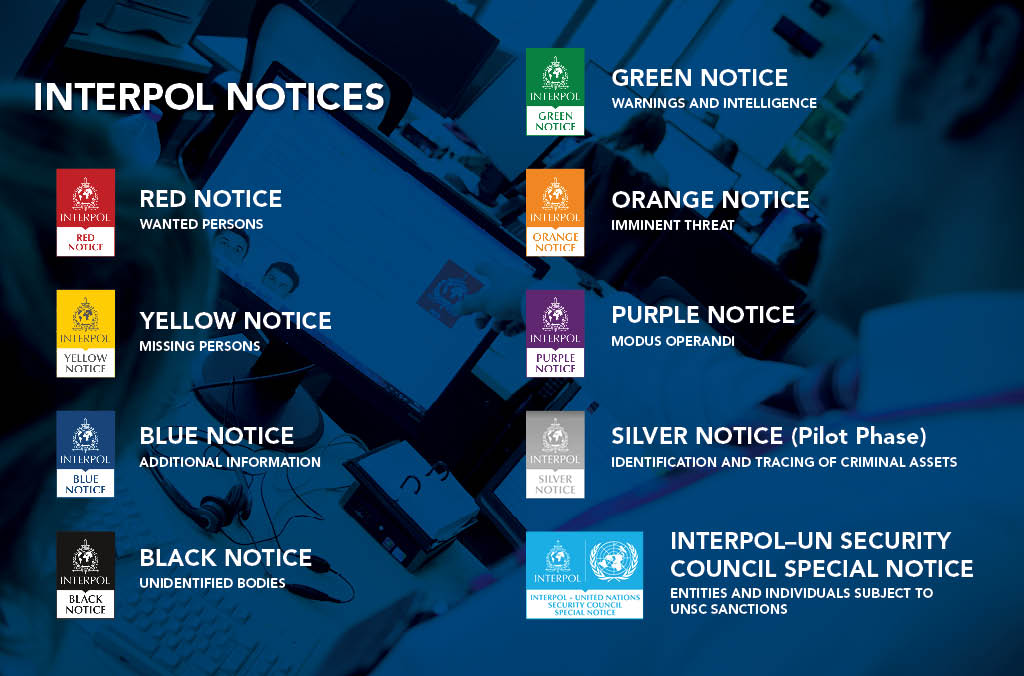
- Through Silver Notices and Diffusions, member countries can request information on assets linked to a person’s criminal activities such as fraud, corruption, drug trafficking, environmental crime and other serious offences.
INTERPOL
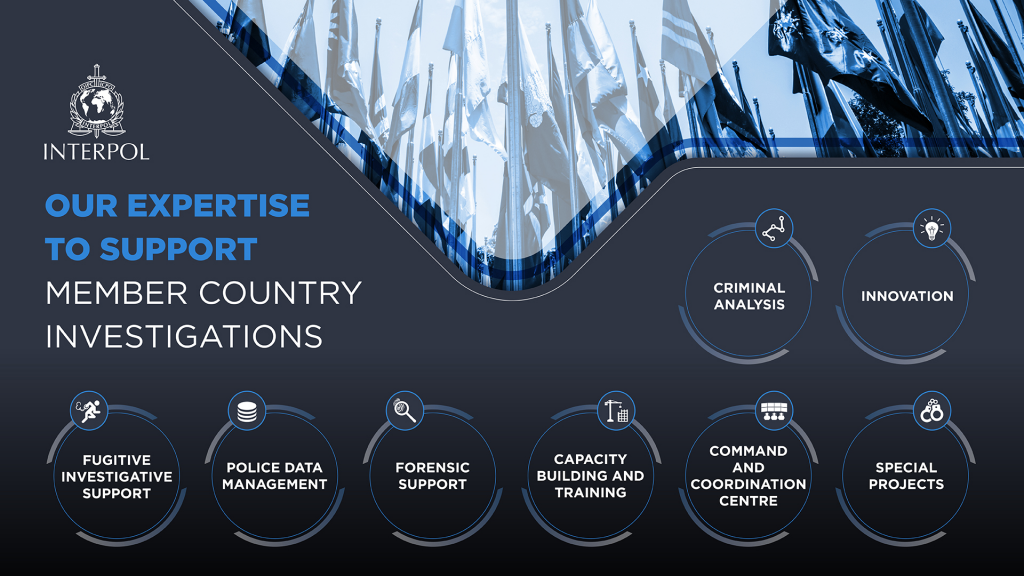
- Full Form: International Criminal Police Organization.
- Nature: An intergovernmental organization.
- Founded: In 1923 Vienna, Austria.
- Motto: “Connecting police for a safer world”.
- HQ: Lyon, France
- Members: 196 countries. India has been a member since 1949.
- Governing Body: The General Assembly, it brings all countries together annually to make decisions.
- Legal Status:
- INTERPOL does not have its own police force.
- It cannot make arrests; it only assists member countries.
- All actions depend on national laws and cooperation of member states.
Source: IE
Nilgiris Tea
Syllabus: GS3/ Agriculture
Context
- The Nilgiris tea, famous for “champagne among teas,” is facing prolonged crisis as small growers face unstable green tea leaf prices, high production costs, and inadequate institutional support.
About Nilgiris Tea
- Region: Grown mainly in the Nilgiris district, Tamil Nadu (Western Ghats, Blue Mountains), at an altitude of around 900–2,600 metres above sea level.
- History: Introduced by the British in the mid-19th century (first plantations around Coonoor, 1850s).
- Taste Profile: Fragrant, brisk, floral, citrus-like; suitable for iced tea.
- Geographical Indication (GI): Granted GI tag in 2008.
Source: TH
Papua New Guinea
Syllabus: GS1/ Place in News
Context
- Recently, the Indian Navy’s indigenously built Anti-Submarine Warfare Corvette, INS Kadmatt, led the Fleet Review during Papua New Guinea’s 50th Independence Day celebrations.
About the Papua New Guinea
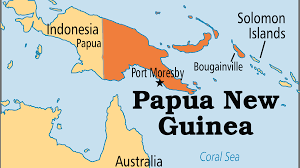
- It is the largest Pacific Island nation by land mass and population, located at the crossroads of Southeast Asia and Oceania.
- The region falls under the seismic ‘Ring of Fire’.
- Capital: Port Moresby
- Official Languages: English, Tok Pisin (a creole), and Hiri Motu.
- Government: Parliamentary democracy, part of the Commonwealth.
- It serves as a key partner in regional forums like the Forum for India-Pacific Islands Cooperation (FIPIC).
India & Papua New Guinea
- India emphasized that INS Kadmatt’s participation reflects its strategic outreach under the Act East Policy, aimed at strengthening ties with Pacific Island nations.
- It highlighted the Indian Navy’s rising stature as a Preferred Security Partner in the Indo-Pacific.
Development Partnerships and Capacity Building
- $100 million Line of Credit for infrastructure development;
- MoUs in agriculture research, healthcare, and IT education;
- Establishment of a Centre of Excellence in IT and an ICCR Chair of Indian Studies at UNITECH, Lae;
Previous article
RNA–Amino Acid Link on Early Earth
Next article
India-Israel Bilateral Investment Agreement (BIA)
