


Syllabus: GS2/ International Relations
Context
- The recent remarks by the US President asserting that the United States “needs Greenland for national security” have triggered a diplomatic standoff with Denmark and Greenland, raising concerns over sovereignty, Arct geopolitics, and great-power competition
About Greenland
- It is semi-autonomous and part of the Kingdom of Denmark, with strong defense ties to NATO.
- Location: Situated between the Arctic and North Atlantic Oceans, northeast of Canada.
- It’s the world’s biggest island with over 80% covered by a massive ice sheet.
Strategic Significance of Greenland
- Military and security significance: Greenland’s location between North America and Europe makes it a critical pillar of NATO’s Arctic defence. It hosts key US military infrastructure such as Pituffik Space Base, which supports ballistic missile early-warning systems and enhances monitoring of polar missile trajectories.
- Space and satellite tracking role: Greenland is ideally placed for ground stations that track polar-orbiting satellites, which are essential for intelligence, navigation, weather forecasting, and secure military communications.
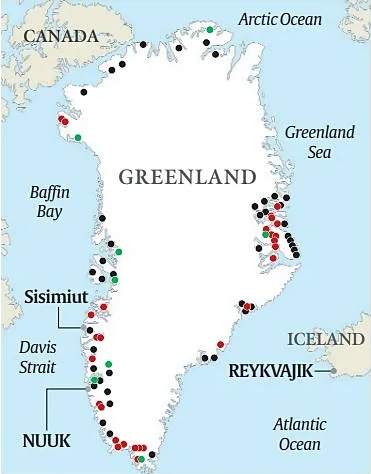
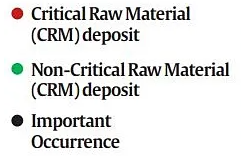
- Critical minerals and resources: The island holds vast, largely untapped reserves of rare earth elements and other strategic minerals (uranium, graphite, zinc), crucial for renewable energy, electric vehicles, and defence manufacturing, helping reduce dependence on concentrated global supply chains.
- Emerging Arctic shipping routes: Melting Arctic ice is opening routes such as the Transpolar Sea Route, positioning Greenland near future global maritime highways that can significantly shorten travel between the Atlantic and Pacific oceans.
- Bypassing global chokepoints: Arctic routes near Greenland can avoid traditional chokepoints like the Panama Canal and the Suez Canal, enhancing trade resilience and strategic maritime flexibility.
- Geopolitical competition in the Arctic: Growing interest from the US, China, and Russia in Arctic dominance has increased Greenland’s importance as a strategic asset in great-power competition.
Historical Trajectory of USA- Greenland Engagement
- During World War II, the US occupied Greenland (A Danish colony) to prevent Nazi Germany from gaining control after Denmark was occupied.
- In 1946, the USA offered Denmark $100 million to purchase Greenland.
- The 1951 US–Denmark Defence Agreement granted the US long-term military access to Greenland, institutionalising American presence.
- The US operates the Pituffik Space Base (formerly Thule Air Base), a key installation for monitoring missile threats from Russia, China, and North Korea.
- During his first term, President Trump revived the idea of purchasing Greenland, calling it a “large real estate deal”, which Denmark categorically rejected.
| The Alleged ‘Three-Phase Strategy’ – Denmark allege a multi-layered influence campaign, reflecting modern forms of hybrid warfare and grey-zone tactics. – The reported strategy includes: Soft power engagement, through high-profile visits and symbolic outreach. Diplomatic coercion, involving public criticism of Denmark’s governance over Greenland. Political influence operations, allegedly aimed at nurturing separatist sentiments within Greenland. |
Has the US Bought Territories in the Past?
- The Louisiana Purchase (1803) saw the US acquire over 2 million sq km from France for $15 million.
- The Alaska Purchase (1867) transferred 1.5 million sq km from Russia to the US for $7.2 million.
- In 1917, the US bought the Danish West Indies, now the US Virgin Islands.
- However, all past acquisitions occurred under very different international legal and geopolitical norms, unlike today’s sovereignty-based global order.
Arctic as the Next Theatre of Great-Power Competition
- The Greenland issue reflects growing militarisation of the Arctic amid climate change and melting sea routes.
- It raises concerns about erosion of sovereignty norms and pressure tactics against smaller states.
- Arctic governance institutions such as the Arctic Council face stress due to rising militarisation and geopolitical polarisation.
- The situation mirrors a broader trend of re-territorialisation of global politics, where geography regains primacy in strategic thinking.
Way Ahead
- Strengthening multilateral Arctic governance mechanisms is essential to prevent conflict escalation.
- Respect for sovereignty and consent-based cooperation must guide Arctic engagement.
- The US and its allies need to reconcile security imperatives with alliance credibility.
- Confidence-building measures and transparency in military activities are necessary to preserve Arctic stability.
Source: IE
Previous article
Reclaiming India’s Buddhist Civilisational Legacy
