


Syllabus: GS2/Issues Related To Health
Context
- The latest Sample Registration Survey (SRS) Statistical Report 2023, released by the Office of the Registrar General of India, points to falling fertility and birth rates, improved survival outcomes, and a rising elderly population.
| Methodology – Sample Registration Survey (SRS) uses a dual-record system: continuous enumeration and retrospective half-yearly surveys. 2. It covers over 8.1 million people across all States and Union Territories. 3. It ensures high reliability through field verification and cross-checking of birth and death events. |
Key Highlights From the Report 2023
- State-Wise Variations in CBR and TFR:
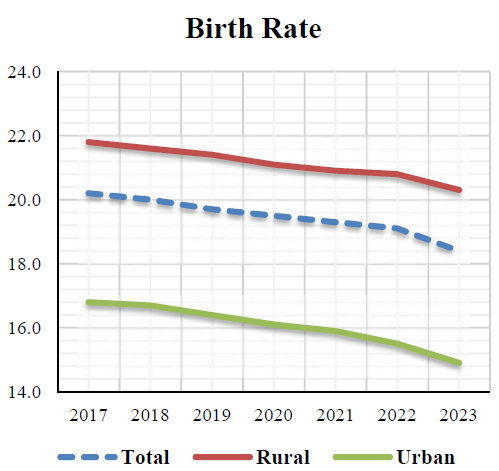
- Crude Birth Rate (CBR): Fell from 19.1 in 2022 to 18.4 in 2023, marking a 0.7-point decline.
- Highest in Bihar (25.8) and Lowest in Tamil Nadu (12);
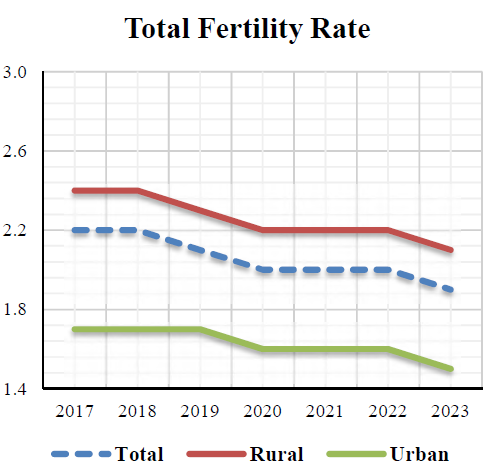
- Total Fertility Rate (TFR): Dropped to 1.9 in 2023, after remaining steady at 2.0 in 2021 and 2022.
- It is the first decline in TFR in two years, pushing India further below the replacement fertility level of 2.1 children per woman.
- Highest TFR in Bihar (2.8) and Lowest TFR in Delhi (1.2);
- Crude Birth Rate (CBR): Fell from 19.1 in 2022 to 18.4 in 2023, marking a 0.7-point decline.
- Mortality Trends:
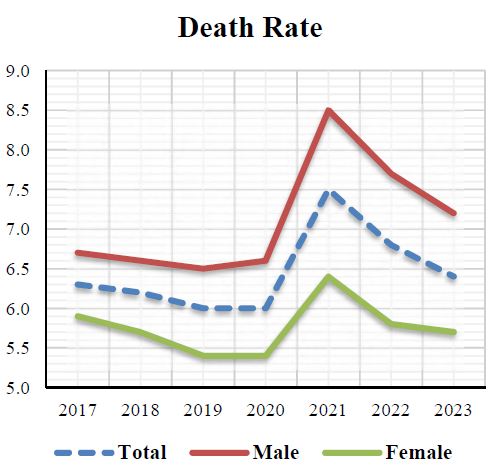
- Crude Death Rate (CDR): Declined from 6.8 in 2022 to 6.4 in 2023.
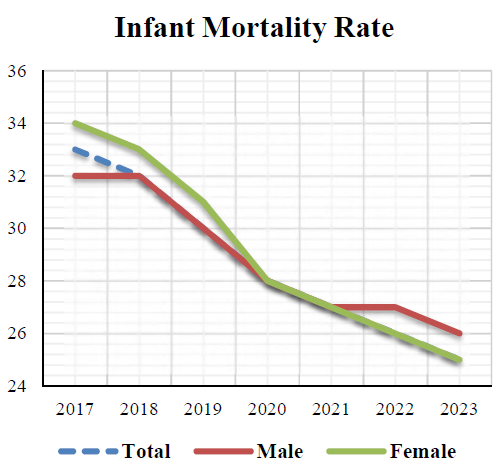
- Infant Mortality Rate (IMR): Fell to 25 in 2023, a one-point drop from 2022 and a seven-point decline over five years.
- One in every 40 infants dies before completing the first year of life.
- Rising Elderly Population:
- The proportion of the elderly (aged 60+) increased by 0.7 percentage points, reaching 9.7% of the total population in 2023, indicating a gradual move towards population ageing.
- Highest elderly share: Kerala (15%)
- Lowest elderly share: Assam (7.6%), Delhi (7.7%), and Jharkhand (7.6%)
- The proportion of the elderly (aged 60+) increased by 0.7 percentage points, reaching 9.7% of the total population in 2023, indicating a gradual move towards population ageing.
- Sex Ratio at Birth (SRB):
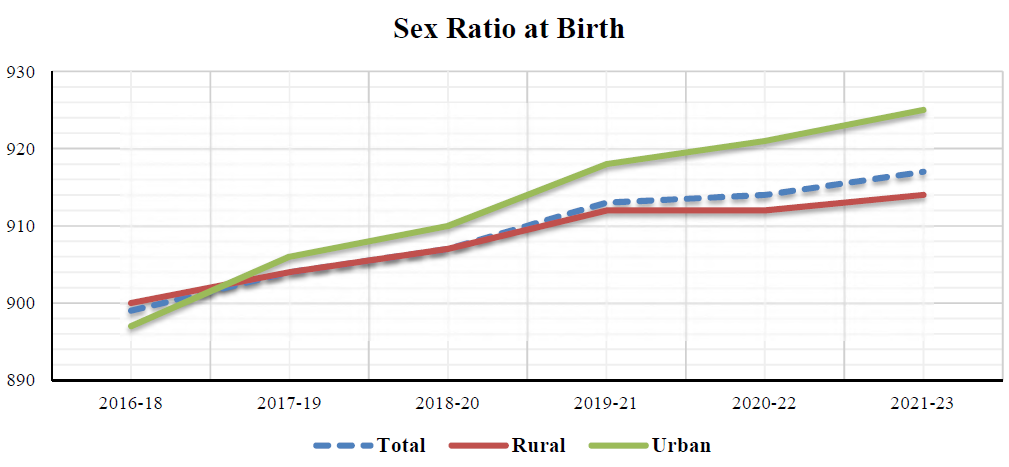
- National SRB:917 girls per 1,000 boys in 2023, reflecting a three-point improvement from the previous period.
- Highest SRB: Chhattisgarh (974), Kerala (971)
- Lowest SRB: Uttarakhand (868)
- However, Bihar, Delhi, Maharashtra, and Haryana remain among the States and UTs with SRBs below 900. Bihar’s SRB continues to decline, falling from 964 in 2020 to 897 in 2023.
- National SRB:917 girls per 1,000 boys in 2023, reflecting a three-point improvement from the previous period.
| Understanding Total Fertility Rate (TFR) – It measures the average number of children a woman is expected to have during her reproductive years. – A TFR of 2.1 is considered the replacement level, meaning the population size remains stable across generations. – A drop below this threshold suggests: 1. Slower population growth 2. Potential future aging of the population 3. Shifts in family planning and societal norms – Why Is Fertility Declining? 1. Increased female literacy and workforce participation; 2. Delayed marriages and childbearing; 3. Urbanization and rising cost of living; 4. Greater reproductive autonomy and access to contraception; 5. Migration of youth for education and employment abroad; |
Significance of Sample Registration Survey (SRS) Report 2023
- Reliable Vital Statistics: Indicators like Birth rate, Death rate, IMR, MMR, and TFR are essential for tracking population growth, health outcomes, and development goals.
- For example, decline in TFR in two years signals a demographic transition with long-term implications for labor markets, aging, and social services.
- Policy and Funding Decisions: SRS data is used by the Ministry of Health, NITI Aayog, and State governments to:
- Allocate health budgets;
- Design maternal and child health programs;
- Monitor progress toward UN Sustainable Development Goals (SDGs);
Next article
Excessive Use of Antibiotics Impacts Mental Health
