


Constitution Day
Syllabus: GS2/ Polity
In News
- 26th November is being celebrated as Constitution Day to mark the adoption of the Constitution of India by the Constituent Assembly (CA).
About Constitution Day (Samvidhan Divas, National Law Day)
Overview:
- In 2015, the Ministry of Social Justice and Empowerment notified the GOI’s decision to celebrate the 26th November as Constitution Day.
- The day was celebrated as a tribute to Dr B R Ambedkar as Chairman of the Drafting Committee.
Historical Background:
- 1934: Demand for the Constituent Assembly was made by M.N. Roy.
- 1940: Demand was accepted by the British government.
- 1946: 9th December, CA conducted the first session on Draft Constitution.
- 1949: 26th November, CA finally adopted the Constitution of India.
- 1950: 26th January, the Constitution of India came into force.
Key Facts about Constituent Assembly
- Took 2 years, 11 months & 17 days for drafting the Constitution of India.
- Dr Sachchidananda Sinha was appointed as 1st President of CA.
- Dr Rajendra Prasad was the chairman of the Constituent Assembly.
- Jawaharlal Nehru (PM) made the ‘Objectives Resolution’ on 13th December 1946, later adopted as Preamble on 22nd Jan 1947.
- The constituent assembly acted as the temporary legislature until a new one was to be constituted.
Brief About Constitution Of India
- The longest written constitution of the World (25 Parts & 12 Schedules)
- The Constitution of India wasn’t typed or printed and is handwritten & stored in a Helium filled case.
- It was handcrafted by the artists of Shantiniketan under the guidance of Acharya Nandalal Bose.
- The major portion borrowed from the
- .
- Salient Features: Define India to be a sovereign, socialist, secular, democratic republic assuring its citizen’s justice, equality, and liberty.
- Parliamentary form, Federalism, Single Citizenship, Separation of Powers.
- Key Amendments:
- 1st CAA: Added Ninth Schedule laws that cannot be challenged in courts.
- 42nd CAA: Inserted Article 51-A (10 FDs), Socialist, Secular and Integrity added to the Preamble, & new DPSPs added (Article 39, 39A, 43 A, 48A)
Source: PIB
Uranium Toxicity
Syllabus: GS2/Health
In News
- A new study published in Scientific Reports has detected uranium in breast milk samples collected from multiple districts in Bihar, raising concern over infant exposure
Key Points of the study
- It measured the uranium (U-238) concentration using ICP-MS (inductively-coupled plasma mass spectrometry) at a laboratory in Bihar.
- It found detectable uranium in every breast milk sample collected from 40 mothers, with the highest concentrations recorded in Katihar and Khagaria, reaching up to 5.25 micrograms per litre.
- It is estimated that about 70% of breastfed infants could face potential non-carcinogenic health effects from this exposure, though no evidence of cancer risk was detected.
About Uranium-238
- Uranium-238 (U-238) is the most abundant isotope of uranium found naturally, making up over 99% of natural uranium.
- It occurs widely in soil, rocks, groundwater, and even in drinking water under natural conditions due to its presence in the earth’s crust.
- Its radioactivity is relatively low because it has a very long half-life (about 4.47 billion years), so the primary health risk from U-238 arises more from its chemical toxicity as a heavy metal rather than its radiological effects.
- The World Health Organization (WHO) has set a provisional safe limit of 30 micrograms per liter (µg/L) for uranium concentration in drinking water to prevent chemical toxicity risks.
Source :BS
Dr. Verghese Kurien
Syllabus: GS3/ Economy
In News
- 26th November commemorates the birth anniversary of Dr. Verghese Kurien.
About Dr. Verghese Kurien (1921-2012)
- He was the architect of India’s White Revolution and is celebrated as the “Father of the White Revolution.”
- Born in Kozhikode, Kerala, he spearheaded Operation Flood in 1970, which transformed India from a milk-deficient country into the world’s largest milk producer.
- He was instrumental in establishing the Anand cooperative model, exemplified by Amul, which became a blueprint for dairy development across India.
- His efforts also led to the creation of institutions such as the National Dairy Development Board (NDDB) and the Institute of Rural Management Anand (IRMA).
- Dr. Kurien revolutionized the edible oil industry by launching the brand ‘Dhara’ in 1979.
- Dr. Kurien’s contributions earned him national and international recognition, including the Padma Vibhushan, Ramon Magsaysay Award, and the World Food Prize.
Source: TH
Nayi Chetna 4.0
Syllabus: GS1/ Social Justice
In News
- Union Minister Shri Shivraj Singh Chouhan launched ‘Nayi Chetna 4.0’ national campaign for gender equality and women’s empowerment.
About
- It is a month-long campaign, organised by the Deendayal Antyodaya Yojana – National Rural Livelihoods Mission (DAY-NRLM) under the Ministry of Rural Development.
- Nayi Chetna 4.0 aims to strengthen community action against gender-based violence and promote women’s safety, dignity and economic empowerment across rural India.
- The campaign focuses on enabling safe mobility, recognising women as key economic contributors, and addressing unpaid care work through shared community responsibility.
Source: PIB
SC Appointed Panel Asks Goa to Notify Tiger Reserve
Syllabus: GS3/ Environment
In News
- A Supreme Court-appointed Central Empowered Committee (CEC) has recently recommended notifying a tiger reserve in Goa in two phases.
About
- The committee has proposed Cotigao Wildlife Sanctuary and Netravali Wildlife Sanctuary, which are contiguous to Karnataka’s Kali Tiger Reserve, to be notified as the core area of the tiger reserve.
- This recommendation is part of India’s broader efforts to expand its network of tiger reserves under the Wildlife (Protection) Act, 1972, managed by the statutory National Tiger Conservation Authority (NTCA) chaired by the Minister of Environment and Forests.
- The creation of a tiger reserve in Goa aims to strengthen tiger conservation in the Western Ghats, enhance biodiversity protection, and support ecological balance in the region.
- Currently, India has 58 tiger reserves, with the latest being Madhav Tiger Reserve in Madhya Pradesh.
Source: TH
Climate Change Impacting Tea Plantation
Syllabus: GS3/Environment
In News
- Climate change is disrupting Assam’s tea industry with rising temperatures, erratic rainfall, and new pests, threatening yields, flavour, and livelihoods.
Tea Cultivation
- India is a global powerhouse in the tea industry, ranking as the second largest producer and consumer of tea worldwide, and the third largest exporter.
- The primary tea-producing regions in India include Assam (notably Assam valley and Cachar), West Bengal (Dooars, Terai, and Darjeeling), Tamil Nadu, and Kerala, which together produce about 96% of the country’s total tea output.
- Despite its large production, around 80% of this tea is consumed domestically.
- The tea plant thrives in tropical and subtropical climates with optimal temperatures ranging between 20°–30°C and requires well-distributed annual rainfall between 150 and 300 cm. It grows best in slightly acidic, calcium-free soil with porous sub-soils for efficient water drainage.
| The Tea Board of India – The Board was established under the Tea Act of 1953 and plays a crucial role in supporting the industry. – It is a statutory body under the Ministry of Commerce with headquarters in Kolkata and international offices in London, Dubai, and Moscow. – The Board provides vital financial and technical assistance to ensure quality cultivation, production, and marketing of tea, helping Indian tea compete globally. |
Source: TH
Cuban Gar
Syllabus: GS3/Species
In News
- In Cuba’s Zapata Swamp, biologist Andres Hurtado leads a restoration effort to save the Cuban gar.
Cuban gar (Atractosteus tristoechus)
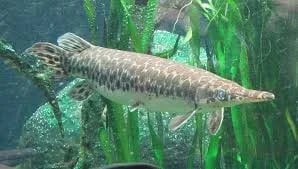
- It is also known as Manjuarí and is endemic to Cuba, where it is restricted to western mainland drainages and possibly the Isle of Youth
- Habitat: It occurs in coastal rivers, bayous, swamps, tidelands, channels and lagoons characterized by abundant aquatic vegetation, feeding primarily on fishes.
- Threats: Habitat loss and alteration, overfishing of prey items, and the establishment of non-native species (e.g., Clarias gariepinus) are the primary drivers of continuing declines
- Protection status : It is listed as Critically Endangered on the IUCN Red List.
Source :TH
Impact RISE Initiative for Societal Change
Syllabus: GS3/Sustainable Development
Context
- IIT Kharagpur launched Impact RISE (Research, Innovation, Skilling, and Entrepreneurship), an initiative that focuses on sustainable tech and management practices for societal transformation.
About
- The Impact RISE initiative will have four pillars – research, innovation, skilling, and entrepreneurship.
- It will involve research aligned with sustainable development goals and India’s climate and development priorities.
- The initiative will be activated through missions focusing on:
- climate resilience in the Sundarbans;
- the use of IIT Kharagpur’s AI health diagnostics;
- women’s health with a focus on low-cost devices for screening of anaemia and oral cancer;
- the use of arsenic filters and smart soil scanners to provide safe water;
Source: IE
Army Looks to Raise Agniveer Vacancies to 1 Lakh a Year
Syllabus: GS3/Defence
Context
- In a bid to reduce a shortfall of nearly 1.8 lakh soldiers, the Army is looking to increase vacancies for recruitment of Agniveers to over 1 lakh every year, from the existing 45,000-50,000.
Agnipath Scheme
- It was introduced in 2022, and is also called the Tour of Duty scheme.
- It is a short-term recruitment scheme for the Indian Army.
- Under the policy, soldiers — called ‘Agniveers’ — are recruited for four years, at the end of which only 25% of recruits from a batch are retained for regular service for 15 years.
- Age Limit : Candidates between the age of 17.5 years to 21 years are eligible for enrolling in the Agnipath scheme.
- The scheme provides an avenue to Indian youth, desirous of serving the country to get recruited in the Armed Forces for a short duration.
- The scheme enhances the youth profile of the Armed Forces.
Reasons for Increasing Vacancies
- Deficiency of Soldiers: Despite the recruitment of soldiers starting in 2022 with the Agnipath scheme, the retiring strength of soldiers continued to be 60,000-65,000 every year.
- It added to the overall deficiency by 20,000-25,000 a year. Currently, the overall deficiency of soldiers is nearly 1.8 lakh.
- Retiring Agniveers: 2026-end onward, a certain percentage of Agniveers would also start retiring since the first batch would complete the four-year tenure.
Source: IE
Operation Pawan
Syllabus: GS3/Defence
Context
- The Chief of the Army Staff (COAS), General Upendra Dwivedi, has paid homage to soldiers who laid down their lives during Operation Pawan (1987 – 1990) in Sri Lanka.
About
- Operation Pawan was launched by the Rajiv Gandhi government in 1987 after the signing of the Indo–Sri Lanka Accord.
- India deployed the Indian Peace Keeping Force (IPKF) to Sri Lanka during the country’s civil war between the minority Tamil population, and the Sinhalese-majority government.
- India was deeply concerned due to:
- Ethnic and cultural ties with Tamil Nadu
- Escalating violence
- Rising refugee inflow into India
Do you know?
- The Sri Lankan civil war ended on May 18, 2009 with the defeat of the Liberation Tigers of Tamil Eelam (LTTE).
- While India had not formally commemorated Operation Pawan for decades, Sri Lanka maintains an IPKF memorial in Colombo.
- Now, this has changed with the Indian Army officially recognising the sacrifices made by troops during the operation.
Source: TH
Previous article
India’s Research Fraud Epidemic
Next article
SC to ‘consider’ plea to revive NJAC: CJI
