


Georgia
Syllabus: GS1/ Places In News
In News
- India’s strengthening of textile and sericulture cooperation with Georgia, including participation in the 11th BACSA International Conference (CULTUSERI 2025).
About Georgia (Capital: Tbilisi)
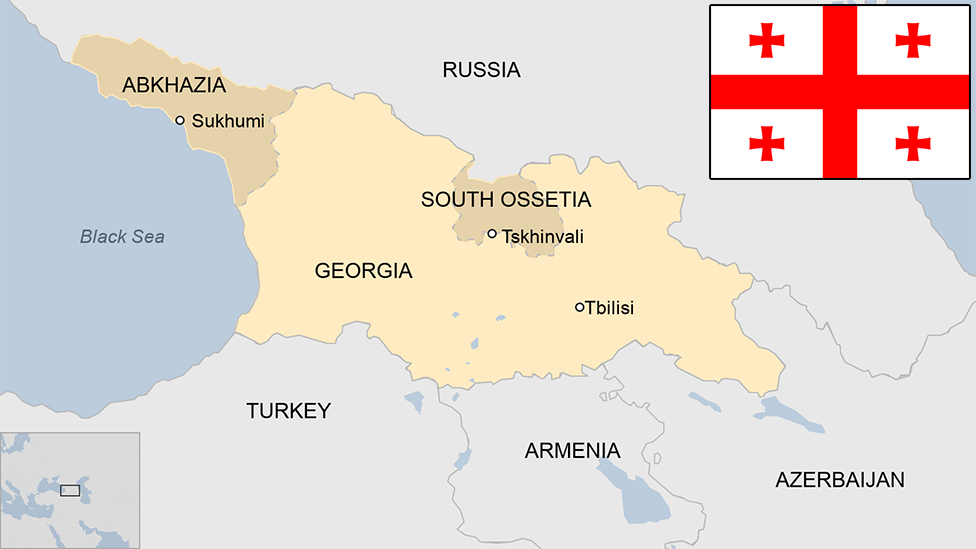
- Georgia is a Transcaucasian country located at the crossroads of Eastern Europe and Western Asia, making it a significant geopolitical bridge between the two continents.
- It lies in the South Caucasus region at the eastern end of the Black Sea, bordered by Russia, Azerbaijan, Armenia, Turkey, and the Black Sea itself.
- Geographically, Georgia is dominated by mountainous terrain, including the Greater Caucasus in the north and the Lesser Caucasus in the south.
- The country’s climate ranges from humid subtropical in the western regions to dry subtropical and alpine in the central and eastern parts.
- Georgia is covered by over one-third forest land, rich in biodiversity with various oak, beech, fir, and alpine vegetation types.
Source: TH
Article 240
Syllabus: GS2/Governance
In News
- The Union Home Ministry clarified that no Constitutional Amendment Bill in the upcoming winter session would bring Chandigarh under Article 240.
Constitution (131st Amendment) Bill, 2025
- It proposes to bring Chandigarh under Article 240, grouping it with Union Territories that lack legislatures, thereby empowering the President to frame regulations for it.
- It will open the door to an independent administrator in the Union Territory of Chandigarh.
- The Punjab Governor is currently the Administrator of Chandigarh.
- The move is aimed to simplify the Central Government’s law-making process for Chandigarh.
- It aims to ensure uniformity in governance across Union Territories without legislatures.
- It aims to empower the President to frame regulations for Chandigarh, equivalent to Acts of Parliament.
Opposition and Concerns
- The Constitution (131st Amendment) Bill, 2025 has triggered sharp opposition in Punjab.
- Parties argue it undermines Punjab’s claim over Chandigarh, which holds a unique status as the joint capital of Punjab and Haryana under the 1966 Reorganisation Act.
- Critics fear it could allow an independent administrator, ending the tradition of the Punjab Governor overseeing Chandigarh.
| Article 240 of the Constitution – It grants the power to the President to make regulations for the peace, progress and effective governance of certain Union territories, including the Andaman and Nicobar Islands, Lakshadweep, and Dadra and Nagar Haveli and Daman and Diu. |
Source :TH
Auramine in Indian food
Syllabus: GS2/ Health
In News
- India continues to face recurring episodes of chemical adulteration in food, particularly through the use of non-permitted synthetic dyes like auramine O.
About
- Auramine O is a synthetic, odorless yellow dye extensively used in industry, including textile and leather processing, printing inks, paper manufacturing, and certain microbiological staining procedures.
- Auramine O is not approved for use as a food colour in India, the European Union, the United States, or most other regulatory jurisdictions.
- Other dyes such as metanil yellow, rhodamine B, and malachite green appear in certain samples of sweets that are also not approved.
- It has a range of health risks, including liver and kidney damage, enlargement of the spleen, mutagenic effects that can alter genetic material, and potential carcinogenic outcomes.
Source: TH
Serious Fraud Investigation Office (SFIO)
Syllabus: GS3/ Economy
In News
- The Serious Fraud Investigation Office (SFIO) has introduced new technical and procedural safeguards to prevent impersonation and misuse of its summons and notices.
Serious Fraud Investigation Office (SFIO)
- Established under the Companies Act, 2013, SFIO functions under the Ministry of Corporate Affairs and is intended as a specialized body for white-collar crime investigations rather than routine company law violations.
- It brings together experts from accountancy, forensic audit, banking, law, IT, capital markets, taxation and company law to handle serious and complex corporate frauds.
- It investigates complex corporate frauds under Section 212 of the Act, while summons issued during investigations are governed by Section 217.
- It is headed by a Director who holds a rank not below Joint Secretary to the Government of India.
Source: ET
Extraordinary Resilience of Moss (Physcomitrium Patens)
Syllabus: GS3/Science & Technology
Context
- A recent study revealed that moss sporesexposed to outer space for nine months survived and retained their ability to reproduce once brought back to Earth.
- The team measured chlorophyll levels — vital for photosynthesis — and found only a 20% reduction in chlorophyll.
About Mosses
- Mosses are non-vascular plants that have evolved to survive in some of Earth’s harshest environments—arctic tundras, deserts, and high-altitude regions.
- Their spores are particularly hardy, capable of withstanding desiccation, UV radiation, and temperature extremes.
- Mosses could play a vital role in oxygen generation, humidity regulation, and soil formation in extraterrestrial environments.
- These traits likely contributed to their survival in space.
Why Does Recent Study Matters?
- Astrobiology and the Search for Life: The ability of space survival supports the theory of panspermia — the idea that life could travel between planets via meteoroids or other celestial bodies.
- If moss can survive space, it raises the possibility that microbial life might exist or have existed elsewhere in the universe.
- Space Farming and Sustainability: Moss is among the earliest land plants and is known for thriving in extreme environments on Earth.
- Its resilience in space suggests it could be a viable candidate for space-based agriculture.
- Biological Shielding and Terraforming: Moss could potentially be used to create biological shields against radiation or to help generate oxygen and recycle water in closed-loop life support systems.
- Its ability to colonize barren environments makes it a candidate for terraforming efforts on other planets.
Bharat New Car Assessment Programme (Bharat NCAP)
Syllabus: GS3/ Environment
In News
- The Ministry of Road Transport and Highways (MoRTH) has released a revised draft of Bharat New Car Assessment Program (Bharat NCAP 2.O).
More About the News
- Under Bharat NCAP 2.0, the overall rating of the vehicle will be composed of five assessment areas: Safe Driving (10%), Accident Avoidance (10%), Crash Protection (55%), Vulnerable Road User Protection (20%) and Post-Crash Safety (5%).
Bharat NCAP
- Bharat New Car Assessment Programme (Bharat NCAP) provides safety ratings for vehicles based on crash testing and evaluation criteria.
- The programme was first implemented in October 2023, which laid down the detailed procedure for vehicle manufacturers or importers to get their vehicles tested as per Automotive Industry Standard (AIS)-197.
- The programme is voluntary in nature.
- Central Institute of Road Transport (CIRT) in Pune is the designated agency for issuing the Bharat NCAP ratings.
Source: IE
Indo-Tibetan Border Police (ITBP)
Syllabus: GS3/Defence
Context
- The Indo-Tibetan Border Police force is establishing 10 all-woman Border Outposts along the Line of Actual Control (LAC), marking a significant step toward gender inclusion in border security.
About the ITBP
- Raised: 24 October 1962, after the India-China war.
- Status: A Central Armed Police Force under the Ministry of Home Affairs.
- Motto: “Shaurya-Dridhata-Karma Nishtha”
- Operational Roles: Guarding the 3,488 km-long India-China border from the Karakoram Pass (Ladakh) to Jachep La (Arunachal Pradesh).
- Counter-insurgency operations (e.g., in Chhattisgarh).
- Legal Framework: In 1992, the ITBPF Act was enacted; in 2004, the entire India-China border was assigned to ITBP for border guarding duties.
Source: TH
African Grey Parrot
Syllabus: GS3/Species
In News
- According to state forest departments, there are no officially registered breeders or authorized pet shops for African grey parrots in India, despite their widespread availability in markets.
African Grey Parrot
- The African grey parrot (Psittacus erithacus) is a medium-sized, highly intelligent parrot regarded as the best mimic among bird species, often nicknamed “The Einsteins of the Bird World.”
- It is native to West and Central Africa, inhabiting savannas, coastal mangroves, woodland edges, and forest clearings.
- There are two main subspecies: the Congo African Grey (CAG), known for its bright red tail, and the Timneh African Grey (TAG), with a darker maroon tail.
- African greys are notable for their exceptional talking and comprehension abilities, capable of large vocabularies and contextual speech.
- The species is classified as Endangered by the IUCN, mainly due to habitat loss and heavy international pet trade capture.
Populations Threats
- India’s domestic market sees widespread illegal and unreported trade of African grey parrots due to lack of proper registries and breeder authorization, with states like Tamil Nadu, Kerala, and Karnataka being major trade hubs.
Source :TH
Previous article
Electricity (Amendment) Bill, 2025
