


Syllabus: GS2/Health
Context
- The Demow Model from eastern Assam’s Siva sagar has been chosen as one of the successful systems of snakebite prevention and management under a project sanctioned by the Indian Council of Medical Research (ICMR).
- The project, called the Zero Snakebite Death Initiative: Community Empowerment and Engagement for Mitigation of Snakebite Envenoming.
Snakebite Envenoming
- The snakebite envenoming (poisoning from snake bites) was classified by the World Health Organisation (WHO) as a high-priority neglected tropical disease.
- An estimated 1.8 – 2.7 million people worldwide are envenomed annually.
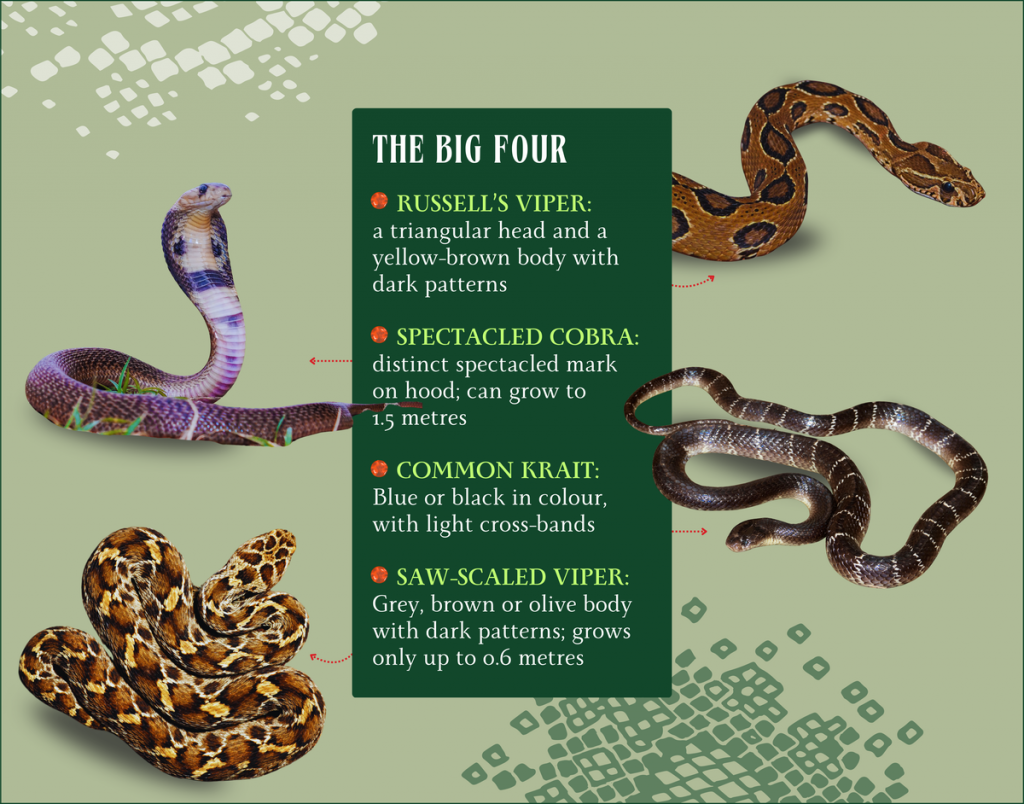
- Snake Bites in India: In India, around 90% of snake bites are caused by the ‘big four’ among the crawlers – common krait, Indian cobra, Russell’s viper and saw scaled viper.
- In India, around 58,000 deaths occur of an estimated 3-4 million snake bites annually.
- Snakebite deaths are more common (48%) during the southwest monsoon (June-September).
- Close to 70% of snakebite deaths occur in nine states, including Uttar Pradesh, Bihar and Madhya Pradesh.
- India has more than 310 species of snakes. Of these, 66 are labelled venomous or mildly venomous.
- The ‘Big Four’ were considered responsible for most venomous bites in the country, but newer studies show other species also contribute to the snakebite burden, particularly in the Northeast.
| Irular Community – The Irular people are skilled snake-catchers and can safely extract venom from snakes in controlled environments. – Their expertise ensures a steady supply of high-quality venom for antivenom production in India. |
Source: TH
Previous article
Viksit Bharat Shiksha Adhikshan Bill
Next article
Push for Public Sector Bank Reforms
