


Syllabus: GS 3/Economy
In News
- India’s Pharmaceutical exports are projected to reach $350 billion by 2047, a 10-15 times increase from current levels.
About India’s Pharmaceutical industry
- It has gained international recognition as the “Pharmacy of the World,” particularly for its imperative role in supplying vaccines, essential medicines, and medical supplies during the COVID-19 pandemic and beyond.
- The sector has showcased its innovative capabilities and established itself as a crucial global pharmaceutical value chain member.
Current Status in the Global Market:
- India is the largest supplier of generic drugs globally, accounting for 20% of global sales.
- India ranks third globally in drug and pharmaceutical production by volume.
- India exports to approximately 200 countries and territories.
- The top five destinations for these exports are the USA, Belgium, South Africa, the UK, and Brazil.
- India ranks 11th in pharmaceutical export value, despite being a major global supplier of generics.
- The total annual turnover of pharmaceuticals in FY24 was ₹4.17 lakh crore, growing at an average rate of 10.1 per cent in the last five years.
Export Projections
- India’s pharmaceutical exports are expected to grow from $27 billion in 2023 to $65 billion by 2030.
- The shift from volume-based to value-driven growth is key to India’s pharmaceutical sector.
- Focus areas for growth include ActivePharmaceutical Ingredients (APIs), biosimilars, and specialty generics.
- API Market Growth: India’s API exports are projected to grow from $5 billion to $80-90 billion by 2047.
- Global supply chain diversification, particularly due to the U.S. Biosecure Act, presents an opportunity for India to strengthen API production.
- Biosimilars Market Growth: Indian biosimilar exports, currently valued at $0.8 billion, are expected to grow fivefold to $4.2 billion by 2030 and $30-35 billion by 2047. Increased R&D, regulatory simplifications, and capacity expansion will support this growth.
- Biosimilars are medications that closely resemble biologic drugs, produced through living systems such as yeast, bacteria, or animal cells, and exhibit comparable structure and function.
- Generic Formulations Growth: Generic formulations make up 70% of India’s pharmaceutical exports, valued at $19 billion.
- These are projected to grow to $180-190 billion by 2047, with a shift towards higher-margin specialty generics.
- API Market Growth: India’s API exports are projected to grow from $5 billion to $80-90 billion by 2047.
Policy and Strategic Measures
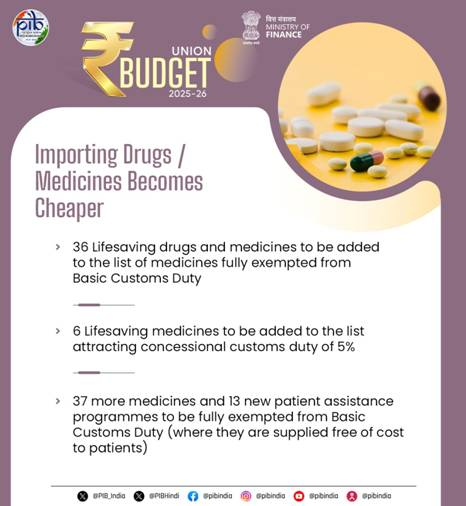
- The Government of India has implemented several initiatives to promote the pharmaceutical sector and boost investment.
- In September 2020, the government introduced the Production Linked Incentive (PLI) scheme for the pharmaceutical sector under the Self-Reliant India initiative, with a financial outlay of worth Rs.15,000 Crore, and the scheme duration is from 2020-2021 to 2028-29.
- Now ,there is a need for targeted policy measures, strengthening the API industry, addressing export barriers, and establishing country-specific export strategies.
- India supplies 55-60% of UNICEF’s vaccines but needs to focus more on high-value markets via clinical trials and manufacturing investments.
- Regulatory harmonization, expansion of production-linked incentives (PLI), and R&D incentives will be key enablers.
Challenges
- India is dealing with several challenges, including tackling intellectual property rights, lack of research and development etc.
- Understanding the political, economic, sociocultural, technological, environmental, and legal factors is vital for assessing the opportunities and challenges in the pharmaceutical market in India.
Conclusion and Way Ahead:
- India is already a global leader in generic drug supply and aims to move up the value chain with specialty generics, biosimilars, and innovative products.
- This shift could help India secure a position among the top five nations in export value by 2047.
- India has set its goal to be the “healthcare custodian of the world,” with a focus on innovation, R&D, and regulatory processes. And collaboration between academia, industry, and government is key to building a globally competitive pharmaceutical sector.
Source: BS
Previous article
India-UK Defence Collaboration
