


Syllabus: GS3/Economy
Context
- Recently, the President of India underscored the transformative role of India’s banking sector in shaping the nation’s economic trajectory.
About the Banking Industry in India
- India’s banking sector is a financial intermediary, primary conduit for credit delivery, liquidity modulation, financial inclusion, and serves as the operational backbone of macroeconomic management.
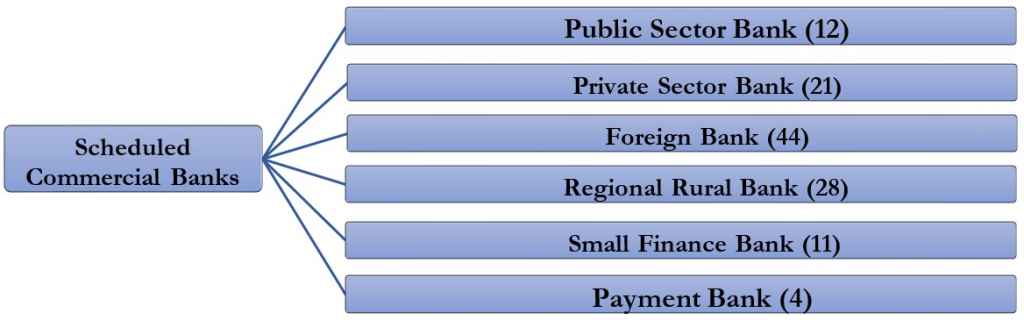
- Cooperative and Local Area Banks: Serve niche markets and rural populations.
- Development Financial Institutions: Such as NABARD, SIDBI, and IDBI, cater to agriculture, small industries, and infrastructure.
- Non-Banking Financial Companies (NBFCs): Over 9,000 registered entities support credit delivery to underserved segments.
Role of the Banking Industry in India’s Nation Building
- Role in Monetary Management: RBI, as the monetary authority, uses banks to implement its policy stance:
- Interest Rate Transmission: Changes in the repo rate directly influence lending and deposit rates across banks.
- Liquidity Operations: Banks participate in RBI’s Variable Rate Repo (VRR) and Reverse Repo (VRRR) auctions to manage short-term liquidity.
- Credit Expansion: By personal loans, services, and agriculture, supporting monetary transmission and economic activity.
- Role in Fiscal Management:
- Public Debt Management: Banks invest in government securities (G-Secs), helping finance fiscal deficits.
- Subsidy Delivery: Through Direct Benefit Transfers (DBT), banks ensure efficient disbursal of welfare schemes like PM-KISAN and LPG subsidies.
- Initiatives like the Pradhan Mantri Jan Dhan Yojana, which has enabled over 56 crore zero-balance bank accounts.
- Digital tools such as UPI, mobile banking, and digital wallets have revolutionized access to financial services, especially in remote areas.
- Tax Collection and Refunds: Banks facilitate digital payments for income tax, GST, and customs duties, streamlining fiscal operations.
- Economic Growth and Credit Expansion: According to the Ministry of Finance, the Indian banking system efficiently allocates resources from depositors to borrowers, thereby enhancing economic efficiency and growth.
- Support for MSMEs: Banks provide tailored credit solutions to micro, small, and medium enterprises, which are key drivers of employment and innovation.
- Infrastructure Financing: Long-term funding from banks supports roads, railways, ports, and digital infrastructure—essential for national development.
- Supporting Agriculture & Boosting Rural Economies: Banks can make farming more sustainable and profitable, through financial literacy programs and agri-tech initiatives.
- Conversion of Kisan Credit Cards to RuPay cards enhances rural financial empowerment.
Concerns & Challenges in India’s Banking Industry
- Asset Quality and Non-Performing Assets (NPAs):
- Hidden Stress: Loan recoveries have not kept pace with slippages, especially post-crisis restructuring.
- Sectoral Vulnerabilities: MSMEs and agriculture continue to face credit access issues, increasing default risks.
- Capital Adequacy and Basel III Compliance:
- Basel III Transition: While larger banks are adapting, smaller institutions may struggle to meet global standards.
- Inter-bank Linkages: High interconnectedness increases systemic risk during financial shocks.
- Financial Inclusion vs. Profitability:
- Rural Outreach: Banks are expanding into underserved areas, but digital literacy and infrastructure gaps persist.
- Net Interest Margins: Indian banks maintain higher margins compared to global peers, raising questions about efficiency and competitiveness.
- Competition and Consolidation:
- Reduced Competition: Mergers may lead to market concentration and reduced customer choice.
- Risk-taking Behavior: Intense competition among private banks can lead to risky lending and investment strategies.
- Cybersecurity Threats:
- Types of Threats: Phishing, ransomware, DDoS attacks, and fake apps pose serious risks to financial stability.
- High Exposure: Banks account for nearly one-fifth of all reported cyber incidents in India.
Key Reforms in India’s Banking Industry
- Banking Laws (Amendment) Act, 2025: It introduced 19 amendments across five major banking laws:
- Governance Enhancements: Director tenures in cooperative banks aligned with the 97th Constitutional Amendment.
- Audit Reforms: Public Sector banks (PSBs) empowered to offer competitive remuneration to statutory auditors, improving audit quality.
- Investor Protection: PSBs can now transfer unclaimed shares and bond redemption amounts to the Investor Education and Protection Fund (IEPF).
- Substantial Interest Threshold: Revised from ₹5 lakh to ₹2 crore, modernizing outdated definitions.
- 4R Strategy for PSB Revival (2014): It includes:
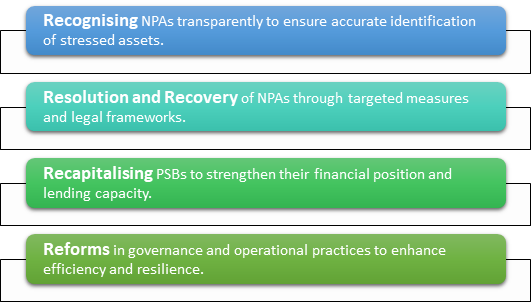
- Banks Board Bureau (BBB): Professional selection of bank leadership;
- Strategic guidance for capital planning and governance;
- Decriminalisation and Ease of Compliance: The Jan Vishwas Bill 2.0, proposed in Union Budget 2025, aims to:
- Decriminalize over 100 provisions across financial laws.
- Simplify compliance for MSMEs and startups.
- Promote a trust-based regulatory framework.
Previous article
Empowered Women are Foundation of Viksit Bharat
Next article
Majorana Particle
