


Syllabus: GS3/Economy
Context
- PM Modi participated in a programme marking a decade of the Startup India initiative on National Startup Day.
- Startup India was launched on January 16, 2016, as a transformative national programme to promote entrepreneurship and enable investment-driven growth.
India’s Startup Ecosystem
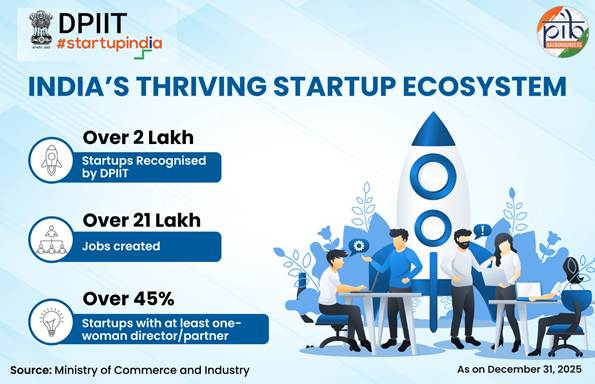
- India has rapidly evolved into one of the world’s largest startup ecosystems, with more than 2 lakh startups as of 2025 .
- India has the 3rd largest startup ecosystem in the world.
- Major hubs like Bengaluru, Hyderabad, Mumbai, and Delhi-NCR have been at the forefront of this transformation.
- India has over 120 unicorns with a valuation exceeding $350 billion.
- Global Innovation Index (GII) 2025 ranking: It provides performance metrics and ranks around 140 economies on their innovation ecosystems.
- India has made a steady climb from 48 rank in 2020 to 38 in 2025.
- At the same time, smaller cities are also steadily contributing to the momentum with around 50% of the startups emerging from Tier II/ III cities.
Challenges in Startup Ecosystem
- Funding Constraints and Capital Volatility: Indian startups face inconsistent access to capital, especially during global economic slowdowns.
- Heavy dependence on foreign venture capital exposes them to external shocks.
- Early-stage and deep-tech startups face acute funding shortages due to long gestation periods.
- Regulatory Complexity and Policy Uncertainty: Multiple compliance requirements across central and state governments, frequent regulatory changes, and tax-related ambiguities increase operational costs and discourage risk-taking and innovation.
- Talent Shortages and Skill Mismatch: There is a shortage of skilled professionals in emerging technologies such as AI, semiconductors, and cybersecurity.
- Infrastructure and Ecosystem Gaps: Startup-support infrastructure is concentrated in metro cities, limiting the growth of startups in Tier-2 and Tier-3 regions.
- Weak Innovation and R&D Culture: Low private-sector investment in R&D, poor industry–academia linkages, and inadequate awareness of intellectual property rights constrain innovation and commercialization of indigenous technologies.
Government Initiatives
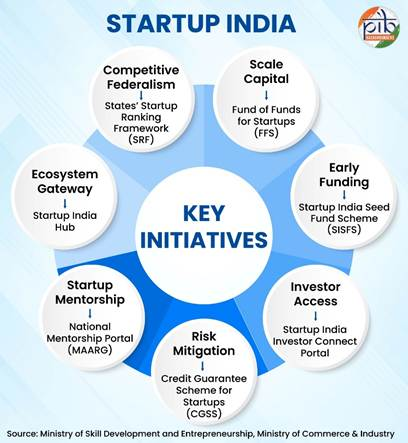
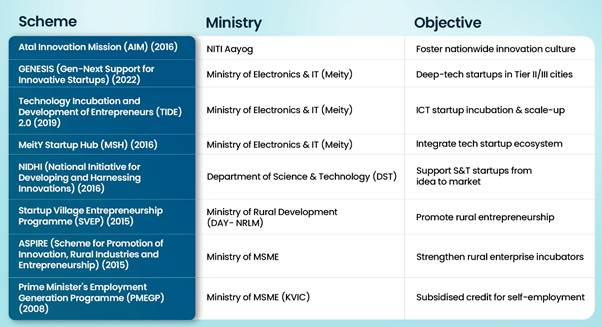
- Sector-specific and ministry-led initiatives
- AI Centers of Excellence: Establishing dedicated AI hubs and innovation centers across the country to support AI startups and research.
- India’s Digital Public Infrastructure (DPI): Combines public funding with private sector innovation to drive digital transformation.
Conclusion
- Over the last 10 years, India’s startup ecosystem has experienced tremendous growth, becoming the third-largest in the world.
- This dynamic collaboration among stakeholders has strengthened the ecosystem, driving economic growth and empowering the next generation of innovators.
Source: AIR
Next article
News In Short 16-01-2026
