


Syllabus: GS3/Disaster Management
Context
- As per The Central Water Commission’s (CWC) report, Himalayan glacial lakes are rapidly expanding, posing an increasing threat to communities and ecosystems.
Major Findings
- The total inventory area of glacial lakes within India increased from 1,962 hectares in 2011 to 2,623 in 2024 i.e. a 33.7% increase.
- It also identified 67 lakes in India that witnessed an over 40% increase in surface area, placing them in the high-risk category for potential GLOFs.
- Ladakh, Himachal Pradesh, Uttarakhand, Sikkim and Arunachal Pradesh showed the most notable expansions, signalling a heightened risk of GLOFs.
- Glacial lakes and other water bodies across the Himalayan region saw an overall area increase of 10.81% in 2024.
- The transboundary risk is posed by expanding glacial lakes in neighbouring countries, including Bhutan, Nepal and China.
What are Glacial Lakes?
- A glacial lake is a body of water that originates from a glacier. It typically forms at the foot of a glacier, but may form on, in, or under it.
- They are divided into two groups:
- Ice-contact lakes which are characterized by the presence of glacier ice terminating in lake water.
- Distal lakes that are somewhat distant, but still influenced by, the presence of glaciers and/or ice sheets.
What are Glacial Lake Outbursts?
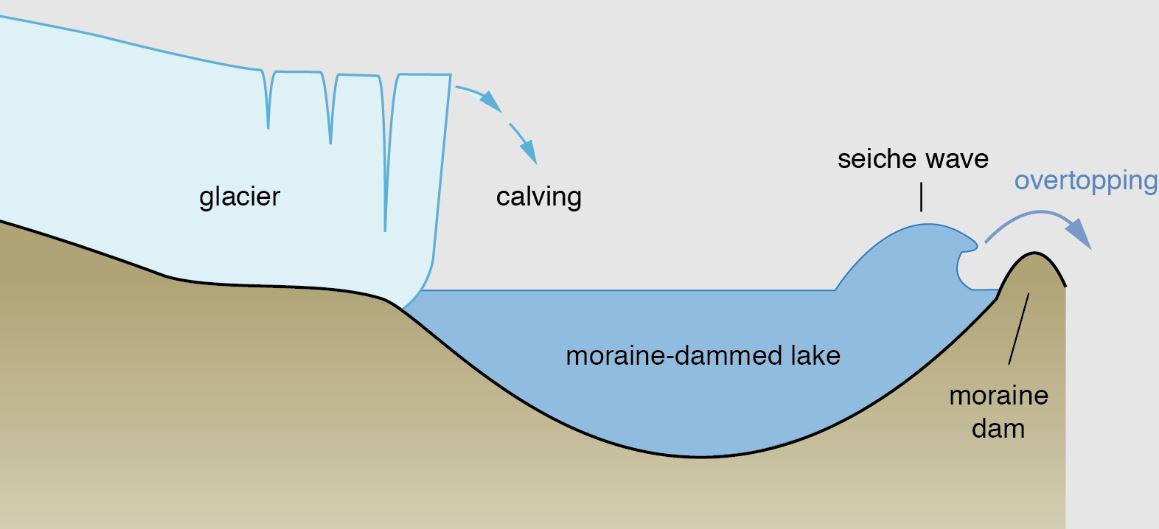
- As glacial lakes grow larger in size, they become more dangerous because they are mostly dammed by unstable ice or sediment composed of loose rock and debris.
- In case the boundary around them breaks, huge amounts of water rush down the side of the mountains, which cause flooding in the downstream areas called glacial lake outburst floods or GLOF.
- In 2013 Uttarakhand’s Kedarnath witnessed flash floods along with a GLOF caused by the Chorabari Tal glacial lake, killing thousands of people.
Reasons for the Glacial Lake Outbursts
- Rising Temperatures: The warming climate is causing glaciers to melt more rapidly in the Himalayas, contributing to the formation of new glacial lakes and the expansion of existing ones.
- Increased Glacier Instability: The rapid melting and retreat of glaciers lead to the destabilization of the moraines (ridges of rock and debris) that hold back water.
- Monsoon Rains: The Indian monsoon season brings intense rainfall to the Himalayan region, which increases the volume of water flowing into glacial lakes.
- Earthquakes and Landslides: The Himalayan region is seismically active, and earthquakes trigger landslides or rockfalls into glacial lakes.
- Development Projects: In the Himalayan region, there is increasing pressure to develop infrastructure, increasing the risk of landslides.
- Lack of Monitoring and Preparedness: Many of the glacial lakes in India are not regularly monitored, especially those in remote areas.
Consequences of GLOFs in India
- Flooding: A GLOF causes severe downstream flooding, wiping out villages, infrastructure, and farmland in affected areas.
- Erosion and Riverbank Damage: Sudden floods cause significant erosion of riverbanks, destabilizing land and infrastructure.
- Loss of Lives and Livelihoods: Communities living in flood-prone areas are at direct risk, especially those with limited resources to cope with the aftermath of such events.
- Infrastructure Damage: Roads, bridges, hydropower plants, and other critical infrastructure is destroyed by the massive surges of water.
Preventive Measures Taken
- The National Disaster Management Authority (NDMA) has finalised a list of 189 “high-risk” glacial lakes for mitigation measures to reduce the risk.
- Steps include constituting teams to investigate these lakes and attempt lake-lowering measures, which are done to buffer against any overflow.
- The National Glacial Lake Outburst Floods Risk Mitigation Programme (NGRMP) aims at detailed technical hazard assessments, installing automated weather and water level monitoring stations (AWWS) and early warning systems (EWS) at the lakes and in downstream areas.
- So far, 15 expeditions have been conducted including six in Sikkim, six in Ladakh, one in Himachal Pradesh and two in Jammu and Kashmir.
Source: TH
Previous article
‘Adaptive Defence’ Strategy To Bolster India’s Defence
Next article
News In Short 13-11-2024
