


Syllabus: GS3/ Economy
Context
- Ahead of India hosting the World Circular Economy Forum 2026, Finland will conduct roadshows in major Indian cities to promote circular economy awareness and explore business opportunities.
What is Circular Economy?
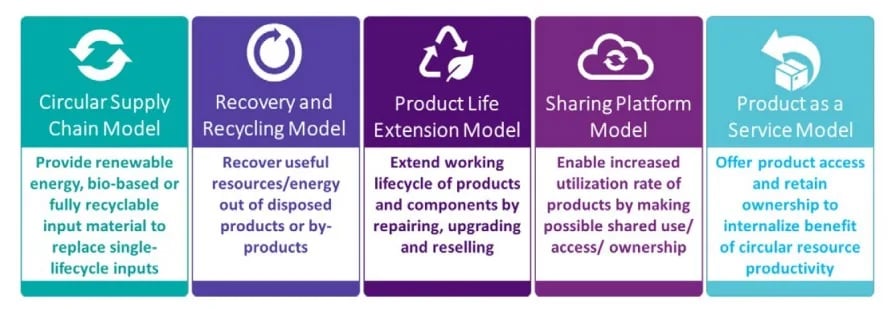
- The circular economy (CE) is a model of production that prioritises waste reduction or elimination at all stages of the product life cycle, from raw materials extraction and manufacturing to disposal and reuse.
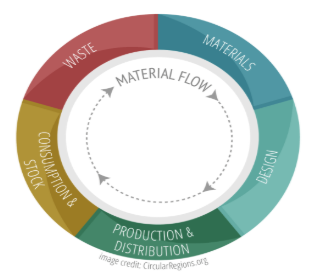
- India’s circular economy is expected to have a market value of $2 trillion and create 10 million jobs by the year 2050.
Significance of Circular Economy
- Economic Opportunities: The UNDP estimates that a global switch to circular economy models could generate $4.5 trillion in economic benefits by 2030, while also reducing emissions and creating stable green jobs.
- Job Creation: Expands employment opportunities in recycling, refurbishment, remanufacturing, and sustainable product design.
- Competitive Advantage: Businesses adopting circular models gain a market edge as consumers increasingly prefer sustainable products.
India’s Leadership in Circular Economy
- Swachh Bharat Mission (SBM-U): Strengthening urban waste management with 3R ( Reduce, Reuse, and Recycle) principles.
- GOBAR-Dhan Scheme: Promoting waste-to-wealth initiatives through biogas and organic waste processing.
- This scheme currently covers 67.8% of the total number of districts in India, with 1008 biogas plants being fully operational as of February 2025.
- E-Waste Management Rules (2022): Strengthening circular economy practices in electronic waste disposal.
- Extended Producer Responsibility (EPR) for Plastic: Encouraging industries to take accountability for plastic waste.
- India banned single use plastic in 2022.
- The 12th Regional 3R and Circular Economy Forum in Asia and the Pacific was held in Jaipur, India, in March 2025, marking a significant milestone in regional cooperation for sustainable waste management and circular economy initiatives.
Challenges in Implementing Circular Economy
- Technical expertise: Many businesses, municipalities, and citizens are unfamiliar with circular economy principles and lack the technical knowledge to implement them effectively.
- High initial investment costs: Setting up circular systems, such as recycling infrastructure or sustainable product design, requires significant upfront capital.
- Uneven corporate Adoption: SMEs, which form a large part of India’s economy, are largely not onboard, making the transition non-uniform across sectors.
- Insufficient enforcement policy: While policies exist, weak enforcement and limited incentives slow down adoption.
Way Ahead
- There is a need for a trickle-down effect where circular economy concepts reach all levels of industry, beyond large corporations.
- Promote repair and reuse of products to extend their lifecycle and reduce resource consumption.
- Improve recycling processes to prevent accumulation and environmental pollution through Extended Producer Responsibility (EPR) initiatives.
Source: TH
Previous article
India’s Commitment to Disability Rights
Next article
Needs of Bioremediation In India
