

Syllabus: GS1/ Geography, GS3/ Environment
Context
- Scientists have confirmed the existence of a massive offshore freshwater aquifer beneath the Atlantic Ocean, stretching from New Jersey to Maine, marking the first systematic global expedition to drill for undersea groundwater.
What are Offshore Aquifers?
- Offshore aquifers are underground bodies of porous rock or sediment saturated with freshwater, located beneath the sea floor.
- They resemble land-based aquifers but remain submerged under shallow coastal waters, extending up to 90 km from the shoreline.
- A 2021 study in Environmental Research Letters estimated that nearly 1 million cubic kilometres of freshwater lie beneath the oceans, around 10% of Earth’s terrestrial groundwater reserves.
- Location: Confirmed and studied locations include the coasts of;
- United States (Northeast Atlantic, California)
- Australia (Perth Basin, Sydney Basin)
- China (Yellow Sea, recently discovered large reserves)
- South Africa (Cape Peninsula)
- Europe (North Sea, Mediterranean).
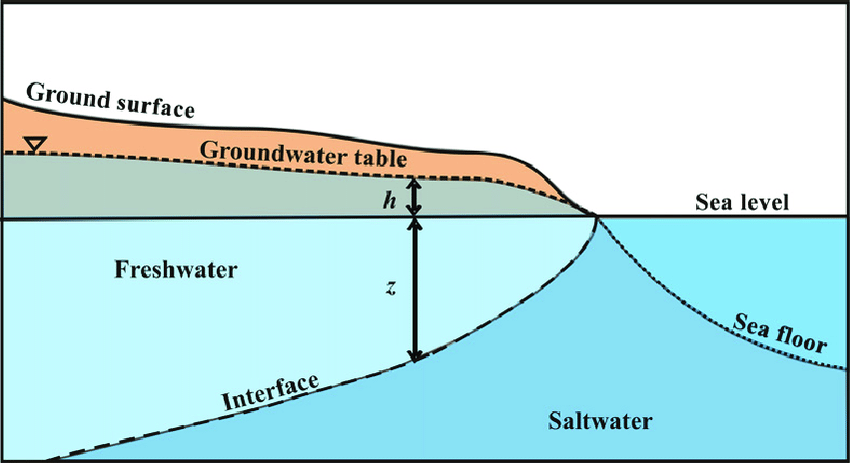
How Do They Get Freshwater?
- Ice Age Hypothesis: During glacial periods, when sea levels were lower, rainfall infiltrated exposed land, gradually filling aquifers that are now under the ocean.
- Onshore Connection Hypothesis: Some offshore aquifers remain linked to land aquifers and receive freshwater recharge through groundwater flow.
- Cap Rock Protection: A clay-rich compacted layer seals the aquifers, preventing freshwater from mixing with surrounding seawater.
Why are Offshore Aquifers Significant?
- Addressing Global Water Crisis: According to the UN (2023), global freshwater demand will exceed supply by 40% by 2030. Offshore aquifers could act as strategic reserves.
- Climate Resilience: Rising global warming, changing rainfall patterns, and over-extraction of land aquifers have worsened water scarcity. Offshore aquifers offer an alternative to stressed terrestrial sources.
- Strategic Importance: For countries facing droughts and urban demand, offshore aquifers can reduce dependence on costly desalination or water imports.
Challenges in Extraction
- High Cost: Offshore drilling is technologically complex and expensive. The US northeast exploration cost $25 million.
- Engineering Difficulties: Designing wells under the seabed, ensuring transport of water onshore, and preventing seawater intrusion are major hurdles.
- Environmental Risks: Extraction could disturb marine ecosystems, alter pressure balances, or cause saltwater contamination.
- If the water is ancient (from Ice Age recharge), it is a non-renewable resource and must be used cautiously.
- Governance Issues: Questions of ownership, coastal community rights, and international disputes over undersea water remain unresolved.
Way Ahead
- Framing International Law: The global community can develop a
- or other instruments to govern the equitable and sustainable use of offshore freshwater resources, preventing future conflicts.
- Integrated Water Management: Offshore aquifers can be viewed as a strategic part of a diversified water portfolio that includes conservation, wastewater recycling, and sustainable use of surface water.
Source: IE
Previous article
National Policy on Sustainable Aviation Fuel (SAF)
Next article
GST Reforms to Boost India’s Drone Ecosystem
