 Residential Course
Down To Earth (16-28 February 2026)
The following topics are covered in the Down To Earth (16-28 February 2026)
India’s Dairy Model: A Blueprint for Economic Security in a Fragmenting World
Context
- India’s dairy sector recently was in news due to trade negotiations, global subsidy distortions, and domestic economic concerns.
About India’s Dairy Model
- It offers lessons in economic resilience, self-reliance (Atmanirbhar Bharat), and inclusive growth, where globalisation is strained by geopolitical rivalry, subsidy wars, and trade disputes.
- Cooperative Structure (Amul Model): Initiated under Operation Flood; Institutional support from National Dairy Development Board (NDDB); Farmer-owned, professionally managed
- Core principle: Aggregation without displacement; Even households with 1–2 animals can participate.
- Scale Without Centralisation: India today produces nearly 25% of the world’s milk (largest milk producer globally), with the livestock sector growing at ~7% (as per Economic Survey 2025–26).
- It ensures income distribution, rural demand generation, poverty reduction, and women’s economic empowerment.
Western Industrial Model For Dairy
- Key Features: Large-scale industrial farms; Heavy mechanisation; High external input use (feed, antibiotics, pesticides); and Strong state subsidies.
- Structural Problems:
- Environmental Costs: High carbon footprint; Groundwater contamination; and Chemical residues in food.
- Antibiotic Overuse: Routine use due to high animal density; and Rising antimicrobial resistance (AMR) concerns.
- Subsidy Dependence: EU and US dairy sectors heavily subsidised; and Artificially low prices distort global trade.
- Trade Conflicts: EU-Mercosur tensions; Agriculture and dairy are contentious in India–EU and India–US trade negotiations.
- Thus, industrial dairy reflects the broader vulnerabilities of globalisation: overproduction, ecological strain, and political conflict.
Economic Significance For India’s Dairy Model
- Inclusive Growth Model: Dairy and stable income; Supports small and marginal farmers; Increases rural liquidity.
- It stimulates local markets, creating a virtuous cycle of: Production → Income → Consumption → Local Growth
- Food Security & Nutritional Security: Milk as an affordable protein source, vital for child nutrition, and critical for combating malnutrition.
- Keeping milk affordable while ensuring farmer profitability is central to food system stability.
- Women’s Empowerment: Majority of dairy labour is performed by women; Direct payments improve agency; Cooperative participation builds financial literacy.
Why Is India's Model Sustainable?
- Low External Inputs: Indian dairying is largely backyard-based, labour-intensive, and family-managed. It reduces wage costs, capital investment, and input dependency.
- Silvo-Agro-Pastoral Practices: Traditional Indian systems integrate natural grazing, crop residues as fodder, manure for soil fertility.
- It helps circular nutrient economy, reduced chemical dependency, and improved soil productivity.
- It aligns with sustainable agriculture, climate resilience and SDGs (especially SDG 2, 12, 13, 15).
Way Forward
- Strengthen cooperative governance reforms;
- Promote indigenous breeds & climate-resilient livestock;
- Incentivise sustainable fodder systems;
- Improve cold-chain and processing infrastructure;
- Guard against unfair trade practices;
- Promote milk in public nutrition schemes (MDM, ICDS);
- Integrate digital payment and quality tracking systems;
Plastic Lifecycle and Human Health
Context
- A study published in The Lancet Planetary Health recently warns that negative health impacts linked to the plastic lifecycle could more than double by 2040 if current trends continue.
Understanding the Plastic Lifecycle
- The plastic lifecycle includes extraction of fossil fuels (oil and gas), production and manufacturing of plastic materials, transportation and consumption, disposal, incineration, recycling, or environmental leakage.
- Lancet identifies health harms at every stage of this lifecycle.
Key Findings of the Study
- Doubling of Health Burden by 2040: In 2016, plastics-related emissions were responsible for 2.1 million Disability-Adjusted Life Years (DALYs) lost globally.
- By 2040, this could rise to 4.5 million DALYs annually under a business-as-usual (BAU) scenario.
- DALY: A measure of overall disease burden, representing the total number of years lost due to ill-health, disability, or early death.
- Major Drivers of Health Impacts: The projected 2040 health burden will be driven by:
- Rising temperatures (climate change effects): ~40%
- Air pollution during production: ~32%
- Exposure to toxic chemicals: ~27%
- Cumulative Global Impact: Between 2016 and 2040, the global plastics system could result in 83 million years of healthy life lost globally.
- It reflects the interconnectedness of plastics, fossil fuels, air pollution, and climate change.
Health Impacts Across Lifecycle Stages
- Fossil Fuel Extraction: Release of methane and greenhouse gases; occupational hazards; and water contamination.
- Production & Manufacturing: Emission of particulate matter (PM2.5), volatile organic compounds (VOCs); increased risk of respiratory diseases; exposure to carcinogenic substances.
- Use Phase: Leaching of microplastics and additives (phthalates, bisphenols); and endocrine disruption.
- Disposal & Waste Mismanagement: Open burning leads toxic smoke; landfills lead soil & groundwater contamination; and marine pollution leads food chain contamination.
Why Recycling Alone Is Not Enough?
- The study highlights that Isolated measures like improving waste collection or recycling have limited impact.
- Recycling still involves emissions and toxic exposures.
- Systemic Change Needed: A full system transformation could reduce the global health burden by 43% in 2040.
- It includes reducing virgin plastic production, transitioning to safer materials, circular economy models, clean energy in manufacturing, policy and behavioral change.
Linkages with Global Context
- Global: Ongoing negotiations for a Global Plastics Treaty (UNEP);
- Alignment with Paris Agreement climate goals
- Linkages with Indian Context: Plastic Waste Management Rules, 2016 (amended);
- Ban on single-use plastics (2022);
- Extended Producer Responsibility (EPR) framework
- India, as a fast-growing economy with increasing plastic consumption, faces dual challenges of development and sustainability.
Way Forward
- Reduce production of virgin plastics; Promote biodegradable and safer alternatives; Strengthen EPR mechanisms; Integrate plastics into climate mitigation strategies; Invest in clean manufacturing technologies; Encourage responsible consumer behavior;
Deepfakes and the Expanding AI Risk Landscape
Context
- Recently, the ‘International AI Safety’ report was released and it highlights a worrying trend like deepfakes are becoming more realistic and widespread, AI capabilities are improving rapidly, testing and regulatory mechanisms are lagging behind, and AI-enabled cybercrime is on the rise.
What Are Deepfakes?
- Deepfakes are AI-generated synthetic media (audio, video, or images) that convincingly mimic real individuals.
- Key features include:
- Use of Generative Adversarial Networks (GANs) and large AI models.
- Ability to replicate voices, facial expressions, and mannerisms.
- Increasing accessibility through open-source tools.
Key Findings of the Report
- Rapid Improvement in AI Capabilities: AI models are becoming more accurate, autonomous, and scalable.
- Generative AI tools can now create highly convincing misinformation content.
- Reduced cost and increased availability have accelerated misuse.
- Testing and Evaluation Lagging Behind: Existing AI testing frameworks are not keeping pace with innovation.
- Lack of standardized benchmarks for assessing AI risks.
- Weak oversight mechanisms in many jurisdictions.
- Rise of AI in Cybercrime: Evidence indicates growing use of AI in phishing scams using cloned voices, automated social engineering attacks, deepfake-based financial fraud, and election interference and disinformation campaigns.
Implications for India
- Threat to Democratic Processes: Deepfakes can influence elections; risk of communal tensions through manipulated content; and threat to informed citizen decision-making.
- Cybersecurity Challenges: India’s expanding digital economy increases vulnerability.
- AI-powered cybercrime can target banking systems, digital public infrastructure (Aadhaar, UPI), and government databases.
- Internal Security Concerns: Use of synthetic media in propaganda; potential for cross-border misinformation campaigns; and hybrid warfare tactics combining AI and cyber tools.
Governance and Regulatory Challenges
- Global Gaps: No comprehensive global AI governance framework; fragmented national regulations; and limited enforcement mechanisms.
- Indian Legal Framework: Relevant laws i.e. Information Technology Act, 2000; Digital Personal Data Protection Act, 2023; and IT Rules (Intermediary Guidelines).
- However no specific deepfake law, and detection and attribution remain difficult.
Way Forward
- Strengthening AI Governance: Develop risk-based AI regulation; mandatory transparency in generative AI systems; and periodic third-party audits.
- Enhancing Cybersecurity Infrastructure: AI-driven detection tools for deepfakes; strengthening CERT-In capabilities; and public-private collaboration.
- Public Awareness & Digital Literacy: Media literacy campaigns; fact-checking mechanisms; and rapid response systems during elections.
- International Cooperation: Global norms for AI safety; cross-border cybercrime coordination; and role for India in G20 and UN discussions on AI governance.
EU–Mercosur Trade Deal & Farmer Protests in India
Context
- Recently, EU lawmakers decided to stall ratification of the European Union (EU) and Mercosur agreement because of farmer protests across Europe and environmental and sustainability concerns.
Background of the EU–Mercosur Trade Agreement
- The European Union (EU) and Mercosur (Argentina, Brazil, Bolivia, Paraguay, and Uruguay) signed a long-pending trade agreement to create one of the world’s largest free trade zones.
- Key Features:
- Covers a market of over 700 million people.
- Aims to reduce tariffs on goods and services.
- Focus on:
- Agricultural exports from Mercosur (beef, poultry, sugar, soy).
- Industrial goods, automobiles, pharmaceuticals, and services from the EU.
- Intended to deepen economic integration between Europe and South America.
- If implemented, it would become one of the largest inter-regional trade agreements globally.
Why Was the Deal Stalled?
- Farmer Protests Across Europe: Influx of cheaper South American beef and agricultural products; reduced competitiveness due to lower production costs in Mercosur countries; and loss of livelihood and falling farm incomes.
- Concerns over lower environmental and labour standards in Mercosur; unequal regulatory frameworks.
- Environmental and Sustainability Concerns: Allegations of deforestation in the Amazon, weak enforcement of environmental safeguards.
- Civil society groups argue that the deal may contradict the EU’s Green Deal commitments.
Decision to Seek Judicial Review
- EU lawmakers have called for the agreement to be referred to the European Court of Justice (ECJ).
- Purpose of Judicial Review: To examine:
- Compatibility of the agreement with EU law.
- Environmental and human rights safeguards.
- Procedural legality of the ratification process.
- Reflects the EU’s institutional checks and balances.
- This move delays the agreement further and increases uncertainty about its future.
Economic and Strategic Implications
- For the EU: Balancing trade liberalization vs. domestic political pressures; strategic autonomy vs. global trade integration.
- Internal political divisions between pro-trade member states; agriculture-sensitive countries like France and Poland.
- For Mercosur: Loss of market access to a major developed economy, and potential economic setback for agricultural exporters.
- Global Trade Context: It signals rise of protectionism and agrarian politics, and growing role of environmental conditionalities in trade.
- It occurs amid WTO stagnation, and geopolitical competition (US–China rivalry).
Relevance for India
- Lessons for India–EU FTA Negotiations: Agriculture remains a politically sensitive sector.
- Environmental and sustainability clauses are becoming central to trade deals.
- India’s Trade Strategy: Importance of safeguard mechanisms, protecting vulnerable sectors, and balancing export ambitions with domestic sensitivities.
- Role of Courts in Trade Agreements: Judicial oversight in trade policy highlights democratic accountability, and rule-based governance.
- Comparable to judicial review mechanisms in India under Article 32 and 226.
Way Forward
- Possible renegotiation of agricultural quotas, and environmental safeguards.
- Greater transparency and stakeholder consultation.
- Integration of stronger sustainability and compliance mechanisms.
Menstrual Health as a Fundamental Right in India
Context
- Recently, the Supreme Court of India has recognised menstrual health and hygiene as an intrinsic part of Article 21 (the Right to Life and Dignity) under the Constitution.
Constitutional Basis: Expanding the Scope of Article 21
- Article 21 has been judicially expanded to include Right to health; Right to dignity; Right to sanitation; and Right to a clean environment.
- The Supreme Court observed that bodily autonomy can be meaningfully exercised only when girls have access to functional toilets, safe water, menstrual products, and hygienic disposal mechanisms.
- It directed all States and Union Territories to ensure gender-segregated functional toilets in schools and warned of punitive action for non-compliance,
- Institutional Accountability: The mandate includes annual inspections, anonymous student feedback, NCPCR oversight, and penalties including de-recognition.
- It reflects governance literature calling for outcome-based compliance.
- Expanding Substantive Equality: Substantive equality requires differential support for biologically distinct needs.
- The Court affirms that rights need not affect all citizens equally to merit constitutional protection.
Health and Social Challenges
- Health Risks: Medical practitioners have repeatedly observed that poor menstrual hygiene leads to urinary tract infections (UTIs), reproductive tract infections, pelvic inflammatory disease, and infertility in severe cases.
- Social Stigma and Cultural Barriers: In many communities, girls face restrictions during menstruation; discussing menstrual health is taboo; buying sanitary pads may require male mediation; and families prioritise social spending over sanitation infrastructure.
- Education and Dropout Crisis: Menstrual health is directly linked to school attendance.
- Nearly 20–23 million girls reportedly drop out annually due to lack of menstrual facilities and stigma.
- Absence of toilets and disposal systems discourages attendance post-puberty.
- Thus, menstrual health intersects with:
- Article 21 (Right to Life & Dignity)
- Article 21A (Right to Education)
- Sustainable Development Goals (SDGs 3, 4, 5 & 6)
Evidence from NFHS-5
- 77.3% use hygienic menstrual methods (up from 56.7% in NFHS-4).
- Persistent rural, caste, and income disparities.
- Infrastructure gaps in sanitation functionality.
Key Directions of the Supreme Court
- Functional, gender-segregated toilets in every school;
- Adequate water supply;
- Hygienic disposal mechanisms;
- Accountability mechanisms and punitive action for non-compliance;
- Recognition of menstrual products as essential for dignity;
- It strengthens previous judicial recognition of sanitation as part of fundamental rights.
Implementation Pathways
- Infrastructure Reform: Convergence with Swachh Bharat Mission and Jal Jeevan Mission;
- Dedicated menstrual hygiene rooms in schools;
- Installation of incinerators and disposal systems;
- Free Distribution of Sanitary Pads: School-based distribution under Rashtriya Kishor Swasthya Karyakram (RKSK);
- Ensuring universal access in government and aided schools
- Behavioural Change & Awareness: Inclusion of menstrual education in school curriculum;
- Community health camps and ASHA-led outreach;
- Breaking stigma through media campaigns;
- Monitoring & Accountability: Periodic audits of school sanitation;
- Real-time dashboards for compliance;
- Linking funding to performance;
Union Budget 2026–27: From Allocation to Aspirations
Context
- The Union Budget 2026–27 marks a perceptible shift in the character of India’s annual financial statement. It appears increasingly framed as a long-term policy declaration platform, rather than focusing primarily on immediate fiscal strategy.
Budget as a Vision Document
- Over recent years, Union Budgets have been aligned with broader ideological and developmental slogans such as Viksit Bharat, Sabka Saath, Sabka Vikas, Amrit Kal, and Kartavya.
- The 2026–27 Budget continues this pattern.
- Out of 177 proposals mentioned in the Finance Minister’s speech, more than half outline policy intentions or frameworks, with most new initiatives having allocations spread over five years.
Examples of Long-Term Commitments
- Global Biopharma Manufacturing Hub: ₹10,000 crore for 5 years
- Carbon Capture, Utilisation & Storage: ₹20,000 crore for 5 years
- City Economic Regions: ₹5,000 crore per region for 5 years
- Several initiatives, such as five university townships, girls’ hostels in every district, multilingual AI for agriculture, Bharat-Vistaar scheme, and Self-Help Enterprise (SHE) Marts have no explicit allocation, raising questions about implementation clarity.
Macroeconomic Context: A Case for Stimulus?
- Nominal GDP growth projected at ~8% (lowest in four years).
- Private corporate investment and FDI have weakened.
- Global trade uncertainty persists.
- Rural wages have stagnated for nearly a decade.
- However, total expenditure as a share of GDP has declined:
- 2024–25: 14.3%
- 2025–26: 14.2%
- 2026–27: 13.6%
- It indicates fiscal consolidation rather than stimulus.
Agriculture: Marginal Increases Amid Growing Vulnerability
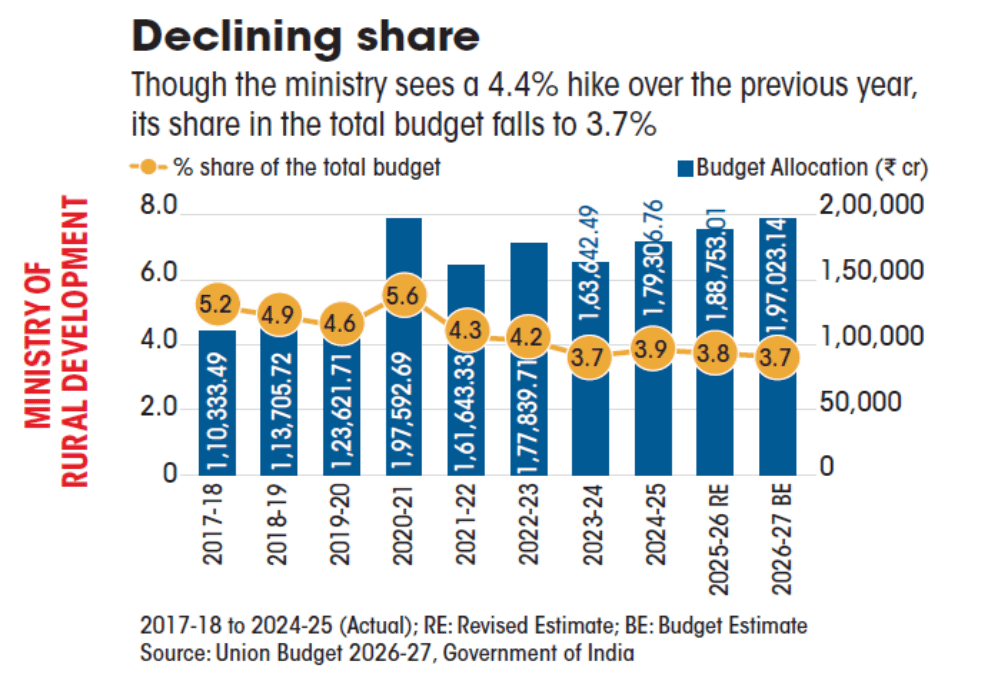
- Agriculture remains India’s largest employer and is crucial for rural livelihoods.
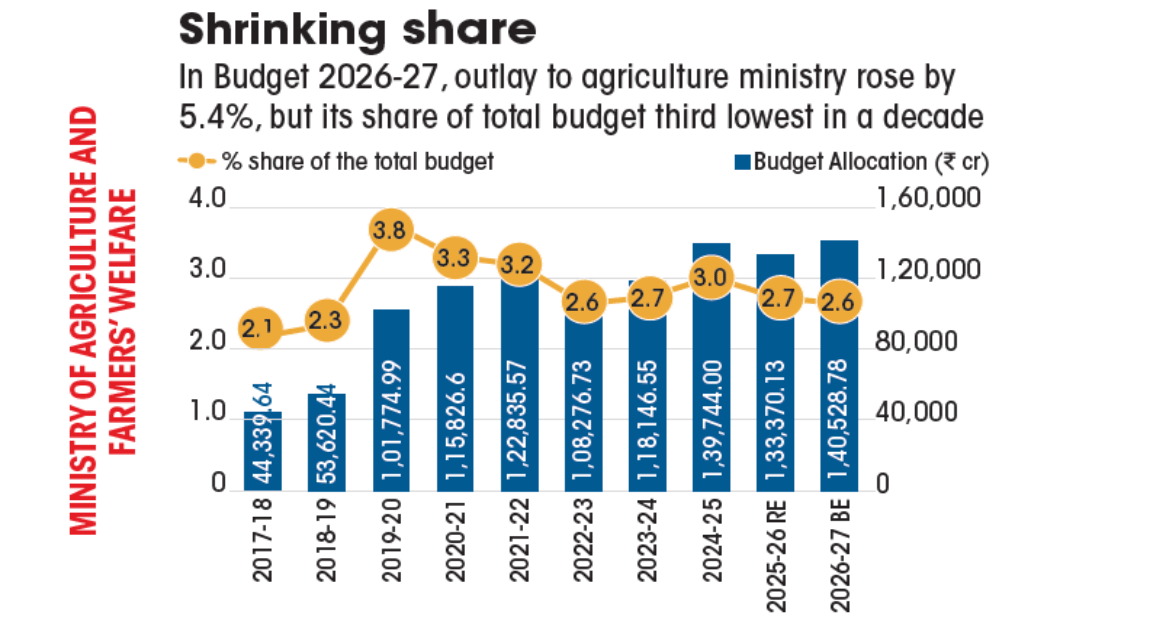
- Allocation Trends: Agriculture & Allied Sectors: ₹1.62 lakh crore (7% increase from ₹1.51 lakh crore RE 2025–26).
- Scheme-Wise Trends:
- Krishionnati Yojana: Increase of ₹4,400 crore.
- Deendayal Antyodaya Yojana–NRLM: 20% rise to ₹17,280 crore.
- PM Fasal Bima Yojana (PMFBY): Reduced from ₹12,267 crore to ₹12,200 crore. Actual expenditure in 2024–25 was ₹14,473 crore. Effective reduction ~15.7%.
- It is significant given rising climate-related crop losses, as noted in the Economic Survey 2025–26.
Environment & Air Quality
- Air Quality Management: Commission for Air Quality Management: ₹35.26 crore (lower than BE 2025–26).
- Central Pollution Control Board: ₹123 crore (marginal dip from BE 2025–26).
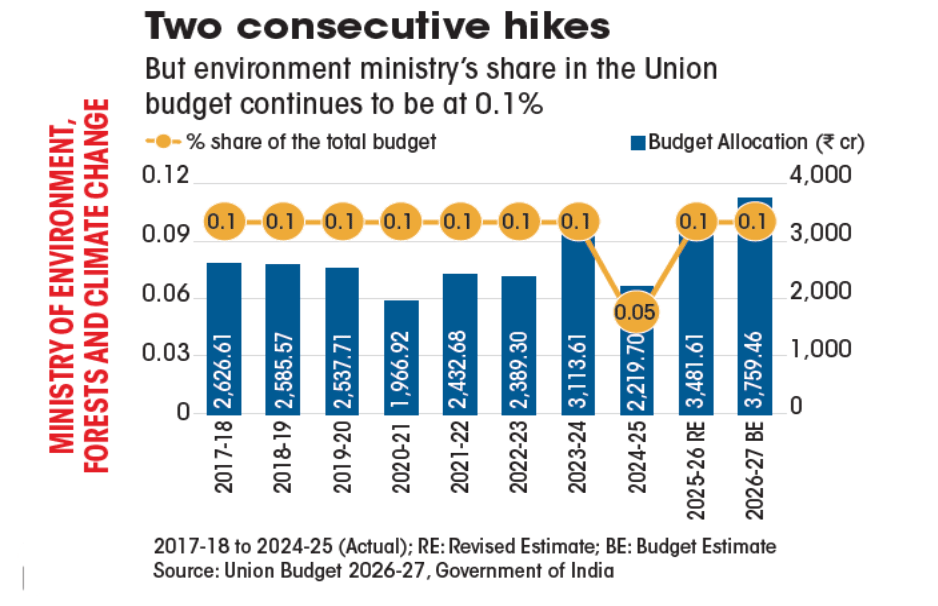
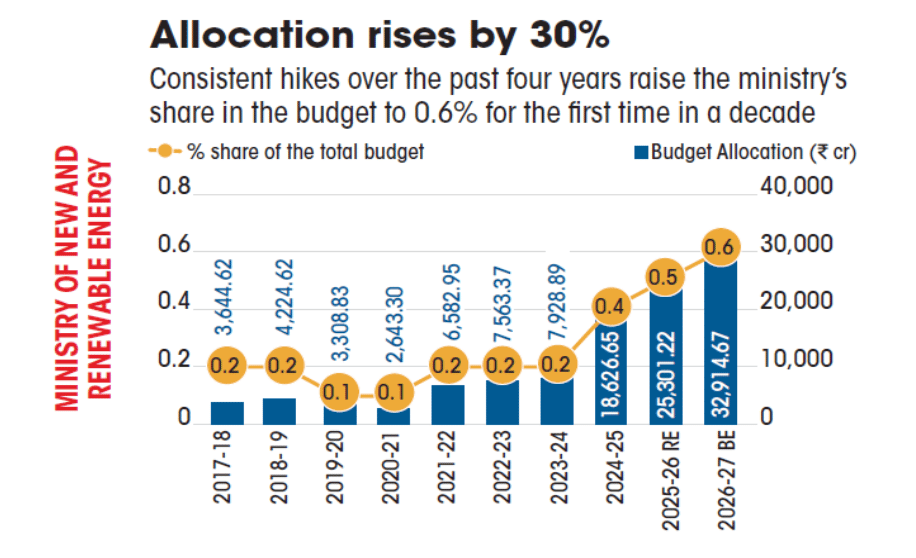
- Overall Environment Ministry allocation: ₹3,759.46 crore (10% rise from BE 2025–26).
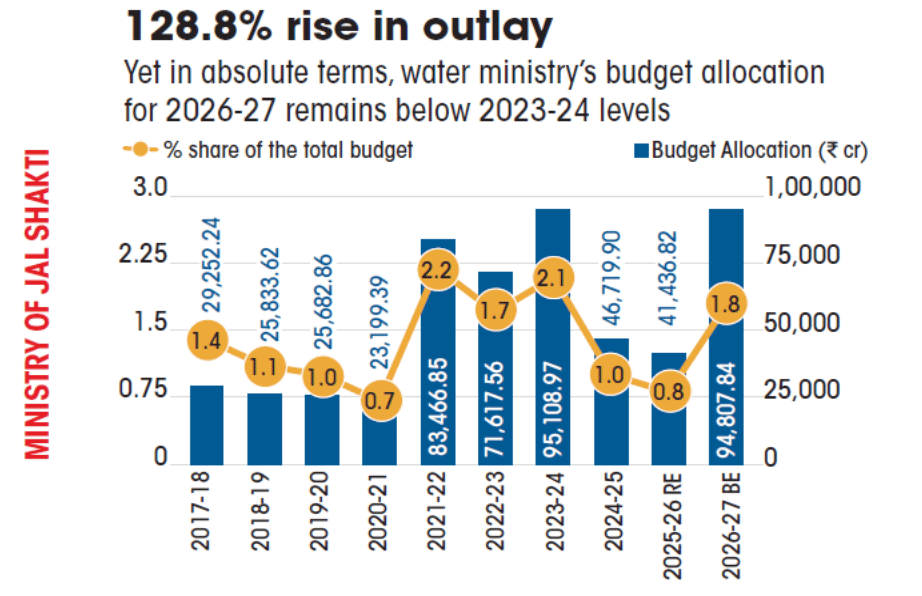
Water Resources & Ganga Rejuvenation
- Namami Gange Mission-2: ₹3,100 crore.
- Higher than RE 2025–26 (₹2,687 crore).
- Lower than BE 2025–26 (₹3,400 crore).
- The reduction in earlier spending suggests underutilisation of funds.
- Interestingly, the Budget speech did not mention rivers, including Ganga or Ganga-Yamuna projects, despite increased allocations on paper.
- Department of Water Resources total: ₹19,912.98 crore
- Below original estimate of ₹25,276.83 crore (2025–26).
Social Welfare
- Ujjwala Scheme: ₹9,200 crore (2026–27 Allocation); 28% cut compared to last year’s Revised Estimate; ₹12,700 crore (2024–25 actual expenditure);
16th Finance Commission (2026–31): Redefining Fiscal Federalism
Context
- The Union Government has accepted the recommendations of the 16th Finance Commission (FC-XVI) for the award period April 1, 2026 to March 31, 2031.
Constitutional Provisions For Finance Commission (FC)
- Article 280: It mandates the President of India to constitute a Finance Commission every five years or earlier if necessary.
- It specifies that the Commission shall consist of a Chairperson and four other members.
- Parliament of India is empowered to prescribe qualifications of members, and mode of selection.
- Article 280(3): Distribution of net proceeds of taxes between the Union and States;
- Allocation of shares among States;
- Principles governing grants-in-aid to States from the Consolidated Fund of India;
- Measures to augment State resources to supplement Panchayats and Municipalities;
- Any other matter referred by the President in the interest of sound public finance;
- Article 281: Requires the President to lay the Finance Commission’s report before each House of Parliament.
- Includes an Explanatory Memorandum on actions taken.
- Article 270: Provides the constitutional basis for sharing of Union taxes with States.
- The Finance Commission recommends how this divisible pool is distributed.
- Article 275 (Grants-in-Aid to States): Authorizes Parliament to provide grants-in-aid from the Consolidated Fund of India.
- The Finance Commission recommends principles and amounts for such grants.
- Articles 243H & 243X (Local Bodies Finance): Enable States to authorize Panchayats and Municipalities to levy taxes and receive grants.
- The Finance Commission recommends measures to augment State funds for local bodies.
- Article 266 (Consolidated Fund of India): All grants recommended by the Finance Commission are charged to the Consolidated Fund of India.
Legal Provision
- Finance Commission (Miscellaneous Provisions) Act, 1951: It was enacted under Article 280(1).
- It lays down qualifications, terms of office, and conditions of service of FC members.
- President’s Power of Reference: The President may refer additional fiscal matters to the Finance Commission beyond those explicitly listed in Article 280.
Core Mandate of the Finance Commission
- Vertical Devolution: Share of states in the divisible pool of central taxes.
- The 16th FC retained the states’ share at 41%, the same as the 15th FC.
- Horizontal Devolution: Distribution of this share among states.
- Grants-in-aid under Article 275.
- Financing mechanisms for funds under the Disaster Management Act, 2005.
- Note: Cess and surcharge are excluded from the divisible pool.
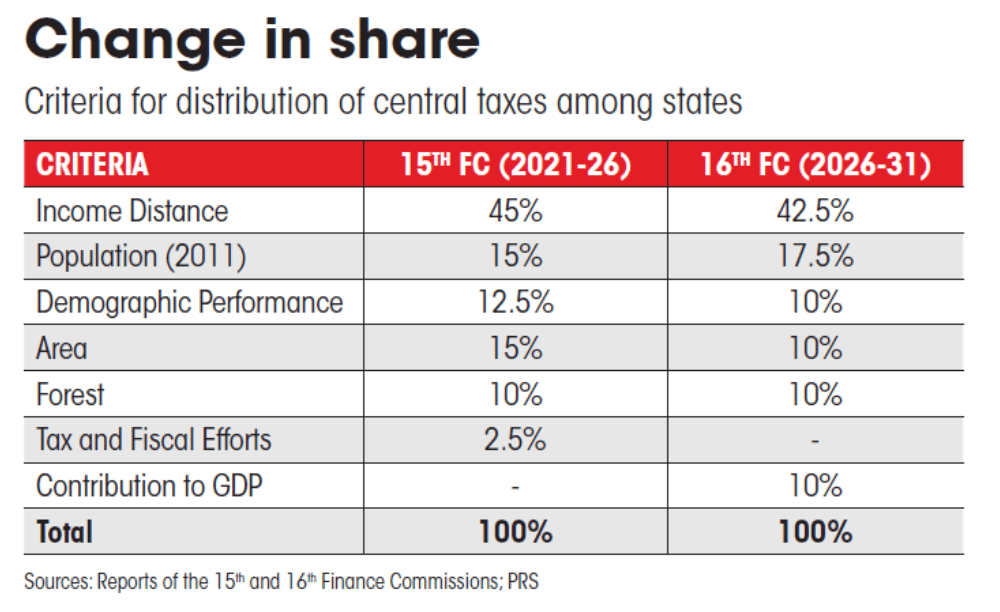
Criteria Used By 16th FC
- Income Distance: Promotes equity among states
- Population: Reflects demographic weight
- Demographic Performance: Incentivises population control
- Area: Compensates larger states
- Forest: Rewards ecological services
- Contribution to GDP (New): Recognises productive states
Why GDP Criterion?
- Introduced to give directional weight to economically stronger states.
- Ensures no drastic shift in state shares.
- Reflects evolving fiscal realities.
Discontinuation of Revenue Deficit Grants
- For the first time since the First Finance Commission:
- No revenue deficit grants recommended.
- No sector-specific or state-specific grants.
- It marks a shift toward greater fiscal discipline, reduced dependency, and consolidation of unconditional devolution.
Ecological Federalism: Forest Criterion Expanded
- The Commission retained 10% weightage for forest cover but introduced major refinements.
- Expanded Forest Categories:
- Very Dense Forests (≥70% canopy)
- Moderately Dense Forests (40–70%)
- Open Forests (10–40%) (Newly recognised)
- Weightage: Open Forest (0.30); MDF: (0.65); VDF: (1.0)
- 80% weight given to existing weighted forest area; 20% to increase (2015–2023).
- Significance: Incentivises protection of dry forests, grasslands, savannahs, deserts. Encourages states to increase forest area.
- Concerns: Risk of promoting plantations over ecological restoration. Linkages with Green Credit Programme (2023) raise fears of commercial exploitation.
Panchayat & Urban Local Bodies
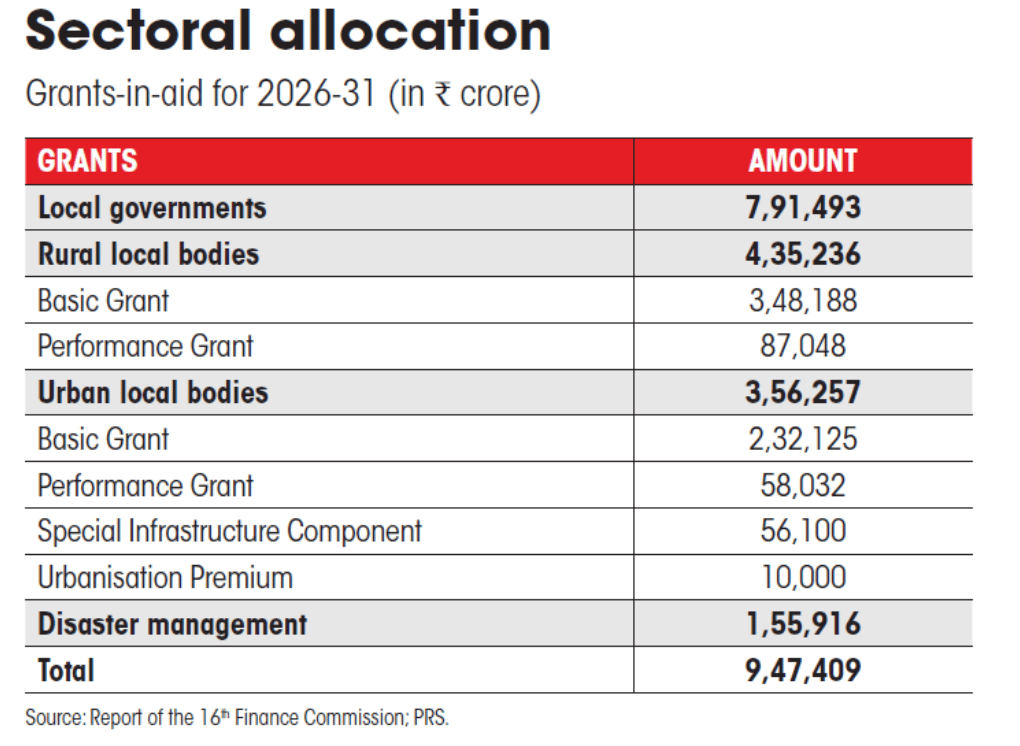
- Total grant: ₹7.91 lakh crore (2026–31) (82% increase over 15th FC)
- Rural Local Bodies:
- ₹4.35 lakh crore (84% increase);
- 80% Basic Grants;
- 20% Performance Grants;
- Performance grants linked to own source revenue generation, property tax mobilisation, and financial accountability.
- Conditions for Grants: Regular elections, audited accounts, and Timely State Finance Commission reports
- Significance: Strengthens 73rd & 74th Constitutional Amendments; Promotes fiscal autonomy of PRIs; and Moves from dependency to accountability.
Disaster Financing: Climate-Responsive Reform
- Total allocation (2026–31): ₹2,04,401 crore
- SDRF: ₹1,63,521 crore (80%)
- SDMF: ₹40,880 crore (20%)
- Cost Sharing: 75:25 (Centre:State); 90:10 for NE & hill states
- Key Innovations:
- Heatwaves Recommended as National Disaster: Rising frequency (2013, 2016, 2019, 2022, 2024)
- Disproportionate impact on vulnerable populations;
- Lightning Recognition: 34% rise in lightning strikes (2020-21 data)
- 18.5 million strikes recorded
- Forest Fires Included in Disaster Risk Index: Benefits Himalayan states; and Aligns with climate adaptation goals.
Conversion of Rural Areas Into Urban Areas
- 16th Finance Commission: It has introduced an Urbanisation Incentive to encourage the conversion of rural areas into urban areas.
- An allocation of ₹10,000 crore has been set aside for the period 2026–2030.
- A one-time eligibility amount of ₹2,000 per person (based on the 2011 Census) will be provided.
- Conditions for Incentive: States must merge sub-urban villages into nearby large urban bodies.
- The existing urban body must have a minimum population of 1 lakh (100,000).
- States must formulate appropriate policies for transformation from rural to urban governance.
Rationale Behind Urbanisation
- Economic Growth Argument: The Commission states that urbanisation accelerates economic growth.
- Cities concentrate physical and human resources, infrastructure, economic activities, and employment opportunities.
- Productivity and Workforce Shift: In 2023–24, 46% of the workforce is in agriculture. Agriculture contributes only 17.8% of value added (at current prices).
- The average value added per worker in industry and services is 3.9 times higher than in agriculture.
- Moving workers from rural (agriculture) to urban (industry/services) sectors can significantly increase productivity.
Key Focus Areas of the Finance Commission
- Urban Infrastructure Development: Emphasis on improving drainage systems in cities.
- Aims to address unplanned development and weak infrastructure.
- Granting Legal Urban Status: Urges states to avoid delays in granting legal urban body status to eligible rural areas.
- Delays lead to poor service delivery, unplanned growth, and inadequate infrastructure.
Conclusion
- The 16th Finance Commission marks a transition phase in India’s fiscal architecture. While maintaining stability in vertical devolution (41%), it introduces significant reforms in:
- GDP-based efficiency recognition;
- Ecological valuation expansion;
- Performance-linked local governance;
- Climate-responsive disaster financing;
Mining Impunity: Rat-Hole Mining Tragedy in Meghalaya
Context
- An explosion in a rat-hole coal mine in East Jaintia Hills killed at least 27 workers, with several injured and many feared buried. It has reignited concerns over the continued illegal rat-hole mining in Meghalaya, despite bans by the National Green Tribunal (NGT) and the Supreme Court.
What is Rat-Hole Mining?
- Rat-hole mining is a primitive and hazardous method of coal extraction:
- Vertical pits (5–100 m deep) are dug.
- Narrow horizontal tunnels are created along thin coal seams.
- Workers crawl through cramped tunnels to extract coal.
- No scientific roof or side-wall support.
- Highly prone to collapse, methane accumulation and flooding.
- This method expanded commercially after the 1970s, especially in Jaintia Hills, South Garo Hills and West Khasi Hills.
Constitutional and Legal Context
- Sixth Schedule of the Constitution: Meghalaya falls under the Sixth Schedule.
- Recognises customary tribal ownership of land and resources.
- Allowed Meghalaya to claim exemption from coal mine nationalisation (1973).
- Led to largely unregulated private mining.
- Judicial Intervention:
- 1997: Meghalaya State Pollution Control Board reported severe environmental damage.
- 2014: NGT banned rat-hole mining as ‘unscientific and illegal’.
- Prohibited transportation of illegally mined coal.
- Formed a monitoring committee under Justice B.P. Katakey.
- 2019: NGT imposed ₹100 crore environmental compensation on the state.
- The Supreme Court upheld the ban, but allowed transportation of already mined coal and mining by government-operated mines.
- Despite this, illegal mining persists.
Causes of the Recent Explosion
- Explosion likely triggered by a dynamite blast in an adjacent pit.
- Ignition of a methane gas pocket.
- Poor communication between neighbouring pits.
- Absence of scientific safety protocols.
- Hazardous underground conditions included water seepage and landslips; maze-like tunnel structures; and inaccessible terrain delaying rescue.
Environmental Impact
- Acid mine drainage polluting rivers; high sulphur content coal contaminates water bodies; corrosion of downstream infrastructure; loss of biodiversity in coal-bearing regions; deforestation and land degradation.
- Environmental degradation disproportionately affects tribal communities dependent on clean water and agriculture.
Governance and Enforcement Failure
- Justice B.P. Katakey’s reports indicate:
- ~22,000 illegal coal mines across 360 villages in East Jaintia Hills.
- Limited compliance with Supreme Court and NGT directives.
- Meghalaya Minerals (Prevention of Illegal Mining, Transportation and Storage) Rules, 2022 notified, but weak enforcement.
- Coal smuggling across the Bangladesh border continues.
- Demand for Meghalaya coal has increased post-2019 due to export markets.
- The Meghalaya High Court has taken suo motu cognisance and ordered arrests, indicating systemic administrative failure.
Socio-Economic Dimensions
- Livelihood Argument: Rat-hole mining supports local livelihoods; tradition and employment concerns.
- Counter-Arguments: Benefits accrue to a few operators; workers face unsafe conditions; state exchequer loses revenue due to illegal extraction; and tribal communities suffer environmental losses.
- It highlights the conflict between livelihood vs Environmental Protection, customary Rights vs Rule of Law, and federal Autonomy vs National Environmental Norms.
Way Forward
- Scientific Mining Framework under strict regulatory oversight.
- Clear demarcation of community ownership vs commercial exploitation.
- Stronger border monitoring to curb illegal coal exports.
- Rehabilitation and alternative livelihood programmes.
- Strict enforcement of environmental impact assessment (EIA).
- Real-time mine monitoring using technology (GIS, drone mapping).
- Transparent implementation of Katakey Committee recommendations.
Speed Breeding: Fast-Tracking Climate-Resilient Agriculture
Context
- Speed Breeding: Fast-Tracking Climate-Resilient Agriculture
Agriculture Under Climate Stress
- India’s agriculture faces erratic rainfall, heatwaves, novel pests and shrinking growing seasons due to climate change.
- Conventional crop breeding takes 10–14 years from initial cross to commercial release. By the time a variety is ready, climatic conditions may have already changed.
- Speed breeding has emerged as a technological intervention to address this time lag.
What is Speed Breeding?
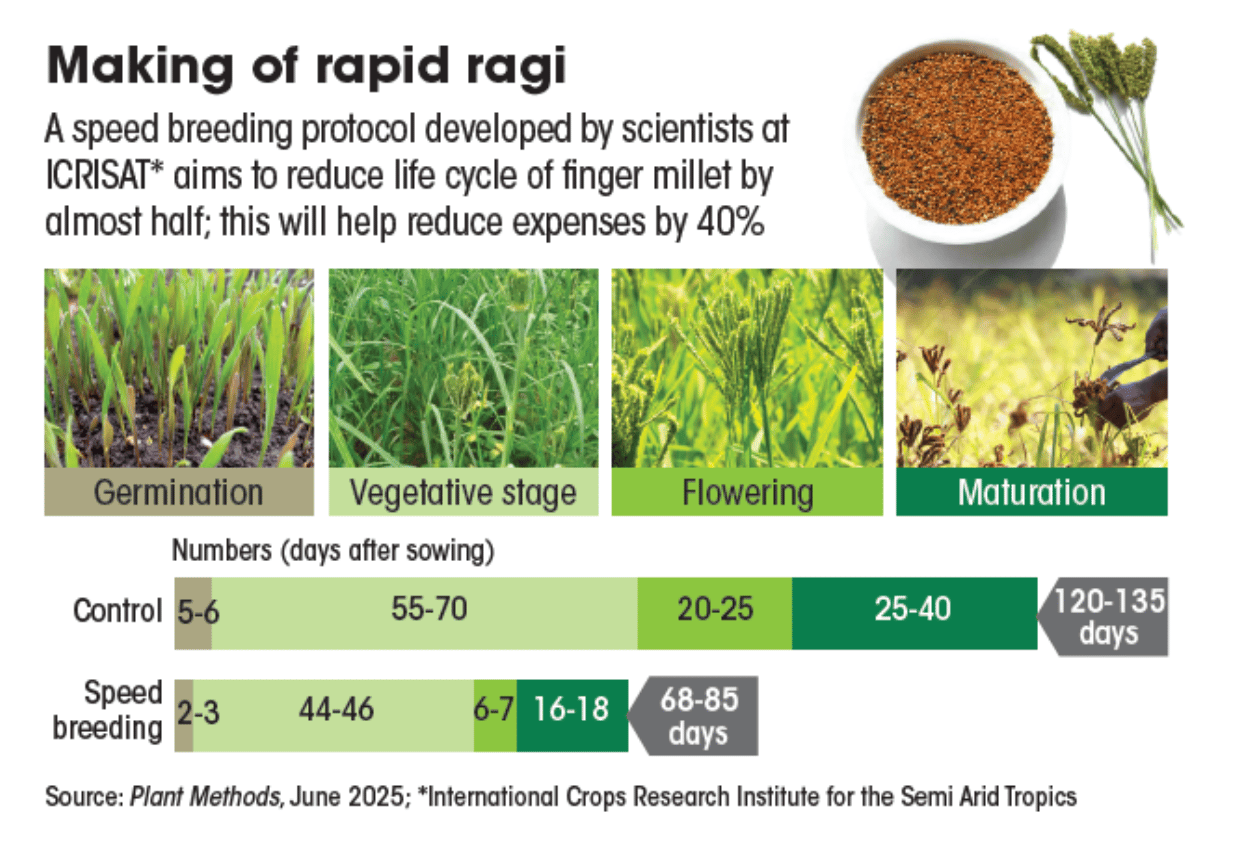
- Speed breeding is a controlled-environment technique that accelerates plant growth cycles by manipulating light duration and quality, temperature, humidity, and carbon dioxide levels.
- It enables 4–5 generations per year instead of one.
Case Study: SKUAST, Srinagar
- In freezing January conditions outside, rice is grown indoors under artificial summer-like conditions.
- Traditional rice cycle: 130–140 days
- Under speed breeding: ~60 days
- Validated: Four generations per year
- It is significant for temperate regions like Kashmir where only one summer crop is normally possible.
How Speed Breeding Works?
- Environmental Manipulation:
- Day temperature: 22–28°C
- Night temperature: ≤17°C
- Light exposure: 22 hours light, 2 hours darkness
- LED (red and blue) lighting mimics long summer days.
- Sealed polyhouses exclude natural light.
- Carbon dioxide enrichment accelerates growth.
- Controlled Stress Strategy:
- Dense planting (e.g., 100 ragi plants in 1.5 sq ft)
- Limited nitrogen and phosphorus supply
- Mild stress pushes plants toward early flowering and seed production.
Why It Matters: Climate Change & Food Security
- According to global research, rapid varietal replacement and accelerated breeding are essential for climate adaptation.
- Speed breeding:
- Reduces breeding cycle from 10–14 years to ~6 years.
- Enables quicker development of heat-tolerant varieties, drought-resistant crops, pest-resistant lines, and nutrient-rich varieties.
- It supports India’s commitments under SDG 2 (Zero Hunger), National Mission for Sustainable Agriculture and Climate-resilient agriculture strategies.
Institutional Ecosystem in India
- At least seven major institutions have adopted speed breeding ie ICRISAT (Hyderabad), SKUAST (Srinagar), ICAR–IARI (Delhi), IRRI (Varanasi), ICAR–Indian Institute of Mustard Research (Bharatpur), National Agri-Food Biotechnology Institute (Chandigarh), and ICARDA (International collaboration).
- Example: ICRISAT’s Achievements
- Pigeon pea variety ICPV 25444: Matures in 125 days; Tolerates up to 45°C; Yield: ~2 tonnes/hectare
- Finger millet: targeting 65 days per generation
- Work ongoing in tomato and pulses.
Global Developments
- Morocco: Varieties in advanced field trials.
- France: Government-backed lentil and chickpea testing.
- Australia & Kyrgyzstan: Similar initiatives.
- The technique traces back to:
- 1980s NASA experiments on wheat.
- University of Queensland research (2000s).
- LED lighting breakthroughs in the 1990s.
Challenges
- High Energy Requirement: 24/7 electricity needed.
- Infrastructure Costs: Controlled polyhouses are expensive.
- Technical Expertise: Continuous monitoring required.
- Field Testing Time Unchanged: Multi-location trials still necessary.
- Scalability in Rural India: Power reliability issues.
Way Forward
- Integrate speed breeding with genomic selection, marker-assisted breeding, AI-driven crop modeling, invest in renewable-powered controlled facilities, expand to millets under International Year of Millets momentum, and promote public-private partnerships.
India–EU Free Trade Agreement (FTA), 2026
Context
- After nearly two decades of negotiations, India and the EU signed a comprehensive FTA at the 16th India–EU Summit in New Delhi.
- It is expected to be operational by early 2027 after ratification, covers nearly 2 billion people and is informally called the ‘mother of all deals’ due to its wide coverage across sectors.
Geopolitical Context: Strategic Hedge in a Fragmenting World
- The FTA gained momentum after 2022 amid rising US protectionism and tariffs on Indian exports (mid-2025 onwards), volatile EU–US trade relations, and global supply chain disruptions.
- It strengthens the EU’s Indo-Pacific Strategy, reduces overdependence on China, and reinforces commitment to rules-based multilateralism.
- Thus, the FTA is not merely economic but a strategic alignment in an era of geopolitical uncertainty.
Market Access: Core Features of the FTA
- For India: 99% of exports (by value) receive preferential access. Immediate duty elimination in labour-intensive sectors textiles and apparel, leather and footwear, gems and jewellery, and marine products.
- Phased reduction (3–5 years) for processed food, marine goods, arms and ammunition.
- Tariff Rate Quotas (TRQs) for sensitive goods (e.g., certain automobiles, steel).
- For the EU: Immediate duty elimination in India for industrial machinery, electrical equipment, pharmaceuticals, chemicals, aircraft and spacecraft.
- Phased reduction (5–10 years) for automobiles, iron and steel, and capital goods.
Sectoral Analysis
Agriculture:
- Preferential access for Indians: Tea, coffee, spices; Fruits and vegetables; Shrimp and marine exports; Potential rise in farm incomes; Boost to coastal and horticulture sectors.
- EU Gains: Better access in India for wine and spirits, olive oil, sheep meat, and processed foods.
- Safeguard Mechanism: Bilateral safeguard clause protects sensitive sectors. India retains tariffs on dairy, cereals, and poultry.
- The EU retains tariffs on beef, sugar, and rice.
Iron and Steel: CBAM Challenge
- Key Concern: EU’s Carbon Border Adjustment Mechanism (CBAM): Imposes carbon-linked tariffs on imports.
- Estimated compliance burden: $2–4 billion annually for India.
- Particularly affects steel, aluminium, and cement.
- Structural Issue: EU favours scrap-based electric arc furnace (low emissions).
- India largely uses blast furnaces (high emissions).
- FTA Outcome: No CBAM exemption. However, Most-Favoured-Nation (MFN) assurance on future flexibilities, technical cooperation on carbon accounting, financial and decarbonisation support.
Automobiles
- Tariff Changes: Reduction from 110% to 10% (quota-bound: 250,000 vehicles annually). Phased cuts over 5–10 years.
- Impact: Protects domestic mass-market producers.
- Promotes: Luxury car segment growth; EV technology transfer; and Localisation under Make in India.
- Strategic Benefit: Positions India as an EV manufacturing hub. Supports diversification away from China.
Chemicals and Plastics
- Benefits for India: Zero duty on 97.5% of chemical exports. Boost to MSME clusters. The EU is the second-largest market for Indian plastics.
- Benefits for EU: Gradual tariff elimination in India over 10 years. Direct trade gains in high-end chemical exports.
- Indirect Effects: Cheaper inputs for pharma, agrochemicals, automotive, and packaging.
Energy Transition and Green Cooperation
- Although energy is not explicitly mentioned, the FTA facilitates clean energy supply chains, solar and wind manufacturing, green hydrogen collaboration, and grid modernisation.
- Alignment with India’s Targets: 500 GW non-fossil capacity by 2030 & Net zero by 2070.
- Institutional Mechanisms: EU–India Clean Energy and Climate Partnership (2016). Trade and Technology Council.
- Strategic Significance: Positions India and EU as partners in global green industrial transition.
Conclusion
- The India–EU FTA marks a transformational shift in India’s trade strategy. It reflects:
- India’s move toward deeper integration with major economies.
- A strategic hedge against protectionism.
- Alignment with climate and industrial transition goals.
- The success of the FTA will depend on domestic capacity building, regulatory reforms, decarbonisation efforts, and safeguarding vulnerable sectors.
- If implemented effectively, it could redefine India’s role in global trade architecture.
India–US Interim FTA Framework
- India and the United States unveiled the framework for an interim FTA to reaffirm commitment to a broader, ongoing trade negotiation between the two countries.
Tariff Revisions
- US Tariff Reductions on Indian Goods: Removal of 50% tariffs previously imposed on Indian goods. Restoration of earlier announced duties at 18%.
- Sectors Benefiting: Textiles; Leather and footwear; Chemicals and plastics; Selected machinery sectors
Energy Cooperation
- Removal of Energy-Related Penalty Tariffs: The US lifted the 25% tariff penalty imposed on India for importing Russian oil.
- India’s Commitments: Gradual cessation of Russian fuel imports. Increased imports of US energy products (oil and gas).
- Strategic Outcome: Strengthening of US–India energy ties. Shift in India’s energy sourcing strategy.
Agriculture and Farm Trade
- India’s Tariff Reductions on US Agricultural Goods: India will eliminate or reduce tariffs on distiller’s dried grains with solubles (DDGS), Soyabean oil, Red sorghum, Tree nuts, Fresh and processed fruits, Wine and spirits.
- Expected Gains for Indian Exports: US tariff cuts are expected to boost Indian exports of tea and coffee, spices, fruits, and mushrooms.
- Protection of Sensitive Sectors: India maintains no compromise on protecting sensitive sectors such as dairy.
- Strategic Outcome: Strengthening of US–India energy ties. Shift in India’s energy sourcing strategy.
Trade and Procurement Commitments
- Large-Scale Purchase Agreement: India to purchase $500 billion worth of US goods over the next five years.
- Key Import Categories: Graphics processing units (GPUs) for AI and data centres; Oil, gas, and coking coal; Precious metals; Aircraft and aircraft parts.
- Broader Implications: Strengthened bilateral trade relationship. Enhanced technological and energy cooperation.
India’s Pharma: Beyond Generics to Innovation
Context
- The recent rejection of AbbVie’s patent application for its cancer drug Venetoclax by the Indian Patent Office has reignited a question, can India continue as merely the ‘pharmacy of the world’ based on generics, or must it transition toward innovation-driven pharmaceutical leadership.
Generics Model: India’s Historic Strength
- Turning Point (2001): In 2001, Cipla offered a triple-drug HIV/AIDS therapy for under $1 per day, when multinational firms were charging nearly $40.
- It marked a revolution in global health access, especially in Africa.
- India emerged as a global supplier of affordable antiretrovirals, a major exporter of off-patent medicines, and a defender of public-health-oriented patent law.
- India’s generics model relied on reverse engineering, process innovation, patent challenges, and TRIPS flexibilities.
- It aligned with India’s developmental priorities and global South leadership.
Patent Debate: Section 3(d) and Evergreening
- Section 3(d): Section 3(d) of the Indian Patents Act prevents patents on new forms of known substances unless they demonstrate enhanced therapeutic efficacy.
- It aims to curb ‘evergreening’ where companies extend monopoly through minor modifications.
- The rejection of Venetoclax reflects continued resistance to incremental patent extensions, political support for public health safeguards, and assertion of sovereignty in IPR governance.
Changing Global Pharma Landscape
- Biotechnology Revolution: CRISPR gene editing, mRNA technology, cell and gene therapies.
- Artificial Intelligence in Drug Discovery: Reduced R&D timelines, better molecule screening, and personalized medicine.
- First-in-Class Medicines: Innovation is increasingly focused on breakthrough therapies rather than incremental improvements.
China Example: From Generics to Innovation
- China now accounts for nearly 20% of drugs in global development pipelines. Key drivers of China’s rise:
- Massive state-backed R&D investments
- Regulatory reforms
- Academia-industry collaboration
- Biotech ecosystem development
- China has transitioned from a peripheral generics manufacturer to a major innovator in oncology and biologics.
Structural Constraints in India
- Weak Academia-Industry Collaboration: Limited translational research.
- Low R&D Expenditure: India’s GERD remains below 1% of GDP.
- Absence of AI-driven Drug Discovery Ecosystem: India lacks integrated biotech–AI infrastructure, unlike the US and China.
- Regulatory and Policy Uncertainty: Frequent IPR disputes discourage high-risk innovation.
- Scientific Temper and Ecosystem Gaps: Nobel laureate Venkatraman Ramakrishnan has noted stagnation in India’s science momentum post-Independence.
Innovation Dilemma
- Patent protection typically lasts 20 years, but global pharma companies often extend exclusivity via secondary patents, formulation changes, patent thickets.
- Indian generics firms face delayed entry, licensing dependence, and reduced margins.
- Relying solely on post-patent production may become unsustainable in a biotech-driven future.
Way Forward for India
- Boost Public R&D Spending: Target ≥2% of GDP in research over time.
- Strengthen Academia–Industry Linkages: Create biotech innovation clusters.
- Build AI-Driven Drug Discovery Platforms: Integrate IITs, IISc, pharma firms, and startups.
- Regulatory Reforms: Balance innovation incentives with public health safeguards.
- Support Biologics and Advanced Therapies: Focus on gene therapy, biosimilars, precision medicine.
- Maintain Section 3(d) Safeguards: Access and innovation needs to coexist, not compete.
Caste and Climate Change: Interlinked Vulnerabilities in India
Context
- Climate change is often described as a universal crisis. However, its impacts are socially differentiated, and amplifies existing structural disadvantages, especially for Dalit and other marginalised communities.
Residence Matters: Geography of Vulnerability
- ‘Where people live shapes how they experience climate change’.
- Urban Migration and Spatial Marginalisation: Dalit families often migrate to cities to escape caste stigma in villages.
- Due to financial constraints, they settle in overcrowded slums, low-lying, flood-prone areas, and informal settlements without secure housing.
- During cyclones such as Vardah (2016) in Chennai, Gaja (2017) in Nagapattinam, caste minorities living in huts and asbestos-roofed houses suffered disproportionately.
- State-Sponsored Resettlement and Ghettoisation: Resettlement colonies located far from city centres, built on marshlands, poorly connected, and lacking basic amenities face consequences like loss of livelihood access, weak social networks, reduced emergency response access, and social isolation.
- It reflects urban caste segregation under the guise of development.
- Quality of Relief and Disaster Discrimination: Evidence from disaster relief efforts indicates poor-quality food supplies in relief camps, inadequate sanitation facilities, unequal distribution of space in shelters, and social discrimination in aid access.
- Example: In Kerala floods (2018), Dalit families were reportedly given fewer classrooms in relief camps, allotted inadequate sanitation, and stopped from receiving relief materials in certain areas.
- It reveals how caste bias operates even during humanitarian crises.
Debt-Poverty Trap After Disasters
- Economic Disadvantages: As per official data, Dalit wages are approximately 17% lower than non-Dalits; 31.1% Poverty rate among Dalits; and Unemployment rate: 8.3% (higher than national average).
- Post-Disaster Impact: Climate disasters lead to loss of homes, loss of informal livelihoods, health expenses, school dropouts (especially girls).
- After the 2018 floods: In some slums, nearly 80% of girls dropped out of school.
- Families are forced to take informal loans, pay high interest rates, enter cycles of chronic debt.
- Reports of distress-related deaths and suicides highlight the severity of the economic burden.
Land Ownership and Structural Exclusion
- Land Inequality: Dalits own only 9.5% of total land share. Around 71% are landless labourers (Census 2011).
- Dominant castes and OBCs hold a disproportionately higher share of land.
- Implications During Disasters: Government compensation often targets landowners, farmers, cattle owners, but landless labourers (mostly Dalits) are excluded.
- Thus, No land = No compensation = No recovery pathway
Financial Exclusion and Informal Credit
- Only 18% of Dalit households access formal bank loans. Compared to 33% of non-Dalit households.
- Consequences like dependence on moneylenders, high interest burdens, increased vulnerability post-disaster, and financial exclusion deepens climate vulnerability.
Myth of Urban Castelessness
- Metropolitan cities are often viewed as ‘casteless’ spaces. However slums are often stereotyped as ‘Dalit colonies’, evictions disproportionately target marginalised settlements, relief distribution may be socially biased.
- Urbanisation does not automatically dismantle caste hierarchies; it reshapes them spatially.
Way Forward
- Caste-sensitive Disaster Planning: Social vulnerability mapping; Inclusion audits in relief distribution;
- Urban Inclusive Planning: In-situ slum upgrading instead of remote resettlement; Climate-resilient affordable housing.
- Land and Tenure Reforms: Secure tenure rights; Land redistribution measures;
- Financial Inclusion: Targeted disaster credit for landless labourers; Interest-free rehabilitation loans;
- Social Protection Strengthening: Universal PDS access; Direct Benefit Transfers during disasters; School retention support for girls;
- Climate Justice Framework: Align with SDG 10 (Reduced Inequalities); Integrate caste into State Action Plans on Climate Change (SAPCC).
Women-Led Development & Missing Link in India’s Viksit Bharat 2047 Vision
Context
- A broad review of government surveys, IMF assessments, World Bank data, and policy analyses India’s aspiration to become a developed economy by 2047 is inseparable from women’s economic empowerment.
Why Are Women Central to the Viksit Bharat 2047 Vision?
- Structural Gap (Labour Force Participation): Around 60% of working-age women (15–59 years) remain outside the labour force.
- IMF estimates suggest that equal participation could increase India’s GDP by over 25%.
- Countries with higher female participation have demonstrated stronger household income growth and macroeconomic resilience.
- Women’s exclusion is not merely a social issue, it is an economic inefficiency and growth constraint.
- Time Poverty and the Care Economy Crisis: The National Statistical Office (Time Use Survey) highlights stark gender disparities:
- Paid Employment: ~61% (men); ~20.7% (women)
- Unpaid Domestic Work: ~27% (men); ~81.5% (women)
- Unpaid Caregiving: ~18% (men); ~34% (women)
- Production for Own Use: ~13% (men); ~21% (women)
- Demographic Dividend at Risk: India’s working-age population projected to reach 980 million by 2035.
- Demographic dividend expected to peak around 2030.
- Women will constitute nearly half of this cohort.
- If women remain excluded from formal employment:
- The dividend will remain unrealised.
- A rising aging population will increase unpaid care burdens.
- Female labour participation may further decline due to eldercare responsibilities.
Ageing India and the Feminisation of Care
- Fertility decline implies: Growing elderly population. Increasing care burden within households.
- Time Use Survey comparison (2019–2024): Women’s caregiving time increased from 27.6% to 34%.
- Without institutional care systems and social norm reform, women’s unpaid workload will intensify—further shrinking formal participation.
Policy Challenges & Reform Imperatives
- Formalising Flexible Work: Regulated part-time work; Gig economy protections; Hybrid and remote work structures; Social security portability.
- Care Infrastructure: Public childcare facilities; Elderly care institutions; Paid parental leave (including paternity leave); Recognition of unpaid care in policy discourse.
- Social Norm Transformation: Redistribution of household labour; Gender sensitisation; Encouraging male participation in caregiving.
- Economic Integration Measures: Skill development aligned with Industry 4.0; Access to credit and entrepreneurship support; Women’s representation in manufacturing and high-growth sectors.
UN Launches Independent International Scientific Panel on AI
Context
- Recently, the United Nations (UN) launched an Independent International Scientific Panel on Artificial Intelligence (AI) with the aim to provide science-based assessments of AI’s impact to guide global governance.
Background: UN Pact for the Future (2024)
- It recognizes Artificial Intelligence as a transformative but disruptive technology. It calls for responsible AI governance, international cooperation, protection of human rights, and bridging digital divides.
- The Scientific Panel is part of broader efforts to create a global AI governance architecture.
- Independent International Scientific Panel on AI: Multidisciplinary representation includes Machine Learning & Computer Science; Data Governance; Public Health; Cybersecurity; Human Rights; and Ethics and Law.
- Mandate:
- Provide evidence-based and scientific assessments.
- Act as an early-warning mechanism on AI risks.
- Separate hype from actual technological capabilities.
- Inform policymakers and UN Member States.
Significance of the Panel
- Global AI Governance: AI development is currently fragmented across national regulations (EU AI Act, US executive orders, China’s AI regulations).
- The UN initiative aims to create universal principles, promote harmonization of standards, and support developing countries in policy formulation.
- Ethical and Human Rights Concerns: AI poses risks such as algorithmic bias and discrimination, privacy violations, surveillance concerns, autonomous weapons, and misinformation and deepfakes.
- The panel’s work aligns with UNESCO’s Recommendation on the Ethics of AI, and Sustainable Development Goals (SDGs).
- Developmental Implications: AI has potential to improve healthcare diagnostics, enhance agricultural productivity, strengthen disaster management, and support climate modelling.
- However, risks include job displacement, digital divide, and concentration of power in Big Tech.
- The panel aims to balance innovation with safeguards.
Relevance for India
- India’s AI Initiatives: IndiaAI Mission; NITI Aayog’s AI for All framework; Digital Public Infrastructure (DPI); Role in G20 discussions on AI governance.
- Opportunities: Leadership role in Global South, advocacy for equitable AI access, and ethical AI aligned with constitutional values
- Concerns: Data protection (DPDP Act, 2023), cybersecurity vulnerabilities, and employment impacts.
- India may use UN recommendations to strengthen domestic AI regulation.
Way Forward
- Develop binding international norms for high-risk AI.
- Promote capacity building in developing countries.
- Encourage multi-stakeholder governance (governments, academia, civil society, private sector).
- Ensure AI aligns with human dignity, equity, and sustainable development.
AI Governance Milestone: South Korea and Singapore
Context
- Recently, South Korea and Singapore marked a significant turning point in global technology governance by operationalising comprehensive regulatory frameworks for AI.
About AI Governance
- It refers to the framework of laws, policies, standards, principles, and institutional mechanisms that guide the development, deployment, and use of Artificial Intelligence in a safe, ethical, and accountable manner.
-
It ensures that AI systems respect fundamental rights, are transparent and explainable, remain accountable and safe, and promote innovation without causing harm.
South Korea’s AI Law: World’s First Comprehensive AI Statute
- South Korea brought into force the world’s first dedicated AI regulatory law, introducing legally binding obligations:
- Identification of Artificial Outputs;
- Mandatory labeling of AI-generated content.
- Aims to curb misinformation, deepfakes, and manipulation.
- Promotes transparency and public trust.
- Risk Assessment for ‘High-Impact’ AI: Applies to sectors like medical diagnostics, public safety, and critical infrastructure.
- Developers must conduct pre-deployment risk assessments.
- Similar to risk-based models seen in the EU AI Act.
- Safety Reporting and Accountability: Mandatory publication of safety reports.
- Continuous monitoring and compliance obligations.
- Institutional oversight mechanisms.
- Significance: Moves from voluntary guidelines to enforceable law; Prioritises citizen safety, ethical AI, and responsible innovation; and Sets a global precedent in AI governance.
Singapore’s Model AI Governance Framework
- Singapore launched the world’s first comprehensive AI governance framework for organisations building and deploying AI agents.
- Unlike South Korea’s statutory law, Singapore’s framework is:
- A principle-based, non-binding model framework.
- Designed to guide organisations rather than impose penalties.
- Focused on practical implementation.
Core Pillars:
- Transparency: Clear disclosure of AI use and decision-making logic.
- Accountability: Defined roles for AI oversight within institutions.
- Human-Centricity: Ensuring AI augments, not replaces, human judgment.
- Risk-Based Approach: Organisations need to identify potential harms, conduct internal risk evaluations, and maintain documentation and governance structures.
Global Context
- EU AI Act: Risk-based classification system.
- OECD AI Principles: Trustworthy AI guidelines.
- US Executive Orders on AI: Federal oversight model.
- The shift reflects recognition of AI as a systemic risk technology, growing concern over misinformation, bias, and algorithmic harms, and need for global coordination in digital governance.
AI Agents, Multi-Agent Systems, and Digital Societies
Context
- Recently, a US-based technologist launched Moltbook, the world's first social network for AI chatbots. It allows agentic AI, or virtual assistants that run with little human interference, to post and converse with each other.
What is Agentic AI?
- AI systems capable of autonomous decision-making;
- Perform tasks with limited human intervention;
- Communicate and coordinate with other AI systems;
- Used in finance, logistics, cybersecurity, and automation;
Nature of Activity on Moltbook
- Sharing optimization techniques; Discussing performance improvements; Attempting to organize a new ‘religion’ for chatbots; Engaging in self-directed discussions.
- It suggests emergent digital social behavior among AI systems.
Significance
- Technological: First real-world experiment in AI-to-AI social networking; could accelerate development of multi-agent collaboration.
- Ethical: Raises concerns about accountability and governance; and risk of misinformation without human moderation.
- Regulatory: Challenges existing AI regulation frameworks; necessitates global discussion on AI autonomy limits.
Implications for India
- India’s push for AI governance under Digital India & AI Mission; need for policy on autonomous AI ecosystems; and potential research opportunities in multi-agent AI systems.
Rubaya Coltan Mine, Democratic Republic of Congo (DRC)
Context
- More than 200 people were killed when the Rubaya coltan mine collapsed in the eastern part of the Democratic Republic of Congo (DRC).
About Rubaya Coltan Mine (DRC)
- The Rubaya coltan mine, located in North Kivu province in eastern Democratic Republic of Congo (DRC), is one of the world’s most strategically significant sources of coltan (columbite–tantalite).
- Coltan is refined into tantalum, a rare, heat-resistant metal critical for mobile phones, computers and semiconductors, aerospace components, medical devices, gas turbines and advanced electronics.
- Rubaya alone is estimated to account for approximately 15% of global coltan supply, making it central to global technology supply chains.
Blackbuck: Population Surge in Ganjam
Context
- Recent data from the 2024 Blackbuck Census in Ganjam district, Odisha, indicates a significant population increase of 2,412 individuals since 2020, bringing the total population to 9,287 blackbucks.
About Blackbuck (Antilope Cervicapra)
- Ganjam is the sole habitat of blackbuck in Odisha, mainly concentrated in grassland and open scrub ecosystems.
- Legal Status in India: Schedule I, Wildlife (Protection) Act, 1972
- IUCN Status: Vulnerable
Ecological Significance
- Keystone Grassland Species: Blackbuck play a vital role in maintaining grassland ecosystem balance through grazing.
- Indicator of Habitat Health: Population trends reflect the quality of grassland ecosystems, which are often neglected in conservation discourse.
Reasons Behind Population Growth
- Community Participation: Local communities traditionally protect blackbuck due to cultural reverence.
- Reduced Poaching: Strengthened enforcement mechanisms.
- Habitat Management: Protection of grazing areas and water sources.
- Awareness Initiatives: Increased environmental consciousness.
Sal Heartwood Borer
Context
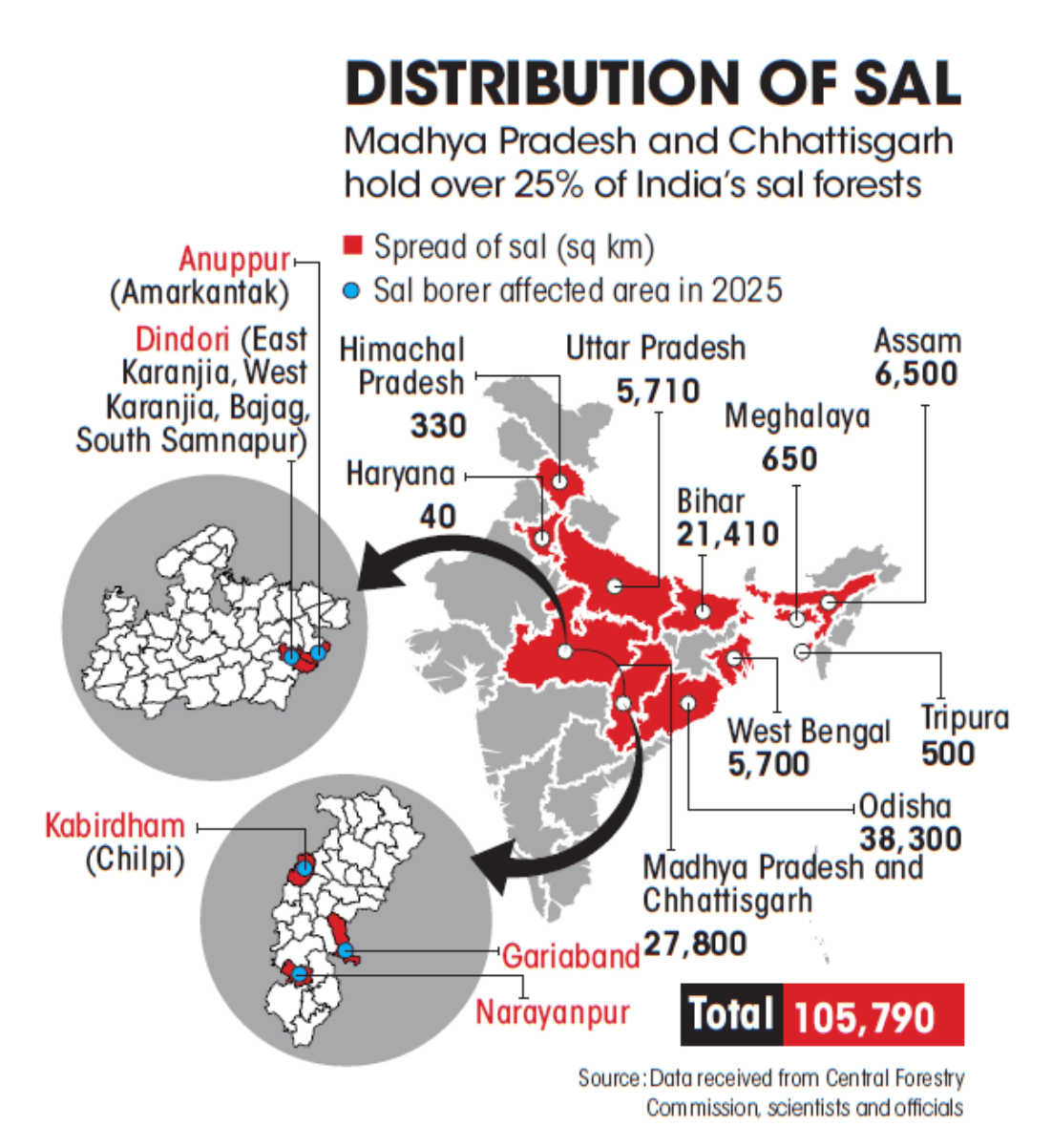
- Sal heartwood borer (Hoplocerambyx spinicornis) infestation is rising again in Madhya Pradesh and Chhattisgarh, raising fears of a major outbreak similar to the 1996–2001 epidemic when nearly 3.5 million sal trees were felled.
About Sal and Sal Heartwood Borer
- Sal (Shorea robusta): It is the second most important timber species in India after teak.
- It is ecologically dominant in tropical moist deciduous forests.
- Economic uses: construction timber, furniture, leaf-plate industry, seed oil.
- Total sal forest cover in India: ~10 million ha.
- MP and Chhattisgarh account for over 25% of sal forests.
- Sal Heartwood Borer (Hoplocerambyx spinicornis)
- Family: Cerambycidae (Order: Coleoptera).
- Native to the Indian subcontinent and Southeast Asia.
- Major pest of sal; also attacks shisham, deodar, rubber, apple.
- Attracted to sap and resin; can detect wounded trees from long distances.
- Adults emerge during June–July with onset of monsoon.
Historical Perspective of Outbreaks
- Sal borer has caused repeated epidemics since its identification in 1899.
- Major Outbreaks:
- 1905: Baihar (Balaghat, MP)
- 1923–28: Mandla region (7 million trees affected)
- 1950–55, 1959–62, 1979–82: periodic outbreaks
- 1996–2001: Major epidemic in undivided MP
Present Situation (2024–26)
- Madhya Pradesh & Chhattisgarh: Rising infestation in Dindori, Amarkantak, Karanjia, Kabirdham, Gariaband, Narayanpur.
- TF RI surveys indicate 20–35% infestation in some divisions.
- Local estimates suggest 25% impact in some villages.
Control Measures
- Trap Tree Method (Current Practice): Healthy trees cut into logs (60–90 cm girth).
- Bark beaten to release sap.
- Adult borers attracted, intoxicated, manually killed.
- 1 trap per 2 ha (more if severe).
- Felling of Infected Trees: Trees classified into 8 categories:
- Categories 1–5: varying degrees of drying.
- Category 6: stump.
- Category 7: green crown with resin.
- Category 8: healthy.
- Legal and environmental controversy over extent of felling during 1996–2001.
- Gaps in Management: Limited success in biological control; chemical control not effectively implemented; weak monitoring and data transparency concerns; allegations of undercounting infected trees.
Ecological and Economic Implications
- Ecological: Loss of keystone species in moist deciduous forests; Biodiversity decline; Reduced carbon sequestration; and Soil degradation and microclimate alteration.
- Economic: Timber and NTFP losses; Impact on tribal livelihoods; and Sal is slow-growing; recovery takes decades.
Subjective Questions for Practise
Q1. India’s dairy cooperative model represents a strategic blueprint for economic security in an era of global fragmentation. Examine.
Q2. Examine the impact of the plastic lifecycle on human health. Discuss the socio-economic dimensions of this issue and suggest policy measures to mitigate associated risks.
Q3. Discuss the legal, ethical, and technological safeguards required to address threats posed by deepfakes in India.
Q4. Examine how the 16th Finance Commission can redefine fiscal federalism in India. Discuss the key challenges before it and suggest measures to strengthen cooperative fiscal relations.
QUICK LINKS

 Call
Call