 Residential Course
YOJANA September 2025
The following topics are covered in the YOJANA September 2025:
Chapter 1: Swachh Bharat Mission (Grameen) and Jal Jeevan Mission
The Government of India’s launch of Swachh Bharat Mission (Grameen) [SBM-G] in 2014 and Jal Jeevan Mission (JJM) in 2019 marked two defining interventions in rural governance. These initiatives go beyond service delivery in sanitation and drinking water.
- They represent a shift towards participatory governance, community-led behavioral change, and institutional resilience, aligned with the vision of “Sabka Saath, Sabka Vikas, Sabka Vishwas, Sabka Prayas.”
- Together, they form a continuum of rural transformation—where sanitation and water converge to advance public health, uphold dignity, empower women, and lay the foundations for Viksit Bharat @ 2047.
Achievements of Swachh Bharat Mission (Grameen)
- Sanitation Coverage: Rural sanitation coverage expanded from 39% in 2014 to 100% in 2019, declaring India Open Defecation Free (ODF).
- Phase II (2020-21 onwards): Focus shifted to ODF Plus, i.e., sustaining ODF gains, managing solid & liquid waste, and visual cleanliness. As of July 2025:
- 96% of villages are ODF Plus.
- 4.70 lakh villages are ODF Plus Model villages.
- Health Impact: WHO (2018) estimated 3 lakh diarrheal deaths avoided by SBM-G in 2019 compared to 2014. UNICEF-BMGF studies confirmed improvements in Suvidha (convenience), Suraksha (safety), and Swabhimaan (self-respect) of women.
- Sanitation was reframed not just as infrastructure but as a symbol of dignity, equity, and citizen–state partnership.
Achievements of Jal Jeevan Mission
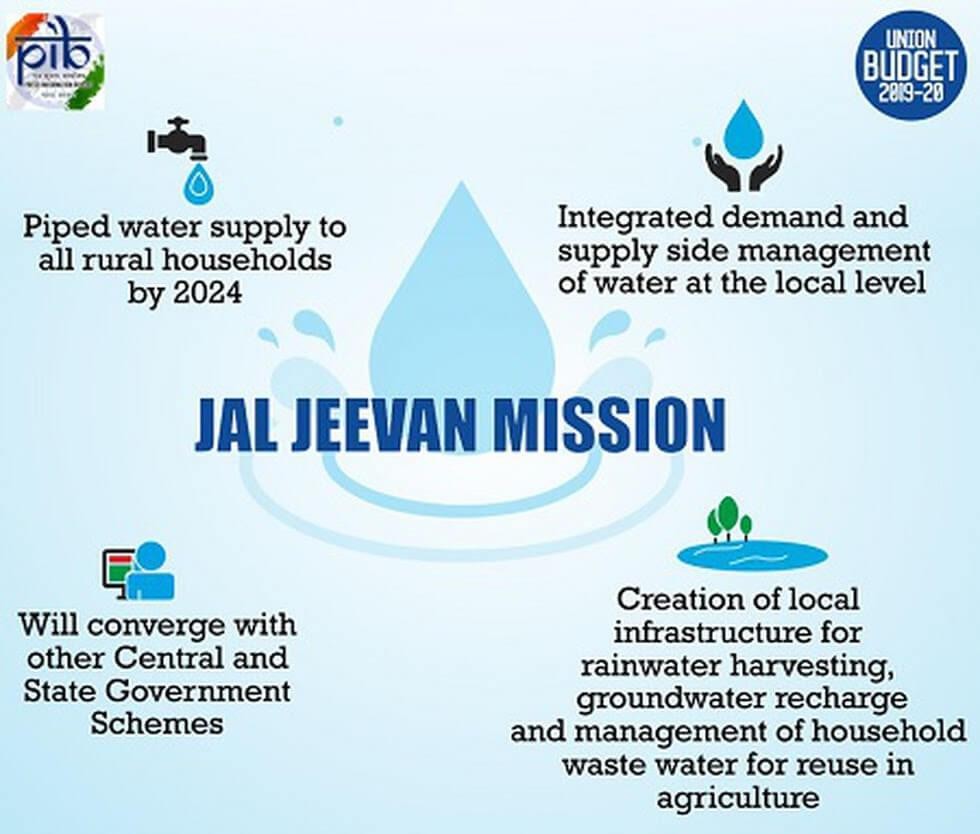
- Household Tap Connections: As of July 2025, JJM has provided 15.67 crore functional household tap connections (over 80% coverage).
- Public Institutions: All schools and Anganwadis now covered with piped water supply.
- Women Empowerment: Over 24 lakh women trained to test water quality using Field Testing Kits; emergence of Jal Sakhis and Jal Sahiyas.
- Governance Innovation: Panchayats and Village Water and Sanitation Committees empowered for planning, operation, and maintenance.
A WHO report projects JJM’s outcomes as:
- Preventing 4 lakh diarrhoeal deaths annually.
- Saving 5.5 crore person-hours daily (mainly women’s time).
- Generating economic benefits of ₹8.28 lakh crore.
Profound Socio-Economic Impacts
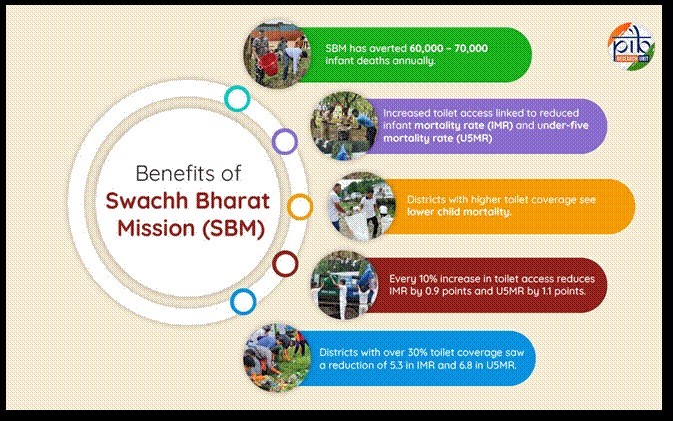
- A Nature (2024) study highlighted SBM’s contribution to reducing infant and under-five mortality rates, averting 60,000–70,000 infant lives annually.
- JJM is projected to create 60 lakh person-years of direct jobs and over 2 crore person-years of indirect employment during its implementation phase.
- Groundwater quality: ODF villages were found to be 12.7 times less contaminated than non-ODF ones (UNICEF study, 2018-19).
Together, these missions have improved public health, gender equity, rural productivity, and environmental sustainability.
Towards a SMART Future of SBM-G
The future trajectory of SBM-G and JJM is guided by a SMART approach:
- Sustainability: Transition from infrastructure creation to system management, robust O&M protocols, and climate-linked sanitation solutions.
- Making Women Central: Institutionalizing women’s leadership through SHGs, Rani Mistris, Swachhagrahis, and women-led O&M enterprises.
- Accelerating Private Sector Involvement: Scaling up GOBARdhan, circular economy models, and CSRbacked sanitation ventures.
- Re-establishing Communication Protocols: Driving deeper behavioural change around waste segregation, menstrual hygiene, and digital awareness campaigns.
- Training & Technology: Smart sanitation villages, IoT-based monitoring, solar-powered STPs, and realtime water quality systems.
Jal Jeevan Mission 2.0: Beyond the Tap
The Mission has been extended till 2028, with a shift from coverage to sustainability. Four strategic directions define its next phase:
- From Tap Coverage to Water Security: Source sustainability via Catch the Rain campaign, spring shed management, aquifer recharge, and rainwater harvesting.
- From Infrastructure to Innovation: IoT, real-time monitoring dashboards, and climate-smart villages.
- From Beneficiaries to Co-Creators: Institutionalizing Gram Panchayat ownership, powered by Jal Doots and Jal Sakhis.
- From Silos to Synergy: Ensuring cross-sector linkages between water, health, education, nutrition, and agriculture.
The vision is to enable every village to become a Swachh Sujal Gaon—with safe water, ODF Plus certification, and holistic well-being.
Alignment with SDGs and Governance Transformation
Both SBM-G and JJM are central to SDG 6 (Clean Water and Sanitation) and catalyze progress towards SDGs on health, education, gender equality, and poverty reduction.
Their deeper legacy lies in governance transformation:
- Decentralized, community-led planning.
- Empowerment of Panchayats and self-help groups.
- Institutionalization of Jan Bhagidari (people’s partnership).
What began as infrastructure creation has evolved into a new paradigm of localized governance and citizen empowerment, reinforcing India’s pathway towards Viksit Bharat by 2047.
Chapter 2: WASH for Women, WASH for the Nation
India’s rural transformation in the last decade has been shaped by two flagship schemes: Swachh Bharat Mission (Grameen) and Jal Jeevan Mission.
- While these missions have expanded sanitation and water access to unprecedented levels, their most enduring contribution lies in redefining the role of women in rural governance.
- From being passive users, women have become custodians, managers, and leaders of India’s WASH revolution.
The Gendered Dimensions of WASH
Traditionally, women bore the invisible burden of water collection, household sanitation, and hygiene management. This restricted their education, health, mobility, and livelihoods. Inadequate WASH also deepened vulnerabilities during menstruation, pregnancy, and old age. Recognizing these gendered barriers, SBM-G and JJM embedded women’s dignity, safety, and leadership as central design features.
Women’s Leadership in WASH
Both missions institutionalized women’s participation, mandating that 50% of Village Water and Sanitation Committee (VWSC) members be women, including leadership roles like president, secretary, and treasurer.
- Under SBM-G Phase I (2014-19): Women mobilized communities as Swachhagrahis and Nigrani Samitis, successfully leading the ODF campaign.
- Under SBM-G Phase II (2020 onwards): Women-led SHGs manage community sanitary complexes, solid and liquid waste management, and faecal sludge treatment.
- Under JJM: Over 24.8 lakh women trained in water quality testing; women serve as Jal Sakhis and Jal Sahiyas operating pumps, managing distribution lines, and ensuring daily water supply.
Notable examples include the Maa Narmada Jal Samiti in Madhya Pradesh, managed entirely by tribal women overseeing chlorination, maintenance, and billing of village water systems.
Impact of Women in WASH
Women’s leadership has translated into measurable outcomes:
- Higher compliance with hygiene protocols and user fee collection.
- Sustainability of assets, with better O&M of water schemes and toilets.
- Behavioral change in taboo subjects like menstrual hygiene and pit emptying.
- Community trust and participation, as women-led committees resolve complaints faster and mobilise higher contributions for water user charges.
Contribution to SDGs
The empowerment of women through WASH has ripple effects across development goals:
- SDG 3 (Health): Reduction in diarrheal diseases, child mortality, and improved menstrual hygiene.
- SDG 4 (Education): Improved school attendance of girls due to functional toilets and safe water.
- SDG 5 (Gender Equality): Formal inclusion of women in WASH governance enhances dignity, decisionmaking powers, and socio-economic opportunities.
- SDG 6 (Clean Water & Sanitation): Ensures universal, sustainable access while making systems community-owned.
- SDG 8 (Livelihoods): Women-led enterprises in sanitation products, faecal sludge management, and greywater treatment create rural employment.
Way Forward: Institutionalizing Women-Led WASH
To sustain these gains and deepen inclusivity, the next phase must focus on:
- Institutionalizing leadership: Expanding women-led VWSCs and recognizing top-performing women Panchayats during Swachh Bharat Diwas.
- Capacity building: Modular e-learning through SBM Academy and JJM Digital Academy for training in finance, grievance handling, and technical operations.
- Sanitation enterprises: Supporting SHGs with capital and technical know-how to run MHM product units, FSTPs, and waste-to-energy plants.
- Convergence: Synergy with the National Rural Livelihood Mission, Ministry of Women & Child Development, and Panchayat Development Plans.
Conclusion
The story of WASH in India is, increasingly, the story of women. From walking miles to fetch water, to now managing piped water supply systems; from being silent sufferers of inadequate sanitation, to leading SHGs and governance committees—women have powered the transformation of SBM-G and JJM from schemes to Jan Andolans.
If sustained and scaled, women-led WASH is not only central to achieving Har Ghar Jal and ODF Plus villages, but also to advancing India’s march towards Viksit Bharat @ 2047—where grassroots leadership and gender justice form the core of national development.
Chapter 3: A Decade of WASH: Transforming Rural India
Over the past decade, India has witnessed a quiet but transformative revolution in the Water, Sanitation, and Hygiene (WASH) sector, led by the twin flagship missions: Swachh Bharat Mission-Gramin (SBM-G) and Jal Jeevan Mission (JJM). These programs have redefined rural development by integrating technology, empowering Gram Panchayats, and involving communities in planning, execution, and monitoring. The impact has been far-reaching—enhancing health, dignity, livelihoods, social inclusivity, and economic outcomes.
Historical Context
India’s engagement with WASH issues is longstanding:
- Ancient Era: The Indus Valley Civilization (c. 2500 BCE) had advanced urban planning with covered drains and household toilets.
- Colonial & Post-Independence Periods: Sanitation became a neglected public priority, compounded by caste-based stigma around sanitation work.
- Post-1951 Planning: Health, water, and sanitation were gradually integrated into national plans, starting with the First Five-Year Plan and initiatives like the Central Rural Sanitation Programme (1986), the Total Sanitation Campaign (1999), and the Nirmal Bharat Abhiyan (2009).
Similarly, rural water supply initiatives evolved from the National Water Supply Programme (1954) to Accelerated Rural Water Supply Programme (1972), National Drinking Water Mission (1986), and later reforms like Swajaldhara (2002), NRDWP (2009-10), and NWQSM (2017). Despite these efforts, progress remained fragmented, with insufficient focus on community engagement and behavior change.
The Turning Point: 2014 Onwards
In 2014, Prime Minister Narendra Modi called for an Open Defecation Free (ODF) India, marking a paradigm shift:
- SBM-G: Over 10 crore household toilets constructed, raising rural sanitation coverage from 39% (2014) to 100% (2019). SBM-G Phase II focuses on Sampoorna Swachhata (ODF Plus), emphasizing solid and liquid waste management (SLWM).
- JJM: Launched in 2019 with the goal of providing Functional Household Tap Connections (FHTCs) to every rural household, ensuring safe, adequate, and continuous drinking water supply (≥55 litres per capita per day, BIS 10500 standards).
These missions have shifted WASH from infrastructure-centric to people-centric, with Gram Panchayats and Village Water & Sanitation Committees (VWSCs) playing central roles.
Community-Led Transformation
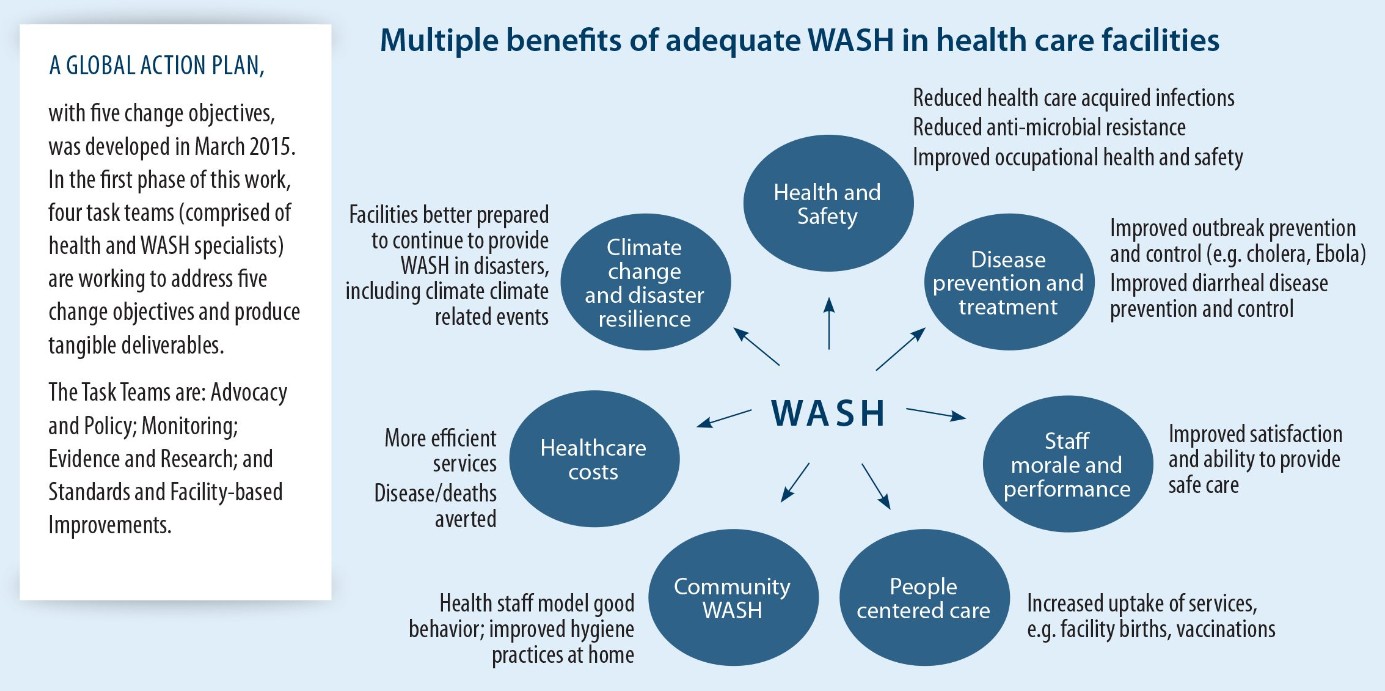
- Gram Panchayats prepare Village Action Plans (VAPs) covering water sources, supply, and greywater management.
- VWSCs ensure community participation, with ≥50% women members. Over 5.2 lakh VWSCs have been formed across 5.85 lakh villages.
- Women SHGs, schoolchildren, and retired personnel are key actors in behaviour change, sanitation maintenance, and water management.
Technological Innovations
- Twin Pit Toilets: Affordable, low-maintenance, eco-friendly.
- Solar-Powered Water Systems: Reduce dependency on grid electricity.
- Insulated Pipes in Ladakh: Ensure water supply in sub-zero temperatures.
- Floating Water Schemes (Gujarat): Resilient against floods.
- IoT & Real-Time Monitoring: Flow meters, chlorine analysers, dashboards for preventive maintenance and grievance redressal.
Water Quality:
- 2,183 laboratories test water samples; mobile testing vans enhance accessibility.
- WQMIS allows citizens to check water quality online.
Behaviour Change & Citizen Engagement
- IEC campaigns like Swachhagrahi, Darwaza Band, Jal Utsav, Swachh Sujal Gaon, Swachh Sujal Shakti Samman foster awareness.
- Women-led initiatives like Jal Saheli, Jal Sakhi, Jal Sahiya drive water conservation, maintenance, and community mobilization.
- Convergence with MGNREGS, NHM, Samagra Shiksha ensures sustainability and optimal resource use.
WASH in Schools and Anganwadis
Aligned with NEP 2020 and SDGs 4 & 6, WASH in educational institutions ensures health, dignity, and educational outcomes:
- Infrastructure: Separate toilets for girls, ramps, accessible toilets for children with disabilities, safe drinking water.
- Behaviour Change: Swachh Vidyalaya, Swachhata Pakhwada, Swachhata Hi Seva, mass handwashing campaigns.
- Sustainability: Rainwater harvesting, greywater reuse, rooftop systems, and kitchen gardens.
- Monitoring: UDISE+, PRABANDH portals, geo-tagged infrastructure, mobile apps, digital dashboards.
Way Forward
As India aims for Viksit Bharat @2047, WASH priorities include:
- Sustaining ODF Plus & Swachh Sujal Gaons through institutionalized SLWM systems.
- Universal and equitable access to safe drinking water, prioritizing marginalized communities.
- Digital transformation using IoT, AI, GIS, and mobile-based monitoring for climate-smart infrastructure.
- Capacity building of rural engineers, VWSCs, and barefoot technicians.
- Strengthening Gram Panchayats as local service providers with inter-departmental coordination.
Conclusion
In ten years, India has progressed from sanitation deprivation to dignity, water scarcity to security, and top-down to community-driven governance. SBM and JJM have demonstrated that policy, technology, and people, when aligned, can transform the everyday lives of rural citizens. The WASH revolution embodies inclusive development, gender empowerment, public health, and participatory democracy, offering a model for sustainable growth in the Amrit Kaal.
Chapter 4: Empowering Women & Nurturing Children
Access to clean water, adequate sanitation, and improved hygiene practices—collectively termed WASH— constitutes a fundamental human right. It is central to promoting gender equality, enhancing child development, and fostering inclusive socio-economic progress.
Gender Dimension of WASH
In India, the burden of water collection and sanitation management disproportionately falls on women and girls, often consuming several hours daily. This limits their educational opportunities, participation in economic activities, and engagement in community affairs. Inadequate sanitation facilities also expose women to health risks, violence, and harassment. Key WASH-related gender challenges include:
- Menstrual Hygiene Management (MHM): Lack of safe, private facilities reduces girls’ school attendance and dignity.
- Safety and Dignity: Access to toilets lowers exposure to harassment.
- Time Burden: Nearby water sources free time for education, skill development, and income generation.
- Empowerment: Women’s participation in community-level WASH decision-making strengthens leadership and agency.
Child Well-being and WASH
Safe water and sanitation are critical for child survival, growth, and development. Poor WASH conditions contribute to diarrhoeal diseases, malnutrition, and school absenteeism. Benefits of improved WASH for children include:
- Improved Health: Reduced incidence of waterborne diseases such as diarrhoea, cholera, and typhoid.
- Better Nutrition: Cleaner environments improve nutrient absorption and combat malnutrition.
- School Attendance: Functional toilets, especially for girls, increase enrolment and retention.
- Early Childhood Development: Hygiene education in Anganwadi Centres (AWCs) promotes healthy habits from an early age.
Integrating WASH into Government Programs
The Ministry of Women and Child Development (MoWCD) has embedded WASH into flagship programs to advance gender equality and child development objectives.
- Mission Saksham Anganwadi & Mission Poshan 2.0:
- Covers over 14 lakh AWCs and more than 10 crore beneficiaries, including children, pregnant women, lactating mothers, and adolescent girls.
- Provides services such as supplementary nutrition (Hot Cooked Meals, Take-Home Rations), Early Childhood Care and Education (ECCE), health check-ups, and immunisation.
- Promotes WASH through community-based events (CBEs) and home visits—over 7 crore CBEs and 2 crore home visits since 2018.
- Infrastructure Development:
- Currently, 10.27 lakh AWCs have functional toilets, and 12.53 lakh have drinking water facilities.
- The Saksham Anganwadi Centres initiative upgrades AWCs with improved infrastructure, water filtration systems, ECCE materials, and Poshan Vatikas.
- Scheme for Adolescent Girls (SAG):
- Targets 23 lakh adolescent girls in NE States and Aspirational Districts.
- Focuses on nutrition, health, menstrual hygiene, and peer-led hygiene education.
- Special Campaigns and Jan Andolans:
- Campaigns such as Poshan Maah, Poshan Pakhwada, and Special Campaign 3.0 promote hygiene, sanitation, and community engagement in AWCs and public spaces.
- Mission Shakti & Beti Bachao Beti Padhao (BBBP):
- Combines gender sensitisation with hygiene promotion, addressing dropout rates among adolescent girls due to inadequate sanitation.
- Pradhan Mantri Matru Vandana Yojana (PMMVY) & Mission Vatsalya:
- Promote antenatal care, childcare, and hygiene awareness for mothers and infants.
- Include Swachhata Action Plan (SAP) funds for Child Care Institutions (CCIs) and service delivery structures.
Strategic Approaches for WASH Success
- Community Engagement: Women’s Self-Help Groups (SHGs) and community volunteers are actively involved in greywater management, toilet maintenance, and hygiene promotion.
- Behavioral Change: Mass campaigns, home visits, and school-based programs foster long-term adoption of WASH practices.
- Inter-sectoral Convergence: Collaboration across Ministries (Education, Health, WCD) and Departments ensures resource optimisation and sustainable outcomes.
Way Forward
Sustainable WASH implementation requires:
- Universal access to safe water and functional toilets, especially for marginalised communities.
- Continued investment in behavioural change communication and community mobilisation.
- Strengthening AWCs and adolescent programs to integrate WASH with nutrition, health, and education outcomes.
- Enhancing monitoring, data-driven decision-making, and inter-departmental coordination.
Conclusion
WASH is not merely a matter of infrastructure; it is a catalyst for empowerment and development. By ensuring clean water, sanitation, and hygiene, India is empowering women, nurturing children, breaking cycles of malnutrition and gender inequality, and fostering participatory governance. Programs like JJM, SBM, Mission Poshan 2.0, and Saksham Anganwadis exemplify how targeted interventions, community engagement, and technological innovation can transform lives and accelerate inclusive development.
Chapter 5: Har Ghar Jal
Water is a fundamental resource and a cultural and developmental imperative in India. Despite its importance, access to safe and adequate drinking water has long eluded millions, particularly in rural areas.
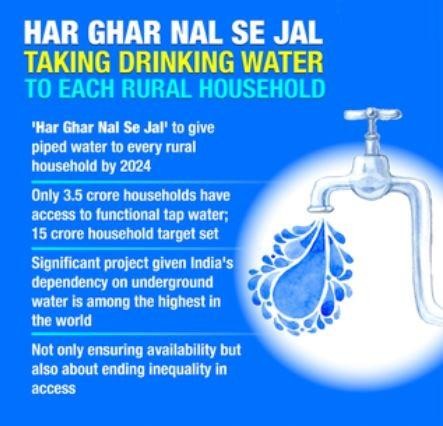
- The launch of the Jal Jeevan Mission (JJM) in August 2019 marked a historic intervention to provide Functional Household Tap Connections (FHTCs) to every rural household, while institutionalizing sustainability, equity, decentralization, and community participation in water governance.
Progress and Coverage
As of May 2025:
- Over 15.62 crore rural households (~80%) have tap water connections.
- Eight states and three UTs—Goa, Arunachal Pradesh, Haryana, Punjab, Telangana, Mizoram, Himachal Pradesh, Gujarat, Andaman & Nicobar Islands, Puducherry, and Dadra & Nagar Haveli and Daman & Diu—achieved 100% coverage.
- Aspirational districts improved from 7.77% coverage in 2019 to 79.13% today.
- Schools and Anganwadi’s have coverage of 89.57% and 85.54%, respectively.
JJM is not only about infrastructure; true success lies in sustainable, reliable service delivery—ensuring sufficient quantity, prescribed quality (BIS 10500), and regularity of supply.
Sustainability Framework
JJM adopts a multi-dimensional approach to sustainability:
- Source Sustainability: Aquifer recharge, watershed development, spring shed management, afforestation, and renovation of traditional water bodies.
- Institutional Sustainability: Strengthening Village Water and Sanitation Committees (VWSCs), District Water & Sanitation Missions (DWSMs), and State Water & Sanitation Missions (SWSMs).
- Financial Sustainability: Community-based cost recovery, convergence of funds, and inclusive financing models.
- Social & Environmental Sustainability: Stakeholder participation, greywater management, and ecological safeguards.
Greywater management is central to sustainability. Community-level solutions—soak pits, kitchen gardens, constructed wetlands, and decentralized wastewater treatment systems (DEWATS)—convert wastewater into a resource for irrigation, reducing pressure on groundwater.
Technology as an Enabler
JJM integrates digital monitoring and IoT:
- Dashboards at village (VWSM), district (DWSM), and state (SWSM) levels provide actionable data for Panchayati Raj functionaries, District Collectors, and State Mission Directors.
- Water Quality Management Information System (WQMIS) manages laboratory and field testing data. Over 2,183 water testing labs are functional nationwide.
- Citizen Corner on the JJM portal ensures transparency by providing real-time scheme data to communities.
- Over 24.83 lakh women trained in Field Testing Kits (FTKs) conduct on-the-spot water quality assessments.
Community Participation
JJM’s transformative feature is people-centric governance:
- 5.14 lakh VWSCs formed with 50% women representation.
- Self-Help Groups (SHGs) manage water quality testing, minor repairs, and tariff collection.
- Nal Jal Mitra Programme (NJMP): Field-level operators trained to manage pumps, valves, treatment units, and preventive maintenance.
This participatory model ensures that water systems are owned, maintained, and respected locally, moving from a top-down provision model to community-led stewardship.
Way Forward
To achieve long-term water security, JJM must:
- Focus on inclusive governance and adaptive resilience, especially in tribal, LWE-affected, and climatesensitive regions.
- Integrate water quality challenges (fluoride, arsenic, salinity) into risk management.
- Strengthen convergence with other flagship schemes (Swachh Bharat Mission-Grameen, MGNREGS) to optimize resources.
- Promote local stewardship and behavioral change to embed WASH culture.
Chapter 6: Light House Initiative
India’s rural sanitation journey has witnessed a remarkable transformation from widespread open defecation to Open Defecation Free (ODF) villages, driven by the Swachh Bharat Mission-Grameen (SBM-G) since 2014. While ODF declaration marked a historic achievement, sustaining gains, managing solid and liquid waste, and embedding sanitation into rural governance remain ongoing challenges.
Within this evolving landscape, the Light House Initiative (LHI) Phase-1 (2022) emerged as a collaborative effort led by the Department of Drinking Water and Sanitation (DDWS), the India Sanitation Coalition (ISC), and corporate partners. The goal: support 75 Gram Panchayats (GPs) to become Light House GPs, showcasing community-led, sustainable sanitation models.
Achievements of Phase 1
- Community-led innovations: Villages like Nadimapalem (Andhra Pradesh) implemented Rs 1/day user fee for waste collection, achieving 90% source segregation and integrating home composting into the circular economy.
- Capacity building: Phase 1 highlighted the importance of institutional capacity, funding alignment, and grassroots ownership.
- Recognition: Several GPs earned state-level awards for sustainable waste management practices.
Transition to Phase 2
Building on Phase 1 insights, LHI Phase 2 (July 2024–March 2025) expands to 43 Blocks across 37 districts in 14 States/UTs, including Assam, Bihar, Chhattisgarh, Gujarat, Haryana, Jharkhand, Karnataka, Madhya Pradesh, Maharashtra, Odisha, Punjab, Rajasthan, Tamil Nadu, and Uttar Pradesh.
Objectives:
- Support SDG Target 6.2 for equitable sanitation access.
- Establish ODF Plus Model Blocks as replicable examples.
- Enable corporate and public sector collaboration for innovative, decentralized sanitation solutions.
- Demonstrate sustainable Operations & Maintenance (O&M) models for Solid and Liquid Waste Management (SLWM) assets.
Methodology and Approach
- Community leadership: Village Water & Sanitation Committees (VWSCs), Self-Help Groups (SHGs), and local champions drive planning and implementation.
- Data-driven monitoring: Regular assessments, dashboards, and IEC/BCC campaigns inform decisionmaking.
- Technology integration: Tools support O&M, water quality, and waste management.
- Financial models: User-fee systems ensure sustainable O&M funding.
Challenges and Opportunities
- Early integration of corporate partners in planning improves alignment.
- Community ownership is key for speed, sustainability, and compliance.
- Inclusion focus: Marginalized groups, women, and persons with disabilities are prioritized.
- Technology and monitoring support scalable, accountable sanitation governance.
UPSC MAINS PRACTICE QUESTIONS
Q1. Examine the role of WASH in promoting gender equality and child well-being in India.
Q2. Assess the achievements and challenges of Jal Jeevan Mission in ensuring sustainable rural water supply.
Q3. Discuss how the Light House Initiative strengthens rural sanitation and sustains ODF gains in India.
QUICK LINKS

 Call
Call