 Residential Course
YOJANA February 2026
The following topics are covered in the Yojana February, 2026:
Chapter 1: Indian Traditional Knowledge System
Traditional Knowledge (TK) represents humanity's accumulated wisdom derived from sustained observation, experimentation, and adaptation to local ecological and social conditions. The Indian Traditional Knowledge System (ITKS), rooted in the Vedas, Upanishads, and Upavedas, integrates Jnan (knowledge), Vignan (scientific inquiry), and Jeevan Darshan (philosophy of life).

- It reflects a holistic worldview that harmonizes science, spirituality, sustainability, and ethics, offering valuable insights for addressing contemporary global challenges such as climate change, public health crises, food security, and sustainable development.
Philosophical and Ethical Foundations
The foundational texts of Indian civilization emphasize cosmic harmony, interdependence of life, and Dharma-based living. The principle of Vasudhaiva Kutumbakam (world as one family) promotes universal brotherhood and ecological responsibility.
- This integrated philosophical framework encourages sustainable consumption, environmental stewardship, and ethical governance, which are increasingly relevant in the context of global ecological degradation and value-based policymaking.
Civil Engineering and Urban Planning
The Indus Valley Civilization exemplified advanced urban planning and civil engineering, featuring grid-patterned cities, underground drainage systems, public sanitation, hydraulic engineering, and climate-responsive architecture.
- Indigenous technologies ensured efficient water supply, traffic management, natural ventilation, and structural durability. These principles align with modern concepts of sustainable urban development, smart cities, and climate-resilient infrastructure.
Water Harvesting and Resource Management
India historically developed decentralized and community-managed water systems, including millions of man-made lakes, ponds (talabs), stepwells, and tanks.
- These systems focused on rainwater harvesting, groundwater recharge, irrigation management, and drought resilience.
- Recent restoration of traditional water bodies has revived water availability in several regions, demonstrating the relevance of community-led water governance and sustainable resource management in tackling global water scarcity.
Metallurgy and Material Science
India made pioneering contributions to metallurgical science, including the production of rust-resistant iron, advanced alloy techniques, and precision engineering tools such as hollow drills and saws. These achievements reflect early scientific experimentation and material innovation.
- Indigenous metallurgical processes later influenced industrial developments elsewhere, demonstrating India's role in shaping global technological evolution.
Textiles and Indigenous Technology
India was historically a global leader in cotton and silk textiles, with weaving constituting a major component of the economy after agriculture. Indigenous textile technologies emphasized skill-intensive craftsmanship, durability, and eco-friendly production methods.
- Many early industrial textile innovations in Europe drew inspiration from Indian designs refined over centuries. Today, traditional handloom practices contribute to sustainable production, livelihood security, and cultural preservation.
Maritime Trade and Shipbuilding
India actively participated in early ocean-based trading systems and developed sophisticated shipbuilding technologies. Large vessels constructed using advanced naval architecture facilitated trade across Asia, Africa, and beyond.
- The Sanskrit root “Nav” (boat) underscores India's long-standing maritime tradition. These contributions highlight India's historical integration into global trade networks and technological innovation in navigation.
Mathematics, Logic, and Linguistics
Indian scholars made transformative contributions to global knowledge systems. The development of the concept of zero, the decimal (base-10) system, and advancements in algebra and trigonometry laid the foundation for modern mathematics and computing.
- In linguistics, Panini's grammatical system represents one of the most systematic and scientific analyses of language structure. Indian traditions of Nyaya (logic) further contributed to epistemology and rational inquiry. These intellectual contributions continue to underpin contemporary science, engineering, and digital technologies.
Agriculture and Sustainable Farming
Historically, India sustained large populations through diversified cropping systems, indigenous seed preservation, organic soil management, and natural pest control techniques.
- Traditional non-chemical pesticides and ecological farming practices are being revived globally as sustainable alternatives to chemical-intensive agriculture. These methods align with modern frameworks of agroecology, climate-resilient agriculture, and food sovereignty.
Traditional Medicine and Holistic Healthcare
India's traditional medical knowledge, institutionalized through AYUSH systems, promotes a holistic, preventive, and person-centred approach to health.
- These systems integrate herbal medicine, lifestyle regulation, mental well-being, and environmental balance. Globally, traditional medicine is increasingly being incorporated into national healthcare policies through regulatory frameworks and strategic plans.
- In India, a substantial proportion of the rural population relies on traditional medicine for primary healthcare needs, demonstrating its accessibility and relevance in achieving Universal Health Coverage (UHC).
Conclusion
- The Indian Traditional Knowledge System represents a dynamic and living knowledge tradition that integrates science, sustainability, ethics, and holistic well-being. Its contributions in urban planning, water management, metallurgy, mathematics, agriculture, and healthcare have significantly influenced global civilization. In the contemporary era marked by environmental crises and socio-economic inequalities, integrating scientifically validated traditional knowledge with modern innovation can contribute meaningfully to sustainable development, global health, and ethical governance.
Chapter 2: AYUSH Systems of Medicine
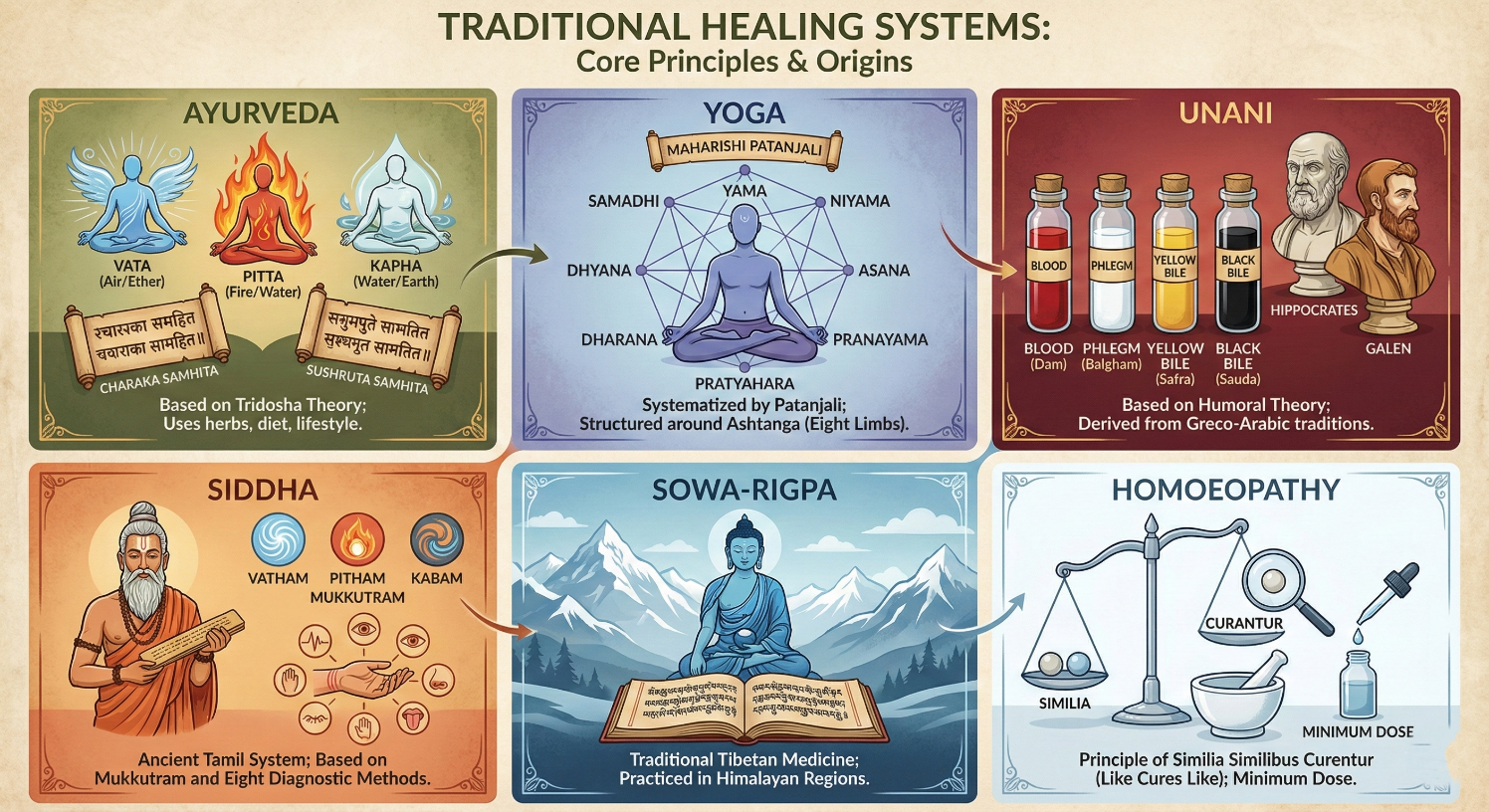
AYUSH represents India's institutional framework for promoting its traditional systems of medicine—Ayurveda, Yoga & Naturopathy, Unani, Siddha, Sowa-Rigpa and Homoeopathy. Rooted in India's civilizational knowledge systems, AYUSH emphasizes preventive, promotive, curative and holistic healthcare.
- It is administered by the Ministry of AYUSH, which was established to provide focused policy direction, regulatory oversight, research support and global promotion of traditional medicine.
Historical and Philosophical Foundations
AYUSH systems are based on holistic principles of balance and harmony between body, mind and environment.
- Ayurveda – Based on the tridosha theory (Vata, Pitta, Kapha) and classical texts such as Charaka Samhita and Sushruta Samhita.
- Yoga – Systematized by Maharishi Patanjali; structured around Ashtanga Yoga (eight limbs).
- Unani – Based on humoral theory (blood, phlegm, yellow bile, black bile) derived from Hippocratic and Galenic traditions.
- Siddha – Ancient Tamil system based on Mukkutram (three humors) and eight diagnostic methods.
- Sowa-Rigpa – Traditional Tibetan medicine practiced in Himalayan regions.
- Homoeopathy – Based on the principle of Similia Similibus Curentur (like cures like) and minimum dose.
Growth and Institutional Expansion
Expanding AYUSH Infrastructure
The Ministry has significantly expanded institutional capacity:
- 3,844 AYUSH hospitals established across India.
- Three State-of-the-Art Satellite Centres of National Institutes of AYUSH set up in Delhi, Goa, and Ghaziabad.
- Integration of AYUSH services in primary healthcare through Health and Wellness Centres.
This expansion has strengthened access, especially in rural and semi-urban areas.
Technology Integration and Digital Health
Digital transformation has enhanced service delivery and outreach:
- Ayush Grid – Digital backbone for data management, research integration and transparency.
- e-Sanjeevani Telemedicine Platform – Facilitating remote consultations and expanding healthcare access in underserved regions.
Technology has improved standardization, monitoring and evidence generation within AYUSH systems.
Global Outreach and Health Diplomacy
India has actively positioned AYUSH as an instrument of soft power and global health diplomacy.
- Donor Agreement between India and the World Health Organization.
- Bilateral Agreement on Ayurveda between India and Malaysia.
- Introduction of AYUSH Visa to promote medical tourism.
- Establishment of the WHO Global Centre for Traditional Medicine at Jamnagar to promote integration of traditional medicine globally.
- In 2014, the United Nations General Assembly declared June 21 (Summer Solstice) as the International Day of Yoga, recognizing Yoga's global relevance.
These initiatives have strengthened India's global leadership in traditional medicine.
Economic Impact
The AYUSH sector has witnessed remarkable economic growth:
- Market size increased from approximately USD 2.85 billion (2014) to USD 43.4 billion (2023).
- Exports doubled from USD 1.09 billion to USD 2.16 billion.
This reflects rising global demand for herbal medicines, nutraceuticals, wellness services and preventive healthcare products.
Major Policy Initiatives
1. National AYUSH Mission (2014)
A Centrally Sponsored Scheme aimed at:
- Strengthening AYUSH infrastructure.
- Supporting education and quality control.
- Promoting co-location of AYUSH services.
2. 100% Foreign Direct Investment (FDI)
Permitted in the AYUSH sector to attract global capital, technology and innovation.
3. National Commission for Indian System of Medicine (NCISM)
Established to ensure quality standards in AYUSH education, curriculum reform, accreditation and professional regulation.
4. AYURGYAN Scheme
Focused on capacity building, research support and strengthening institutional frameworks in the AYUSH healthcare sector.
Significance of AYUSH in Contemporary Healthcare
- Promotes preventive and lifestyle-based healthcare.
- Reduces burden on tertiary care institutions.
- Addresses non-communicable diseases through holistic interventions.
- Enhances rural healthcare access.
- Contributes to employment generation and MSME growth.
- Strengthens India's soft power and medical tourism sector.
Challenges Faced by AYUSH
- Lack of Scientific Validation – Need for robust clinical trials and evidence-based research.
- Quality of Education and Practitioners – Variations in institutional standards.
- Integration with Modern Medicine – Regulatory and professional coordination challenges.
- Standardization and Quality Control – Ensuring uniform drug quality.
- Limited Public Awareness in Some Regions – Need for broader health literacy.
Way Forward
- Strengthen research ecosystems and pharmacovigilance systems.
- Promote interdisciplinary collaboration under a regulated framework.
- Enhance digital integration and tele-AYUSH services.
- Improve quality assurance and international certification standards.
- Expand global partnerships and export promotion.
Conclusion
- The AYUSH sector represents a strategic convergence of India's traditional knowledge systems and modern healthcare needs. Through infrastructure expansion, digital innovation, global outreach and economic growth, the Ministry of AYUSH has strengthened its institutional presence.
- However, sustained emphasis on scientific validation, quality education and systemic integration will determine its long-term credibility and contribution to universal health coverage and global health governance.
Chapter 3: Naturopathy and Holistic Wellness
The World Health Organization (WHO) defines health not merely as the absence of disease or infirmity, but as a state of complete physical, mental, and social well-being. In an era dominated by modern allopathic medicine, the rising burden of Non-Communicable Diseases (NCDs), antimicrobial resistance, and high out-of-pocket healthcare expenditures have shifted the global focus back to traditional, preventive, and holistic health systems.
- Among these, Naturopathy and the broader concept of Holistic Wellness hold a critical place, especially within India's AYUSH (Ayurveda, Yoga and Naturopathy, Unani, Siddha, and Homeopathy) framework.
Understanding Naturopathy
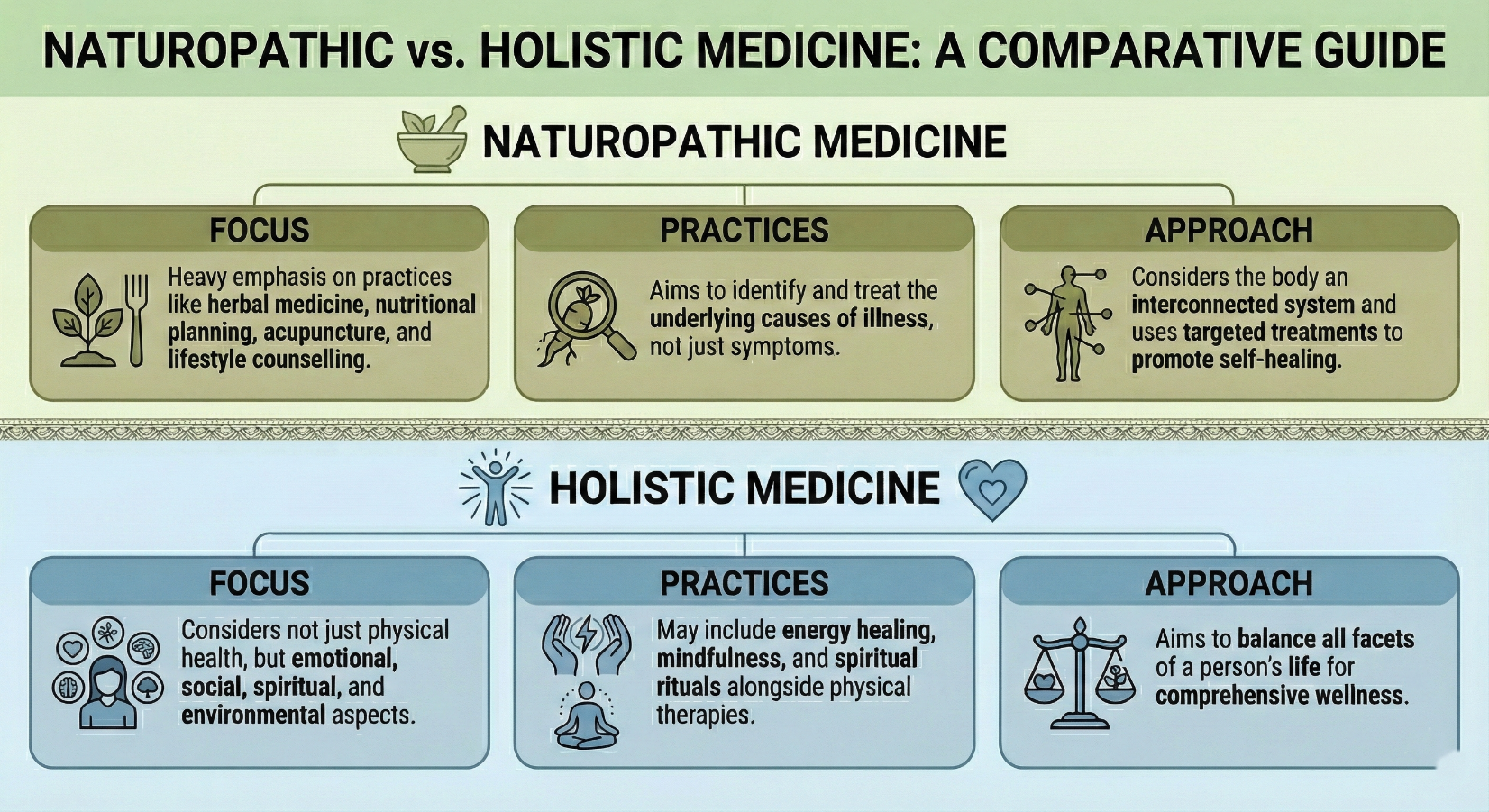
Naturopathy is a drugless, non-invasive system of medicine that emphasizes the body's inherent self-healing mechanism. It is based on the philosophy that the accumulation of toxins is the root cause of all diseases, and health can be restored by eliminating these toxins and aligning with the laws of nature.
It relies heavily on the theory of Panchamahabhutas (the five great elements: Earth, Water, Fire, Air, and Ether/Space) and utilizes these elements for treatments:
- Earth (Prithvi): Mud therapy, mud packs, and massages.
- Water (Jal): Hydrotherapy, baths, enemas, and compresses.
- Air (Vayu): Breathing exercises, fresh air walks, and outdoor therapy.
- Fire (Agni): Sunbaths (Heliotherapy), thermotherapy, and fasting.
- Space/Ether (Akash): Fasting therapy (reducing the intake to allow the digestive system to rest and detoxify).
It moves beyond the physical body to address the interconnectedness of the mind, body, and spirit. It includes emotional stability, social harmony, occupational satisfaction, and environmental consciousness, promoting a lifestyle that prevents disease before it begins.
Relevance in the Contemporary Context
- Tackling Non-Communicable Diseases (NCDs): India is witnessing an epidemiological transition, with lifestyle diseases like diabetes, hypertension, cardiovascular diseases, and obesity accounting for over 60% of all mortality. Naturopathy focuses heavily on diet, physical activity, and stress management, making it highly effective in preventing and managing NCDs.
- Reducing Out-of-Pocket Expenditure (OOPE): Healthcare costs can push millions into poverty. Naturopathy largely relies on inexpensive resources like dietary modifications, water, sunlight, and mud. Integrating it into primary healthcare can drastically reduce OOPE for rural and marginalized populations.
- Addressing the Mental Health Crisis: Post-COVID-19, mental health has emerged as a parallel pandemic. Holistic wellness integrates mind-body therapies like Yoga, meditation, and counseling, providing a comprehensive safety net for psychological well-being.
- Eco-friendly and Sustainable: Unlike the pharmaceutical industry, which contributes significantly to chemical waste and water pollution, naturopathic treatments are inherently environmentally sustainable and leave almost no ecological footprint.
- Combating Antimicrobial Resistance (AMR): The over-prescription of antibiotics has led to the silent crisis of AMR. By enhancing the body's natural immunity and offering drugless therapies for minor ailments, naturopathy can help curb the unnecessary use of antibiotics.
Institutional Framework and Government Initiatives
India has institutionalized traditional medicine through the Ministry of AYUSH (2014) and the National AYUSH Mission, expanding infrastructure and affordable services. Research and global integration are strengthened via AYUSH Health & Wellness Centers, Central Council for Research in Yoga and Naturopathy, and the WHO Global Centre for Traditional Medicine.
Challenges in the Sector
Despite its potential, the Naturopathy and holistic wellness sector faces several hurdles that impede its complete integration into mainstream healthcare:
- Lack of Standardization and Regulation: Unlike allopathy, which is strictly regulated by the National Medical Commission (NMC), the regulation of Naturopathy education and practice varies significantly across states. This loophole allows quacks and untrained practitioners to exploit patients, damaging the system's credibility.
- Deficit in Evidence-Based Research: Modern medicine relies on rigorous Randomized Controlled Trials (RCTs). Naturopathy often lacks robust, peer-reviewed clinical data to substantiate its claims scientifically, leading to skepticism among mainstream medical professionals and policymakers.
- Infrastructural and Funding Constraints: Although the AYUSH budget has increased, it remains a fraction of the total health budget. Dedicated Naturopathy hospitals, wellness centers, and research laboratories are disproportionately concentrated in urban pockets or specific states.
- Integration vs. Isolation: There is often friction between allopathic and traditional practitioners. Cross-referrals are rare, and there is a lack of a true “Integrative Medicine” protocol where a patient can seamlessly benefit from both systems.
Way Forward
- Promoting Evidence-Based Research: The government must facilitate collaborative research between institutions like ICMR (Indian Council of Medical Research) and CCRYN to validate naturopathic treatments through modern scientific parameters.
- Standardizing Education and Practice: A centralized regulatory body, similar to the National Commission for Indian System of Medicine (NCISM), should strictly monitor the curriculum (BNYS - Bachelor of Naturopathy and Yogic Sciences) and clinical practice to eliminate quackery.
- True Integrative Medicine: Medical colleges should introduce modules on holistic wellness so that future allopathic doctors understand the scope of Naturopathy. Primary Health Centers (PHCs) should have a unified protocol where lifestyle diseases are first managed through naturopathy and diet, keeping allopathy as a concurrent or secondary intervention.
- Public Awareness Campaigns: Utilizing platforms like the Fit India Movement to educate the masses about the difference between authentic Naturopathy and commercialized “wellness spas.”
- Health Insurance Coverage: The inclusion of naturopathic treatments under flagship schemes like PM-JAY (Pradhan Mantri Ayushman Bharat) and private insurance policies will increase accessibility and affordability for the general public.
Conclusion
- Mahatma Gandhi said- true wealth lies in health, not material riches. By shifting from a sick-care model to preventive and holistic healthcare, India can harness its demographic dividend and emerge as a global leader— a Vishwa Guru in integrative medicine.
Chapter 4: Mental Health in the Digital Age
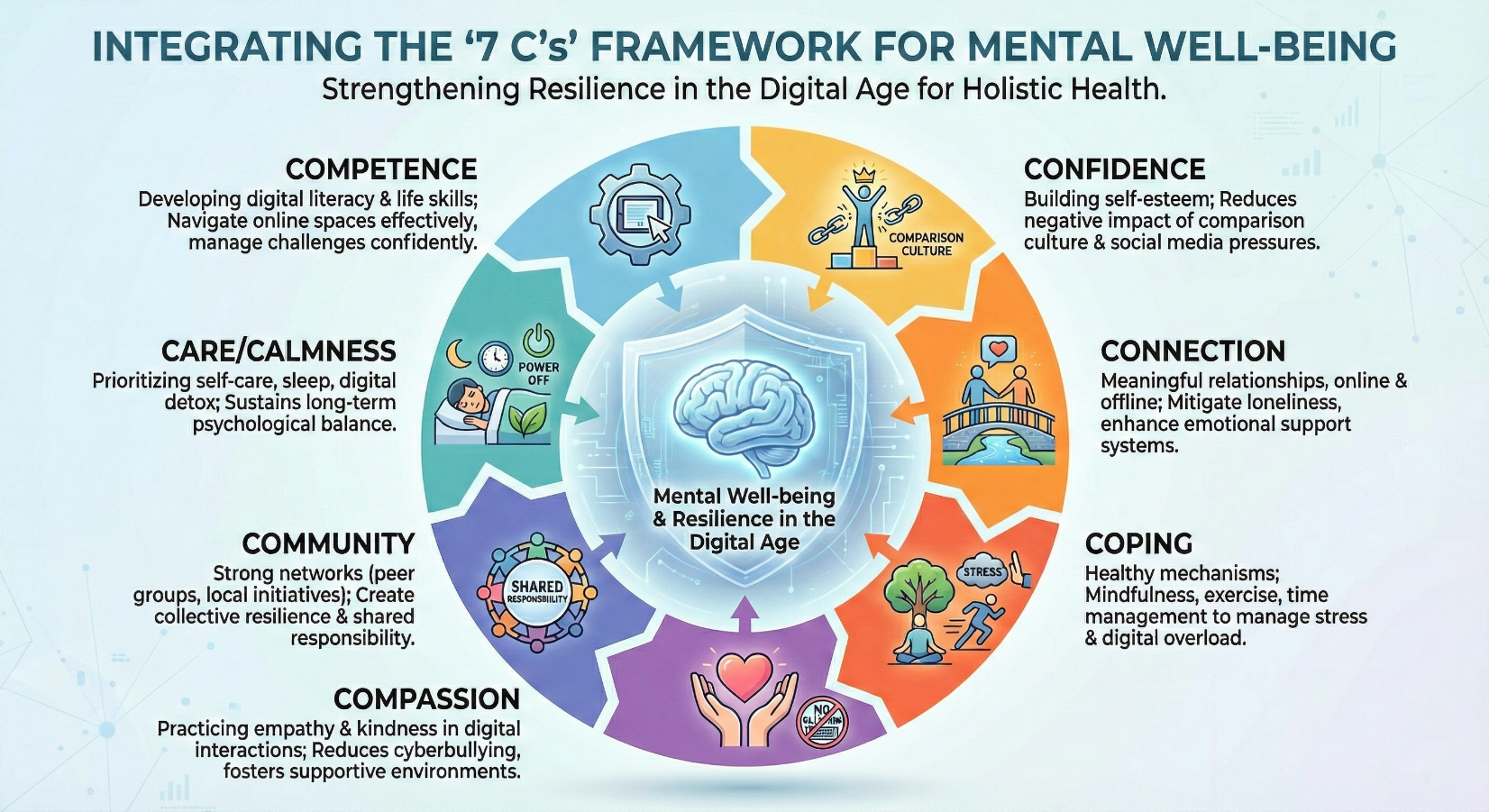
The Digital Age has transformed communication, work, and education through smartphones, social media, AI, and remote systems, creating unprecedented connectivity. However, this hyperconnected environment has significant implications for mental health, contributing to stress, anxiety, loneliness, and digital addiction. The key governance challenge is to balance technological progress with psychological well-being.
Challenges to Mental Health in the Digital Age
- Digital Overload and Constant Connectivity- The continuous stream of notifications, emails, news feeds, and social media updates creates information overload, leading to cognitive fatigue and chronic stress. The expectation of being “always available” for professional and social communication blurs boundaries between personal and professional life.
- The rise of remote work has further intensified this phenomenon, making it difficult to maintain work-life balance. Prolonged connectivity increases burnout, reduces rest cycles, and contributes to anxiety disorders.
- Social-Media and Psychological Distress- Social media platforms often promote a culture of comparison through curated portrayals of success, beauty, and lifestyle. This comparison culture negatively impacts self-esteem, body image, and identity formation, particularly among adolescents.
- Moreover, cyberbullying and online harassment have emerged as major risk factors for depression and suicidal tendencies. The anonymity of digital platforms emboldens harmful behavior, disproportionately affecting young users. The phenomenon of Fear of Missing Out (FOMO) exacerbates anxiety, as individuals feel compelled to remain constantly engaged online to avoid social exclusion.
- Excessive Screen Time and Physical-Mental Linkages- Extended screen exposure disrupts sleep patterns by interfering with melatonin production due to blue light emission. Poor sleep quality is closely linked to depression and anxiety disorders.
- Additionally, digital dependency promotes sedentary lifestyles, reducing physical activity. Since exercise plays a critical role in mood regulation and stress reduction, inactivity contributes to deteriorating mental health outcomes.
- Isolation in an Era of Hyperconnectivity- Paradoxically, increased digital connectivity has led to rising loneliness and social isolation. Online interactions often lack emotional depth compared to face-to-face engagement.
- The decline in in-person communication hampers development of social skills and emotional intelligence, particularly among adolescents.
- Vulnerable groups such as the elderly, who may struggle with digital literacy, face technological exclusion and loneliness. Adolescents, on the other hand, are exposed to heightened peer pressure and digital risks.
Opportunities and Technological Solutions
- Digital Mental Health Tools- The rise of mental health applications such as meditation, mood-tracking, and therapy platforms has democratized access to psychological support. Apps like Headspace and Calm provide guided mindfulness sessions and stress-management tools.
- Online therapy platforms such as BetterHelp and Talkspace reduce stigma and geographical barriers by enabling remote counseling.
- AI-driven chatbots such as Woebot and Wysa provide early intervention support, cognitive behavioral therapy (CBT)-based exercises, and coping mechanisms.
- Digital Well-being Features- Technology companies have integrated tools to regulate usage. Google's Digital Wellbeing tools and Apple Screen Time enable users to track screen time, set app limits, and schedule downtime.
- Encouraging digital detox practices, mindful usage, and tech-free hours can help reduce digital dependency and restore psychological balance.
- Leveraging Social Media Positively- Social media can function as a platform for mental health awareness campaigns, peer support communities, and stigma reduction. Hashtag movements such as #MentalHealthAwareness foster open dialogue and normalize help-seeking behavior.
- Online communities offer safe spaces for individuals to share experiences, reducing isolation and promoting collective resilience.
- Workplace and Educational Interventions- Employers increasingly implement Employee Assistance Programs (EAPs), counseling services, stress management workshops, and flexible work arrangements to address digital burnout.
- Schools and universities are integrating mental health education into curricula, promoting emotional literacy and coping strategies. Open discussions in academic and professional environments reduce stigma and encourage early intervention.
Policy and Regulatory Framework
1. Government Interventions
Governments play a crucial role in regulating digital ecosystems to safeguard mental health.
Policies targeting cyberbullying, online harassment, and harmful content moderation are essential. Additionally, funding for mental health research and digital innovation can strengthen evidence-based interventions.
Regulatory frameworks must ensure ethical use of AI and data privacy, particularly in digital mental health tools.
2. Community and Grassroots Initiatives
Local initiatives promoting digital literacy and mental health awareness equip citizens to navigate online environments responsibly.
Peer support groups and community-based programs foster belonging and reduce stigma. Collaboration between technology companies, non-profits, and mental health organizations can ensure equitable access to digital mental health services.
3. Global Perspectives
Mental health disparities remain significant across regions. International cooperation and sharing of best practices can enhance policy effectiveness.
The World Health Organization (WHO) plays a pivotal role in setting global standards, promoting mental health action plans, and advocating integration of mental health into primary healthcare systems.
Case Studies and Best Practices
1. Corporate Initiatives
Technology firms such as Google and Apple have introduced digital well-being tools that empower users to manage screen time. These initiatives reflect corporate responsibility in mitigating digital harm.
2. National Strategies
The United Kingdom has implemented comprehensive mental health strategies, increasing funding and school-based mental health services.
In India, the Tele-MANAS initiative provides free tele-mental health services, particularly targeting rural and underserved populations. Such programs bridge accessibility gaps and align with the objectives of Universal Health Coverage.
Way Forward
To effectively address mental health in the digital era, a multi-pronged strategy is required:
- Promoting Digital Literacy – Educating citizens about responsible technology use.
- Strengthening Regulatory Oversight – Ensuring safe digital ecosystems and ethical AI deployment.
- Expanding Tele-mental Health Infrastructure – Especially in rural and marginalized regions.
- Encouraging Preventive Approaches – Mindfulness, physical activity, and offline social engagement.
- Public-Private Partnerships – Leveraging innovation while ensuring equity and accessibility.
The emphasis should shift from reactive “treatment” to proactive mental health promotion and resilience-building.
Conclusion
- The digital age is both a risk factor and an opportunity for mental health. While digital overload, cyberbullying, and social isolation pose serious challenges, innovations such as teletherapy, AI-based interventions, and policy reforms offer viable solutions.
- A balanced approach combining individual responsibility, institutional support, technological ethics, and regulatory safeguards is essential. With coordinated efforts, the digital ecosystem can become a catalyst for a resilient, inclusive, and mentally healthy society.
QUICK LINKS

 Call
Call