 Residential Course
Down To Earth (16-31 October, 2025)
The following topics are covered in the Down To Earth (16-31 October, 2025):
Redefining the Global South’s Clean Tech Landscape
Context
- According to a report by the Net Zero Industrial Policy Lab (NZIPL), there is a transformative surge of Chinese capital — exceeding $220 billion since 2022 — which is flowing across 54 countries, focusing on key sectors such as batteries, solar, wind, new energy vehicles (NEVs), and green hydrogen.
Unprecedented Pace and Scale of Investment
- The report emphasizes that China’s overseas cleantech financing has now surpassed the US Marshall Plan’s inflation-adjusted total ($200 billion in 2024 dollars), underscoring the scale of its global industrial footprint.
- Significantly, three-quarters of these projects are located in emerging markets, positioning the Global South as a central hub in the energy transition.
- Drawing from the China Low Carbon Technology FDI database — which catalogs 461 projects from 2011 to mid-2025 — the NZIPL report reveals an extraordinary acceleration since 2022:
- Over 80% of all projects were launched post2022, amounting to $210 billion (88% of total pledged capital).
- 2024 alone saw a record 165 project announcements.
- More than 60 megaprojects each exceed $1 billion in committed investment, signaling longterm industrial expansion.
- It reflects a shift from early solar-heavy investments to a full-spectrum clean tech strategy, covering the entire value chain — from raw materials to advanced manufacturing.
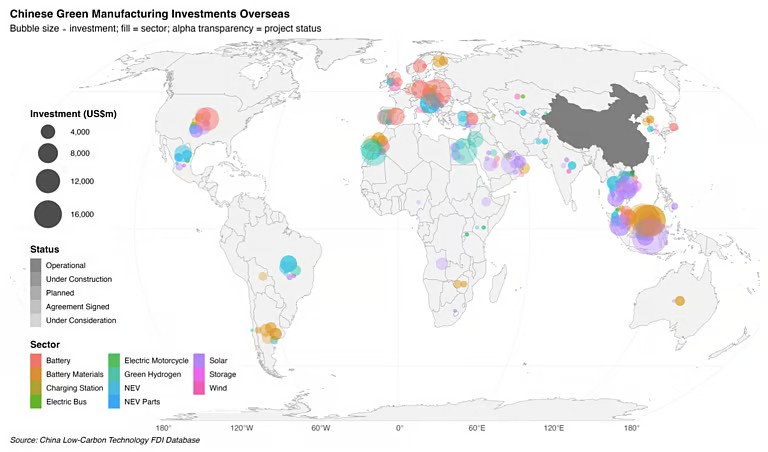
Strategic Investment Breakdown
- Battery Materials Manufacturing ($62 Billion): Now the single largest category, battery material projects underscore China’s drive to secure upstream supply chains, particularly across Southeast Asia and Latin America’s Lithium Triangle (Chile, Bolivia, Argentina).
- Battery Production ($49 Billion): Concentrated in Europe, this investment wave supports the continent’s expanding EV ecosystem, with Hungary emerging as a major hub.
- Solar Manufacturing ($57 Billion): Distributed across 135 projects globally, these initiatives reinforce China’s long-standing dominance in solar value chains.
- Green Hydrogen ($27 Billion): Primarily located in MENA countries, these projects — averaging $2 billion each — are pioneering renewable hydrogen capacity for export markets.
- EV & Wind Sectors: Investments remain geographically diverse but exclude the U.S., reflecting caution amid rising trade barriers and geopolitical tensions.
Motivations Behind China’s Clean-Tech Expansion
- The report identifies three primary motivations driving Chinese firms’ global strategy:
- Access to raw materials: Indonesia’s nickel reserves have made it a top destination for battery material processing.
- Access to local markets: Countries like Hungary attract downstream production to serve European demand.
- Access to third-country markets: Morocco leverages duty-free EU access, while Southeast Asia benefits as a re-export hub.
Emerging Trends: From Rapid Expansion to Strategic Consolidation
- The pace of growth appears to be moderating in 2025, with 68 new projects announced in the first half of the year, signaling a phase of consolidation and strategic recalibration.
- Amid trade restrictions and sanctions risks, Chinese firms are increasingly adopting ‘light-asset’ strategies — such as technology licensing, contract manufacturing, and OEM partnerships — to maintain market access without heavy capital exposure.
- It suggests that while physical construction may slow, commercial engagement and technological diffusion are likely to continue expanding.
Implications for Host Governments and Global Partners
- For developing economies, this capital influx presents a historic opportunity to attract green industrialization and clean infrastructure investment. However, success will depend on:
- Creating tailored investment incentives;
- Integrating resource advantages into Chinese supply chains;
- Expanding infrastructure capacity to support megaprojects.
- International partners must also adapt trade and climate finance policies to respond effectively to China’s accelerating outward green manufacturing drive.
Suicide in India’s Farm Sector in 2023: Ncrb Report
Context
- Recent NCRB’s 2023 report (NCRB’s Accidental Deaths and Suicides in India 2023 Report) highlighted a troubling persistence of suicides among farmers and agricultural laborers.
Key Findings from the NCRB (2023)
- Over 10,000 suicides were recorded among individuals engaged in farming-related activities.
- Maharashtra, Karnataka, and Telangana continue to report the highest numbers.
- Agricultural laborers accounted for a growing share of these deaths, indicating worsening conditions for landless workers.
- Debt burden, crop failure, and lack of access to institutional credit remain the leading causes.
Structural Challenges
- Fragmented land holdings and climate volatility have made farming increasingly unsustainable.
- Input costs have risen sharply, while market prices remain volatile and often below Minimum Support Price (MSP).
- Mental health support in rural areas is virtually nonexistent, leaving farmers with few coping mechanisms.
Rising Deaths Linked to Health and Mental Illness
- Suicides due to illnesses increased by 3.2%, with mental health disorders cited in 13,978 cases.
- Sudden deaths from heart attacks saw a 10% surge, reflecting growing lifestyle and stress-related health risks.
- Alarmingly, abortion-related fatalities rose by 59%, resulting in 127 maternal deaths, pointing to critical gaps in women’s healthcare access and safety.
Nature’s Deadly Role
- External and environmental factors added to the tragedy. In 2023, 6,444 accidental deaths were caused by natural forces, with lightning emerging as the most lethal—responsible for nearly 40% of such fatalities.
- Additionally, animal attacks injured or killed 1,742 people, emphasizing the vulnerability of rural populations to climate and wildlife-related hazards.
Policy Response
- PM-KISAN: Direct income support to farmers.
- Crop Insurance Schemes: To mitigate losses due to natural calamities.
- Kisan Credit Cards: For easier access to institutional loans.
Who Report Highlights Global Gaps In Tobacco Reduction Progress
Context
- A new report released by the World Health Organization (WHO) has revealed that global efforts to reduce tobacco use are progressing unevenly.
Key Findings
- Only three WHO regions are currently on track to achieve the Global Action Plan for the Prevention and Control of Non-Communicable Diseases (NCDs) target—a 30% reduction in tobacco use between 2010 and 2025.
Regions Making Progress
- According to the report, the following regions are on course to meet the target:
- African Region: This region continues to show strong policy commitment and steady declines in tobacco consumption, attributed to widespread implementation of WHO’s Framework Convention on Tobacco Control (FCTC) measures.
- Region of the Americas: Many countries in the Americas have strengthened tobacco taxation, advertising bans, and smoke-free laws, contributing to substantial reductions in tobacco use.
- South-East Asia Region: Public awareness campaigns, stricter regulation, and community health initiatives have significantly curbed tobacco use in this region.
Regions Lagging Behind
- Other WHO regions—including Europe, the Eastern Mediterranean, and the Western Pacific—are not on track to meet the 2025 goal. These regions face challenges such as:
- Slow policy adoption;
- Tobacco industry interference;
- Rising use of alternative nicotine products;
Global Implications
- The uneven progress underscores the urgent need for stronger tobacco control policies, enhanced public health education, and greater international cooperation.
- WHO stresses that accelerated action is essential to reduce the burden of tobacco-related noncommunicable diseases, which remain leading causes of death worldwide.
India’s Carbohydrate-Heavy Diet: Rising Diabetes and Obesity Rates
Context
- A new study by the ICMR–India Diabetes (INDIAB) has revealed an alarming link between India’s dietary habits and the growing prevalence of type 2 diabetes and obesity across the nation.
Carbohydrates Dominate Indian Diets
- According to the report, Indians derive about 62% of their daily calories from carbohydrates, primarily from white rice, refined grains, and added sugars.
- This dietary pattern, while traditional, is increasingly being associated with metabolic health challenges in both rural and urban populations.
Increased Diabetes Risk
- The study, which surveyed 121,077 adults across the country, found that a higher carbohydrate intake raised the risk of newly diagnosed type 2 diabetes by 14%.
- It occurs when the body becomes resistant to insulin or fails to produce enough of it, resulting in elevated blood sugar levels.
Lifestyle Factors Intensify the Problem
- Researchers highlighted that the surge in diabetes cases is not solely due to diet, but linked to sedentary lifestyles, overweight, and poor nutritional diversity.
- Rapid urbanization, processed food consumption, and reduced physical activity are compounding the problem.
Call for Nutritional Shift
- Experts stress the need for dietary rebalancing, advocating a move toward whole grains, pulses, vegetables, and proteins while reducing refined carbohydrates and sugars.
- Public health initiatives emphasizing awareness, prevention, and lifestyle modification are critical to curbing this growing epidemic.
Conclusion
- India’s evolving dietary landscape is having profound consequences on public health.
- As the ICMR–INDIAB study reveals, unless substantial changes in nutrition education and food policy are implemented, the nation’s diabetes and obesity burden is likely to escalate further.
Collective Denial: A Decade After The Paris Agreement
Context
- Despite the pledge to limit global warming to well below 2°C—and ideally to 1.5°C at the Paris Agreement of 2015—countries are collectively planning more fossil fuel production than ever before.
- The Production Gap Report 2025, released on September 22 ahead of COP30 in Belém, Brazil, reveals an alarming expansion in fossil fuel plans, threatening to derail global climate ambitions.
Expanding Production Gap
- According to the report, governments plan to produce 120% more fossil fuels by 2030 than would be consistent with the 1.5°C target.
- It marks a widening gap compared to the 2023 assessment, showing a disturbing retreat from the Paris goals rather than progress toward them.
- Coal: It remains the most misaligned energy source:
- 500% higher production projected for 2030 than 1.5°C-consistent levels.
- 330% higher than 2°C-consistent levels.
- Oil and Gas:
- Oil production plans for 2030 exceed Paris-aligned limits by 31%.
- Gas production exceeds the 1.5°C benchmark by 92%.
- Major producers — China, the United States, Saudi Arabia, Brazil, and Nigeria—are expanding extraction efforts, contradicting both global and national net-zero targets.

Country-Level Contradictions
- Despite climate pledges, many nations are increasing fossil fuel production:
- Nigeria has doubled its 2030 oil target.
- Brazil projects a 47% rise in oil output by 2030.
- China and India are slowing coal phase-outs.
- Of the 20 countries profiled in the report, 17 plan to expand at least one fossil fuel by 2030, while 13 anticipate significant gas increases.
- Alarmingly, 11 countries are now planning higher fossil fuel production than they did in 2023.
Economic Lock-In and Climate Risk
- The report warns that time lost to inaction will make future reductions both harder and costlier.
- Continued investment in fossil fuel infrastructure throughout the 2020s will ‘lock in’ carbon emissions and stranded assets, pushing the world further from its net-zero trajectory.
- Even with immediate and decisive action, fossil fuel production in 2030 is expected to exceed levels consistent with the 1.5°C pathway.
- Cumulative production over this decade will already have surpassed climate-safe thresholds.
Human and Environmental Costs
- Neil Grant of Climate Analytics describes the situation as ‘intolerably unjust’, emphasizing the human toll of continued fossil expansion.
- Vulnerable communities will bear the brunt of worsening heatwaves, floods, and displacement, even as renewable energy technologies have become economically competitive.
Need for a Just Transition
- To close the production gap, countries must enact coordinated policies for a just transition away from fossil fuels. Only a few—such as Germany, Norway, and the UK—are developing production scenarios aligned with their net-zero goals.
- Most nations continue to plan expansions incompatible with global climate limits.
- Reaching net-zero emissions in the second half of the century requires steep, immediate declines in coal, oil, and gas use.
- Failure to act decisively now will leave future generations with an even steeper and costlier transition.
- At current emission rates, the remaining carbon budget for 1.5°C may run out in just over three years—a stark reminder that the window for meaningful action is rapidly closing.
Ultra-Processed Foods (Upfs)
Context
- Over the past few decades, food companies have exploited basic human instincts to sell ultraprocessed products (UPFs) that are fuelling a silent addiction epidemic.
About the Ultra-Processed Foods (UPFs)
- These are industrial formulations made mostly or entirely from substances extracted from foods (oils, fats, sugar, starch, protein isolates) or synthesized in laboratories (flavor enhancers, colorings, emulsifiers).
- The NOVA classification system, widely used in nutrition science, categorizes foods based on the extent and purpose of processing.
- UPFs fall into the fourth category, representing the highest level of processing.
NOVA Classification
- Group 1: Unprocessed or minimally processed foods (fruits, vegetables, grains, meat).
- Group 2: Processed culinary ingredients (oils, butter, sugar, salt).
- Group 3: Processed foods (canned vegetables, simple cheese, tinned fish).
- Group 4: Ultra-processed foods (soft drinks, biscuits, candies, ready meals, chips, and instant noodles).
- It is estimated that UPFs contribute to $7 trillion in hidden costs globally—stemming from healthcare burdens, environmental degradation, and reduced labor productivity.
India’s Growing Appetite for Junk
- India’s economic growth and changing lifestyles have accelerated the shift toward UPFs.
- Between 2006 and 2019, consumption surged from $900 million to $37.9 billion, growing at over 33% annually.
- The Economic Survey 2024–25 flagged the alarming rise in UPF consumption and emphasized the need for stringent labeling rules to protect youth health.
- According to the Household Consumption Expenditure Survey 2022–23, about 10% of urban and rural food budgets are spent on processed foods and beverages.
- Salty snacks, biscuits, chocolates, and ready-made meals dominate retail sales. Sweet biscuits alone account for over 43% of the chocolate and sugar confectionery category.
- The National Family Health Surveys (NFHS) reveal that obesity prevalence rose by more than 10 percentage points between 2005–06 and 2019–20.
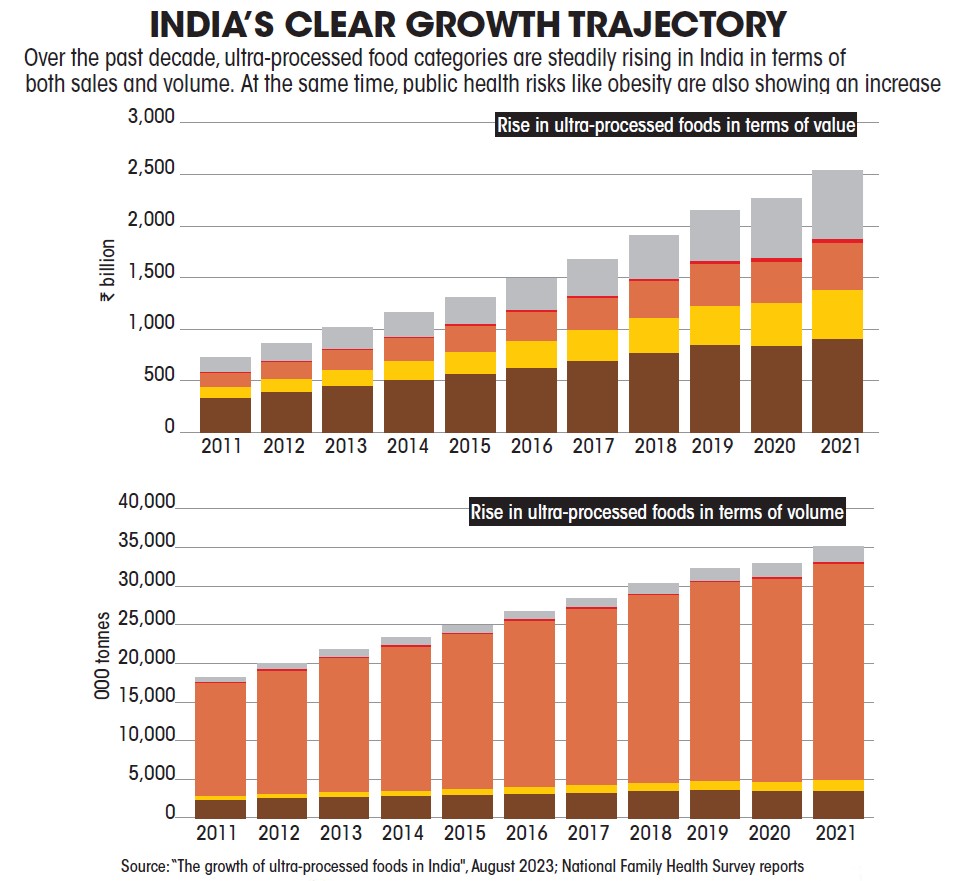
Health & Environmental Impacts
- Obesity and metabolic disorders;
- Cardiovascular diseases;
- Type 2 diabetes;
- Mental health challenges like depression and anxiety;
- The Economic Survey 2024–25 and Nutritional Advocacy in Public Interest (NAPI) reports expose how major food corporations influence policymaking to delay or weaken health regulations.
- For example, India’s proposed front-of-package warning label (FOPL) system was stalled under industry pressure.
- Instead, regulators introduced a diluted ‘Health Star Rating’ masking the dangers of high-sugar or high-fat foods.
Why Are UPFs So Hard to Resist?
- UPFs are engineered to be hyper-palatable—high in sugar, salt, and fat—making them addictive and easy to overconsume.
- Their convenience, long shelf life, and aggressive marketing make them especially appealing in urban and rural settings alike.
Policy Measures Around the World
- Globally, more than 45 countries—including the UK, Mexico, and South Africa—have imposed taxes on sugary drinks.
- A smaller number, such as Chile, Israel, and Peru, have extended these to other UPFs and adopted front-of-package warning labels. These measures have been effective in curbing unhealthy food consumption and improving consumer awareness.
- In India, Kerala introduced a ‘fat tax’ in 2016 on fast foods like burgers and pizzas, but nationwide efforts remain inconsistent.
- The Economic Survey 2024–25 now recommends a broader ‘health tax’ on UPFs.
- The Food Safety and Standards Authority of India (FSSAI) has formed a dedicated panel to address the challenges posed by UPFs. It includes:
- Reviewing safety standards for processed and ultra-processed foods;
- Developing rapid detection kits for food adulteration;
- Promoting front-of-pack labeling to inform consumers;
Way Forward: Recognizing Food Addiction
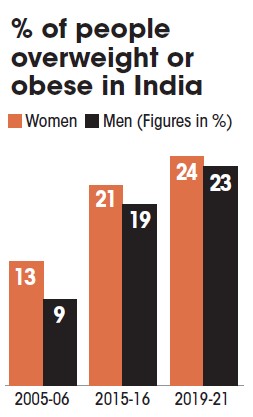
- To combat the growing epidemic of obesity and dietrelated diseases, policymakers must first acknowledge ultra-processed food addiction as a legitimate disorder. This recognition could lead to:
- Stricter advertising and marketing regulations, especially targeting children.
- Mandatory warning labels on unhealthy products.
- Reformulation of food products to reduce sugar, fat, and salt.
- Independent public health campaigns to counter industry influence.
- Formal classification of UPF addiction would mark a turning point—pushing governments to act decisively against one of the most pervasive and profitable health threats of our time.
What the H-1B Visa Angst Reveals About India
Context
- India’s response to the recent turmoil over the US H1B visa reveals a deeper issue in its development model. The government expends considerable diplomatic and financial effort to facilitate the migration of skilled professionals abroad, but fails to create comparable opportunities for innovation and research at home.
India’s H-1B Dependence
- The H-1B visa, a key pathway for global tech workers to access opportunities in the U.S., has long symbolized success for India’s STEM graduates.
- In 2024, Indians received 71% of all H-1B approvals — 283,397 visas — far surpassing China’s 12%.
- For individual professionals, the visa represents access to world-class technology ecosystems and career mobility.
China’s Strategic Countermove: The ‘K Visa’
- China introduced the ‘K visa’, a program aimed at attracting young STEM professionals to fuel its technological rise.
- It was built on China’s longstanding talentrepatriation programs, such as the Thousand Talents Plan (2008), designed to lure eminent scientists and innovators — both overseas Chinese and foreigners — to its universities and laboratories.
- By offering generous funding, research freedom, and modern infrastructure, China has managed to attract Nobel laureates and MacArthur ‘genius grant’ winners, embedding them in its innovation ecosystem.
Missing Vision in India
- While the Global Innovation Index (2025) saw China enter the top 10 for the first time — a historic feat for a middle-income nation — India languished at rank 38.
- India, by contrast, lacks a coherent strategy to attract or retain high-caliber talent.
- Nobel laureate Venkatraman Ramakrishnan bluntly summarized the problem: India is not a magnet for global science due to inadequate funding, infrastructure, and academic freedom.
Beyond the Visa: A Call for Innovation at Home
- The H-1B visa crisis may, ironically, serve as a wakeup call. If U.S. restrictions persist, India will have little choice but to create a more vibrant domestic ecosystem for technological innovation. It requires:
- Policy reform to improve research funding and autonomy.
- Public-private partnerships that foster industrial innovation.
- Incentives for returnees and global talent to collaborate with Indian institutions.
- Long-term vision, modeled on China’s futurefocused strategy.
National Biodiversity Authority (NBA)
Context
- The National Biodiversity Authority’s Poor Record in Benefit Sharing. Less than 27% of funds disbursed to local communities since 2008.
About National Biodiversity Authority (NBA)
- It was established in 2003 under the Biological Diversity Act (BDA), 2002, was created to ensure equitable sharing of benefits derived from India’s biological resources.
- However, recent data obtained through the Right to Information (RTI) Act, 2005, reveals a significant shortfall in the NBA’s performance.
Funds Collected vs. Disbursed
- Between 2008–09 and 2024–25, the NBA received a total of ₹224.28 crore from companies, institutions, and individuals as Access and Benefit Sharing (ABS) payments.
- Shockingly, only ₹60.44 crore (less than 27%) has been disbursed to the rightful beneficiaries.
- ₹12.25 crore was transferred to Biodiversity Management Committees (BMCs);
- ₹9.40 crore went to State Biodiversity Boards (SBBs) (including administrative costs);
- ₹38.79 crore reached local communities and other beneficiaries;
How Benefit Sharing Works?
- The three-tier structure under BDA comprises:
- NBA (Central level);
- SBBs (State level);
- BMCs (Local/panchayat level);
- Companies using biological resources for commercial purposes must compensate the source communities. They can either:
- Pay 1 – 5% of the purchase price, or
- Pay 0.1 – 0.5% of the sale price, depending on their scale of operations.
- Of the total payment, 95% must go to local communities or BMCs, while 5% can be retained by the NBA or SBB for administrative expenses.
- If the ‘benefit claimers’ cannot be identified, the funds must be used to support biodiversity conservation and promote local livelihoods in the area where the biological resource was sourced.
Challenges in Identifying Beneficiaries
- Officials acknowledge that identifying the original source of biological resources is a major challenge.
- For instance, a company may report buying saffron from a Delhi trader, even though the crop originates in Jammu and Kashmir.
- Tracing the true source in such cases is often impossible, especially when resources are grown in multiple regions.
- Unutilized Funds and Interest Dispute: The undistributed funds are currently parked in fixed deposits. Companies that made payments are now requesting that 50% of the accrued interest be shared with them.
- The NBA has formed a committee to consider this request, and a decision is expected soon.
Case of Red Sanders
- A major portion—₹100 crore—of the collected ABS funds comes from the trade of red sanders (Pterocarpus santalinus), a valuable species endemic to Andhra Pradesh’s Chittoor, Kadapa, Kurnool, and Nellore districts.
- NBA claims that beneficiary communities for about ₹33 crore have been identified, and efforts are ongoing to trace farmers who supplied the resource.
- Another ₹75 lakh has been received from a Maharashtra-based private entity, but beneficiaries are yet to be compensated.
Conclusion
- Despite its mandate to promote equitable benefit sharing and biodiversity conservation, the NBA’s dismal record—disbursing less than 27% of the collected funds—reveals systemic inefficiencies.
- Poor documentation, lack of transparency, and bureaucratic hurdles have kept local communities, the rightful custodians of India’s biodiversity, from receiving their due.
- Urgent reforms in traceability, data transparency, and community engagement are needed to restore faith in the benefit-sharing framework envisioned by the Biological Diversity Act.
Decline of India’s Right to Information (RTI) Act
Context
- Recently, the Right to Information (RTI) Act completed 20 years—a landmark law that once empowered citizens to hold their government accountable. However, successive amendments, judicial interpretations, and administrative neglect have eroded its strength.
About RTI and Founding Principle
- The RTI Act, 2005, was built on a simple democratic premise: information held by the government belongs to the people.
- The law presumed disclosure as the default, with only ten specific exemptions under Section 8(1).
The Digital Personal Data Protection (DPDP) Act, 2023
- The DPDP Act, 2023 delivered a severe blow by amending Section 8(1)(j)—reducing its scope to a mere six words: ‘information which relates to personal information’.
- It eliminated the earlier public-interest test and broadened ‘personal information’ to include entities like firms, companies, and even the State.
- As a result, vital public data—loan defaulters’ names, officials’ asset declarations, or details of public contracts—can now be withheld on privacy grounds.
Administrative Paralysis
- Transparency has also been crippled by vacancies and delays in Information Commissions:
- 0.4 million cases are pending across the country.
- Seven State Information Commissions (SICs) were defunct in 2023–24.
- The Central Information Commission (CIC) operates with barely a fraction of its sanctioned strength.
- Some states, such as Chhattisgarh and Bihar, take over four years to hear appeals—rendering “information delayed” effectively ‘information denied’.
Amendments Undermining Independence
- The RTI (Amendment) Act, 2019 empowered the Union government to decide the tenure, salary, and post-retirement benefits of commissioners.
- This move compromised their autonomy, potentially influencing decisions against government interests.
- By demoting commissioners’ status from that of Election Commissioners to that of secretaries, the amendment signaled a shift towards central control and weakened institutional independence.
Erosion of Transparency
- RTI has historically exposed scams such as Vyapam, Adarsh Housing, and Commonwealth Games, but recent years have seen a surge in opacity:
- Ministries deny crucial data citing privacy or ‘nonavailability’.
- The Election Commission and Ministry of External Affairs have refused disclosures not covered by Section 8 exemptions.
- Even powerful entities like the BCCI remain outside RTI’s ambit despite functioning as quasipublic bodies.
- Moreover, over 100 whistleblowers have been killed since 2005, and the Whistle Blowers Protection Act (2014) remains unimplemented—further discouraging transparency.
Privacy vs. Transparency
- While privacy is essential, the DPDP Act has made it absolute, overriding public interest. Earlier, Section 8(1)(j) balanced privacy with transparency by allowing disclosure if public interest justified it.
- Now, information crucial to public welfare—loan defaults, election funding, recruitment irregularities—is shielded as ‘personal’, contradicting democratic accountability.
Restoring the Spirit of RTI
- Restore Institutional Independence: Reverse the 2019 amendment to ensure fixed tenure and transparent appointments of commissioners.
- Reinstate the Public Interest Test: Amend the DPDP Act to restore the right to access information with public relevance.
- Fill Vacancies Promptly: Appoint commissioners and digitise records to reduce the backlog.
- Strengthen Whistleblower Protection: Implement the 2014 Act and ensure safety for information seekers.
- Enhance Awareness and Accessibility: Replicate models like Gujarat’s user-friendly system and Maharashtra’s searchable RTI database.
Climate Change Forcing Himalayan Wildlife Toward the Brink
Context
- A new assessment by the UN Convention on the Conservation of Migratory Species of Wild Animals (CMS) warns that climate change is driving coldadapted Himalayan species—including musk deer, pheasants, and snow trout—to higher elevations.
Key Highlights
- The CMS report highlights that changes in temperature and precipitation are disrupting the breeding, foraging, and survival patterns of several Himalayan species.
- Shorter winters and unpredictable rainfall alter food availability, nesting times, and migration routes, threatening delicate ecological balances across the mountain range.
- Human Activity Compounds the Crisis: Beyond climate impacts, habitat loss due to human activities—including infrastructure expansion, tourism, and deforestation—has intensified the pressure on wildlife.
- These disturbances fragment ecosystems, restrict movement, and further reduce the chances for adaptation.
Conservation of Migratory Species of Wild Animals (CMS) aka Bonn Convention
- It is a key international treaty under the United Nations framework that aims to protect migratory species across their range.
- Established: Signed in Bonn, Germany in 1979; entered into force in 1983.
- Administered by the United Nations Environment Programme (UNEP).
- Purpose: To conserve terrestrial, aquatic, and avian migratory species throughout their migratory routes.
Working
- Appendix I: Lists endangered migratory species. Parties are obligated to protect these animals, conserve their habitats, and remove obstacles to migration.
- Saiga antelope, Siberian crane, marine turtles.
- Appendix II: Includes species that need international cooperation for conservation. Parties are encouraged to develop agreements for these species.
- African elephant, whale shark, and many migratory birds.
Agreements Under CMS
- CMS has led to several specialized agreements and memoranda of understanding (MoUs), such as:
- AEWA: Agreement on the Conservation of African-Eurasian Migratory Waterbirds.
- ASCOBANS: Agreement on the Conservation of Small Cetaceans of the Baltic, North East Atlantic, Irish and North Seas.
Urgent Need for Conservation Action
- The assessment underscores the urgent need for coordinated regional conservation measures.
- Strengthening transboundary habitat corridors, monitoring species movements, and integrating climate resilience into wildlife policies are vital to preserving the unique biodiversity of the Himalayas.
New Zealand’s Oceans Warming Faster Than Global Average
Context
- New Zealand’s environment ministry has revealed that the country’s surrounding oceans are warming 34% faster than the global average.
Rising Ocean Temperatures and Coastal Risks
- The report highlights a growing crisis for coastal regions, with NZ $80 billion (US $40 billion) worth of housing now at risk of flooding.
- Rising sea levels and warmer waters are increasing the frequency and severity of coastal inundation, putting thousands of homes and critical infrastructure in danger.
Threats to Marine Ecosystems
- The warming seas are endangering indigenous marine species, many of which are uniquely adapted to New Zealand’s temperate ocean conditions.
- Shifting ocean temperatures are disrupting habitats, altering food chains, and pushing some species toward extinction.
Intensifying Storms and Economic Impact
- The report warns of stronger and more devastating storms as ocean heat drives more intense weather systems.
- These climate-related events are expected to strain local economies, damage coastal communities, and increase costs for disaster response and recovery.
Great Green Wall: Ambition vs. Reality
Context
- Recent satellite imagery paints a concerning picture of the Great Green Wall (GGW) initiative’s progress.
About the Great Green Wall (GGW)
- It is one of Africa's most ambitious environmental projects, and was launched by the African Union in 2007.
- Its goal is to restore 100 million hectares of degraded land across the Sahel region by 2030, combat desertification, and improve livelihoods through sustainable land management.
- In Senegal, where the GGW was expected to thrive, only one of 36 planted areas shows a measurable increase in vegetation.
- It indicates that despite over a decade of work, large-scale restoration remains elusive.
Key Challenges
- Inadequate Irrigation: The Sahel’s harsh climate poses a severe challenge. With low rainfall and extreme heat, many planted trees fail to survive.
- The lack of proper irrigation systems further reduces the survival rate of seedlings, undermining restoration efforts.
- Low Tree Survival Rates: High mortality rates among young trees—caused by drought, grazing animals, and poor soil conditions—have limited long-term gains.
- Without consistent maintenance and monitoring, many areas revert to barren land within years.
- Financial and Logistical Barriers: Although international donors pledged substantial funding, many financial commitments remain unmet.
- Insufficient funding delays planting, reduces training for local communities, and weakens coordination among participating nations.
Questioning Sustainability
- The limited vegetation growth raises questions about the GGW’s effectiveness and long-term sustainability.
- Experts argue that without a shift toward locally adapted agroforestry systems, community engagement, and sustained financial investment, the initiative risks falling short of its 2030 targets.
Sukapaika River
Context
- A cardiologist revives a dying river in Odisha with help from 425 riparian villages.
About Sukapaika River
- It is a distributary of the river Mahanadi in Odisha, branched off near Ayatpur village and rejoined it near Bankala.
- It has been largely cut off from its source due to embankments and development projects, leading to drying and ecological degradation.
- In the 1950s, a barrage constructed near Naraj led to the closure of Sukapaika’s mouth.
Restoration Efforts
- The National River Conservation Directorate (NRCD) under the Ministry of Jal Shakti has listed polluted and degraded river stretches across India, including those in Odisha.
- CPCB has published guidelines for restoration of water bodies, which may be applicable to rivers like Sukapaika.
Nobel Prizes 2025 in Medicine and Physics
Context
- Recently, the world witnessed the announcement of the Nobel Prizes in Physiology or Medicine and Physics, recognizing pioneering contributions that have reshaped our understanding of human biology and the quantum realm.
Nobel Prize in Physiology or Medicine
- The 2025 Nobel Prize in Physiology or Medicine was jointly awarded to two US researchers and one Japanese scientist for their groundbreaking discoveries revealing how the immune system safeguards the body against self-destruction.
- Their work provided crucial insights into immune regulation mechanisms, explaining how the body distinguishes between its own cells and foreign invaders.
- This research not only deepens scientific understanding but also opens new avenues for treating autoimmune diseases and improving immunotherapies.
Nobel Prize in Physics
- The Nobel Prize in Physics was awarded to John Clarke, Michel H. Devoret, and John M. Martinis, all from the US, for their exceptional work in unveiling the behavior of the quantum world.
- Their discoveries demonstrate quantum phenomena in real time, paving the way for next-generation digital technologies, including quantum computing, ultra-sensitive sensors, and quantum communication systems.
- The trio’s research marks a major step toward integrating quantum mechanics into practical, scalable technologies.
Barren Island Volcano
Context
- Recently, India’s only active volcano, located on Barren Island in the Andaman and Nicobar Islands, erupted again.
Recent Eruptions in the Andaman Sea
- While the Indian authorities classified these as minor eruptions, a recent event followed a magnitude 4.2 earthquake that struck the region two days earlier — signaling renewed geological activity beneath the island.
History of Volcanic Activity
- The first recorded eruption of the Barren Island volcano occurred in 1787, with activity continuing until 1832. The volcano then remained dormant for nearly 159 years, before erupting again in 1991.
- Subsequent eruptions have been recorded in 1994– 95, 2005–07, 2008–April 2010, December 2010, 2013–14, 2017, and 2022, making it one of the most closely monitored volcanic sites in the Indian subcontinent.
What Makes Barren Island Unique
- Barren Island is India’s only active volcano and one of the few in the Indian subduction zone, where the Indo-Australian Plate dives beneath the Eurasian Plate.
- The island itself is uninhabited, characterized by steep slopes, ash deposits, and a central crater lake, offering valuable insights into plate tectonics and volcanic processes in the region.
Is Climate Change Increasing Volcanic Activity?
- Scientists are exploring whether global warming could influence volcanic behavior.
- One hypothesis suggests that melting ice caps reduce pressure on the Earth’s crust, allowing magma to rise more easily and potentially trigger eruptions.
- However, researchers emphasize that more evidence is needed to confirm any direct link between climate change and subsurface volcanic processes.
- In contrast, the influence of major volcanic eruptions on global climate—such as temporary cooling due to aerosol and ash emissions—is well established.
Clean Energy Surpasses Coal Worldwide
Context
- In a landmark shift for the global energy landscape, renewable energy sources have overtaken coal in electricity generation for the first time.
Solar Power Leads the Surge
- The first half of 2025 witnessed a remarkable expansion in renewable capacity, with solar power rising nearly one-third compared to the same period in 2024.
- It is combined with steady gains in wind energy, enabling renewables to outpace both coal and natural gas in meeting rising global electricity demand.
Asia Drives the Transition
- The momentum was primarily driven by China and India, where rapid renewable deployment reshaped national energy portfolios.
- China alone added more renewable generation capacity than the rest of the world combined.
- The country’s shift led to a 2% reduction in fossil fuel use in the first half of 2025 compared to the same months last year.
- Meanwhile, the United States and Europe maintained significant reliance on fossil fuels, showing slower progress toward clean energy goals.
Future Outlook: Renewables Set to Double by 2030
- A separate analysis from the International Energy Agency (IEA) projects that global renewable energy capacity could more than double by the end of the decade.
- Solar energy is expected to dominate new installations.
- Wind, hydropower, bioenergy, and geothermal will also play crucial supporting roles in diversifying the clean energy mix.
Subjective Questions for Practise
Q1. Examine how the Global South is redefining its clean technology landscape in response to climate challenges and energy demands. What role do innovation, international collaboration, and policy frameworks play in shaping this transformation?
Q2. Examine the key findings of the NCRB Report 2023 on suicides in India’s farm sector. What structural, economic, and social factors contribute to this crisis, and what policy interventions could help mitigate it?
Q3. Evaluate the impact of India’s carbohydrate-heavy dietary patterns on the rising prevalence of diabetes and obesity. How can public health policy, nutritional education, and cultural shifts contribute to reversing this trend?
Q4. Critically evaluate the health, social, and economic implications of rising consumption of Ultra-Processed Foods (UPFs). How should public policy and consumer awareness respond to this growing dietary trend?
Q5. Discuss the role and significance of the National Biodiversity Authority (NBA) in implementing the Biological Diversity Act, 2002. How does the NBA promote conservation, sustainable use, and equitable benefit-sharing of biological resources in India?
Q6. Critically analyze the factors contributing to the decline of India’s Right to Information (RTI) Act. How have legislative amendments, institutional weaknesses, and emerging data protection frameworks impacted transparency and citizen empowerment?
QUICK LINKS

 Call
Call