 Residential Course
Down To Earth (16-31 August, 2025)
The following topics are covered in the Down To Earth (16-31 August, 2025):
Coal: Balancing Energy Security And Climate Responsibility
Context
- India, as the world's third-largest energy consumer, needs to reconcile its growing demand for power with the urgent need to address climate change.
About
- Coal has long been the backbone of India's energy infrastructure, currently providing around 70–75% of electricity, and is projected to decline to 50% by 2030 as wind and solar expand.
- It is abundant, cost-effective, and crucial for powering industries such as steel, cement, and chemicals.
- Government has undertaken several key reforms to modernize the sector, including:
- Commercial coal mining to attract private investment and boost efficiency;
- Single-window e-auction systems to streamline coal distribution;
- Reopening abandoned mines to maximize resource utilization.
Environmental Costs of Coal
- Energy demand is set to double by 2030, essential for growth, livelihoods, and health.
- Coal is a major contributor to environmental degradation, despite its economic benefits. Coalfired power plants account for:
- 60% of particulate emissions;
- Over 80% of mercury emissions;
- 45–50% of sulfur dioxide emissions;
- 30% of nitrogen oxide emissions.
- Water consumption is another concern — coal power plants withdraw 65% of all freshwater used by Indian industry.
- Recognizing these impacts, the Indian government has introduced stricter emission norms and mandated recycled water usage for plants along the Ganga.
Transitioning Responsibly: Clean Coal and Renewables
- India’s approach is not to abruptly phase out coal, but to displace it gradually with cleaner alternatives. Key strategies include:
- Supercritical technology for new coal plants to reduce emissions;
- Coal gasification and liquefaction to diversify coal use;
- Carbon Capture and Storage (CCS) to mitigate CO₂ emissions;
- Investments in renewable energy, with a target of 500 GW by 2030.
- Coal India Limited has committed to installing 5 GW of renewable energy capacity, signaling a shift toward a more sustainable energy mix. of 500 GW by 2030.
Roadmap for Decarbonising Coal Power
- Benchmarking Efficiency: Existing plants should be required to match the performance of the best units in their category.
- For example, older but well-maintained plants such as Tata Power’s Trombay unit demonstrate how efficiency standards can drive emission reductions across the fleet.
- Biomass Co-Firing: Mandating a 20% switch to biomass for co-firing can significantly cut carbon emissions.
- Many plants already co-fire biomass, making this a scalable and practical solution.
- Policy and Market Reforms: Technological improvements alone will not suffice. Policy incentives and structural reforms are essential.
- The current merit order dispatch system favors cheaper, older plants that run dirtier.
- Ultra-supercritical plants — though cleaner — often operate at less than 50% capacity, undermining their efficiency advantage.
- A new system must prioritize environmental performance alongside cost to displace dirty coal effectively.
Country Actions Driving Climate Change ‘ILLEGAL’: ICJ
Context
- Recently, the International Court of Justice (ICJ) issued an advisory opinion stating that government actions contributing to climate change are ‘illegal’ under international law and constitute a crime against humanity, reiterating the principle of common but differentiated responsibility.
A Landmark Legal Opinion
- The ICJ stated that climate treaties impose binding obligations on states to protect the climate system and the broader environment from anthropogenic emissions.
- It carries immense moral and legal weight and is expected to influence global climate negotiations, while the opinion is not legally binding — particularly the upcoming COP30 summit in Belém, Brazil.
Implications for Climate Justice
- The ruling was driven by a coalition of Pacific youth, island nations, civil society groups, and Indigenous communities.
- It aims to empower climate-vulnerable countries — such as India, Bangladesh, and small island states — to demand accountability from historical polluters.
- Climate experts believe the opinion will:
- Strengthen legal arguments in climate litigation;
- Pressure high-emitting countries to accelerate decarbonization;
- Influence trade and investment decisions linked to fossil fuels;
India’s Position: Between Vulnerability and Responsibility
- India, one of the most climate-impacted nations, stands to benefit from the ruling’s emphasis on justice.
- However, as the world’s third-largest emitter, it faces increased scrutiny. India may need to:
- Reassess its fossil fuel subsidies and coal dependence;
- Align its emissions targets with human rights and climate science;
- Prepare for greater accountability in international forums.
Plastics and Human Health: Hidden Costs Behind a Global Crisis
Context
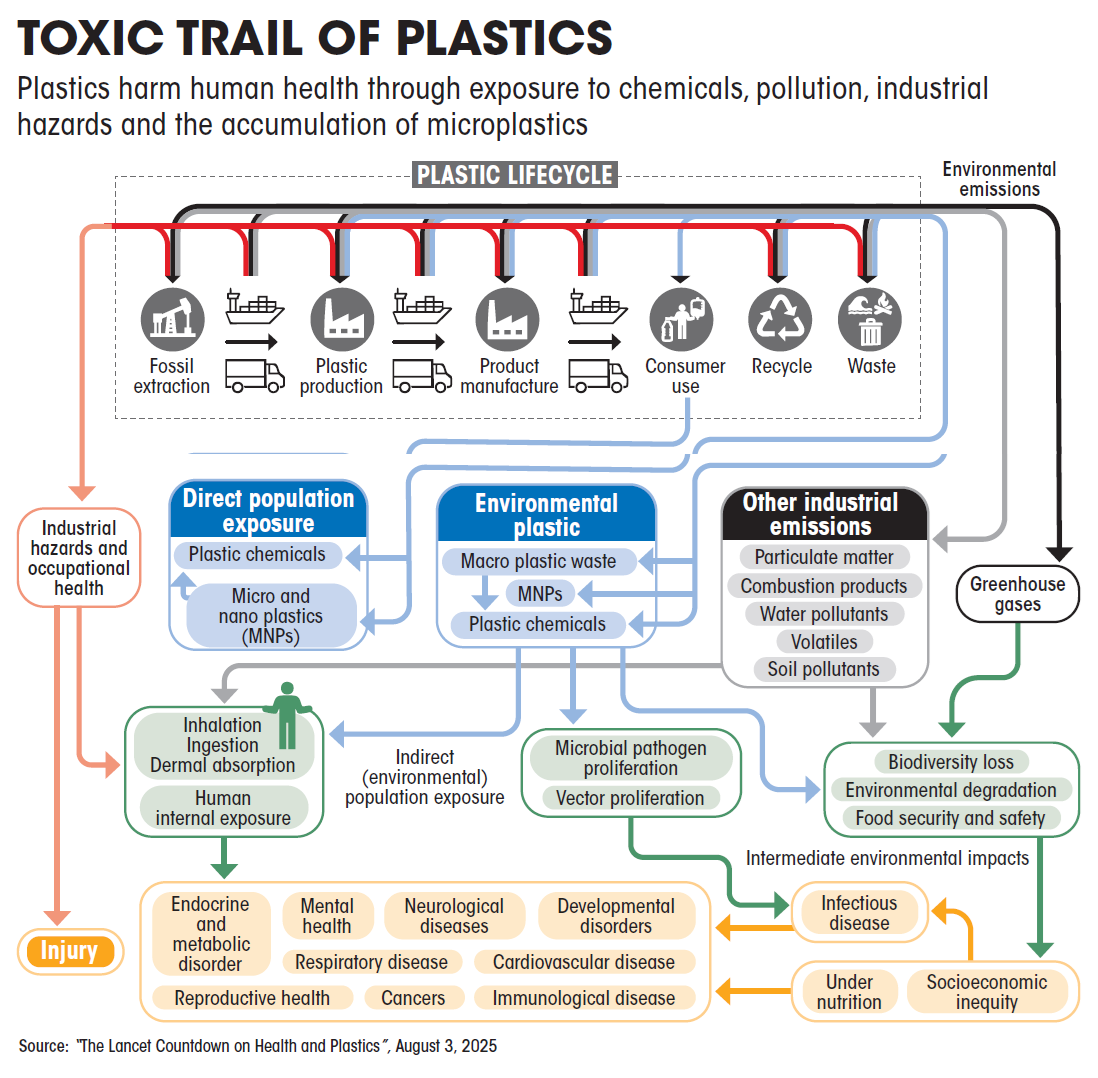
- Recently, the Lancet Countdown on Health and Plastics, reveals the massive toll plastics take on human health—an issue long overlooked in policy discussions, as nations negotiate the Global Plastics Treaty in Geneva.
About Plastics
- Plastics are cheap to buy, but expensive to use. There are three chemicals widely used in plastics — Polybrominated Diphenyl Ethers (PBDE) (flame retardant), Bisphenol A (BPA) (strength and clarity), and Di(2-Ethylhexyl) Phthalate (DEHP) (flexibility) — across 38 countries, covering a third of the global population.
- The health costs from just these three substances amount to $1.5 trillion, equivalent to vaccinating every newborn on Earth for the next 200 years.
Health Left Out of the Treaty
- The draft Global Plastics Treaty faces resistance, despite the evidence.
- Article 19, dedicated to health, remains unresolved, with countries divided on whether to retain, dilute, or postpone decisions.
Plastics: Problematic by Design
- Since the 1970s, chemicals like phthalates and bisphenols have been linked to endocrine disruption — causing infertility, cancer, heart disease, and neurodevelopmental disorders.
- Today, exposure is universal, affecting even babies in the womb.
- Nearly 75% remain untested for toxicity, of over 16,000 plastic-related chemicals.
- The Minderoo–Monaco Commission estimated that in 2015 alone, plastic’s health-related costs reached $600 billion, surpassing the GDP of many countries.
Toxic Footprint Across the Lifecycle
- Production: Over 2 gigatonnes of CO₂ emissions annually, with nearby communities suffering cancer, birth defects, and respiratory diseases.
- Consumption: Everyday items like food packaging leach harmful chemicals into diets.
- Microplastics: Found in blood, lungs, liver, kidneys, brain, and even newborns’ first stool.
- Their health effects include cell damage, chemical toxicity, and pathogen transport.
- Waste: With less than 10% recycled, plastic pollution creates hazardous conditions for waste pickers, fuels mosquito-borne diseases, and worsens air pollution through open burning.
Plastics and Antimicrobial Resistance (AMR)
- Microplastics also accelerate antibiotic resistance, acting as mobile ecosystems or ‘plastispheres’.
- They enable bacteria to exchange resistance genes, accumulate chemical residues, and spread resistant microbes across environments.
Roadmap for Change
- Experts argue that plastic-related chemicals should face regulation as strict as pharmaceuticals, given their direct entry into the human body.
- The University of Birmingham’s 2025 report Plastics, Health and One Planet proposes four pillars for the treaty:
- Ban and phase out the most harmful plastics and chemicals.
- Adopt global standards for safe, circular product design.
- Redirect financial flows toward equitable, just transitions.
- Adapt treaty measures as new evidence emerges.
- It calls for a One Health approach, recognizing the interconnected well-being of people, animals, and ecosystems.
Breaching of Planetary Boundaries
Context
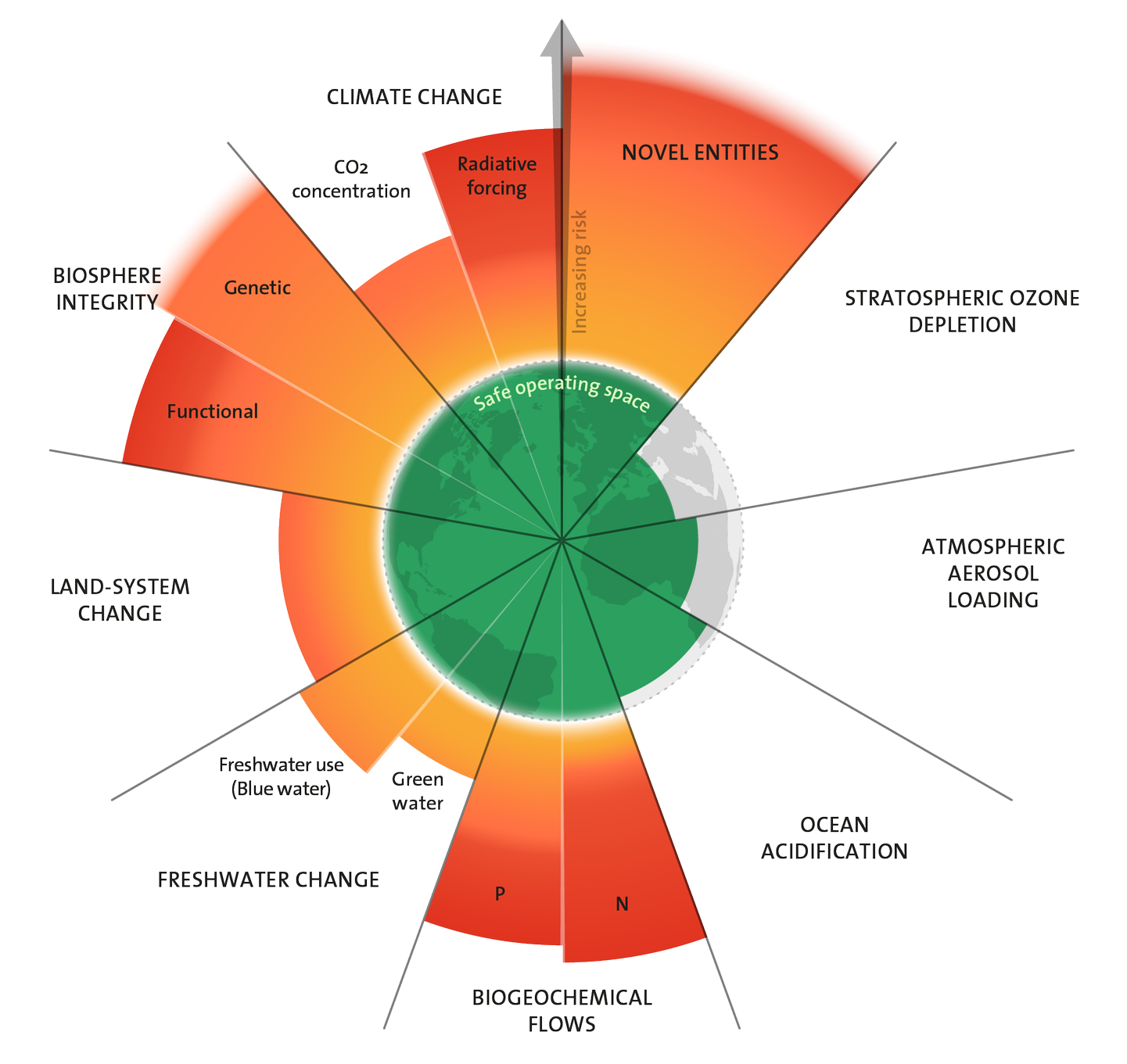
- According to a landmark study published in Science Advances, humanity has crossed six of the nine planetary boundaries that define Earth’s safe operating space.
What Are Planetary Boundaries?
- The planetary boundaries framework identifies nine Earth system processes essential for maintaining a stable environment, first introduced in 2009 by Johan Rockström and colleagues.
- These include climate change, biosphere integrity, land-system change, freshwater use, biogeochemical flows, ocean acidification, atmospheric aerosol loading, novel entities (pollutants), and stratospheric ozone depletion.
What Does Breaching Mean?
- Breaching a boundary doesn’t guarantee immediate catastrophe, but it significantly increases the risk of triggering irreversible environmental shifts.
- The study used computer simulations and historical data to assess how human activities have altered Earth’s systems since the Holocene epoch, a 12,000- year period of climate stability that enabled human civilization to flourish.
Already Breached Planetary Boundaries
- Climate Change: Atmospheric CO₂ levels have reached 417 ppm, far above the safe threshold of 350 ppm.
- Biosphere Integrity: Loss of genetic diversity and ecosystem energy flows threaten species survival.
- Land-System Change: Forest cover has dropped below the safe limit, with only 60% of original forests remaining.
- Freshwater Change: Alterations in the water cycle due to overuse and pollution are destabilizing hydrological systems.
- Biogeochemical Flows: Excessive nitrogen and phosphorus from agriculture are disrupting nutrient cycles.
- Novel Entities: Microplastics, endocrine disruptors, and synthetic chemicals are accumulating in ecosystems.
Global Implications
- Crossing these boundaries could lead to:
- Collapse of ecosystems and biodiversity;
- Intensified climate extremes;
- Disruption of food and water systems;
- Increased health risks from pollution and pathogens;
India’s Role and Responsibility
- India, as one of the world’s largest economies and biodiversity hotspots, plays a pivotal role in both contributing to and mitigating planetary stress. Experts urge:
- Stronger environmental regulations;
- Restoration of degraded ecosystems;
- Reduction in chemical-intensive agriculture;
- Investment in clean energy and circular economy models;
Future of Farming: Decline of Farms And the Aging Farmer Population
Context
- Farming in India is facing unprecedented challenges as farms decline worldwide, farmers age, and youth shy away from agriculture, raising urgent questions about the future of food production.
Declining Workforce in Agriculture
- Data from the International Labour Organization shows a sharp decline in agricultural employment:
- In 1991, agriculture accounted for 43% of global employment.
- By 2023, this share dropped to 26%.
- The situation is particularly stark in India, where the 2011 Census revealed that 2,000 farmers quit farming every day.
Aging Farmers and Youth Disinterest
- The average global age of farmers is 55 years, closer to retirement. Meanwhile, fewer young people are entering farming, seeing it as unprofitable and labor-intensive.
- It poses a serious risk to sustaining food systems in the future.
Limits of Land and Climate Pressures
- Farming is uniquely constrained:
- Land is finite and faces competing demands from urbanization, industry, and conservation.
- Climate change disrupts crop cycles, adding volatility to yields.
- Despite advances, farming remains labor-intensive, deterring new entrants.
- Hannah Ritchie of Our World in Data notes that global agricultural land use has peaked and is now in decline, marking ‘a historic moment in humanity’s relationship to the planet’.
Projected Decline of Farms
- Zia Mehrabi (University of Colorado) offers one of the first global projections for farm numbers:
- 2020: 616 million farms worldwide.
- 2100: Expected to drop to 272 million.
- Key drivers of this trend include urban migration and economic growth, leading to fewer people engaged in rural farming.
- Low-income countries may see growth until 2070, after which decline is expected there too, while farms decline in higher-income regions.
Rising Farm Sizes and Consolidation
- As farms decline, their average size will grow:
- By 2050, global farm size is projected to increase by 10%.
- By 2100, it is expected to double.
- It could bring efficiency but also risks reducing diversity in farming practices.
Food Security Concerns
- The decline raises critical questions about feeding a growing population:
- Today, 600 million farms sustain 8 billion people.
- By 2100, half the number of farms will need to feed even more people.
- Small farms — though occupying only 25% of agricultural land — produce one-third of the world’s food.
- Their decline may disrupt biodiversity, reduce resilience, and weaken food supply chains.
Conclusion
- The future of farming hinges on urgent reforms:
- Education and support systems for farmers.
- Sustainable land use policies.
- Climate-resilient agricultural practices.
- As the world faces fewer farmers, larger farms, and increasing food demand, decisive action is essential to safeguard food security and preserve farming as a viable profession for future generations.
New National Agriculture Policy
Context
- Recently, the Union Ministry of Agriculture & Farmers Welfare, unveiled the new ‘National Agriculture Policy’ aimed to address the evolving challenges of climate change, market volatility, and farmer income security, and positioning India as a resilient and self-sufficient agri-economy.
Core Objectives of the Policy
- Increase crop production and productivity through improved seeds, precision farming, and technology adoption.
- Reduce cost of production by promoting efficient irrigation, mechanization, and input subsidies.
- Ensure remunerative prices for farmers to enhance income through better market access and MSP reforms.
- Promote agricultural diversification into horticulture, pulses, oilseeds, and allied sectors.
- Develop post-harvest infrastructure for value addition, storage, and processing.
- Adapt to climate change through resilient cropping systems and risk mitigation strategies.
Sector Performance and Economic Impact
- According to the Ministry of Statistics and Programme Implementation (MoSPI), the Gross Value Added (GVA) growth rate in agriculture and allied sectors for 2024–25 is estimated at 4.6%, reflecting the sector’s robust performance despite global uncertainties.
- India’s domestic market remains vast, and agricultural self-sufficiency is not just an economic goal—it carries geopolitical significance.
- The new policy reinforces this by aligning national schemes with state-level priorities, recognizing agriculture as a state subject.
Supporting Schemes and Missions
- Digital Agriculture Mission: Creating digital public infrastructure and crop estimation tools.
- Clean Plant Programme: Ensuring disease-free planting material for horticulture.
- National Mission on Edible Oils – Oilseeds (NMEO): Boosting domestic oilseed production.
- National Mission on Natural Farming (NMNF): Promoting chemical-free, sustainable farming practices.
- Expanded Agriculture Infrastructure Fund (AIF): Supporting community farming assets and integrated processing projects.
Vision for New India
- The policy reflects NITI Aayog’s vision of transforming Indian agriculture through innovation, inclusivity, and sustainability.
- It emphasizes stakeholder consultations, in-house research, and strategic inputs to the Prime Minister’s Office for effective implementation.
Global Power Demand to Surge In 2025–26: Iea
Context
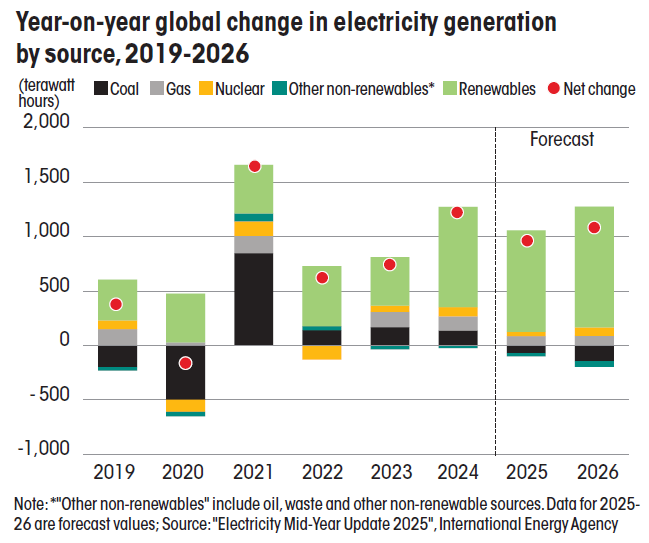
- Recently, the International Energy Agency’s (IEA) Electricity Mid-Year Update 2025 has said that global electricity demand is set to rise at one of the fastest sustained rates in over a decade.
Key Forecasts
- According to the IEA, global electricity demand is projected to grow by:
- 3.3% in 2025;
- 3.7% in 2026;
- These figures mark a significant jump from the 2015–2023 average of 2.6%, although slightly below the 4.4% surge recorded in 2024.
Drivers of Growth
- Air conditioning and cooling needs amid intensifying heatwaves;
- Expansion of data centres, especially in the US;
- Electrification of transport, notably electric vehicles (EVs);
- Industrial and appliance demand in emerging economies;
Regional Trends
- China and India will account for 60% of global electricity demand growth over 2025–26. India’s demand is forecast to rise by 4% in 2025 and 6.6% in 2026; China’s by 5% and 5.7%, respectively.
- United States demand is expected to grow above 2% annually, driven by data centre expansion—more than double its average growth over the past decade.
- European Union demand will grow modestly (1.1% in 2025, 1.5% in 2026), with industrial recovery still lagging.
Renewables Rise, Coal Declines
- Renewables (solar and wind) are expected to cover over 90% of the increase in electricity demand in 2025.
- Coal’s share in global electricity generation is forecast to fall below 33% for the first time in a century.
- Nuclear power is set to reach record highs, with new reactors in Asia and restarts in Japan and Europe.
Policy Implications
- Greater investment in grids and storage
- Flexible market designs
- Robust regulatory frameworks
Groundwater Keeps Ganga Flowing In Summer: IIT Roorkee Study
Context
- Recently, a study by IIT Roorkee found that the Ganga River’s summer flow of Ganga river is sustained by groundwater during the dry season.
Science Behind the Discovery
- The study used advanced isotopic analysis to trace the Ganga’s water sources from its Himalayan origin to its journey across the Indo-Gangetic plains, published in Hydrological Processes. The findings are striking:
- Glacier melt contributes almost nothing to the river’s flow once it enters the plains.
- Groundwater discharge accounts for nearly all of the Ganga’s summer flow up to Patna.
- The river’s volume increases by 120% along this stretch due to groundwater input.
- However, 58% of the river’s water evaporates during summer, a massive and often overlooked loss.
Resilient Aquifer System
- The study challenges satellite-based narratives of widespread groundwater depletion. Using two decades of field data, researchers found:
- Central Ganga plain aquifers remain stable, supported by shallow hand pumps.
- The underground system is robust and resilient, still feeding the river reliably.
- It noted that the Ganga basin holds about 8,300 billion cubic metres of groundwater, with 99% in alluvial deposits.
- The shallow aquifers (~50 metres deep) contain nearly 30% of India’s total replenishable groundwater resources.
Implications for River Management
- These findings have profound implications for water policy and river rejuvenation efforts:
- Namami Gange and Jal Shakti Abhiyan need to prioritize aquifer recharge and tributary revival.
- Barrages and diversions need to be managed to maintain natural groundwater flow into the river.
- Over-extraction and neglect of tributaries, not glacier retreat, are the real threats to the Ganga’s summer flow.
World’s Largest Carbon Sink at Risk: Dr Congo
Context
- Recently, the Democratic Republic of the Congo (DRC) has auctioned 52 new oil blocks in 2025, placing over half of the country’s landmass — an estimated 124 million hectares — under oil exploration.
- It poses a grave threat to the world’s largest tropical carbon sink: the Congo Basin peatlands.
Oil Expansion
- The new blocks in DR Congo overlap with:
- 8.3 million hectares of protected areas;
- 8.6 million hectares of Key Biodiversity Areas;
- 63% of community forests;
- Habitats of gorillas, chimpanzees, forest elephants, and rare flora
Peatlands in Peril
- At the heart of the crisis are the Cuvette Centrale peatlands — home to 30 gigatons of carbon, nearly 30% of all tropical peatland carbon globally.
- These ecosystems are vital for climate stability, storing the equivalent of 20 years of US fossil fuel emissions.
- The report warns that oil exploration activities such as drilling, road-building, and drainage could irreversibly damage these peatlands, releasing massive amounts of carbon dioxide and methane into the atmosphere.
Human and Ecological Impact
- The auction threatens the livelihoods of 39 million people who depend on forest ecosystems for food, water, and cultural identity.
- Civil society groups, including Our Land Without Oil and CORAP, have called for the cancellation of the 2025 licensing round, citing irreversible damage to biodiversity and climate.
Global Responsibility
- The Congo Basin, often referred to as the ‘Lungs of Africa’, absorbs more carbon than the Amazon.
- Its protection is not just a regional concern but a global imperative.
- As climate negotiations intensify, the DRC’s oil expansion raises urgent questions about balancing development with planetary survival.
Southern Rice Black-Streaked Dwarf Virus (AKA Dwarf Virus or Fiji Virus)
Context
- Recently, Indian states of Punjab, Haryana, Himachal Pradesh and other rice-growing regions in northern regions reported outbreaks of the Southern Rice Black-Streaked Dwarf Virus, also called the Dwarf Virus or Fiji Virus.
- Agricultural bodies have issued advisories urging weekly field checks and strategic insecticide use.
About the Southern Rice Black-Streaked Dwarf Virus (SRBSDV)
- SRBSDV is a plant virus that causes severe dwarfing in rice plants, leading to:
- Stunted growth and poor tillering;
- Yellowing of leaves;
- Reduced grain yield;
- Delayed flowering and maturity;
- The virus is transmitted by the white-backed planthopper (WBPH), a sap-sucking insect that thrives in warm, humid conditions.
- Rice plants show symptoms within 10–15 days, but by then, the damage is often irreversible, once infected.
Advisory for Farmers
- Keep field bunds clean and remove weeds that may harbor WBPH.
- Discard infected seedlings early to prevent transmission.
- Monitor fields weekly by tapping plants to detect WBPH presence.
- Use targeted insecticides like Triflumezopyrim, Dinotefuran, or Pymetrozine directed at the base of plants.
Broader Implications
- The emergence of SRBSDV underscores the vulnerability of India’s rice ecosystem to viral diseases. It highlights the need for:
- Genomic surveillance to track emerging pathogens;
- Biosecurity protocols to prevent cross-border spread;
- Development of resistant rice varieties;
- Farmer education and early detection systems;
Coral Reefs in Lakshadweep
Context
- According to a study published in the journal Diversity and Distributions, coral cover in Lakshadweep nearly halved between 1998 and 2022, dropping from 37.2% to just 19.1% by 2022, due to repeated marine heatwaves and bleaching events.
Heatwaves and Bleaching: A Repeating Cycle
- Lakshadweep has endured three major marine heatwaves over the study period—1998, 2010, and 2016 — each linked to El Niño events and rising sea surface temperatures.
- These heatwaves triggered mass coral bleaching, with the 2010 event being the most severe, registering a Degree Heating Week (DHW) of 6.7.
- Interestingly, while coral mortality has decreased over time, this is not necessarily a sign of resilience.
- Researchers suggest that many heat-sensitive species have already vanished, leaving behind stress-tolerant genera like Porites, Isopora, and Favia.
Recovery Needs Time — At Least Six Years
- One of the study’s most striking findings is that coral recovery accelerates only after a six-year gap between bleaching events.
- Shorter intervals, such as the six years between 2010 and 2016, limit the ability of fast-growing genera like Acropora to bounce back.
- It highlights the importance of giving reefs time to heal. Without sufficient pauses between heatwaves, even the most resilient coral communities may not survive.
Why Lakshadweep’s Reefs Matter
- Lakshadweep’s coral reefs are not just ecological treasures—they are lifelines for local communities. They:
- Support rich marine biodiversity;
- Protect shorelines from erosion and storm surges;
- Sustain fisheries and tourism-based livelihoods;
- The loss of coral cover threatens all these functions, making reef conservation a socio-economic imperative.
Environment Protection (Management of Contaminated Sites) Rules, 2025
Context
- The Union Ministry of Environment, Forest and Climate Change notified the Environment Protection (Management of Contaminated Sites) Rules, 2025, under the Environment Protection Act, 1986.
Key Provisions of the 2025 Rules
- Identification and Notification: State Pollution Control Boards (SPCBs) must identify suspected contaminated sites and notify them to CPCB.
- Site Assessment: Detailed risk assessments must be conducted to determine the extent and severity of contamination.
- Remediation Plans: Polluters or responsible parties must submit site-specific remediation plans, subject to approval by CPCB.
- Time-bound Cleanup: Remediation must be completed within a defined timeline, with penalties for non-compliance.
- Public Disclosure: Information about contaminated sites and cleanup status must be made publicly accessible.
Institutional Mechanism
- The rules empower CPCB as the nodal agency for oversight, supported by SPCBs and expert committees.
- A national registry of contaminated sites will be maintained, and technical guidelines will be issued for remediation technologies, including bioremediation, soil washing, and containment.
What Are Contaminated Sites?
- Contaminated sites are locations where soil, groundwater, or surface water has been polluted to levels that pose risks to human health or the environment.
- India has over 250 such sites identified by the Central Pollution Control Board (CPCB), many of which remain untreated due to lack of legal clarity and funding mechanisms.
Why These Rules Matter
- The 2025 rules bring India in line with global best practices, such as the US Superfund program and the EU’s Soil Framework Directive.
- India’s industrial legacy includes thousands of sites contaminated with heavy metals, pesticides, hydrocarbons, and other toxins. These sites:
- Threaten drinking water sources;
- Harm agricultural productivity;
- Pose long-term health risks to nearby communities;
Challenges Ahead
- Funding mechanisms for remediation, especially where polluters are defunct
- Capacity building at state and district levels
- Robust monitoring and enforcement
Offshore Areas Atomic Minerals Operating Right Rules, 2025
Context
- The Union Ministry of Mines notified the Offshore Areas Atomic Minerals Operating Right Rules, 2025, under the Offshore Areas Mineral (Development and Regulation) Act, 2002.
What the Rules Cover?
- The Offshore Areas Atomic Minerals Operating Right Rules, 2025 define procedures for granting operating rights for atomic minerals — such as uranium, thorium, and rare earth elements — found in seabed deposits within India’s Exclusive Economic Zone (EEZ). Key provisions include:
- Operating rights restricted to government entities: Only public sector undertakings (PSUs) and government agencies are eligible to explore or mine atomic minerals offshore.
- Electronic monitoring systems: Real-time tracking of vessels, mineral volumes, and operational data is mandatory to prevent illegal mining and ensure transparency.
- Transit permits and bank guarantees: Operators must secure permits and financial guarantees to ensure compliance and environmental accountability.
- Oversight by Atomic Minerals Directorate: All references to the Indian Bureau of Mines are deemed to refer to the Atomic Minerals Directorate for Exploration and Research when dealing with atomic minerals.
Strategic Importance of Offshore Atomic Minerals
- India’s maritime domain spans over 2 million square kilometers, rich in polymetallic nodules, phosphorites, and heavy mineral placers. These resources are vital for:
- Nuclear energy and defense applications;
- Clean energy technologies;
- Rare earth supply chains;
- The rules aim to harness these resources responsibly, while maintaining strict control over materials critical to national security.
Environmental and Social Safeguards
- Offshore mining — especially for sand and heavy minerals — has raised concerns among coastal communities and environmentalists. The new rules include:
- Provisions to prevent illegal mining, storage, and transportation;
- Mandatory environmental impact assessments;
- Monitoring of mechanized machinery and extraction platforms;
Parijat Tree (Sacred Baobab)
Context
- Recently, the National Green Tribunal (NGT) directed the Union Environment Ministry, the Botanical Survey of India, and state authorities to respond to concerns about the extinction risks faced by Parijat Trees (Sacred Baobab) in Uttar Pradesh due to weather vagaries and excessive harvesting.
About the Parijat Tree (Sacred Baobab)
- The Parijat tree — botanically known as Adansonia digitata and commonly referred to as the sacred baobab — is one of India’s most enigmatic and ecologically significant trees.
- It is native to Africa, and often associated with legends from the Mahabharata and is considered a celestial tree that descended from heaven.
- It is found in isolated pockets of Uttar Pradesh, particularly in Kintoor (Barabanki), Jhusi (Prayagraj), and Sultanpur, these trees are believed to be over 800 years old and are steeped in myth, medicine, and environmental importance.
- According to the Botanical Survey of India, the tree’s high internal water content — up to 79% — helps it remain structurally stable even in arid conditions.
- However, recent studies show alarming drops in moisture levels: 45.2% in Jhusi and just 39.7% in Kintoor, making the trees vulnerable to collapse.
Medicinal and Cultural Significance
- Leaves and pulp: Used in juices and food supplements;
- Bark and roots: Known for anti-inflammatory, antidiabetic, and antioxidant properties;
- Fruit: Rich in vitamin C, calcium, and fiber; used in traditional remedies;
- Wood and shell: Crafted into utensils and ceremonial items;
- The tree is a carbon sink, helping mitigate climate change by absorbing atmospheric CO₂.
Crop Area Affected Due to Monsoon Rains
Context
- Recently, the Union Minister of Agriculture and Farmers Welfare revealed that over 158,000 hectares of cropped area have been affected due to hailstorm, heavy rain or flood during the 2025 southwest monsoon season in India.
- The damage spans multiple crop types, including Paddy, Wheat, Barley, Mustard, Jowar, Bajra, Maize, Onion, and Horticultural crops.
Impact on Kharif Season
- The timing of the rainfall has been especially damaging to the Kharif season.
- Paddy, which is typically sown between mid-June and mid-July, has seen delayed transplanting due to waterlogged fields.
- Farmers in several districts have reported losses in maize and cotton, with fears of pest outbreaks compounding the crisis.
Government Response
- State governments are conducting crop damage assessments;
- Relief measures under the Pradhan Mantri Fasal Bima Yojana (PMFBY) are being activated
- Advisories from the Indian Meteorological Department (IMD) are being issued to guide farmers on drainage and re-sowing;
Climate Extremes and Policy Challenges
- The frequency and intensity of monsoon anomalies — early onset, flash floods, and erratic rainfall—are increasing due to climate change.
- This year’s rainfall patterns have caught forecasters off guard, with sub-daily rainfall extremes becoming more common.
- Agricultural scientists are calling for:
- Improved early warning systems;
- Flexible sowing calendars;
- Climate-resilient crop varieties;
- Expanded insurance coverage for smallholder farmers;
State of Food Security and Nutrition In the World
Context
- Recently, the State of Food Security and Nutrition in the World, jointly published by FAO, IFAD, UNICEF, WFP, and WHO.
About the State of Food Security and Nutrition in the World – 2025
- Key Global Findings:
- Hunger affected 8.2% of the global population in 2024, a slight improvement from 8.5% in 2023.
- 2.6 billion people—nearly one-third of the world’s population—could not afford a healthy diet in 2024.
- Food price inflation has consistently outpaced general inflation since 2020, peaking in early 2023.
- Ultra-processed foods remain 47% cheaper than nutrient-rich options, reinforcing unhealthy dietary patterns.
India: A Double Burden of Malnutrition
- 18.7% of children under five suffer from wasting— the highest rate globally.
- 37.4 million children are stunted, reflecting chronic undernutrition.
- 53.7% of women aged 15–49 are anaemic, affecting over 203 million individuals.
- 42.9% of the population cannot afford a healthy diet, with the average cost rising from $2.77/day in 2017 to $4.07/day in 2024.
- India still has the largest number of undernourished people globally—about 172 million in 2024, despite a 30% reduction in undernourishment since 2006.
Regional Trends and Inequities
- Africa saw a sharp rise in diet unaffordability, with 1 billion people unable to access healthy food.
- Asia showed modest improvements, though disparities persist between urban and rural populations.
- Latin America and the Caribbean had the highest average cost of a healthy diet at $5.16/day.
Policy Recommendations
- Coherent fiscal and trade policies to stabilize food markets;
- Investment in resilient agrifood systems;
- Better data systems to track nutrition and affordability;
- Targeted social protection for vulnerable groups
Pang Solar and Wind Park in Ladakh
Context
- The proposed ₹60,000 crore Pang Solar and Wind Park in Ladakh — set to become India's largest renewable energy facility — risks displacing Ladakh’s nomadic herders and their prized pashmina goats.
About
- The Pang Solar and Wind Park in Ladakh park is planned across 48,000 acres of alpine grasslands in Skyang-Chu-Thang, Samad-Rakchan, and surrounding valleys.
- These meadows, perched at over 4,600 metres above sea level, are the summer grazing grounds for pashmina goats.
- Changpa herders, who migrate seasonally across mountain passes like Taglang La, fear displacement and loss of access to ancestral grazing routes.
Green Energy vs. Green Grabbing?
- While the Pang park is expected to generate up to 13 GW of clean power — five times the capacity of Rajasthan’s Bhadla Solar Park — it has sparked concerns of ‘green grabbing’, where land is acquired in the name of climate goals without adequate safeguards for local communities.
Ecological and Cultural Stakes
- The high-altitude pastures are not just economic assets — they are ecological buffers and cultural heritage zones.
- The Changpa way of life, rooted in sustainable herding and deep knowledge of the terrain, is at risk of being erased. These solar parks could:
- Fragment wildlife corridors;
- Disrupt soil and water cycles;
- Accelerate land degradation in an already climate-sensitive region;
A Call for Inclusive Planning
- India’s energy transition must not come at the cost of its pastoral communities. Experts urge:
- Transparent land-use planning;
- Legal recognition of grazing rights;
- Community-led environmental assessments;
- Integration of renewable infrastructure with local livelihoods;
- The Changpa herders are not opposed to clean energy — but they want a future where their goats, culture, and dignity are not sacrificed for solar panels.
Subjective Questions for Practise
Q1. In the context of global energy demands and climate change, do you believe coal can still play a responsible role in ensuring energy security, or should it be phased out entirely?
Q2. Considering the widespread use of plastics in everyday life, to what extent do you think the hidden health risks associated with plastic exposure outweigh its convenience and economic benefits?
Q3. What strategies do you believe are most effective for revitalizing agriculture and attracting younger generations to farming? Discuss the role of technology, education, and policy in shaping the future of farming.
Q4. How far do you think the New National Agriculture Policy addresses the core challenges faced by farmers today—such as income security, sustainability, and market access?
QUICK LINKS

 Call
Call