 Residential Course
Down To Earth (16-30 November, 2025)
The following topics are covered in the Down To Earth (16-30 November, 2025)
COP30 at Belém, Brazil
Context
- The 30th Conference of Parties (COP30) to the UNFCCC opened in Belém, Brazil, on the edge of the Amazon rainforest, focusing on climate realities in the world.
Emissions Rising, Warnings Repeating
- A recent UN synthesis report confirms that global greenhouse gas emissions continue to rise, placing the world on track to cross 1.5°C by the early 2030s.
- Even at 1.2°C, catastrophic extreme climate events now strike with terrifying frequency— from heatwaves in Europe to floods across Asia and Latin America.
- Extreme heat events in India and across Asia are already pushing human survivability thresholds.
- Global methane emissions — especially from agriculture and fossil fuels — remain uncontrolled.
- Multiple climate models suggest that global adaptation capacity is being breached faster than predicted.
Issue of Delhi’s Pollution
- Winter Smog as a Political Performance: As winter approaches, wind slows, and cold air traps pollutants close to the surface.
- Delhi’s air becomes among the worst in the world.
- Moisture traps pollutants, worsening smog;
- Only heavy natural rain or strong winds can clear Delhi’s air;
- Cloud-Seeding: It was attempted to generate artificial rain, but not successful.
How COP Lost Its Way?
- A Broken Framework: The UNFCCC was built on the idea that historic polluters (the Global North) must cut emissions first and support developing countries (the Global South) with finance and technology to develop cleanly.
- Paris Agreement (2015) diluted the principle of equity, shifting to voluntary nationally determined contributions (NDCs).
- Climate Finance: Countries most vulnerable to climate change now pay more in interest on external debt than they receive in climate aid.
- Much climate finance comes as loans—not grants—deepening debt burdens.
- The Loss and Damage Fund (COP27), NCQG (COP29), and the Global Goal on Adaptation (COP30 agenda) all suffer from the symbolism without substance.
- Global System Built on Avoidance: The world has spent 35 years avoiding difficult decisions:
- No agreed formula to quantify equitable responsibility;
- No accountability for unmet financial commitments;
- No mandatory emissions cuts for major economies;
- No structural change in development pathways;
- Instead, we get panels, sessions, dialogues, communiqués—everything except implementation.
What Needs To Change?
- For Delhi: The city already has a detailed action plan. It simply needs to implement it year-round.
- For Global Climate Policy: COP must return to its core purpose like enforcing commitments, delivering finance, implementing adaptation strategies, and ensuring historical responsibility is not erased by diplomatic convenience.
- Climate change cannot be solved by speeches, symbolism, or seasonal outrage.
COP30: Narrowing Window as The Planet Warms Beyond Limits
Context
- As leaders gather in Belém, Brazil, for the 30th UN Climate Summit (COP30), a series of scientific and policy reports, global warming is accelerating, climate finance is collapsing, and the world is far off track to meet the Paris Agreement goals.
About
- According to the World Meteorological Organization (WMO), 2025 is set to be the second- or thirdhottest year in 176 years of records.
- Ocean Heat Surges Beyond Historical Highs: Ocean heat content beats 2024’s records.
- Marine ecosystems face collapse, biodiversity declines, and carbon-absorption capacity weakens.
- Hotter oceans are fueling stronger storms, faster polar ice melt, and accelerating sealevel rise.
- Sea-Level Rise Doubles in Satellite Era: 1993–2002: 2.1 mm/yr; 2016–2025: 4.1 mm/yr
- Arctic and Antarctic sea-ice levels remain at or near record lows.
- Glaciers: The hydrological year 2023–24 marked the third consecutive year of global glacier mass loss, raising sea levels by 1.2 mm, the largest since 1950.
- Extreme Events Intensify: 2025 has already brought:
- Massive floods across Africa and Asia;
- Wildfires in Europe and North America;
- Deadly cyclones;
- Relentless global heatwaves;
- Such disasters disproportionately affect low-income communities, often erasing decades of local development.
Greenhouse Gases at Record Highs
- CO₂ Surges to 423.9 ppm: From 278 ppm before industrialization to 423.9 ppm in 2024—an astonishing 53% increase.
- The jump from 2023 to 2024 alone (3.5 ppm) is the largest in modern measurement history, and 2025 levels are expected to be even higher.
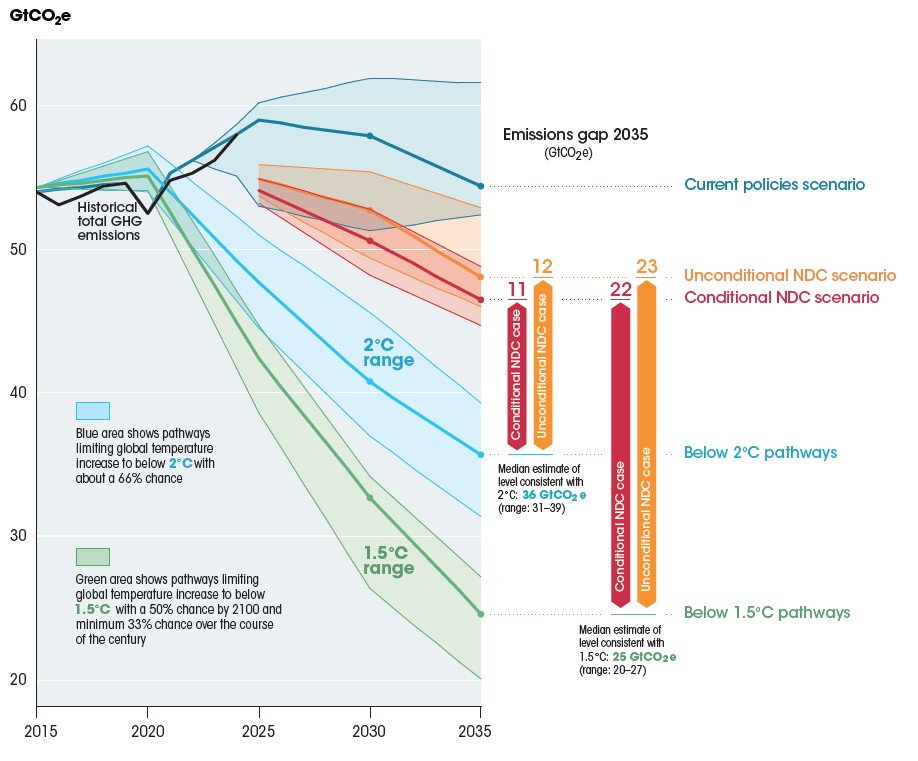
- UNEP Emissions Gap 2025: It shows:
- Current policies: 2.8°C of warming by 2100;
- Full implementation of pledges: 2.3–2.5°C;
- Even this minor improvement is negated by methodological changes and the expected US withdrawal from the Paris Agreement.
- NDCs: Only 64 of 193 parties submitted new Nationally Determined Contributions.
- Implemented pledges reduce emissions by just 15% by 2035 (vs 55% needed for 1.5°C).
- UNEP warns of a “huge implementation gap”.
- Global Emissions Break Records: 57.7 GtCO₂e in 2024, up 2.3% from 2023.
- Fossil fuels = 69% of emissions.
- Fastest growth: F-gases (3.8%).
- Deforestation reverses a decade-long decline with a 21% increase in 2024.
- Many tropical nations—especially in Amazonia, Central Africa, and Southeast Asia—face pressure to expand extraction and agriculture, complicating deforestation goals.
- Major Emitters:
- Top emitters: China, US, India, EU, Russia, Indonesia.
- Largest year-on-year emissions rise: India and China.
- Only major bloc with declining emissions: European Union (EU).
Adaptation
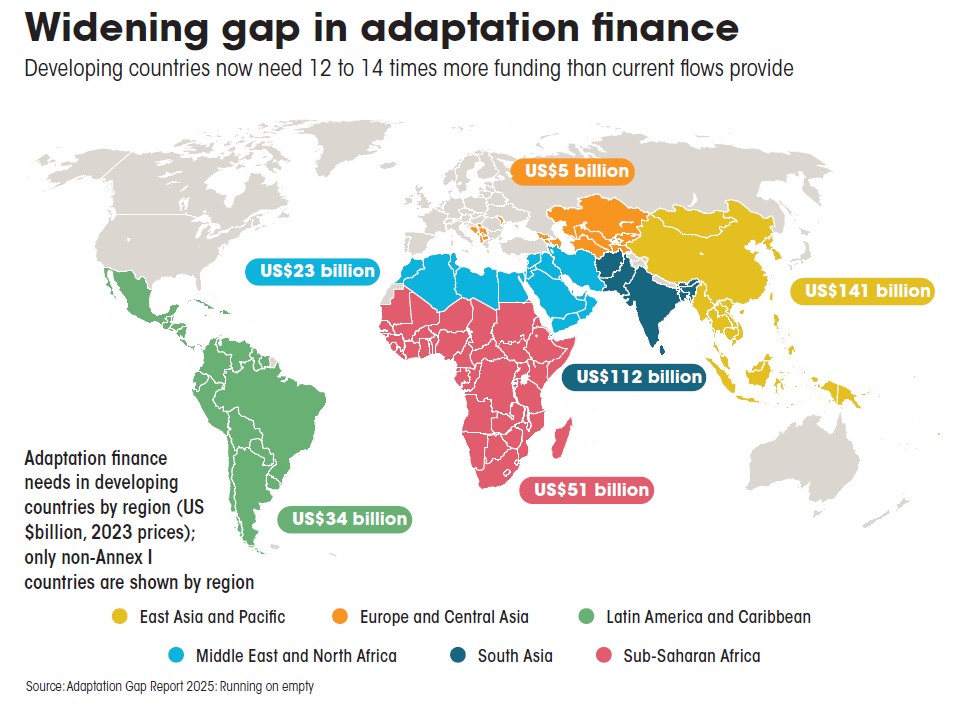
- UNEP’s Adaptation Gap Report 2025: As Hurricane Melissa devastated Jamaica—one of the strongest storms ever to hit the North Atlantic—UNEP delivered a grim assessment.
- Developing countries need $310–365 billion/year by 2035 for adaptation.
- Current public international finance: just $26 billion (down from $28b).
- Adaptation finance gap: $284–339 billion.
- Countries need 12–14× more funding than currently provided.
- It has deadly consequences: coastal inundation, heatwaves, droughts, and storms push vulnerable communities to the brink.
- Adaptation projects in South Asia, Africa, and small island nations are stalled due to delayed funds, high-interest loans, and donor fatigue.
G20’s Crucial Role and the Road Ahead
- High Emissions, Low Delivery: G20 countries account for 77% of global emissions but have failed to align with their own 2030 targets.
- Despite falling prices of solar, wind, and energy-storage technologies, political inertia and fossil-fuel dependence persist.
- Technical Possibility, Political Paralysis: UNEP stresses that:
- Renewable energy expansion is economically viable.
- Climate governance reform is overdue.
- Financial institutions must be redesigned to deliver accessible climate finance without worsening debt.
- Even under the most ambitious scenario—full NDCs + net-zero pledges—the planet still warms ~1.9°C.
Conclusion
- The world enters COP30 with a narrowing window and widening gaps across emissions, finance, and adaptation.
- The science is unambiguous; the lived experience of vulnerable communities confirms it daily.
- Whether COP30 will remain another missed opportunity—or become a turning point—depends not on scientific warnings, which are deafening, but on political will, which remains fragile.
Wealth, Capital and Climate
Context
- The Climate Inequality Report 2025 by the World Inequality Lab — researchers show that the world’s richest individuals are not only accumulating disproportionate wealth but are also disproportionately responsible for driving the climate crisis.
Key Findings
- The report finds that the top 1% of global wealth-holders are responsible for 15% of consumption-based emissions, but, when accounting for emissions tied to their asset ownership (capital in high-emitting industries) that share jumps to 41%.
- An individual in the top 1% emits about 75 times more than someone in the bottom 50%, based purely on consumption.
- But when looking at asset-ownership in high-emitting industries, the per-capita emissions of someone in the top 1% are about 680 times that of someone in the bottom 50%.
- In countries like France, Germany and the U.S., the carbon footprint of the wealthiest 10% measured via ownership-based emissions is three to five times higher than estimates based on consumption alone.
Why the Focus on Investment and Ownership Matters?
- The report emphasises that these personal consumption emissions are overshadowed by the emissions tied to their investments into high-carbon sectors (fossil fuels, heavy industry), while the rich do have high-emission lifestyles (private jets, mega-yachts, massive homes).
- It matters because climate policy has often focused on consumption (e.g., carbon taxes, fuel levies) rather than the underlying ownership structure that channels capital into high-carbon assets.
- For example, the report notes that more than 100 companies are believed to be responsible for about 71% of industrial greenhouse gas emissions since the Industrial Revolution — and much of the ownership of those companies lies with wealthy individuals and institutional investors.
Policy Response: Taxing Carbon-Intensive Wealth
- One of the central recommendations of the Climate Inequality Report 2025 is taxing the carbon content of assets and financial portfolios, rather than focussing only on fossil-fuel consumption taxes.
- The logic is that when you tax fossil-fuels consumed, the cost is passed on to the consumer — often disproportionately affecting lower-income individuals who may lack alternatives.
- The report outlines three major policy options:
- A global ban on new fossil-fuel investments.
- A tax on the carbon content of assets and investments.
- A shift to public-driven decarbonisation, ensuring that new clean-energy capital does not just reinforce private wealth concentration.
- According to the report, poorly designed climate policies risk deepening wealth inequality: if the transition is captured by private capital, the share of wealth going to the top 1% could increase from ~38% today to ~46% by 2050 if climate investments remain largely private-owned.
Key Findings of the Climate Inequality Report 2025
- Emissions remain highly unequal: The top 10% of global emitters are responsible for nearly half of all emissions, while the bottom 50% contribute less than 10%.
- Within countries, the wealthiest households continue to increase per-capita emissions faster than national averages.
- Climate damages disproportionately harm the poorest populations: Low-income countries—responsible for the smallest share of global emissions—face the highest exposure to heat, crop loss, flooding, and health impacts.
- Within countries, poorer households face higher climate risk due to lower-quality housing, limited savings, and restricted access to cooling, insurance, and healthcare.
- Climate adaptation funding remains deeply inequitable: An adaptation financing gap persists, with vulnerable countries receiving far less than what is needed to prepare for rising climate impacts.
- Even when funds are delivered, they often do not reach the most vulnerable communities effectively.
- Green investment is concentrated in wealthy countries: High-income countries dominate investment in renewable energy, green technology, and emission-reduction innovation.
- Low-income countries face financing barriers and higher borrowing costs, limiting their ability to transition to clean energy.
Drought Condition: Ganga River
Context
- A recent study has revealed that the Ganga River is experiencing its worst drought in approximately 1,300 years.
Key Findings
- According to the study, from 1991 to 2020, the drop in streamflow in the Ganga basin was about 76% more intense than the severe drought of the 16th century.
- The study reports that the decline in annual mean rainfall over the Ganga River Basin (GRB) between 1951 and 2020 was around 9.5%.
- In some western parts of the basin, declines exceed 30%.
- During 1991–2020, multiple consecutive drought periods were recorded: e.g., 1991–1997, 2004–2010, 2014–2018.
Reasons: Why Is It Happening?
- Reduced Monsoon Rainfall: A key driver is the weakening of the summer (southwest) monsoon over the basin.
- The study finds that decreased rainfall reduces river flow and groundwater recharge
- Human Activity & Groundwater Extraction: Large-scale groundwater extraction for irrigation, dense dam and barrage networks, irrigation canals diverting water — all reduce the natural flow of the Ganga.
- Model Limitations & Climate Complexity: The study finds that many climate models fail to capture the severity of the drying trend in the Ganga Basin.
- Human interventions (irrigation, land-use change, aerosols) are not well represented in models, thus the risk is under-estimated.
Impacts & Risks
- Water and Food Security: The basin of the Ganga supports over 600 million people across India, Nepal and Bangladesh.
- Reduced river flow threatens irrigation, drinking water supply, ecosystems and livelihoods.
- Ecosystems & Navigation: With lower flows, stretches of river that once allowed navigation are becoming impractical during the dry season.
- Canals and wells that depended on the Ganga are being affected.
What Can Be Done?
- Prioritise environmental flows in the river: ensuring sufficient water remains in the Ganga to maintain its ecology, even as withdrawals continue.
- Manage groundwater and surface water as a connected system: recharge aquifers, regulate extraction.
- Improve modelling and planning by including human factors (irrigation, land use, damming) in climate-hydrology models.
- Promote trans-boundary cooperation (India, Nepal, Bangladesh) for data sharing, coordinated water management, given the Ganga Basin spans political borders.
Kerala’s Extreme Poverty-Free Status
Context
- Recently, Kerala became the first Indian state to declare itself free of ‘extreme poverty’, rooted in the state’s Extreme Poverty Eradication Programme (EPEP).
Kerala’s Declaration and the EPEP Framework
- Under EPEP, the state—working with local bodies and non-profits—identified:
- 64,006 households (103,099 individuals) as extremely poor;
- 59,277 households rehabilitated through micro-plans linking them to welfare schemes;
- The programme used four dimensions to assess deprivation like food, health, income and housing.
- What the Government Did Not Count: Kerala did not use:
- NITI Aayog’s Multidimensional Poverty Index (12 indicators);
- The World Bank’s threshold of $3/day;
- It allowed many severely vulnerable groups to fall through the cracks.
Invisible Poor: Workers, Tribes, and Coastal Communities
- Informal Workers Excluded: A Kerala labour official notes that workers often live on company-owned land without titles, lack income/address documentation, and remain invisible to state surveys.
- A 2024 study by the Gulati Institute of Finance and Taxation shows that 22% of Kerala’s workforce is stuck in low-wage, insecure jobs.
- Tribal Communities: Kerala has 426,000 tribal people, with Wayanad alone housing 152,000.
- In districts like Wayanad, Idukki, and Palakkad, over 85% of tribal households are landless.
- Coastal Communities: Nearly 60% of Kerala’s 580-km coastline faces moderate to severe erosion (National Centre for Earth Science Studies).
Poverty vs. Vulnerability
- Experts argue that the declaration reflects reduction of visible destitution, not actual eradication of poverty. Key drivers of poverty in Kerala remain like landlessness, climate risk, gendered exploitation, income insecurity, and rising household debt.
Extreme Poverty Eradication Programme (EPEP) 2.0
- Kerala has acknowledged gaps and is preparing EPEP 2.0, which aims to:
- Update inclusion criteria;
- Provide sustained support to previously identified families;
- Involve self-help groups and local governments;
- Allocate dedicated state budget resources;
Cloudbursts on the Plains: India’s Unseen Climate Emergency
Context
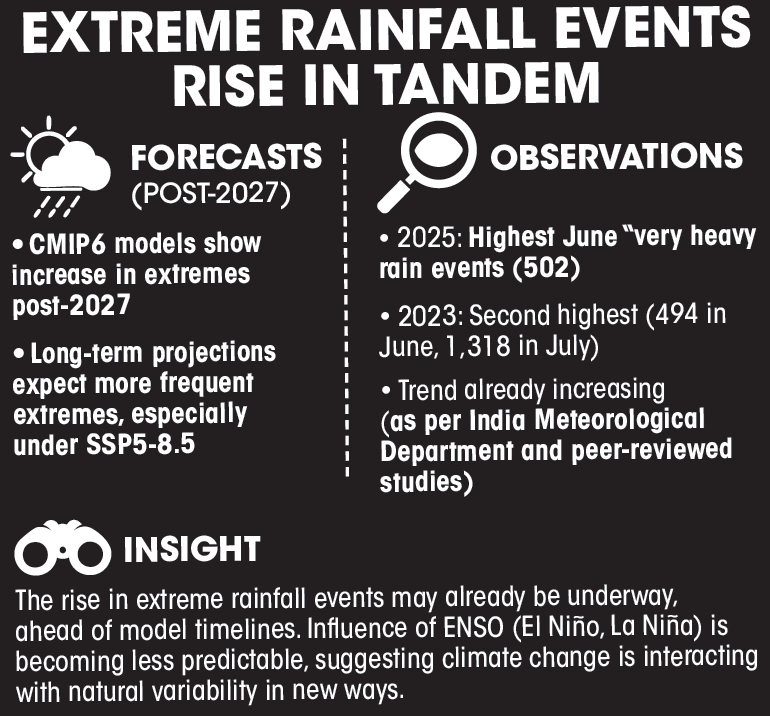
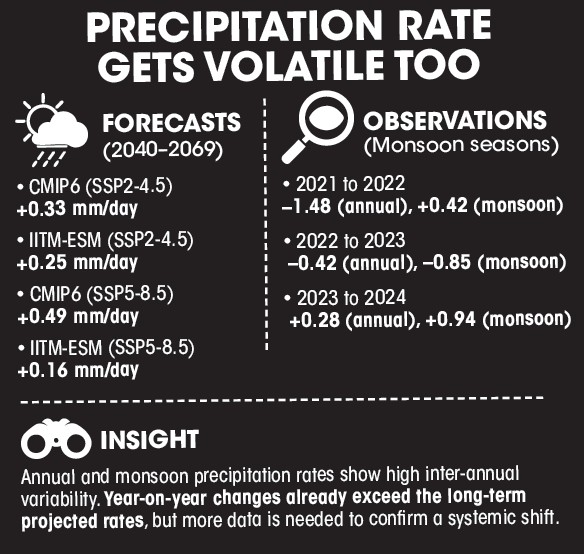
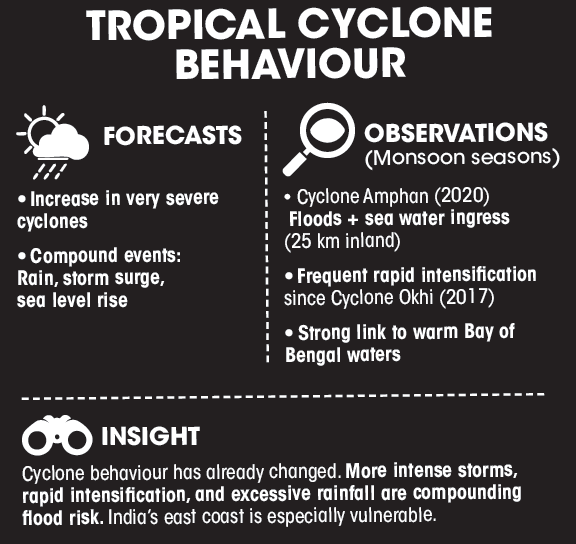
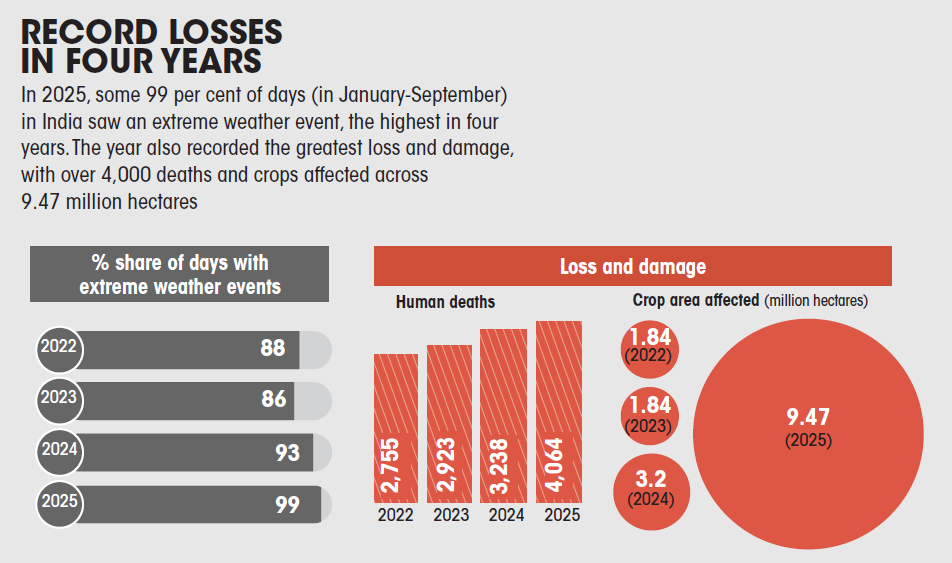
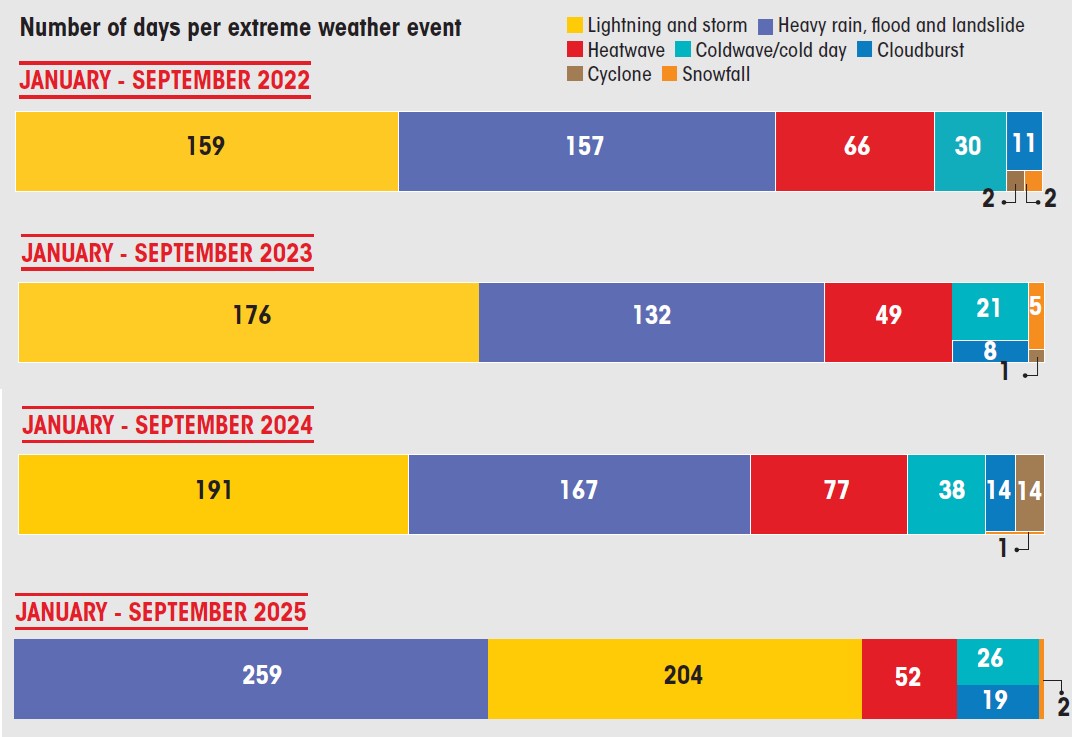
- Cloudburst-like downpours are now striking India’s plains with alarming frequency, redefining the country’s understanding of monsoon extremes, once confined to the mountains.
Cloudbursts Beyond the Hills
- Traditionally, cloudbursts—defined as rainfall exceeding 100 mm per hour over 20–30 sq km — are phenomena of hilly terrains, where orographic lift pushes moist air upwards, triggering intense convection.
- Every 1°C rise in global temperature, the atmosphere holds 7% more water vapour.
- Despite decades of research, climate models remain too coarse to forecast such hyperlocal phenomena.
- They can simulate trends over large regions but fail to capture specific convective patterns responsible for these cloudbursts in the plains.
Early Signs of a Global Shift
- Even with gaps in data and limitations in modeling, two clear trends are emerging:
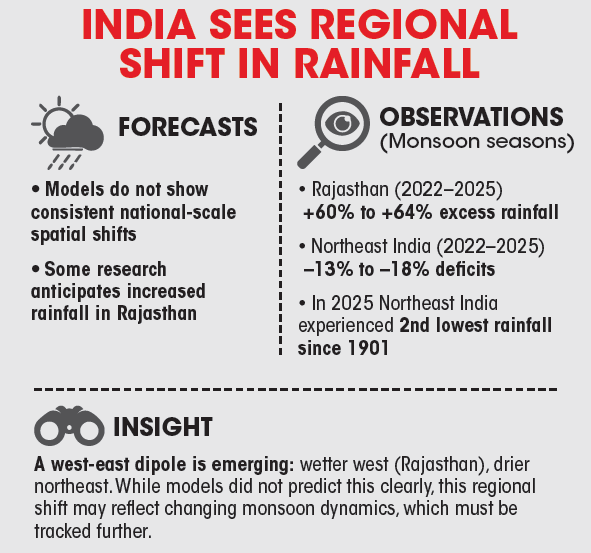
- Climate impacts are appearing in unpredicted regions—from India’s coastal plains to its rain-shadow interiors.
- These disruptions are arriving sooner than most forecasts anticipated.
- The ‘Global Tipping Points 2025’ report, produced by 160 scientists from 23 countries, declared that the Earth has crossed its first major climate tipping point—the mass die-off of warm-water coral reefs.
- Tipping points are thresholds beyond which human-induced warming triggers irreversible planetary changes. Earlier projections placed them between the 2030s and 2100, depending on emissions scenarios. But as this report indicates, the timeline has accelerated.
Why are the models struggling?
- Many climate models used by the IPCC and others are coarse in spatial resolution, and are designed to identify broad regional trends—not specific extreme events in small areas (such as a cloudburst in a plain).
- Feedback loops (e.g., rapid Arctic/Antarctic ice melt, weakening of the AMOC, strange jet-stream behaviour) appear to be activating earlier or faster than expected.
- The modelling community is thus increasingly calling for a next generation of models: greater spatial and temporal resolution, better coupling with observation systems (including palaeoclimate records), and real-time data assimilation of emerging extremes into projections.
Looking Ahead: What does it means in practice?
- More frequent and intense extremes: Each additional 0.1 °C of global warming tends to produce a disproportionately greater rise in disasters linked to extreme weather.
- The faster the planet warms, the earlier and stronger the disruptions: altered precipitation patterns, shifting monsoon behaviour, sea-level rise, retreating glaciers, stronger cyclones.
- Some changes once projected for decades ahead may already be underway.
- Risks of tipping points and cascading failures: The ‘Global Tipping Points 2025’ report warns that we may already have passed the first ‘tipping point’ (warm-water coral reef die-off).
- Current models may not capture all these cascading feedbacks, which means our risk assessments may under-estimate the real-world danger.
Implications for India’s Policy & Planning
- India must accelerate climate adaptation: anticipating not just gradual shifts but sudden, extreme, small-scale events (e.g., cloudbursts, flash floods, short-duration heavy rainfall), especially in regions previously considered ‘safe’.
- Urban planning, infrastructure, drainage, early warning systems, land-use regulation must all factor in this elevated risk profile.
- The monsoon is changing its character: growing variability, increasing extremes, shifting spatial patterns (for example, excess rain in Rajasthan but deficits in northeast India).
- The modelling and forecasting community in India needs to invest in higher-resolution local data and models (including sub-daily rainfall extremes) to support early warning and adaptation.
ICAR’s Gene-Edited Rice Controversy
Context
- Recently, ICAR has announced the development of two gene-edited (GE) rice varieties — Pusa DST-1 and DRR Dhan 100 (Kamala) — marked as high-yielding, climate-resilient, and salt-tolerant.
Controversy: Gene-Edited Rice Underperforms
- An analysis of ICAR’s own trial data revealed that:
- No significant increase in yield was observed compared to the parental varieties.
- The varieties did not mature earlier, contradicting official claims.
- ICAR allegedly flouted crop testing norms, bypassing standard protocols and ignoring red flags in the data.
Data Discrepancies and Ethical Concerns
- ICAR’s internal data showed inconsistencies that should have prompted further trials or revisions. Instead, the varieties were fast-tracked for release, raising concerns about:
- Scientific transparency: The lack of peer-reviewed publication and open data access undermines public trust.
- Regulatory bypass: ICAR sidestepped established crop testing procedures, possibly to avoid public resistance to gene technologies.
- Institutional accountability: The response from ICAR has been described as evasive, reflecting poorly on the ethics of India’s top agricultural research body.
Implications for Farmers and Food Systems
- Farmers may adopt crops that don’t deliver promised benefits, leading to economic losses.
- It could erode trust in future gene-edited crops, stalling innovation in agricultural biotechnology.
- The controversy may fuel public skepticism toward genetically modified organisms (GMOs) and gene-editing technologies in India’s food systems.
Land Subsidence: A Growing Urban Hazard in India and Beyond
Context
- Human activities have dramatically accelerated subsidence rates in many rapidly urbanising regions, particularly in the Global South, while natural processes drive slow, long-term settling of the Earth’s surface.
What Causes Land Subsidence?
- Natural Drivers:
- Glacial Isostatic Adjustment (GIA): Land continues to settle thousands of years after the retreat of massive ice sheets.
- Natural Consolidation of Sediments: Recently deposited or soft sediments naturally compact over time, especially in river deltas and coastal plains.
- Tectonic Activity: Fault movements, crustal adjustments, and long-term geological settling contribute to slow, persistent vertical land motion.
- Anthropogenic Drivers: Although natural processes occur at millimetres per year, human-driven processes can increase subsidence to several centimetres annually. Major human causes include:
- Excessive Groundwater Extraction: When aquifers are over-pumped, clay layers compress like squeezed sponges, causing surface-level sinking.
- Oil and Gas Extraction: Removal of underground hydrocarbons destabilises subsurface pressure.
- Mining Activity: Underground voids created by mining operations trigger localised collapses or widespread settling.
Why Global South Cities Are Especially Vulnerable?
- Cities across the Global South heavily rely on groundwater as their primary or fallback water source due to unreliable surface water, rapid urban growth, insufficient water infrastructure, and high dependence on private borewells.
Subsidence Threat in India’s Megacities
- A 2023 study published in Nature Sustainability highlights alarming levels of land subsidence across India’s five major metropolitan areas — Delhi, Mumbai, Kolkata, Chennai, and Bengaluru — collectively affecting 878 sq km of urban land, 13 million buildings, and ~80 million residents
- Maximum Annual Subsidence Rates: Delhi: 51 mm/year; Chennai: 31.7 mm/year; Mumbai: 26.1 mm/year; Kolkata: 16.4 mm/year; Bengaluru: 6.7 mm/year;
- City-wise Drivers and Hotspots:
- Delhi:
- Primary driver: compaction of alluvial deposits due to extreme groundwater extraction.
- Hotspots: Bijwasan, Faridabad, Ghaziabad (up to 38.2 mm/year).
- Some areas like Dwarka are uplifting (15.1 mm/year) due to successful aquifer recharge and rainwater harvesting policies implemented between 2005–2015.
- Chennai:
- Fastest sinking around the Adyar River floodplains and central districts including Valasaravakkam, Kodambakkam, Alandur, Tondiarpet.
- Drivers: compaction of Holocene alluvium + groundwater extraction.
- Chennai shows the highest future structural damage exposure compared with other cities.
- Mumbai:
- Subsidence is low in most areas except dense, economically weaker regions like Dharavi.
- Urban load from vertical development adds to subsidence pressures.
- Kolkata:
- Caused by the settlement of Pleistocene and Holocene sediments in the Ganga delta.
- Long-term groundwater dependence continues to trigger compaction.
- Bengaluru:
- Minimal subsidence due to stable igneous and metamorphic bedrock (gneiss, granodiorite, granite).
- Subsidence risk increased in late 2022 due to a surge in groundwater extraction during drought-like conditions.
Strategies to Prevent or Slow Subsidence
- Early Monitoring and Data Systems:
- Groundwater monitoring networks using in-situ sensors.
- Satellite-based deformation tracking (e.g., InSAR) to detect early warning signs of aquifer stress.
- Regulation and Governance:
- Sustainable yield thresholds and borewell permitting systems.
- Phased regulation rather than blanket bans — particularly important where communities have no alternative water supply.
- Public awareness campaigns on sustainable groundwater use.
- Diversified Urban Water Portfolios:
- Surface water augmentation
- Wastewater recycling
- Rainwater harvesting
- Managed Aquifer Recharge (MAR) — recharge basins, rooftop-to-recharge systems, and revival of tanks and wetlands.
- Risk-Sensitive Urban Planning:
- Incorporating subsidence risk maps into building codes and zoning plans.
- Designing infrastructure with expected long-term settlement in mind.
Road Ahead: Sustainable Groundwater Management
- For India’s megacities — and others across the Global South — the path forward requires:
- Proactive monitoring rather than crisis response;
- Adaptive groundwater governance that accounts for equity;
- Urban design that treats water as a foundational element, not an afterthought;
- Community-led recharge and conservation initiatives;
- Sustainable groundwater use is not only essential for water security but for safeguarding the geological stability of the cities themselves.
Ethnomedicinal Heritage of the Sumi Nagas
Context
- The ethnomedicinal practices of the Sumi Nagas are a living knowledge system transferred orally through generations. Unless protected through legal frameworks, the knowledge may be lost and faces risk of biopiracy.
About the Ancient Wisdom in the Hills of Nagaland
- In the misty hills of Zunheboto district, Nagaland, the Sumi Nagas have preserved a vibrant tradition of healing through plants and rituals.
- These ethnomedicinal practices are orally transmitted, forming a living knowledge system that blends biodiversity with cultural identity.
Living Knowledge System of the Sumi Nagas
- Oral Transmission and Practice: The Sumi Nagas do not rely on formal pharmacopoeias.
- Instead, their ethnomedicinal knowledge is embedded in narratives, songs, the expertise of tribal healers—bonesetters, midwives, elders—and passed verbally from one generation to the next.
Traditional Treatments
- Albizia Chinensis (locally Amwosu): powdered bark used as an anthelmintic to eliminate parasites without harming the host.
- Albizia Lebbeck (Azuyisu): used for blood toxicity, bronchial disorders and night-blindness.
- Artemisia Indica (Ahupi): versatile—treats asthma, gastritis, skin ulcers; a paste of leaves applied to a child’s head to prevent convulsions.
- Artemisia Nilagirica (Achupi): leaf decoction for piles, juice rubbed on forehead for headaches; roots used as tonic/antiseptic.
- Bambusa Tulda (Awuti): the bamboo shoots flavour meals; a paste from the plant used to treat chicken-pox and poisonous bites.
- Curcuma Angustifolia (Anashibo): rhizome crushed gives a fragrant scent. Used for jaundice, blood purification, ulcers, kidney-stones.
- Azadirachta Indica (Akhosuba, neem): from fever to gum disease; its smoke is believed to ward off viruses and insects.
- Debregeasia Longifolia (Awukhu-nabo): bark used as cleansing shampoo; fruits aid digestion.
- Khollethi (Phyllanthus Emblica): Rich in vitamin C; used to treat scurvy, diarrhoea, dysentery, headache and grey hair. The seed is used in treatment of asthma, bronchitis and biliousness.
- Mughuniye (Fagopyrum Esculentum; Buckwheat): It is used particularly to treat fragile capillaries; also helps strengthen varicose veins and treat chilblains.
- Tughami Subo (Alstonia Scholaris): The bark is used to treat asthma, dyspepsia, chronic diarrhea and to stop bleeding of wounds.
- Khakhuthi (Solanum Indicum): Treats asthma, bronchitis, skin diseases, relieves labour pain and toothache.
- Nebathi (Ficus Benjamina): Leaf decoction used to treat ulcer; tender shoots for cough, dysentery.
- Tachisu (Callicarpa Arborea): Cures fever, gastritis and skin diseases.
- Qopupu (Bauhinia Glauca): Decoction of bark is used for dysentery, its infusion is used in poisonous bites.
- Sumugha (Allium Ascalonicum; Shallot): Decoction of bulbs mixed with milk, butter and Ferula asafetida and paste is applied to treat paralysis
- Shenhanibo (Ricinus Communis; Castor): Leaves are anthelmintic. Leaves are heated with steam and placed on swellings, boils and rheumatic joints. Oil is purgative, used in skin inflammation and leprosy
- Lavatsuna (Allium Tuberosum): Decoction of herbs used in urinary infection, is considered a good diuretic.
- Lutusu (Alnus Nepalensis): Bark paste is used to cure stomach-ache and dysentery. The leaf paste is applied on cuts and wounds.
Threats to Traditional Knowledge
- Biopiracy: Without legal safeguards, pharmaceutical companies may exploit indigenous knowledge without compensation or recognition.
- Loss of biodiversity: Deforestation and climate change are endangering the very plants that sustain these cures.
- Cultural erosion: Younger generations are drifting away from traditional practices, risking the loss of centuries-old wisdom.
Need for Community-Centred Legal Frameworks
- Recognition of collective ownership: Traditional knowledge is often not the creation of an individual inventor but the result of communal practice and oral transmission.
- Legal frameworks must allow for collective rights rather than individual patents.
- Free, Prior and Informed Consent (FPIC): Communities must have the right to decide if, how and on what terms their knowledge may be used.
- Benefit-sharing mechanisms: When medicinal plants or knowledge lead to commercial products, communities should share in the rewards, not be excluded.
- Customary law alignment: The frameworks should respect local customary laws and knowledge practices.
- Sui generis protection: A tailored legal regime (rather than forcing traditional knowledge into classic patent systems) may be appropriate—one that recognises the intergenerational, evolving, communal character of the knowledge.
- Documentation and databases (with control): While oral transmission is central, strategic documentation (with community control) can help protect the knowledge from misappropriation and serve as evidence of prior use (prior art) to prevent wrongful patents.
- Acts like the Biological Diversity Act 2002 and the Forest Rights Act 2006 provide some rights, but they are inadequate to protect orally transmitted, communal knowledge.
Hasdeo Arand Forest
Context
- Recently, the Chhattisgarh High Court ordered upholding mining operations in the Hasdeo Arand forest—despite community challenges.
Background: Ghatbarra Community Forest Rights Case
- FRA Recognition and Later Revocation: In 2013, Ghatbarra village in Surguja district received Community Forest Rights (CFR) under the Forest Rights Act, allowing access to 810 ha of forestland for fuelwood, minor forest produce, and grazing.
- In 2016, the District Level Committee (DLC) revoked these rights, claiming they were granted ‘in error.’
- High Court’s Ruling: The court agreed that a DLC has no authority to cancel CFR titles.
- Despite this, it dismissed the petition on technical grounds—stating villagers could not prove residence or eligibility—effectively undermining their recognized rights.
Mining, Approvals, and Procedural Violations
- Mining Interests in Hasdeo Arand: Hasdeo Arand—one of India’s largest contiguous forest blocks—contains the Parsa East–Kanta Basan (PEKB) coal block, allotted to Rajasthan Rajya Vidyut Utpadan Nigam Ltd (RVUNL), where Adani Enterprises holds the majority stake.
- Questionable Clearances: The Forest Advisory Committee initially rejected diversion proposals in 2011 due to non-compliance with FRA.
- In-principle approval was later granted conditionally, requiring settlement of forest rights.
- Final forest clearance followed, though Gram Sabha consent—mandatory under FRA and PESA—was never obtained.
Community Opposition and Legal Battles
- Resistance on the Ground: Between 2012–2013, multiple Gram Sabhas and Van Adhikar Samitis passed resolutions demanding a halt to mining activities, citing violations of:
- Forest Rights Act (FRA), 2006
- Panchayats (Extension to Scheduled Areas) Act (PESA), 1996;
- NGT and Supreme Court Interventions: The National Green Tribunal (2014) suspended mining after finding illegalities in forest diversion.
- The Supreme Court later allowed continuation of Phase-1 mining while litigation continued.
- Meanwhile, the Union government advanced permissions for Phase-2 mining, which began in 2022, despite active disputes over rights and consent.
Concerns Over the Court’s Reasoning
- Undermining of CFR and Gram Sabha Powers: If CFR titles existed, forest clearance should be deemed illegal without community consent.
- The judgment allows authorities to disregard the FRA and reduces Gram Sabha consent to a formality.
- Fifth Schedule and PESA Violations: Hasdeo Arand lies in a Fifth Schedule Area, where PESA empowers Gram Sabhas to decide whether mining may occur.
- The Supreme Court’s Niyamgiri judgment (2013) reaffirmed this power
- Ecological Concerns: Hasdeo Arand is rich in biodiversity and hosts critical catchments for major rivers. These include:
- destruction of elephant corridors;
- fragmentation of dense forest;
- long-term hydrological damage;
- loss of indigenous livelihoods;
Community Rights Before Relocation
- The Union Ministry of Tribal Affairs (MoTA) Issues Policy on Rights of Communities in Tiger Reserves, titled as ‘Reconciling Conservation and Community Rights: A Policy Framework for Relocation and Co-existence in India’s Tiger Reserves’.
- It urges cooperation from the MoEFCC and stresses that conservation must respect constitutional guarantees, legal safeguards, and human dignity.
Core Principles of the New MoTA Framework
- MoTA reiterates that no forest-dwelling community can be relocated unless:
- All individual and community forest rights are first recognized.
- The free, prior and informed consent of the gram sabha is obtained.
- Relocation is strictly voluntary and adheres to both the FRA and the Wild Life Protection Act (WLPA), 1972.
- It mandates:
- Land-for-land compensation, secure housing, and livelihood restoration.
- Long-term rehabilitation support and transparent monitoring of outcomes.
- Commitment to zero forced displacement.
Rights-Based Conservation
- Co-existence: Allowing forest communities to continue living within tiger habitats with legal protections.
- Voluntary Relocation: Providing fair compensation, livelihood guarantees, and transparent procedures.
Painted Stork
Context
- For over 15 years, a cluster of villages in Etawah in Uttar Pradesh have hosted an unlikely seasonal guest—the painted stork (Mycteria Leucocephala).
About Painted Stork (Mycteria Leucocephala)
- They are large birds native to South and Southeast Asia.
- They inhabit freshwater wetlands, marshes, lakes, and riverbanks, often nesting in large colonies near water bodies.
Threats
- Wetland degradation and encroachment;
- Pollution and reduced fish availability;
- Disturbance during breeding seasons;
Conservation Status
- Near Threatened (IUCN Red List)
Cyclone Montha
Context
- Recently, Cyclone Montha made landfall on the east-coast of India between Machilipatnam and Kakinada in Andhra Pradesh.
About Cyclone Montha
- Cyclone Montha was classified as a Severe Cyclonic Storm by IMD, bringing torrential rains, storm surges, and high winds that battered coastal and inland regions.
What Is a Cyclone?
- A cyclone is a large-scale air mass that rotates around a strong center of low atmospheric pressure.
- In the Northern Hemisphere, the rotation is anticlockwise, while in the Southern Hemisphere, it’s clockwise.
- Cyclones are classified into:
- Tropical Cyclones: Form over warm ocean waters and are typically more intense.
- Extra-Tropical Cyclones: Occur in temperate zones and are driven by temperature gradients.
- The term ‘cyclone’ was coined by Henry Piddington, meaning ‘coiled snake’, to describe the swirling nature of storms in the Bay of Bengal and Arabian Sea.
Key Challenges & Gaps Identified
- Damage to housing, especially in informal or vulnerable settlements, is under-assessed.
- Livelihoods (especially farming) get hit hard by standing-crop losses and delays in compensation.
- Infrastructure (roads, power, irrigation) damage hampers relief and recovery.
- Post-disaster enumeration and assistance often lag behind actual ground conditions.
Hurricane Melissa
Context
- Recently, Category 5 Hurricane Melissa struck Jamaica with maximum sustained winds of 298 kmph, ranking it among the strongest storms ever recorded in the North Atlantic, affecting Cuba, Haiti, and the Dominican Republic.
About Hurricane
- A hurricane is a type of tropical cyclone characterized by strong winds (≥119 km/h), heavy rainfall, and storm surges.
- They form over warm ocean waters and are classified into categories based on wind speed, with Category 5 being the most severe.
Climate Change and Intensification
- Warmer oceans provide more energy for storm formation.
- Increased atmospheric moisture leads to heavier rainfall.
- Rising sea levels exacerbate storm surges and coastal flooding.
Nanobody-Based Anti-Venom
Context
- Recently, a team of researchers, published in Nature, has developed a promising broad-spectrum anti-venom that uses nanobodies — tiny, highly stable antibodies derived from camelids.
How the Study Was Conducted?
- Testing Venom From 18 African Snake Species: Scientists injected venom from 18 African snakes, including some of the most dangerous species such as the black mamba and cape cobra, into mice and camelids.
- They identified eight nanobodies that effectively neutralized key toxins found in these snake venoms.
- Nanobodies’ small size allows them to penetrate deep tissues and cross the blood–brain barrier, giving them a therapeutic advantage over traditional antivenoms.
Why Does This Matters?
- Snakebite, A Neglected Public Health Crisis: Africa records 7,000 deaths and 10,000 amputations annually due to snakebites.
- India has the highest global burden, with 58,000 annual deaths, as noted in a report presented at the 78th World Health Assembly (2025).
- Snakebite envenoming is considered a ‘neglected tropical disease’, disproportionately affecting rural and low-income communities where access to effective treatment is limited.
- Limited Current Anti-Venoms: Existing antivenoms are often species-specific, require cold-chain storage, and are expensive and not always available where needed.
- A broad-spectrum, stable nanobody-based solution could dramatically improve access, affordability, and survival rates.
Measles and Other Vaccine-Preventable Diseases
Context
- Canada has recorded over 5,000 measles cases since October 2024, triggering the loss of its elimination status, as it had achieved measles-free status in 1998 (with formal verification in 2000).
Why did it happen?
- Low vaccine coverage: Canada’s two-dose measles vaccine uptake fell below the ~95% level needed for herd immunity.
- Vulnerable groups: Much of the transmission has been among under-vaccinated or unvaccinated populations.
Broader Resurgence: Other Diseases
- Whooping Cough (Pertussis): Pertussis (also known as whooping cough) is making a comeback globally:
- Outbreaks of pertussis are being reported around the world; immunity from vaccines wanes, and vaccine uptake/boosters are sub-optimal.
- One recent review describes pertussis resurgence driven by waning immunity, vaccine changes, and bacterial adaptation.
- Diphtheria: A study covering 2023-2024 shows large outbreaks among children <15 years old in several African countries with low vaccination coverage.
- Many African countries face high numbers of zero-dose (unvaccinated) children, leading to outbreaks of diphtheria, meningitis, measles and more.
Root Causes & What Needs to Be Done
- Declines in routine immunisation;
- Waning immunity;
- Vaccine hesitancy, misinformation, and weak public health outreach;
- Weak surveillance and health-system gaps;
Key Actions
- Reinforce routine immunisation programs;
- Increase coverage of full two (or more) dose series and maintain the high thresholds (~95%) needed for herd protection.
- Strengthen booster programmes where immunity wanes (e.g., pertussis).
- Improve surveillance: Fast detection and response to outbreaks, tracking of vaccination status.
- Tackle vaccine hesitancy: Clear public communication, trust-building, addressing misinformation.
- Global solidarity: Strengthening immunisation in lower-income countries to reduce global risk—because diseases don’t respect borders.
Generational Tobacco Ban By Maldives
Context
- Recently, Maldives became the first country in the world to enact a generational ban on tobacco use.
About
- Anyone born on or after 1 January 2007 is prohibited from buying, using or being sold tobacco products—including residents and visitors alike.
- It covers all forms of tobacco: cigarettes, cigars, chewing tobacco, etc and extends to electronic cigarettes and vaping devices for all age-groups.
Penalties for Violations
- Retailers caught selling tobacco to someone born on or after 1 January 2007 face a fine of 50,000 Maldivian Rufiyaa (≈ ₹2.9 lakh).
- Individuals found using a vaping device may be fined 5,000 Rufiyaa (≈ ₹29,000).
- Age-verification (ID checks) is required before tobacco sales to ensure compliance.
Rationale
- The Maldives’ move aligns with global public health frameworks, such as the WHO’s Framework Convention on Tobacco Control (WHO FCTC).
- Previously, other countries (e.g., New Zealand) had proposed generational bans but did not succeed in implementing them.
Lamu, Kenya
Context
- Recently, Kenya has cancelled its first 1,050 MW coal-fired power plant in Lamu County.
About
- The coastal region of Lamu, in Kenya, is home to a UNESCO World Heritage site, a centuries-old Swahili settlement known for its architecture, culture and marine ecosystems.
- In 2013, Kenya announced plans for a 1,050 MW coal-fired power plant near Lamu in a joint venture with local and Chinese firms.
- The proposed plant would have used imported coal (from South Africa and Zimbabwe) and later locally mined coal (from the Mui Basin in Kitui County).
- The court acknowledged these risks and ruled that the environmental impact assessment was inadequate and failed to consult affected stakeholders meaningfully.
Mosquitoes in Iceland
Context
- For the first time on record, mosquitoes have been detected in Iceland — a country long regarded as one of the last mosquito-free places on Earth (the other being Antarctica)
About
- Previously, Iceland’s cold climate and lack of suitable standing water environments made sustained mosquito populations extremely unlikely.
- Now, the detection of a cold-tolerant species suggests that conditions may be shifting.
- Studies have shown that mosquitoes are expanding their geographic range as warmer temperatures, longer seasons and milder winters create new potential habitats.
Science Behind It
- Cold Tolerance & Species: Culiseta annulata is known in northern Europe and parts of Asia for its ability to overwinter as an adult.
- That means one of the key barriers for mosquito survival in Iceland — the long, cold winter — is less of a guaranteed shut-out if the species can find sheltered indoor or subterranean sites.
- Researchers point to barns, basements or other micro-habitats as possible refuges.
- Climate Shift & Habitat Change: Temperature is one of the major drivers for mosquito activity: warmer weather speeds up development, increases feeding frequency and lengthens the active season.
- The Arctic and near-Arctic regions, including Iceland, are warming faster than many other parts of the world — estimates suggest up to four times the global average in some metrics.
Declining Vultures in India
Context
- A new assessment by the Wildlife Institute of India (WII) reveals a stark decline in vulture presence across the country. According to the survey, vultures have disappeared from 72% of their historical nesting sites in India.
What the Assessment Found
- Revisiting Old Nesting Sites: The WII study covered 359 historical nesting sites first documented between 1990 and 2000.
- In the 2019–2023 reassessment, vultures were found at only 101 sites.
- Where Vultures Remain: The remaining active nesting locations are now concentrated in three states: Madhya Pradesh, Maharashtra, and Rajasthan.
- These states host most of the surviving populations of India’s once-abundant vulture species.
Why India’s Vultures Are Declining
- Impact of Veterinary Drugs: The most significant driver of decline has been the use of diclofenac, a veterinary painkiller toxic to vultures when they feed on treated livestock carcasses.
- Although India banned veterinary diclofenac in 2006, human formulations and other toxic NSAIDs (such as ketoprofen and aceclofenac) continue to enter the food chain.
- Habitat Loss and Disturbance: Urban expansion, quarrying, and infrastructure projects have disturbed traditional nesting cliffs and tall nesting trees.
- Habitat fragmentation has reduced safe nesting zones, pushing vultures into smaller pockets.
- Slow Recovery Despite Conservation Efforts: India established Vulture Conservation Breeding Centres, but wild population recovery remains slow.
- Limited food availability, continued NSAID contamination, and shrinking habitats remain major barriers.
Conservation Measures Needed
- Strict enforcement of the ban on harmful NSAIDs and expansion to include all toxic drugs.
- Protection of existing nesting sites, especially cliffs and old-growth trees.
- Carcass management systems that ensure safe, NSAID-free food sources for vultures.
- Public awareness and coordination between forest, livestock, and pharmaceutical regulators.
Neelakurinji
Context
- The National Green Tribunal (NGT) has taken suo motu cognisance that the neelakurinji shrub (Strobilanthes kunthiana) is nearing a threatened conservation status in India.
About Neelakurinji Shrub (Strobilanthes Kunthiana)
- It is a rare, purplish-blue flowering shrub endemic to the Western Ghats, known for its spectacular mass blooming every 12 years.
- It belongs to the Acanthaceae family and is native to the shola grasslands of the Western Ghats, thriving at altitudes between 1,300–2,400 meters.
- The plant is named after the Kunthi River in Kerala’s Silent Valley National Park, where it grows abundantly.
Conservation Status and Threats
- Vulnerable: species on the IUCN Red List.
- Schedule III: Wildlife (Protection) Act, 1972.
- Habitat destruction due to encroachments and land clearing—especially in areas like Chokramudi Hills—has severely impacted its regeneration.
- Another species, Mettukurinji, which blooms every 14 years, is often confused with Neelakurinji due to their visual similarity.
Mislabelled Oral Rehydration Solution (ORS)
Context
- Recently, the Delhi High Court declared that no product in India can carry the label ‘ORS’ unless it strictly adheres to the WHO formula for Oral Rehydration Solution (ORS).
WHO Formula and Why It Matters
- Correct Composition: The WHO-recommended ORS must contain 13.5 g glucose (anhydrous); 2.6 g sodium chloride; 1.5 g potassium chloride; and 2.9 g trisodium citrate (dihydrate); Dissolved in 1 litre of drinking water.
- Life-Saving but Easily Misused: A simple mix of sugar and salts, ORS is globally recognised as one of the most effective interventions against dehydration from diarrhoea.
- Excess sugar can worsen diarrhoea, cause rapid dehydration, and in severe cases lead to multi-organ failure.
- Sugar-free or low-sugar drinks, often perceived as healthy alternatives, also fail to rehydrate.
- As per data submitted to Parliament, over 14,000 children under five in India died of diarrhoeal diseases between 2017-18 and 2021-22.
Subjective Questions for Practise
Q1. Discuss the significance of COP30 of the UNFCCC being hosted in Brazil. How can this summit shape global climate action, particularly in the context of Amazon conservation, climate justice, and the role of the Global South?
Q2. Examine the interrelationship between wealth, capital, and climate change. How do patterns of global capital accumulation and consumption contribute to environmental degradation?
Q3. Analyze the emerging phenomenon of cloudbursts beyond hilly regions. What does this shift reveal about the changing nature of India’s climate emergency?
Q4. Evaluate the causes and consequences of land subsidence in urban areas, with reference to India and global examples.
QUICK LINKS

 Call
Call