 Residential Course
Down To Earth (01-15 September, 2025)
The following topics are covered in the Down To Earth (01-15 September, 2025):
Disaster Zone: Himalayan Crisis Unfolding Daily
Context
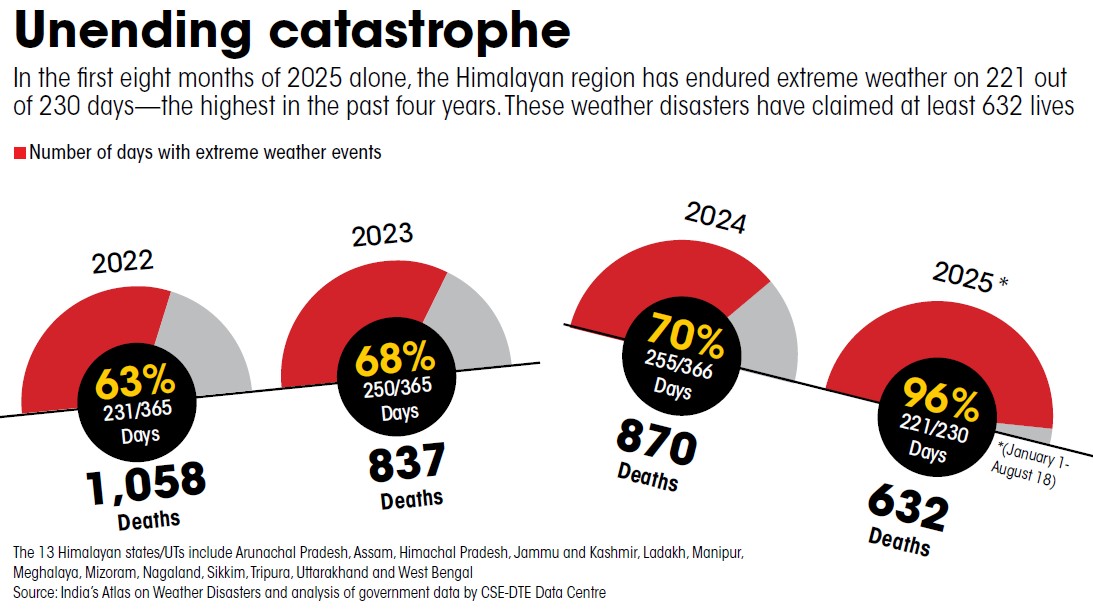
- With an extreme weather event on almost every day in 2025, the Himalayas show the cost of ignoring science and warnings.
Himalayan Region on the Brink
- The Himalayan states and Union Territories are experiencing disasters almost every single day from flash floods in Uttarakhand to landslides in Himachal Pradesh and cloudbursts in Jammu & Kashmir, resulting in 632 deaths in 2025.
Role of Western Disturbances
- Western disturbances are cyclonic systems that typically affect India in winter.
- India recorded 14 western disturbances between June to August 2025, with several lasting up to seven days.
- These systems, when intersecting with the monsoon trough, create volatile low-pressure zones that trigger catastrophic rainfall and floods.
Development vs. Ecology
- Rampant construction, deforestation, and poorly planned infrastructure projects have weakened the region’s natural resilience.
- Himalayan towns like Chamoli, Mandi, Dharali, and Kishtwar have become hotspots of disaster, where altered rainfall patterns meet fragile geology and unchecked urbanization.
Call for Urgent Action
- Reassess infrastructure projects in ecologically sensitive zones;
- Strengthen early warning systems and disaster preparedness;
- Restore natural buffers like forests and wetlands;
- Integrate climate science into regional planning;
Solar Parks & India’s Renewable Energy Transition
Context
- In drought-prone districts of Karnataka, solar parks promise prosperity but deliver displacement, exposing the fault lines of India’s renewable energy transition.
What Are Solar Parks?
- Solar parks are large tracts of land developed with shared infrastructure — such as transmission lines, water supply, roads, and communication networks — where multiple solar power developers can set up utility-scale projects.
- These parks eliminate the logistical and regulatory hurdles of individual land acquisition and streamline project execution.
- According to the Ministry of New and Renewable Energy (MNRE), the Solar Park Scheme launched in 2014 aimed to establish at least 50 parks of 500 MW and above, targeting a cumulative capacity of ~38 GW by 2025-26.
- India added a record 24.5 GW of solar capacity in 2024, with 18.5 GW coming from utility-scale projects—most of which were housed in solar parks.
- States like Rajasthan, Gujarat, and Tamil Nadu led the charge, contributing 71% of the total installations.
- These parks are instrumental in:
- Reducing project costs and transmission losses;
- Speeding up land acquisition and regulatory clearances;
- Attracting domestic and foreign investment;
- Supporting grid-connected solar expansion;
Challenges on the Ground
- In drought-prone districts like Chitradurga in Karnataka, solar parks have taken over village commons, grazing lands, and agricultural plots— deepening rural inequality.
- Moreover, solar park development is exempt from environmental and social impact assessments, raising concerns about unchecked expansion and ecological degradation.
Innovative Alternatives
- To address land scarcity and social tensions, experts advocate for New and Innovative Solar Applications (NISA)—such as canal-top solar panels, agrivoltaics, and building-integrated photovoltaics.
- These solutions could unlock 4,740 GW of solar potential without displacing communities or compromising agricultural land.
- India has the opportunity to repurpose abandoned coal mines into solar hubs. A recent study found that over 500 sq km of degraded mine land could generate 27 GW of solar power, supporting a just transition for coal-dependent regions.
Decarbonising India’s Coal-Based Thermal Power Sector
Context
- A recent Supreme Court directive has urged the Union Ministry of Power to coordinate with regulators to devise an urgent action plan to curb emissions.
India’s Coal Dependence and Emission Outlook
- India’s coal-based thermal power plants remain the backbone of its electricity supply, meeting nearly three-quarters of national demand.
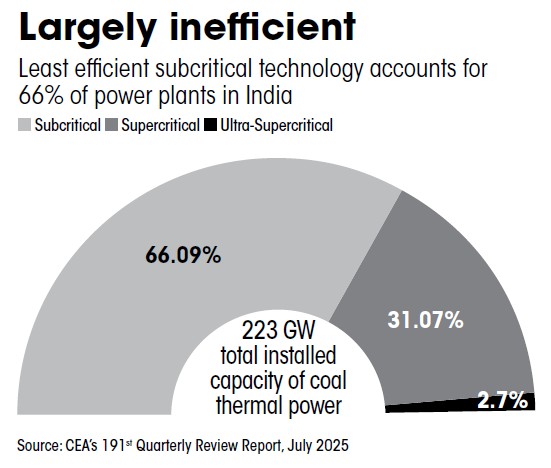
- Installed Capacity: As of 2025, India operates 223 GW of coal and lignite-based power capacity, projected to rise to 307 GW by 2035.
- Emission Burden: By 2031-32, thermal power alone could emit 1,100 million tonnes of CO₂, underscoring its centrality to India’s climate challenge.
- Energy Security: Despite rapid renewable growth, coal remains indispensable for base-load demand, given the intermittency of solar and wind.
Current Efficiency and Technological Gaps
- Dominance of Subcritical Plants: 66% of India’s fleet runs on outdated, less efficient subcritical technology.
- Supercritical and Ultra-Supercritical Technologies: More efficient by 5–9%, but underutilised, accounting for only about 34% of plants.
- Operational Issues: Efficiency depends not just on technology but also on operations and maintenance. Some older plants perform better than newer ones due to better practices.
Key Opportunities for Emission Reduction
- Improve Fleet Efficiency: Benchmark all plants against best performers in their category.
- Revamp the Renovation and Modernisation (R&M) policy to include inefficient units of all ages.
- Retire units that cannot meet efficiency or cost-effectiveness benchmarks.
- Align Plant Load Factor (PLF):
- Current PLF averages: 68% (subcritical), 61.9% (supercritical), 51.2% (ultra-supercritical).
- Giving priority dispatch to supercritical and ultra-supercritical plants could cut 22 million tonnes of CO₂ annually.
- Accelerate Biomass Co-firing:
- Mandated co-firing target: 7% biomass from 2025-26.
- NTPC’s Tanda plant has demonstrated 20% cofiring, while international benchmarks (e.g., Japan at 34%) show higher potential.
Decarbonisation Scenarios by 2031-32
- A new report, Decarbonizing the coal-based thermal power sector in India, highlights the sector’s potential to reduce emissions by over 30% by 2031- 32—greater than the combined emissions of India’s cement and iron-steel industries.
- Scenario 1: Benchmark efficiency, PLF at 58%, biomass co-firing at 20%.
- Emissions reduced to 909 MtCO₂, a 31.8% cut from business-as-usual.
- Scenario 2: Higher PLF for efficient plants, same benchmarks and co-firing.
- Emissions fall further to 900 MtCO₂, a 32.5% cut, equivalent to eliminating emissions greater than India’s cement and steel sectors combined.
Policy Reforms Needed
- Power Purchase Agreements (PPAs): Long-term PPAs (25–30 years) lock in inefficiencies.
- Reform needed to link payments with efficiency, emissions, and flexibility.
- Merit Order Dispatch (MOD): Currently cost-based, ignoring emission performance.
- Reforms need to incorporate environmental costs to incentivize cleaner coal plants.
- Emission Targets and Carbon Trading: Thermal plants currently exempt from India’s carbon credit trading scheme.
- Unit-specific emission intensity reduction targets are essential.
- Renewable Integration and Flexibilisation: Retrofit existing thermal plants for faster ramp rates and integration with renewables.
- Standardise coal quality and improve instrumentation systems.
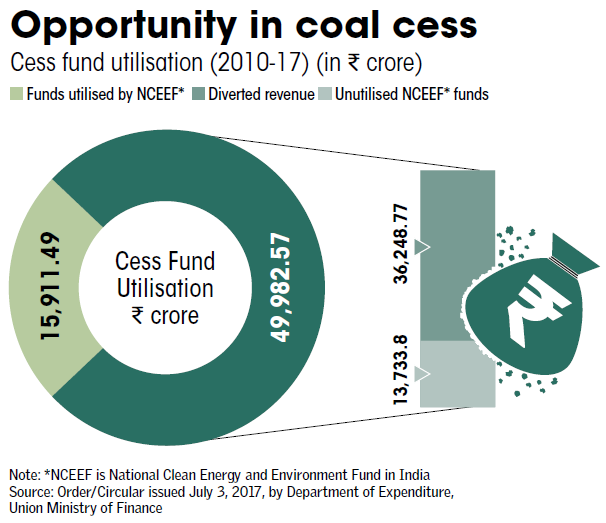
- Coal Cess Repurposing: After 2026, redirect cess revenues (projected ₹3.97 lakh crore till 2032) to fund efficiency improvements and emission reduction in coal plants.
- Demand Forecasting: Revise electricity demand models to prevent overcapacity and policy uncertainty.
- Establish an expert committee for accurate forecasting aligned with India’s energy transition.
Conclusion
- India’s coal-based thermal sector cannot be phased out immediately, but it can be decarbonised significantly through efficiency upgrades, smarter dispatch, biomass co-firing, and policy reforms. Achieving the 30%+ emission reduction potential by 2032 requires urgent regulatory intervention, technological adoption, and operational discipline.
- The path forward lies in making coal power cleaner while accelerating the renewable energy transition, ensuring both energy security and climate responsibility.
Rethinking Wildlife Conservation In India: Balancing People and Nature
Context
- India’s approach to wildlife conservation has undergone a dramatic transformation since the late 1970s, resulting in notable successes in saving species—but also incurring significant social and economic costs.
Early Years: Conservation Without Conflict
- Human-wildlife conflict (HWC) was hardly discussed, when the Indian Forest Service officers of the 1970s and 1980s were trained.
- The Wild Life (Protection) Act (WLPA) of 1972 was considered pragmatic — allowing hunting of dangerous animals, and also creating protected areas (PAs).
- Traditional coping strategies — such as hunting or deterring wild animals — were outlawed, creating resentment.
- Local communities saw wildlife depredations as ‘acts of God’.
- Restrictions imposed by WLPA, rather than the presence of wildlife itself, became their main grievance.
Shift in Paradigm
- Major amendments to WLPA in 1991 and 2003 fundamentally changed the conservation model:
- Animal rights began to take precedence over human rights.
- Even driving away crop-raiding animals was deemed ‘hunting’.
- Dangerous animals could only be eliminated after multiple human casualties.
- Wildlife corridors were legally defined, expanding restrictions on development.
- As a result, India now hosts most of the world’s populations of tigers, elephants, leopards, and rhinos. Species have expanded into landscapes they had long abandoned.
Hidden Cost of Success
- Human casualties: In 2022, wild animals killed 1,510 people, a 19% increase over the previous year. Thousands more were injured.
- Economic damage: A study estimates annual crop losses from wildlife in Maharashtra alone at ₹20,000–40,000 crore.
- Nationally, this could reach ₹2.3 lakh crore (US $27 billion).
- Social injustice: Poor rural communities bear the brunt of these costs, while laws deny them the right to defend their lives, crops, or livestock.
Constitutional and Legal Contradiction
- Article 21 of the Indian Constitution guarantees the right to life and property, but people are forced to live under threat from dangerous animals.
- The state may be violating its duty as a welfare government, by allowing free-ranging wildlife to harm citizens.
- Similar reasoning has been applied by courts to address the menace of stray dogs.
Way Forward: A Balanced Conservation Model
- The challenge is not whether to conserve wildlife, but how. A more sustainable paradigm needs to balance ecological goals with human welfare. Suggested measures include:
- Demarcate and strengthen PAs for maintaining viable populations.
- Confine dangerous animals to forests; eliminate those straying into human settlements.
- Treat wildlife as a natural resource—enabling both non-consumptive use (tourism) inside PAs and consumptive use outside them to generate livelihoods.
- Legislative reform: While WLPA provides some flexibility, a new law may better reflect a balanced approach to conservation and human rights.
Conclusion
- India has succeeded in rescuing many iconic species from the brink of extinction. However, this achievement cannot justify the ongoing loss of human lives, livelihoods, and security.
- A conservation model that prioritizes people alongside wildlife is not only morally necessary but also the only way to ensure long-term sustainability.
- It is time to shift from a wildlife-centric framework to one that embraces coexistence rooted in fairness, pragmatism, and constitutional justice.
Us Tariffs and Trade Deals
Context
- Recently, the United States’ new tariffs on imports came into effect that includes a universal levy of 10% on imports, alongside higher tariffs of 25–50% on goods from selected countries.
About
- The United States’ evolving trade policies — marked by aggressive tariffs, strategic trade deals, and shifting geopolitical alliances — have had profound ripple effects on global energy markets and export flows.
- From fossil fuels to clean tech, the US approach to trade is increasingly shaping how energy is produced, priced, and distributed worldwide.
Tariffs as Tools of Influence
- Under the Trump administration and continuing into subsequent years, tariffs became a central instrument of economic diplomacy. While initially aimed at protecting domestic industries, they have also:
- Disrupted global supply chains, especially in solar panels, rare earths, and electric vehicle components.
- Triggered retaliatory tariffs, particularly from China and the EU, affecting US agricultural and energy exports.
- Raised costs for clean energy technologies, slowing adoption in both domestic and international markets.
- For example, tariffs on Chinese solar modules led to a spike in prices, impacting renewable energy projects across Asia and Africa that relied on affordable imports.
Trade Deals and Energy Diplomacy
- Recent US trade agreements have increasingly included energy clauses, reflecting the country’s growing role as a major oil and LNG exporter. Key developments include:
- USMCA (United States–Mexico–Canada Agreement): Facilitated cross-border energy trade and infrastructure investment.
- Bilateral LNG deals with India, Japan, and South Korea: Strengthened U.S. influence in Asia’s energy security landscape.
- Strategic partnerships in Africa: Focused on oil exploration and clean energy investment, often tied to broader trade incentives.
- UK Deal: Maintained the 10% tariff but created $5 billion in export opportunities for US products such as ethanol and beef.
- Other Markets: Provided preferential access for US goods in multiple domestic markets, enhancing agricultural and industrial exports.
- These deals not only open new markets for US energy exports but also shape global energy transitions by influencing technology standards and investment flows.
Energy Commitments from Key Partners
- More consequential are the agreements signed with the EU, Indonesia, and South Korea, where tariff reductions were tied to significant energy purchases.
- These countries collectively committed to buy $860–865 billion worth of fuels from the US, including liquefied natural gas, crude oil, and nuclear fuel.
- It addresses US concerns over ensuring steady demand for its fossil fuel exports. However, it raises questions about increasing energy dependence on the US.
Environmental Implications
- Fossil fuel lock-in: Long-term LNG contracts may delay the shift to renewables in developing countries.
- Carbon leakage: Tariff-driven shifts in manufacturing can push emissions to less-regulated regions.
- Green protectionism: The rise of carbon border adjustment mechanisms (CBAMs) in the EU and elsewhere may clash with US trade interests.
Export Dynamics in Flux
- US exports — especially in agriculture, energy, and high-tech — have faced volatility due to:
- Geopolitical tensions (e.g., with China and Russia)
- Supply chain disruptions
- Currency fluctuations and inflationary pressures
- Emerging economies are recalibrating their trade strategies, diversifying suppliers, and investing in regional trade blocs to reduce dependence on U.S. markets.
Rise of the Neo-Locals: Rethinking Globalisation in the Trump Era
Context
- Recent moves by the Trump presidency catalyzed a cultural and economic movement now referred to as the ‘Rise of the Neo-Locals’.
What Are Neo-Locals?
- Neo-locals are not anti-globalisation, but they are post-globalisation thinkers. They advocate for:
- Local supply chains over fragile global networks;
- Community-based economies that prioritize sustainability;
- Cultural preservation in the face of homogenizing global trends;
- It gained traction during the Trump era, when protectionist policies and nationalist rhetoric encouraged citizens to ‘buy American’ and question the costs of global interdependence.
Weight of American Consumption
- The US, home to only about 4% of the world’s population, accounts for nearly 30% of global household consumption — far more than it produces.
- It creates both opportunity and dependency. Countries rush to access the US market, even at the expense of their own self-reliance.
- China, with 17% of the world’s population, consumes just 12% globally.
Globalisation Under Scrutiny
- Trump’s withdrawal from multilateral agreements like the Trans-Pacific Partnership (TPP) and his trade war with China exposed the fragility of global supply chains.
- COVID-19 further amplified this, as countries scrambled for medical supplies and food security, revealing how deeply dependent they had become on distant producers.
- In response, many communities began to reclaim local autonomy — from urban farming and renewable energy cooperatives to regional manufacturing hubs.
Environmental and Social Dimensions
- Neo-localism aligns closely with environmental goals:
- Reduced carbon footprints through shorter supply chains;
- Revival of traditional practices like seed saving, rainwater harvesting, and artisanal crafts;
- Resilience against climate shocks by decentralizing production and consumption;
- Socially, it fosters inclusive economies, where small producers, indigenous communities, and informal workers are valued contributors rather than casualties of global competition.
Challenges Ahead
- Scaling up without losing authenticity;
- Balancing local pride with global cooperation;
- Avoiding xenophobia or isolationism disguised as self-reliance;
Path Forward: Localisation and Equity
- Redistribute Wealth: Expanding purchasing power among the poorest creates broad-based consumption, ensuring growth is inclusive rather than elite-driven.
- Localize Economies: Following Gandhi’s vision, economies need to prioritize local production by the masses, not mass production for the locals.
- It builds resilience against climate shocks while sustaining livelihoods.
Vultures vs Dogs Fallout: Ecological Ripple of a Vanishing Scavenger
Context
- The dramatic decline of vultures in India has created a vacuum that is being filled by free-ranging dogs— leading to a surge in their population and a cascade of environmental consequences.
Vulture Decline
- India’s three major vulture species — whiterumped, long-billed, and slender-billed — saw population declines of up to 98%, prompting their classification as critically endangered by the IUCN.
Ecological Fallout
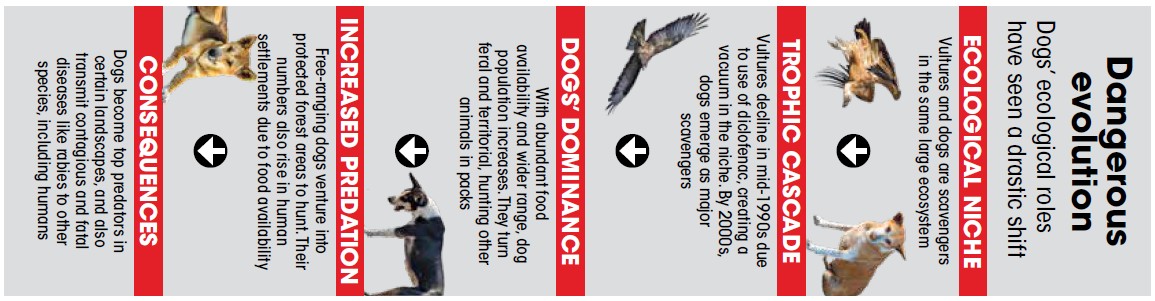
- Disruption of carcass decomposition: Vultures consume carcasses rapidly and hygienically, while dogs scatter remains, increasing disease risk.
- Threat to wildlife: Dogs prey on groundnesting birds, reptiles, and small mammals, and compete with native carnivores.
- Disease transmission: Dogs are vectors for rabies, canine distemper, and parvovirus, posing risks to both humans and endangered wildlife.
Restoring Balance
- Reviving vulture populations through captive breeding and safe feeding zones;
- Controlling dog populations via sterilization and waste management;
- Restricting public feeding of strays, especially near conservation areas;
- Monitoring carcass sites to ensure vultures can safely access food;
Vultures in India
- Oriental White-backed Vulture (Gyps bengalensis): Critically Endangered
- Slender Billed Vulture (Gyps tenuirostris): Critically Endangered
- Indian Vulture or Long Billed Vulture (Gyps indicus): Critically Endangered
- Red Headed Vulture (Sarcogyps calvus): Critically Endangered
- Egyptian Vulture (Neophron percnopterus): Endangered
- Himalayan Griffon (Gyps himalayensis): Near Threatened
- Cinereous Vulture (Aegypius monachus): Near Threatened
- Bearded Vulture or Lammergeier (Gypaetus barbatus): Near Threatened
- Indian Griffon Vulture (Gyps fulvus): Least Concern
Vervet Monkeys
Context
- In recent years, Vervet Monkeys have become valuable research animals, particularly for biomedical studies of primates' brain and behaviour, metabolism and immunity, which have resulted in live-trapping of the monkeys.
About the Vervet Monkeys (genus Chlorocebus)
- Vervet monkeys are among the most studied primates in Africa, with their expressive faces and agile limbs.
- They were introduced in the 17th century in the Caribbean islands.
- They are often referred to as African green monkeys, and are common across East Africa, and found across the savannas and woodlands of subSaharan Africa.
- They are known for their complex vocalizations, vervets have distinct alarm calls for different predators — snakes, eagles, and leopards — demonstrating advanced cognitive abilities.
- IUCN Status: Least Concern (LC)
Geneva Plastic Treaty Talks
Context
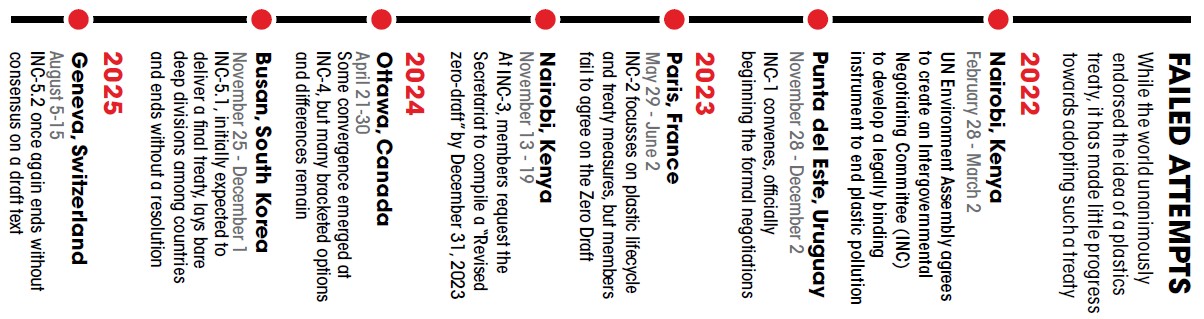
- The fifth session of the Intergovernmental Negotiating Committee (INC-5.2), held in Geneva ended in a stalemate, exposing the limits of consensus-driven multilateralism and the deep fault lines between nations over how to tackle the plastic crisis.
Background
- The negotiations are part of the United Nations Environment Assembly’s Resolution 5/14, adopted in 2022, which mandates the development of a treaty addressing the entire life cycle of plastics — from production and design to disposal and pollution control.
Geneva Session
- It was followed by earlier rounds in Busan, Ottawa, Nairobi, Paris, and Punta del Este. The committee failed to reach consensus on a draft treaty text. Key points of contention included:
- Scope of the treaty: Whether it should focus solely on waste management or address upstream issues like production caps and product design;
- Legal language: Disagreements over binding terms such as ‘shall’ versus ‘should’;
- Decision-making process: A proposal to allow future treaty decisions by a three-quarters majority vote, rather than full consensus, was rejected by several member states;
- Chemicals of concern: Resistance to including strong language on toxic additives and microplastics;
- Finance:
- Compensation funds for oil- and plasticproducing countries;
- Remediation support for small island developing states;
- Public-private partnerships led by the United States;
Antarctic Heavy Metal Pollution Soars Tenfold in 40 Years
Context
- A study in Nature Sustainability found that concentrations of toxic metals such as lead, cadmium, and mercury have increased nearly tenfold over the past four decades in Antarctica.
What the Data Shows?
- Recent ice core analyses and snow sampling reveal:
- Lead levels have increased by over 900% since 1980.
- Cadmium and mercury concentrations are now detectable in areas once considered untouched.
- Pollution hotspots are clustered around human activity zones, with trace metals found even in remote inland regions due to atmospheric transport.
What’s Causing the Surge?
- Scientific Research Stations and Tourism operations, both of which have expanded significantly since the 1980s.
- Diesel combustion from generators and vehicles releases heavy metals into the air and snow.
- Waste disposal practices, though regulated, often fall short in extreme conditions.
- Cruise ships and aircraft contribute to localized pollution near landing zones.
- Scientific Research: Research stations require year-round energy, transportation, and infrastructure — all of which leave behind chemical residues.
- Studies have found elevated levels of arsenic and chromium near long-standing bases like McMurdo and Rothera.
- Tourism’s Growing Footprint: Antarctic tourism has grown from a few hundred visitors in the 1980s to over 100,000 annually.
- Although governed by the Antarctic Treaty System, enforcement is challenging.
- Tourists inadvertently introduce pollutants through fuel use, waste, and even contaminated clothing or gear.
Chikungunya
Context
- The world is experiencing a chikungunya outbreak, with more than 240,000 cases of the mosquitoborne virus reported this year, including 200,000 in Latin America and 8,000 in China.
About Chikungunya
- Chikungunya is a mosquito-borne viral disease particularly in tropical and subtropical regions.
- It was first identified in Tanzania in 1952, and has since spread to over 110 countries across Asia, Africa, the Americas, and Europe.
- It is caused by the Chikungunya Virus (CHIKV), an RNA virus belonging to the Alphavirus genus of the Togaviridae family.
- It is primarily transmitted to humans by the bites of infected Aedes aegypti and Aedes albopictus mosquitoes—species that spread dengue and Zika viruses.
African Union Urges Global Adoption of Accurate World Map Reflecting Africa’s True Size
Context
- Recently, the African Union (AU) has officially endorsed the ‘Correct The Map’ campaign, calling for the global adoption of a world map that accurately reflects the true size of the African continent.
Problem with the Mercator Projection
- The Mercator map has long exaggerated the size of countries farther from the equator — making nations like Greenland, Canada, and Russia appear disproportionately large compared to Africa.
- It was first developed in the 16th century for navigation.
- Greenland, for example, appears nearly equal in size to Africa on Mercator maps, despite being 14 times smaller.
- Africa, with a land area of 30.3 million km², is actually three times larger than Canada and more than 1.5 times the size of Russia.
- It has contributed to a global misperception of Africa’s scale, influence, and strategic importance.
What is Africa doing about it?
- The African Union has endorsed the ‘Correct the Map’ campaign, urging schools, governments and international bodies to stop using the distorted Mercator map.
- It is promoting accurate alternatives like the Equal Earth projection and has asked the UN to adopt maps that show Africa’s true size.
Equal Earth Projection
- It, developed in 2018, maintains the relative sizes of countries while preserving a visually appealing layout.
- It allows viewers to grasp the true scale of continents — revealing that Africa can comfortably contain the United States, China, India, and most of Europe within its borders.
Global Worker Productivity
Context
- A joint report by the World Meteorological Organization (WMO) and WHO reveals that workplace heat stress is now a global crisis, endangering health, reducing productivity, and deepening socioeconomic inequality.
Key Findings: Heat Stress Crisis
- 2024 was the hottest year on record, with global temperatures averaging 1.45°C above pre-industrial levels.
- Worker productivity drops by 2–3% for every degree rise above 20°C in wet-bulb globe temperature (WBGT), a measure that accounts for humidity, solar radiation, and wind.
- Over 2.4 billion workers are exposed to excessive heat annually, leading to 22.85 million occupational injuries, 18,970 deaths, and 2.09 million disabilityadjusted life years (DALYs) lost.
Who’s Most at Risk?
- Outdoor workers in sectors like agriculture, construction, and fisheries are among the most vulnerable.
- In India, informal workers in brick kilns, metal workshops, and power looms face extreme conditions with little protection.
- Heat stress symptoms include dehydration, dizziness, kidney dysfunction, and neurological damage.
- Indoor workers in poorly ventilated factories also suffer, with shop floors turning into ‘virtual furnaces’.
Physiological Limits and Safety Thresholds
- The WHO warns that to sustain an eight-hour work shift, core body temperature should not exceed 38°C.
- Exceeding this threshold can impair cognitive and physical functions, and in extreme cases, lead to organ failure or death.
Recommendations for Action
- Occupational heat-health policies tailored to local conditions and job types.
- Awareness and training for employers, health professionals, and workers to recognize and treat heat stress.
- Stakeholder collaboration involving governments, unions, and public health experts.
- Innovative technologies to monitor and mitigate heat exposure while maintaining productivity.
Global Glacier Erosion
Context
- Recently, a study published in Nature Geoscience highlighted that some 99% of the world’s glaciers erode at rates of 0.02-2.68 mm per year.
About the Study
- It analyses over 185,000 glaciers — including the Gangotri, Dokriani, and Siachen glaciers in India — and estimates glaciers collectively erode 23 gigatonnes of bedrock annually, reshaping landscapes and affecting sediment and nutrient movement worldwide.
- This erosion plays a critical role in carbon cycling, nutrient transport, and geomorphological evolution etc.
- Key factors influencing erosion include:
- Precipitation levels;
- Glacial elevation and length;
- Latitude and underlying geology;
- Surprisingly, glacial velocity was found to be less statistically significant than previously assumed.
Global Hotspots of Erosion
- The highest erosion rates were observed in regions with extensive modern ice cover, including Alaska, Central and South Asia, Scandinavia, Greenland, Southern Andes, New Zealand, Caucasus and the Middle East.
Uniform Renewable Energy Tariff (Uret) Scheme
Context
- Recently, the government has scrapped its central pricing mechanism for renewable energy projects, dissolving the Solar Energy Central Pool and the Solar–Wind Hybrid Central Pool with immediate effect.
About the URET Scheme
- It was aimed to simplify the pricing structure for renewable energy by creating centralized pools:
- Solar Energy Central Pool;
- Solar–Wind Hybrid Central Pool;
- It was implemented under the Electricity (Amendment) Rules, 2022, and was initially scheduled to run until February 2027.
- Fixing tariffs for three years to shield buyers — primarily state distribution companies (DISCOMs) — from fluctuating auction prices.
- It aims to facilitate power purchase agreements (PPAs) between developers and the Solar Energy Corporation of India (SECI), which would then sign power sale agreements (PSAs) with buyers at the uniform tariff.
Why Was It Withdrawn?
- Buyers hesitant to commit: Fixed tariffs discouraged discoms from signing PSAs, especially when market rates were falling.
- Stranded capacity: Renewable projects approved under the scheme remained uncommissioned due to delays in PSA signings.
- Infrastructure bottlenecks: Incomplete transmission networks and regulatory hold-ups further stalled deployment.
Implications for India’s Clean Energy Future
- India has set ambitious targets for renewable energy, aiming for 500 GW of non-fossil fuel capacity by 2030.
- The dissolution of the central pricing system signals a shift toward greater market flexibility and responsiveness.
Snow Leopards
Context
- A three-year camera-trap study by the Nature Conservation Foundation and the Wildlife Protection Department of J&K confirmed yearround presence and breeding activity of snow leopards in the Union Territory.
About Snow Leopard (Panthera Uncia)
- It is often called the ‘ghost of the mountains’ and is a flagship species of the high-altitude ecosystems of Central and South Asia.
- It inhabits the rugged terrains of 12 countries, including India, China, Nepal, Bhutan, Mongolia, and Russia.
- In India, the Snow Leopard Population Assessment in India (SPAI) conducted between 2019 and 2023 revealed a population of 718 individuals across five Himalayan states and two Union Territories including Ladakh (477), Uttarakhand (124), Himachal Pradesh (51), Arunachal Pradesh (36), Sikkim (21), Jammu & Kashmir (9).
- Despite this, only about 34% of their habitat— about 120,000 sq km—is under legal protection.
Conservation Status
- IUCN Red List: Vulnerable (downgraded from ‘Endangered’ in 2017);
- Wildlife (Protection) Act, 1972: Schedule-I
- Conservation Efforts:
- Project Snow Leopard: A national initiative launched in 2009 to promote landscape-level conservation.
- SPAI Protocol: A rigorous two-step framework involving camera traps and habitat modeling to assess population and distribution.
- Proposal for a Snow Leopard Cell: The Wildlife Institute of India (WII) has recommended a dedicated cell for long-term monitoring and research.
- Internationally, programs like IUCN’s Save Our Species and the Global Snow Leopard & Ecosystem Protection (GSLEP) initiative foster transboundary cooperation, community engagement, and habitat protection across Central Asia.
- In regions like Sanjiangyuan in China, high snow leopard densities correlate with abundant prey and minimal human disturbance, offering models for conservation success.
Sundarbans Tiger Reserve in West Bengal
Context
- Recently, the Sundarbans Tiger Reserve in West Bengal officially became India’s second-largest tiger reserve after the National Board for Wildlife (NBWL) approved a proposal to expand its area by 1,044.68 sq km, just behind Nagarjunasagar-Srisailam in Andhra Pradesh.
About The Sundarbans Tiger Reserve
- It was established in 1973, is located in the South and North 24-Parganas districts of West Bengal.
- It forms part of the world’s largest mangrove ecosystem, shared between India and Bangladesh, and is the only mangrove forest globally known to support a significant tiger population.
Geographic & Ecological Highlights
- Location: Southernmost tip of the Gangetic delta, bordering the Bay of Bengal;
- Flora: 140 plant species across 59 families, including true mangroves, halophytic herbs, and epiphytes
- Fauna: Royal Bengal Tiger; Fishing Cat, Estuarine Crocodile, Gangetic Dolphin; Marine turtles (Olive Ridley, Green Sea Turtle, Hawksbill); River Terrapin, King Cobra, Water Monitor Lizard
Conservation Status & Recognition
- UNESCO World Heritage Site (1985);
- Biosphere Reserve (1989);
- National Park (core area designated in 1984)
About National Board for Wildlife (NBWL)
- It is a statutory body constituted under the Wildlife (Protection) Act, 1972, with the primary mandate to promote the conservation and development of wildlife and forests across India.
- It replaced the earlier Indian Board for Wildlife in 2003 following an amendment to the Act.
Composition
- Chairperson: Prime Minister of India;
- Vice-Chairperson: Minister of Environment, Forest and Climate Change;
- Members: 47 total, including government officials, ecologists, environmentalists, and representatives from NGOs;
- Member-Secretary: Director of Wildlife Preservation (Additional Director General of Forests);
Key Functions
- Reviewing and approving proposals for diversion of forest land in protected areas;
- Advising the government on wildlife conservation strategies;
- Promoting the creation and management of protected areas;
- Overseeing flagship programs like Project Tiger, Project Elephant, and Project Snow Leopard;
- Facilitating inter-ministerial coordination on wildlife issues;
Mines and Minerals (Development And Regulation) Amendment Bill, 2025
Context
- Recently, the Parliament of India has passed the ‘Mines and Minerals (Development and Regulation) Amendment Bill, 2025’.
Key Objectives of the Amendment
- The bill amends the Mines and Minerals (Development and Regulation) Act, 1957, with a focus on:
- Accelerating exploration of deep-seated, critical, and strategic minerals;
- Enhancing transparency in mineral allocation and trading;
- Expanding the scope of the National Mineral Exploration Trust (NMET);
- Facilitating ease of doing business for mining lease holders;
- Facilitating public-private partnerships for large-scale hydrogen projects.
Major Provisions
- Inclusion of Additional Minerals: Lease holders can now apply to the state government to include other minerals in an existing lease.
- For critical and strategic minerals—such as lithium, graphite, nickel, cobalt, gold, and silver—no additional payment is required for inclusion.
- Extension of Leased Areas: Holders of mining leases for deep-seated minerals may apply for a one-time extension of up to 10% of their existing leased area, while composite license holders may extend up to 30%.
- Removal of Sale Restrictions: The previous cap allowing captive mines to sell only 50% of their annual mineral output has been removed, enabling full commercial flexibility.
- Creation of Mineral Exchanges: The bill introduces provisions for establishing registered mineral exchanges—electronic platforms for trading minerals and their derivatives—bringing transparency and efficiency to mineral markets.
- Expanded Role for National Mineral Exploration Trust (NMET): NMET, originally set up to fund exploration, will now also support mine development projects, including those in offshore areas and international ventures.
Jan Vishwas (Amendment Of Provisions) Bill, 2025
Context
- Recently, the Union Minister for Commerce and Industry has introduced the Jan Vishwas (Amendment of Provisions) Bill, 2025, in Lok Sabha.
About the Jan Vishwas (Amendment of Provisions) Bill, 2025
- It aims to further decriminalize minor offences, rationalize penalties, and promote ease of doing business and ease of living across sectors, building on the success of the Jan Vishwas Act, 2023
Key Objectives of Bill
- It proposes amendments to several Acts including the Legal Metrology Act, 2009; Motor Vehicles Act, 1988; Drugs and Cosmetics Act, 1940; New Delhi Municipal Council Act, 1994; Tea Act, 1953; Electricity Act, 2003; Central Silk Board Act, 1948, administered by 10 Ministries, targeting 355 provisions in total. Of these:
- 288 provisions are proposed for decriminalization;
- 67 provisions are aimed at improving ease of living, especially in urban governance and transport;
- It aligns with the government’s philosophy of ‘Minimum Government, Maximum Governance’, and is designed to reduce fear of prosecution for technical or procedural lapses.
Key Features of the Bill
- Decriminalization of Minor Offences: Imprisonment clauses for minor, technical, or first-time offences are replaced with monetary penalties or warnings.
- For example, under the Motor Vehicles Act, 1988, driving while unfit will now attract a fine instead of jail time.
- Advisory Instead of Punishment: 76 offences across 10 Acts will now attract advisories or warnings for first-time contraventions.
- Graduated Penalties for Repeat Offences: Penalties will be proportionate and progressive, discouraging habitual violations without being overly punitive.
- Administrative Adjudication: Designated officers will be empowered to impose penalties through administrative processes, reducing judicial burden and delays.
- Automatic Revision of Fines: Fines and penalties will increase by 10% every three years to maintain deterrence without requiring legislative amendments.
Why Does It Matters?
- Foster a trust-based compliance culture;
- Encourage entrepreneurship and innovation;
- Reduce litigation and regulatory bottlenecks;
- Improve India’s global ease of doing business rankings
- It complements the government’s plan to launch an Investment Friendliness Index of States and set up a High-Level Committee for Regulatory Reforms.
Guidelines for Automatic Weather Stations for Solar and Wind Power Plants
Context
- Recently, the Central Electricity Authority (CEA) has issued the Guidelines for Automatic Weather Stations for Solar and Wind Power Plants has issued comprehensive guidelines mandating the installation of Automatic Weather Stations (AWS) at solar and wind power plants across India.
Why Do Automatic Weather Stations (AWS) Matter?
- Renewable energy generation is inherently dependent on weather conditions.
- Inaccurate forecasts can lead to deviation penalties under the Deviation Settlement Mechanism (DSM), affecting both project economics and grid reliability.
- The AWS systems are designed to monitor critical meteorological parameters such as solar irradiance; wind speed and direction; temperature and humidity; barometric pressure; and rainfall.
- This data is essential for real-time resource planning, demand forecasting, and maintenance optimization.
Key Guidelines from CEA
- Mandatory Installation: One AWS per renewable energy plant of 50 MW and above;
- For projects exceeding 150 MW, at least two AWS units are required;
- Additional AWS units need to be installed for every 10 sq km of plant area;
- Site Selection Criteria: AWS needs to be located within the project site;
- For solar plants: terrain should match the overall site, with sensors aligned to the tilt and orientation of photovoltaic modules;
- For wind plants: AWS should be placed in zones that reflect the true wind regime, avoiding turbulence or artificial barriers;
- Data Storage and Sharing: Recorded data needs to be stored locally for at least six months;
- Data needs to be shared with:
- National and Regional Load Dispatch Centres (NLDC/RLDC);
- State Load Dispatch Centres (SLDC);
- Renewable Energy Management Centres (REMCs);
- AWS Site Specifications:
- Minimum area: 10m x 10m;
- Site needs to be leveled and cleared of obstructions like trees, buildings, or equipment;
- Herbicide treatment and regular cleaning are recommended to maintain accuracy;
Impact on Renewable Energy Sector
- Improve generation predictability;
- Reduce forecasting errors and penalties;
- Enhance grid integration of intermittent sources like solar and wind;
- Support regulatory compliance and project bankability;
- It aligns with India’s broader goal of achieving 50% non-fossil fuel capacity by the end of 2025 and supports the transition to a smart, resilient energy grid.
Natural Land Carbon Stocks & Human Activity
Context
- Recently, a study revealed that human activity has reduced global natural land carbon stocks driven largely by deforestation, agricultural expansion, and forest management.
What Are Natural Land Carbon Stocks?
- Natural land carbon stocks refer to the carbon stored in vegetation, soils, wetlands, and forest biomass.
- These ecosystems act as carbon sinks, absorbing atmospheric CO₂ and helping regulate global temperatures.
- Forests, grasslands, and peatlands are especially important, storing billions of metric tons of carbon over centuries.
Anthropogenic Influence on Natural Land Carbon Stocks
- Human activity has reduced global natural land carbon stocks by 24%, equivalent to 344 billion metric tons of carbon.
- It is comparable to the total CO₂ emissions from fossil fuels over the past 50 years.
- Key drivers of carbon loss are expansion of pasture and croplands; intensive forest management; and urbanization and infrastructure development;
Orphan Drugs
Context
- Medicines designed to treat rare diseases have become valuable assets for big pharma companies, while millions of patients in countries like India remain underserved.
What Are Orphan Drugs?
- They are developed to treat rare or ‘orphan’ diseases, which affect a small fraction of the population. Definitions vary:
- United States: Conditions affecting fewer than 200,000 people;
- European Union: Life-threatening or chronically debilitating diseases affecting fewer than 5 in 10,000;
- India: No fixed numerical definition, but the Central Drugs Standard Control Organisation considers a disease rare if it affects fewer than 500,000 people;
- These drugs were once commercially unviable, but incentives like tax breaks, market exclusivity, and fast-track approvals have transformed them into high-profit ventures.
Billion-Dollar Boom
- Only a handful of orphan drugs existed, until the 1980s. Today, the US FDA has approved nearly 900, and in 2024 alone, 52% of new drug approvals were for rare diseases.
- It reflects a strategic pivot by Big Pharma, which now sees orphan drugs as lucrative investments with less competition and premium pricing.
India’s Lagging Response
- The National Policy for Rare Diseases (NPRD), launched in 2021, offers financial support of up to ₹50 lakh per patient;
- Only 1,118 patients have benefited, despite 63 rare diseases being officially notified.
- There is no structured incentive for domestic R&D or manufacturing of orphan drugs, which leaves patients dependent on expensive imports or charitable crowdfunding, with little systemic support.
Government Efforts
- The Union Ministry of Chemicals and Fertilizers recently proposed incentives to boost local production of orphan drugs. It includes:
- Subsidies for R&D;
- Fast-track regulatory approvals;
- Public-private partnerships to scale manufacturing;
- There is no structured incentive for domestic R&D or manufacturing of orphan drugs, which leaves patients dependent on expensive imports or charitable crowdfunding, with little systemic support.
Subjective Questions for Practise
Q1. Critically examine the role of climate change and unregulated development in transforming the Himalayan region into a disaster-prone zone. How can policy interventions balance ecological preservation with human settlement and infrastructure needs?
Q2. Evaluate the role of solar parks in advancing India’s renewable energy transition. How can their expansion be balanced with ecological sustainability and equitable land use?
Q3. Discuss the challenges and opportunities in decarbonising India’s coal-based thermal power sector. How can policy, technology, and financial mechanisms be aligned to ensure a just and sustainable energy transition?
Q4. Discuss the evolving paradigm of wildlife conservation in India with reference to the need for balancing ecological protection and community livelihoods. How can conservation models be restructured to ensure both biodiversity preservation and social justice?
QUICK LINKS

 Call
Call