 Residential Course
Down To Earth (01-15 March 2026)
The following topics are covered in the Down To Earth (01-15 March 2026)
IPBES Business and Biodiversity Assessment
Context
- The IPBES Business and Biodiversity Assessment (2025) highlights the growing systemic risks created when businesses undermine the ecosystems they depend on, making corporate participation crucial in reversing biodiversity loss.
About
- Biodiversity underpins economic activities by providing essential ecosystem services such as pollination, soil fertility, water regulation, and climate stability.
- However, recent global assessments show that business activities are simultaneously degrading these very natural systems.
Example: Cocoa Production and Deforestation
- The global chocolate industry illustrates the link between business and biodiversity loss.
- Ivory Coast, the world’s largest cocoa producer, has experienced significant deforestation due to rising global demand.
- Around 70% of illegal deforestation in the country is linked to cocoa cultivation.
- The country has lost nearly 45% of its tropical forests in the last two decades.
Key Findings of the IPBES Business and Biodiversity Assessment
- Decline of Natural Capital: The report reveals a significant imbalance between economic growth and environmental sustainability.
- Since 1992, human-produced capital (buildings, machinery) has doubled per person.
- Meanwhile, natural capital i.e. forests, soils, water, and biodiversity has declined by nearly 40%.
- Finance Flows that Harm Nature: In 2023, about $7.3 trillion in public and private finance directly harmed nature.
- $4.9 trillion from private finance; and $2.4 trillion from harmful public subsidies; In comparison, only $220 billion was invested in biodiversity conservation and restoration.
- Thus, for every $1 spent protecting nature, nearly $33 finances activities that damage it.
- Business Drivers of Biodiversity Loss: The assessment finds that businesses contribute to all five main drivers of biodiversity loss:
- Land- and sea-use change (e.g., deforestation, urban expansion);
- Overexploitation of species (overfishing, wildlife trade);
- Climate change;
- Pollution;
- Invasive alien species;
- High-impact sectors include agriculture, fisheries, forestry, mining, infrastructure, energy, and transport.
Risks for Businesses and the Economy
- Physical Risks: Degradation of ecosystems can disrupt supply chains, reduce crop yields, and increase production costs.
- Transition Risks: New environmental regulations and sustainability standards may increase compliance costs for businesses.
- Systemic Risks: Large-scale ecosystem collapse could threaten financial stability and economic growth, affecting markets and investments.
Indigenous Lands and Biodiversity Protection
- Indigenous territories play a critical role in biodiversity conservation.
- Around 60% of Indigenous lands globally face industrial development pressure.
- Nearly 25% face high pressure from resource extraction.
- However, Indigenous knowledge is often excluded from business and financial decision-making.
- The importance of Free, Prior and Informed Consent (FPIC) when development projects affect Indigenous territories.
Policy Challenges and Global Negotiations
- The IPBES report highlights disagreements between developed and developing countries regarding biodiversity finance and subsidies.
- Developed countries, including the EU, preferred softer language on harmful subsidies.
- Developing countries such as India, Brazil, and South Africa pushed for stronger commitments.
- For many developing countries, balancing economic development and environmental protection remains a major challenge.
Relevance to India
- India faces similar tensions between development and ecological protection.
- For example, increasing hydropower projects in Himalayan states such as Uttarakhand and Himachal Pradesh have weakened fragile mountain ecosystems.
- Events such as the 2021 Chamoli flash flood demonstrate the risks of infrastructure development in ecologically sensitive regions.
Enabling Solutions for Nature-Positive Business
- Strong Policies and Regulations: Governments must enforce environmental laws and remove harmful subsidies.
- Reforming Financial Systems: Financial institutions should redirect investments toward sustainable activities.
- Changes in Corporate Culture: Companies must shift from short-term profits to long-term sustainability.
- Improved Technology and Data: Better monitoring systems can track biodiversity impacts across supply chains.
- Capacity Building and Knowledge Sharing: Collaboration among governments, businesses, scientists, and Indigenous communities is essential.
Emerging Global Frameworks
- Initiatives like the Taskforce on Nature-related Financial Disclosures (TNFD) help companies identify and report their dependence on nature.
- Over 730 organisations worldwide have voluntarily adopted TNFD recommendations, signalling increasing pressure on corporations to address biodiversity risks.
Breast Milk and Environmental Contaminants: First Food Under Threat
Context
- Recent scientific studies suggest that environmental contaminants present in water, soil, and food may also enter the human body and appear in breast milk, raising concerns about early-life exposure to pollutants.
Importance of Breast Milk for Infant Health
- Breast milk is a biologically active fluid that evolves according to an infant’s nutritional and developmental needs.
- It contains essential nutrients, antibodies, hormones, enzymes, and bioactive compounds that support growth and immunity.
- The World Health Organization (WHO) considers breastfeeding a crucial intervention for improving child survival, immunity, and long-term health.
- Key benefits include:
- Strengthening immune defence and reducing infections;
- Supporting neurological development and cognitive growth;
- Regulating inflammation and shaping the gut microbiome;
- Reducing risks of allergies, autoimmune diseases, obesity, and respiratory infections;
- A study published in The Lancet Global Health (2015) found that longer breastfeeding duration is associated with higher intelligence, increased years of schooling, and improved adult income levels.
Detection of Environmental Contaminants in Breast Milk
- Uranium in Breast Milk: A 2025 study published in Scientific Reports investigated uranium exposure in the Gangetic plains of six districts of Bihar.
- Key findings:
- Uranium was detected in all 40 breast milk samples.
- Concentrations ranged from trace amounts to 5.25 µg/L.
- The highest levels were recorded in Katihar district.
- Model-based risk assessments suggested that about 70% of infants could face potential non-carcinogenic health risks, including kidney damage and neurological effects.
Other Contaminants Detected
- Uranium is not the only contaminant identified in breast milk samples in India.
- Heavy Metals: Studies in Bihar’s Gangetic belt have detected Arsenic, Mercury, and Lead. In some samples, lead concentrations were extremely high, exceeding safe limits.
- Chronic exposure to these metals may lead to developmental delays, reduced growth, and cognitive impairment in children.
- Persistent Organic Pollutants (POPs): Research from rural Karnataka has also found trace levels of organochlorine pesticides, including DDT and its metabolites (DDE).
- These chemicals persist in the environment for decades and accumulate in human tissues, including breast milk.
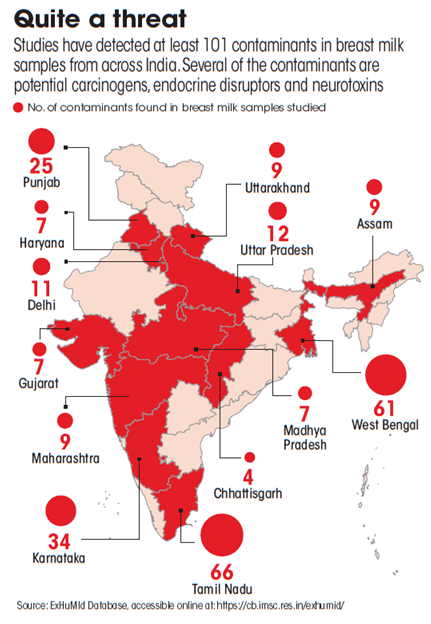
Key Observations of Exposome of Human Milk Across India (ExHuMId) Database
- Over 100 environmental pollutants have been detected in breast milk.
- These include heavy metals, pesticides, dioxins, furans, and polychlorinated biphenyls (PCBs).
- Many of these chemicals are carcinogens, endocrine disruptors, or neurotoxins.
Sources of Contamination
- Contaminated Groundwater: Groundwater polluted with heavy metals or radioactive elements may enter drinking water supplies and irrigation systems.
- Agricultural Inputs: Phosphate fertilisers may contain uranium impurities, which gradually accumulate in soil and groundwater through long-term agricultural use.
- Industrial and Energy Activities: Coal combustion in thermal power plants can enhance naturally occurring radioactive elements, contributing to groundwater contamination.
- Persistent Environmental Chemicals: Old pesticides such as DDT remain in soils and ecosystems for decades, entering the food chain and eventually accumulating in human tissues.
Key Concerns for Public Health
- The detection of contaminants in breast milk highlights several challenges:
- Early-life exposure to environmental pollutants;
- Possible long-term health risks such as neurological disorders and kidney damage;
- Lack of regulatory standards for many contaminants in breast milk;
- Limited nationwide biomonitoring data;
- Despite these concerns, scientists emphasize that breastfeeding remains far safer and more beneficial than alternatives.
Way Forward
- Addressing the issue requires coordinated environmental and public health interventions:
- Strengthening groundwater monitoring and pollution control;
- Regulating fertiliser and pesticide use;
- Expanding biomonitoring programmes for contaminants in human tissues;
- Improving safe drinking water access in rural areas;
- Supporting interdisciplinary research on environmental health;
India’s AI Challenge: Innovation Deficit and the Data Centre Strategy
Context
- Despite hosting high-profile events like the AI Impact Summit, the country continues to struggle with limited innovation capacity, shortage of AI talent, and inadequate infrastructure.
- In response, the government has promoted a strategy to turn India into a global hub for data centres, but this approach raises economic, technological, and environmental concerns.
India’s Vision for Human-Centric AI
- At the summit, the Prime Minister proposed the MANAV framework for AI governance.
- MANAV Framework: MANAV stands for:
- M: Moral and ethical systems;
- A: Accountable governance;
- N: National sovereignty;
- A: Accessible and inclusive;
- V: Valid and legitimate principles;
- The framework aims to ensure human-centric AI development, prioritising welfare, accountability, and inclusivity.
- Similar global initiatives already exist, such as the UN’s ‘AI for Good’ programme, which promotes AI for sustainable development and societal benefit.
AI Disruption and Employment Risks in India
- India’s technology services sector, the backbone of its digital economy, is highly vulnerable to AI-driven automation.
- Key Employment Concerns:
- 2.7 million jobs could be lost by 2031 due to AI disruption.
- Tech services employment may decline from 7.5–8 million to around 6 million.
- Customer service jobs may fall from 2–2.5 million to about 1.8 million.
- Studies suggest over 60% of formal sector jobs in India could be vulnerable to AI automation by 2030.
- This is particularly concerning because the tech sector:
- Employs around 13% of India’s workforce.
- Accounts for over 30% of white-collar employment.
- Automation and AI will transform labour markets, requiring large-scale reskilling and policy adaptation to avoid structural unemployment.
India’s Weak Position in Global AI Innovation
- India lags behind global leaders in AI research and innovation, despite a large digital workforce.
- Indicators of Innovation Gap:
- India’s share of AI patents declined from about 8–10% in 2010 to under 5% in 2023.
- Low presence in AI publications, citations, and foundational model development.
- Shortage of advanced AI researchers and specialised computing infrastructure.
- India lacks domestic large language models (LLMs) and access to advanced AI chips, which are essential for AI sovereignty.
NITI Aayog’s Proposed Solution: India AI Talent Mission
- To address these challenges, policy experts propose a national AI skill development programme.
- Key Recommendations:
- Establish an India AI Talent Mission to coordinate skilling efforts.
- Reform education curricula to incorporate AI and data science.
- Expand public–private partnerships for workforce reskilling.
- Increase investment in AI research and innovation ecosystems.
- AI is evolving faster than policy and education systems, leaving only a short window for corrective action.
Government’s Data Centre Strategy
- In parallel, India has invited global technology companies to build large-scale data centres in the country.
- Expected Investments: Major technology companies such as Google, Amazon, and Microsoft have pledged investments that could reach $200 billion in data infrastructure.
- The government views this as an opportunity to:
- Position India as a global digital infrastructure hub;
- Strengthen the AI ecosystem; and
- Attract foreign investment.
Limitations of the Data Centre Approach
- Limited technology transfer: Global firms rarely share proprietary data or AI models.
- Low employment generation: Data centres require relatively few workers.
- No direct contribution to AI innovation: They primarily store and process data rather than develop AI systems.
- Therefore, data centres do not automatically lead to AI sovereignty or technological leadership.
Environmental Concerns
- Resource Consumption: A 100 MW data centre can consume over 2 million litres of water per day.
- Massive projects such as the 1 GW Google data centre in Visakhapatnam illustrate the scale.
- Energy and Climate Impacts: Data centres may require 2.5 GW power capacity in the near future.
- India’s electricity still relies heavily on coal-based power, increasing carbon emissions.
- Extreme heat conditions in many districts increase cooling demands, further raising energy consumption.
- International organisations, including the UN Environment Programme, warn that the rapid expansion of digital infrastructure can create significant environmental stress if not properly regulated.
Way Forward: Policy Priorities
- Invest in AI research and domestic innovation;
- Develop foundational AI models and semiconductor capabilities;
- Expand AI education and reskilling programmes;
- Promote sustainable digital infrastructure powered by renewable energy;
- Encourage public–private collaboration in AI development;
China’s Energy Transition and Lessons for India
Context
- China’s moves to transition to clean energy offer critical lessons to India
Declining Emissions Amid Rising Power Demand
- China, the world’s largest greenhouse gas emitter, recorded a 1.6% year-on-year decline in CO₂ emissions in the first quarter of 2025, and 1% decline over the past year.
- It occurred despite rising electricity demand, indicating a structural shift in China’s power sector.
- Clean energy is increasingly replacing coal as the primary source of electricity generation.
- China now has 1,494 GW of clean power capacity, which contributes over 50% of the country’s electricity generation.
- It demonstrates that rapid expansion of renewable and non-fossil energy capacity is translating into actual decarbonisation outcomes.
India’s Capacity–Generation Gap
- India presents a more complex transition pathway. Although non-fossil sources account for more than half of installed capacity, they contribute only around one-third of total electricity generation.
- It highlights a critical issue: capacity expansion does not automatically translate into dominant energy generation, especially due to intermittency and grid integration challenges.
Changing Role of Coal in China
- China remains the largest coal consumer globally, with 1,189 GW of installed coal-fired power capacity. However, the role of coal is evolving:
- Coal plants are shifting from baseload power providers to peaker and balancing sources that operate during periods of high demand.
- Plant Load Factors (PLF) have declined from around 45–50%, reflecting reduced utilisation.
- Retrofit programmes are enabling coal plants to operate flexibly at lower loads, supporting integration of renewable energy.
- China’s policy framework now emphasises quality over quantity, promoting:
- Deep peak-shaving (reducing generation during low demand);
- Lower minimum stable load levels (below 30%);
- Improved operational flexibility;
- This flexibility is essential for supporting China’s emerging “new-type power system”, where renewables form the backbone of electricity supply.
Coal Flexibility Reforms
- Under the 14th Five-Year Plan (2021–2025), China targeted the retrofit of 200 GW of coal capacity for flexible operation, representing 16.8% of the coal fleet.
- The aim is to transform coal plants into low-load, flexible units that complement renewable energy rather than compete with it.
Capacity Payment Mechanism
- Declining utilisation rates threaten the economic viability of coal plants. To address this, China introduced a capacity payment mechanism in January 2024.
- Key Features:
- Provides monthly standby payments to eligible coal plants.
- Covers fixed costs during periods of low utilisation due to high renewable output.
- Payments are based on 30–50% of a fixed cost benchmark of 330 yuan/kW.
- Reliable Capacity Compensation (2026 Policy Update): In January 2026, China revised the mechanism under the ‘Reliable Capacity Compensation Mechanism’. Key changes include:
- Minimum payment increased to 50%, with higher levels depending on provincial market conditions.
- Expanded coverage beyond coal plants to include Battery storage systems, and Gas-based thermal power plants.
- The policy aims to reward generators that ensure grid reliability, particularly during peak demand periods outside solar generation hours.
Key Lessons for India
- Move Beyond Capacity Expansion: China’s experience shows that simply adding power capacity is insufficient. Effective transition requires operational flexibility and grid management mechanisms.
- Accelerate Coal Flexibility: India is still in the pilot phase of coal flexibilisation, aiming for 40% minimum technical load. The target of retrofitting 200 GW by 2030 remains challenging under current progress.
- Develop Market-Based Reliability Mechanisms: India requires structured financial mechanisms, such as capacity payments, to ensure the economic viability of plants providing grid stability and balancing power.
- Integrate Storage and Flexible Resources: A balanced ecosystem should include flexible coal plants, energy storage systems, and reliable market mechanisms.
Climate Anxiety, Youth Behaviour, and Community Conservation
Context
- Climate change is increasingly recognised not only as an environmental crisis but also as a psychological and social challenge. Rising awareness of environmental degradation has triggered eco-anxiety and ecological grief among young people, which can sometimes manifest as frustration or aggressive behaviour.
Climate Change and Youth Mental Health
- Eco-Anxiety and Solastalgia: Young people across the world are experiencing new climate-related emotional states:
- Eco-anxiety: Persistent worry about climate change and the planet’s future.
- Solastalgia: Emotional distress caused by environmental changes in one’s home environment.
- Adolescents are particularly vulnerable because their cognitive and emotional systems are still developing, making them more sensitive to uncertainty and long-term threats.
Why Are Teenagers More Vulnerable?
- Developmental Sensitivity: Adolescence is marked by rapid psychological change. Climate-related stress adds additional pressure through:
- Incomplete emotional regulation mechanisms in the developing brain;
- Heightened peer influence and social awareness;
- Limited decision-making power regarding global environmental issues;
- As a result, teenagers often worry more about climate change than adults but feel less capable of influencing outcomes, which intensifies stress.
Pathways Linking Climate Stress to Aggressive Behaviour
- Direct Environmental Impacts: These arise from extreme climate events such as floods, droughts, or heatwaves.
- Effects include disrupted schooling, family financial instability, and displacement and trauma.
- Such stress can impair attention, memory, and emotional control, increasing the likelihood of irritability or aggression.
- Indirect Social and Psychological Impacts: Climate change can also weaken social systems like food and water insecurity, displacement and migration, and breakdown of community support systems.
- These pressures create feelings of helplessness and betrayal, which sometimes manifest as anger or confrontational behaviour.
Mechanisms Behind Climate-Induced Aggression
- Cognitive Stress: Environmental stressors such as heat and pollution reduce concentration and decision-making ability.
- Emotional Overload: Persistent feelings of helplessness associated with eco-anxiety can translate into frustration.
- Loss of Support Systems: Climate disruption weakens families, schools, and community networks that normally protect adolescents.
- Developmental Vulnerability: Teenagers have higher emotional reactivity, making them more susceptible to environmental stress.
Research Gaps
- Limited research on climate stress and aggression (most studies focus on anxiety or depression).
- Lack of standardised eco-anxiety measurement tools for adolescents.
- Underrepresentation of Global South populations in climate psychology studies.
- These gaps are important for policymaking in countries like India where climate vulnerability is high.
Transforming Eco-Anxiety into Positive Action
- Studies indicate that constructive engagement in climate action improves youth mental health.
- Examples include environmental restoration activities, community climate initiatives, and youth participation in sustainability projects.
- Active participation builds agency, hope, and resilience, reducing frustration and aggressive tendencies.
Measuring Poverty: Challenges and a New Approach
Context
- Measuring poverty is essential for designing and implementing effective development programmes. Accurate poverty measurement helps governments identify vulnerable populations and allocate resources efficiently. However, the process is complex and often contested due to methodological limitations.
Traditional Methods of Measuring Poverty
- Income Surveys: In many advanced economies, poverty is measured through direct income surveys, which estimate the earnings of individuals or households.
- Those whose income falls below a defined poverty line are categorized as poor.
- Expenditure Surveys: In countries like India, poverty measurement relies largely on consumption expenditure surveys, which use household spending as a proxy for income.
- Based on this data, a poverty line is drawn and individuals below this threshold are considered poor.
Limitations of the Poverty Line Approach
- Exclusion of the Near-Poor: The poverty line creates a rigid classification of poor vs. non-poor. Individuals earning slightly above the poverty line are excluded from welfare schemes despite facing similar hardships as those below the line.
- In India, the poverty line has often been criticized as a ‘deprivation line’ or ‘starvation line’ because it is set very low.
- Seasonal Bias in Surveys: Consumption surveys capture spending only at the time of the survey, which may not represent the household’s annual economic condition.
- Surveys conducted post-harvest may show higher consumption due to increased income and produce availability.
- Surveys during the monsoon or lean season may reflect lower consumption levels.
- Since surveys are usually conducted once, they may not capture these seasonal fluctuations accurately.
A New Measure: ‘Average Poverty’
- Concept by Olivier Sterck: Olivier Sterck proposes a new approach that does not rely on a poverty line.
- Instead of classifying people as poor or non-poor, the method measures poverty across the entire income distribution.
- Methodology: Sterck suggests measuring poverty as the reciprocal of income, focusing on the time required to earn a unit of money.
- If income is measured in dollars per day ($/day), poverty is measured in days per dollar (days/$).
- For example: If person A earns half as much as person B, A is twice as poor.
- Definition: Sterck calls this measure ‘Average Poverty’, defined as: The average time it takes for people in a population to earn one dollar.
Advantages of the Average Poverty Measure
- Distribution-Sensitive Measurement: The method considers variations across the entire income distribution, rather than focusing only on those below a fixed poverty line.
- Better Policy Targeting: It highlights the severity of poverty, enabling governments to design better-targeted anti-poverty programmes.
- Greater Impact for the Poorest: A small income increase for the poorest individuals reduces poverty more significantly than the same increase for relatively richer individuals.
Conclusion
- Traditional poverty measures based on the poverty line provide useful but limited insights into economic deprivation.
- The Average Poverty approach proposed by Olivier Sterck offers a more inclusive and distribution-sensitive method by considering the entire income spectrum.
- Such innovative measures could improve poverty assessment and enhance the effectiveness of development policies.
India Joins Pax Silica Coalition (2026)
Context
- India formally joined Pax Silica, a US-led coalition that sought to build a common supply chain for electronics and critical minerals during the AI Impact Summit held in New Delhi.
What is Pax Silica?
- Pax Silica is an emerging strategic technology and resource partnership focused on:
- Building secure and resilient supply chains for semiconductors and electronics;
- Ensuring reliable access to critical minerals such as lithium, cobalt, rare earth elements, and silicon;
- Reducing dependence on geopolitically concentrated mineral supply chains;
- Strengthening technological cooperation among partner countries;
- The initiative reflects the growing importance of technology security and supply-chain resilience in global geopolitics.
Significance for India
- Strengthening Semiconductor and Electronics Ecosystem: Access to technology partnerships and manufacturing networks.
- Support for India's Semiconductor Mission and electronics manufacturing sector.
- Secure Access to Critical Minerals: Helps India obtain lithium, cobalt, rare earth elements, and silicon needed for semiconductors, batteries, renewable technologies, and electronics manufacturing.
- Strategic Technology Partnerships: Collaboration with EU, Japan and the US enhances research cooperation, supply-chain diversification, and advanced manufacturing capabilities.
- Reduced Supply Chain Vulnerabilities: Global supply chains for many critical minerals are highly concentrated geographically, creating risks of disruption.
Relevance for Global Geopolitics
- The Pax Silica initiative reflects a broader trend of technology alliances among democracies to secure strategic resources and manufacturing capacity.
- Critical minerals and electronics manufacturing are becoming central to national security and technological leadership.
Implications for India’s Strategic Policy
- Joining Pax Silica could support India in semiconductor manufacturing expansion, energy transition technologies, AI hardware development, and supply chain diversification.
- It aligns with initiatives such as Make in India, India Semiconductor Mission, and National Critical Minerals Mission.
Conclusion
- India’s entry into Pax Silica marks an important step toward technological self-reliance and resilient supply chains.
- By partnering with advanced economies, India can strengthen its electronics manufacturing, semiconductor ecosystem, and access to critical minerals, all of which are crucial for future AI, digital infrastructure, and clean energy technologies.
Repeal of the US ‘Endangerment Finding’: Implications for Climate Policy and Global Energy Transition
Context
- The United States has recently overturned the ‘Endangerment Finding’, a key legal basis for regulating greenhouse gas emissions under the Clean Air Act (CAA) since 2009.
What is the Endangerment Finding?
- The Endangerment Finding (2009) concluded that greenhouse gases such as carbon dioxide, methane, and nitrous oxide pose a threat to public health and welfare.
- This finding legally empowered the EPA to regulate emissions under the Clean Air Act.
Key Significance
- Provided the legal basis for US climate regulation.
- Enabled emission standards for vehicles, power plants, and industrial sources.
- Formed a cornerstone of US climate policy for over a decade.
Reasons Given for the Repeal
- The US administration argues that overturning the finding will bring economic benefits.
- Claimed Advantages:
- Savings of over $1.3 trillion for taxpayers.
- Lower vehicle prices for consumers.
- Reduced trucking costs and overall cost of living.
- Restoration of consumer choice in vehicle technologies.
- However, these claims overlook the rapid decline in renewable energy costs and broader environmental consequences.
A Broader Shift in US Climate Policy
- Policy Changes: Reduced support for renewable energy, electric vehicles, and battery technologies.
- Expanded backing for fossil fuels, including new drilling licenses.
- Promotion of oil, gas, and coal exports.
- Legal challenges and resistance against state-level climate initiatives.
- It reflects a deliberate shift toward fossil fuel expansion while weakening federal climate regulation.
Economic Debate: Fossil Fuels vs Renewables
- Market Trends: In many regions, renewables are already cheaper than fossil fuels.
- States like Texas are rapidly expanding wind and solar energy because of their economic advantages.
- Renewable energy involves higher upfront investment, but long-term operating costs are lower.
- Therefore, analysts argue that fossil fuels are not necessarily the cheaper option in the long run.
Impact on International Climate Cooperation
- The US stepping back from climate commitments could weaken global momentum.
- Key Concerns:
- Reduced leadership in international climate negotiations.
- Other countries may use US withdrawal as justification for delaying climate action.
- Potential weakening of commitments under the Paris Agreement.
Role of Courts and States
- Domestic Divisions: Several environmental and health groups have challenged the repeal in court.
- Many states, especially California and other progressive states continue pursuing ambitious climate policies.
- These states represent nearly half of the US GDP, indicating significant internal policy divergence.
Strategic Choices for Countries
- Two Possible Paths:
- Continue reliance on imported fossil fuels.
- Accelerate the transition to domestic renewable energy.
- Countries like India and members of the European Union import large quantities of fossil fuels, leading to capital outflows. Expanding domestic renewable energy can:
- Improve energy security.
- Create jobs and technological innovation.
- Strengthen export-oriented industries, such as solar photovoltaic manufacturing.
Emerging Climate Alliances
- New global partnerships could accelerate the clean energy transition.
- Possible Cooperation:
- Stronger India–EU collaboration on technology and supply chains.
- Alliances among fossil-fuel-importing countries to reduce dependence on volatile energy markets.
- Such partnerships could support faster adoption of renewable energy while enhancing economic resilience.
Coal Mining Proposal Near Bandhavgarh–Achanakmar Corridor: Implications for Tiger Conservation
Context
- A proposal to start coal mining in Umaria district, Madhya Pradesh, is awaiting final environmental clearance from the MoEFCC.
- It lies only about a few metres from the Bandhavgarh–Achanakmar tiger corridor, a critical wildlife corridor that enables movement of tigers between protected areas in central India’s tiger landscape.
Importance of the Bandhavgarh–Achanakmar Corridor
- Wildlife corridors are ecological linkages that allow animals to move between fragmented habitats.
- The Bandhavgarh–Achanakmar corridor connects several important tiger reserves such as Bandhavgarh, Kanha, Sanjay-Dubri, Pench, Panna, and Achanakmar.
- According to the ‘Status of Tigers in India, 2022’ report by the National Tiger Conservation Authority (NTCA), these six reserves together hold around 342 tigers, with Bandhavgarh alone hosting about 134 tigers.
- The corridor enables genetic exchange between tiger populations, which is essential to prevent inbreeding and population decline.
- Connectivity also helps tigers disperse to new territories, reducing pressure on core habitats and limiting human–wildlife conflict.
- Landscape connectivity is crucial for long-term tiger survival in fragmented habitats like central India.
- Loss of corridors can isolate populations and increase extinction risk.
Details of the Marwatola VII Coal Mining Project
- The proposed Marwatola VII coal block spans approximately 12 sq km in the Sohagpur coalfield. Key features of the project include:
- Open-cast and partial underground mining;
- 10.59 sq km of forest land likely to be disturbed;
- 6.52 sq km to be mined through open-cast method;
- Over 152,000 trees expected to be cut;
- Nearly 88% of the mining area lies within forest land, most of which is classified as Reserved Forest under the Indian Forest Act, 1927, offering the highest level of protection.
- Open-cast mining is proposed because it allows extraction of about 82 million tonnes of coal from a total geological reserve of 188.7 million tonnes, making it economically viable.
Environmental and Ecological Concerns
- Habitat Fragmentation: Mining infrastructure such as roads, trucks, and waste dumps can fragment forest landscapes.
- Anthropogenic infrastructure significantly disrupts wildlife corridors and movement patterns.
- Impact on Tiger Connectivity: Research using landscape genetics and connectivity modelling indicates that the central Indian landscape depends on functional corridors between tiger reserves.
- Fragmentation of such corridors may reduce gene flow and threaten the viability of tiger meta-populations.
- Biodiversity Loss: The forest in the proposed mining area supports several species including Leopard, Sloth bear, Jackal, Chital and deer species, Macaques, reptiles and vultures.
- It also contains ecologically important flora such as sal (Shorea robusta), teak (Tectona grandis), mahua (Madhuca indica), palash (Butea monosperma), and tendu.
- Impact on Local Livelihoods: Forest produce like mahua and tendu leaves supports local tribal livelihoods. Mining may also affect five local streams (nallas) and disrupt hydrological flows.
Policy and Legal Issues
- ‘No-Go’ Forest Area: The Marwatola VII block was earlier included in the 2010 ‘No-Go’ list, which identified dense forest areas unsuitable for coal mining.
- Wildlife Clearance Debate: The National Tiger Conservation Authority (NTCA) recommended that wildlife clearance should be obtained due to proximity to a tiger corridor.
- Supreme Court Directive: The Supreme Court, in 2025, ordered a complete ban on mining within 1 km of critical tiger habitats, raising further questions about the project’s legality.
Institutional Review Process
- To assess the ecological impact, MoEFCC formed a six-member expert committee including representatives from NTCA, Bandhavgarh Tiger Reserve, MoEFCC regional offices, and Madhya Pradesh forest department.
- The committee conducted a site inspection in December 2025, and its report is awaited.
Way Forward
- Avoid open-cast mining near critical wildlife corridors;
- Consider underground mining with strict safeguards;
- Strengthen scientific mapping and legal protection of wildlife corridors;
- Ensure community consultation and rehabilitation planning;
- Balancing energy security and biodiversity conservation remains a key challenge. Protecting critical corridors is vital to sustain India’s globally significant tiger populations.
Guggul (Commiphora Wightii)
Context
- The Chambal ravines of Madhya Pradesh, characterised by steep slopes, severe soil erosion, and barren terrain, are largely unsuitable for conventional agriculture, limiting livelihood opportunities for local communities.
- The cultivation of Guggul (Commiphora Wightii) can address environmental degradation and rural poverty.
About Guggul (Commiphora Wightii)
- It is a medicinal shrub belonging to the Burseraceae family, widely known for producing an aromatic oleo-gum resin called ‘guggul gum’.
- It has been used for centuries in Ayurvedic medicine to treat various ailments such as high cholesterol, arthritis, and obesity.
- The plant is commonly called Indian bdellium tree, guggul, or guggulu.
Distribution and Habitat
- Guggul is primarily found in arid and semi-arid regions of South Asia.
- Major regions:
- India: Rajasthan, Gujarat, Madhya Pradesh, and parts of the Deccan plateau;
- Pakistan: Sindh and Balochistan;
- Bangladesh: limited distribution;
- In India, the plant naturally occurs in rocky tracts, dry forests, and desert ecosystems, particularly in the Thar Desert and Chambal ravines.
Economic and Medicinal Importance
- Medicinal Uses: The resin contains guggulsterones, biologically active compounds with pharmacological effects.
- Major therapeutic uses:
- Reducing cholesterol and triglycerides;
- Anti-inflammatory properties for arthritis;
- Supporting weight loss and metabolism;
- Treating skin diseases and digestive disorders;
- Several Ayurvedic formulations include guggul resin, such as Yograj Guggulu, Kaishore Guggulu, and Laksha Guggulu.
- Other Uses: Perfumes and incense due to its aromatic resin; Traditional religious rituals; and Herbal pharmaceutical industries.
Ecological Importance
- Guggul is highly suitable for dryland ecosystems. Key ecological benefits:
- The Drought-tolerant plant that survives with minimal water;
- The Helps stabilize fragile desert and ravine soils;
- The Supports biodiversity in arid ecosystems;
- The Because of these features, it is recommended for ravine reclamation and dryland afforestation projects.
Threats
- Overharvesting of resin using destructive tapping techniques;
- Habitat degradation in arid regions;
- Low natural regeneration;
- Grazing and land-use changes;
Conservation Status
- Listed as Critically Endangered in India
- Included in the IUCN Red List of Threatened Species.
- Conservation strategies include:
- In-situ conservation in natural habitats;
- Cultivation by farmers;
- Biotechnological propagation techniques;
- Government medicinal plant conservation programmes;
China’s Zero-Tariff Policy for African Nations
Context
- Recently, China announced that it will implement zero tariffs on imports from 53 African countries (except Eswatini) with which it maintains diplomatic relations.
- Eswatini maintains diplomatic relations with Taiwan instead of China.
Key Features of the Policy
- Expansion of Duty-Free Access: China’s policy extends zero-tariff treatment to all African partners with diplomatic ties.
- Earlier, the benefit was mainly limited to least developed African countries.
- The new move also benefits middle-income economies such as Nigeria and Kenya.
- Exclusion of Eswatini: Eswatini remains excluded because it recognizes Taiwan diplomatically rather than China.
- Beijing follows the ‘One China Policy’, which discourages diplomatic relations with Taiwan.
- Continued Economic Partnerships: China plans to deepen economic cooperation through:
- Joint economic partnership agreements with African countries.
- Expanding market access mechanisms such as the ‘Green Channel’, which ensures fast-track administrative approvals and streamlined trade procedures.
Potential Benefits for Africa
- Increased Market Access: Duty-free access to the world’s second-largest economy can boost African exports such as agricultural products; minerals and raw materials; and manufactured goods;
- China has become one of Africa’s largest trading partners, facilitating infrastructure development and trade expansion across the continent.
- Support for Economic Growth: Trade liberalisation can enhance export revenues, promote industrialisation, and support Africa’s integration into global value chains.
- Alignment with South–South Cooperation: China’s policy reflects a broader strategy of strengthening South–South cooperation and development partnerships, especially through frameworks such as the Forum on China–Africa Cooperation (FOCAC).
Challenges and Limitations
- Regulatory Standards: Despite tariff removal, China’s strict regulatory and quality standards could create barriers, particularly for agricultural exports.
- Structural Trade Imbalances: Africa’s trade with China often remains resource-heavy and manufacturing-light, which may limit long-term industrial gains unless diversification occurs.
- Non-Tariff Barriers: Even with zero tariffs, logistical, technical, and sanitary standards can restrict export growth for African producers.
Amazon Rainforest Turning into a Carbon Source: Key Findings from the 2023 Drought
Context
- A recent study published in AGU Advances found that extreme drought and prolonged heatwaves in 2023 temporarily turned parts of the Amazon into a carbon source. It highlights growing concerns about the stability of the Amazon’s climate-regulating role.
Key Findings of the Study
- The Amazon rainforest is traditionally known as a global carbon sink, meaning it absorbs more carbon dioxide (CO₂) than it emits.
- Estimated CO₂ released: 10–170 million tonnes into the atmosphere.
- The study concluded that the Amazon acted as a net carbon source for about three months.
- The phenomenon was primarily linked to extreme drought and heatwaves associated with the 2023 El Niño event.
Main Cause: Reduced Vegetation Uptake
- Researchers found that the carbon release was mainly due to reduced photosynthesis, not forest fires.
- Mechanism:
- Severe drought leads to reduced soil moisture;
- Heat stress on vegetation;
- Weaker photosynthesis during the dry season;
- Reduced carbon absorption by plants;
- Thus, the decline in vegetation carbon uptake rather than increased emissions caused the shift.
Role of Early-Year Vegetation Uptake
- From January to April 2023, the Amazon experienced unusually strong vegetation growth and carbon absorption.
- This early uptake partially offset the later carbon loss.
- Without this earlier absorption, the annual net carbon loss would have been much larger.
Role of El Niño and Ocean Warming
- El Niño (2023 Event): Causes warmer and drier conditions in the Amazon basin. Intensifies drought and heatwaves.
- Widespread Ocean Warming: Beyond the Pacific Ocean, global ocean warming may also influence Amazon rainfall patterns. This may increase the frequency of extreme drought events.
Implications for the Global Climate System
- If such extreme events become more frequent:
- The Amazon could transition from a carbon sink to a permanent carbon source.
- This would accelerate global warming.
- It may push the ecosystem toward a tipping point, leading to forest degradation or savannization.
Conclusion
- The 2023 Amazon drought demonstrates how climate extremes can weaken the planet’s largest rainforest’s capacity to absorb carbon.
- Continued warming and frequent El Niño events could push the Amazon toward a long-term transition into a carbon source, posing serious risks for global climate stability.
US Supreme Court Strikes Down Trump’s Global Reciprocal Tariffs (2025)
Context
- Recently, the US Supreme Court struck down the global reciprocal tariffs, ruling that the president had exceeded the powers granted under existing trade laws.
Background: Reciprocal Tariffs
- In February 2025, the administration of the US President introduced global reciprocal tariffs, imposing duties on imports from multiple countries.
- It was aimed to counter what the U.S. perceived as unfair trade practices and trade imbalances.
Supreme Court Ruling
- The Court held that Congress retains primary authority over tariffs and foreign commerce under the US Constitution.
- The Court found that the blanket global tariffs went beyond these delegated powers, while Congress has delegated limited tariff powers to the executive through legislation.
- The decision reaffirmed the principle of checks and balances between the executive and legislative branches in trade policy.
Financial Implications
- The US government may need to refund more than $100 billion collected as tariff revenue.
- The refunds would primarily go to American importers who paid the duties under the invalidated tariff policy.
- This could create a significant budgetary impact and administrative challenge for the US government.
- Tariffs often function as a tax on domestic consumers and firms, because importers usually bear the cost.
Significance for Global Trade
- Reassertion of Congressional Authority: The decision reinforces that trade policy ultimately falls under Congress’s constitutional powers over foreign commerce.
- Limits on Presidential Trade Powers: It clarifies the limits of executive authority under laws such as emergency economic powers or trade statutes.
- Impact on Global Trade Relations: The rollback of sweeping tariffs could reduce tensions with trading partners and affect ongoing trade negotiations.
- Legal Precedent: The judgment may influence future challenges to unilateral trade actions by US presidents.
Kashiwazaki–Kariwa Nuclear Power Plant: Japan
Context
- Recently, Japan restarted the Kashiwazaki–Kariwa Nuclear Power Plant located in Niigata Prefecture, marking a major step in reviving its nuclear energy sector.
About Kashiwazaki–Kariwa Nuclear Power Plant
- It is the largest nuclear power station in the world by installed capacity (around 7.9 GW), operated by the Tokyo Electric Power Company (TEPCO).
- It had remained offline since the 2011 Fukushima Daiichi nuclear disaster, which triggered nationwide shutdowns of nuclear reactors and stricter safety regulations.
- Location: Niigata Prefecture, Japan
- Technology: Advanced Boiling Water Reactors (ABWR) and Boiling Water Reactors (BWR)
Reasons for Restart
- Energy Security: Japan imports most of its fossil fuels. Restarting nuclear plants reduces dependence on imported coal, oil, and LNG.
- Climate Commitments: Nuclear energy is a low-carbon source that helps Japan meet its carbon neutrality target by 2050.
- Rising Energy Costs: Fossil fuel imports surged after the Fukushima shutdown, increasing electricity prices.
- Energy Transition: Nuclear power is considered part of Japan’s balanced energy mix alongside renewables.
Safety and Regulatory Measures
- After Fukushima, Japan introduced one of the strictest nuclear safety regimes in the world. Key steps before restart include:
- Approval from the Nuclear Regulation Authority (NRA);
- Enhanced seismic and tsunami safety measures;
- Improved emergency response systems;
- Strengthened cybersecurity and security protocols;
- These measures aim to rebuild public trust and ensure operational safety.
Significance for Japan’s Energy Policy
- The restart reflects a broader shift in Japan’s energy strategy:
- Reintegrating nuclear power into the national energy mix;
- Supporting decarbonization and climate goals;
- Stabilizing electricity supply amid global energy uncertainties;
- The move signals that nuclear power will remain a key component of Japan’s long-term energy transition strategy.
Measles Outbreak in Mexico: Threat to Measles-Free Status
Context
- Mexico has reported around 9,000 measles cases by mid-February, marking a major resurgence of the disease since an outbreak began in early 2024.
About Measles
- Measles is a highly contagious viral disease caused by the Measles morbillivirus.
- It spreads through respiratory droplets and close contact.
- Symptoms include fever, cough, conjunctivitis, and a characteristic skin rash.
- Severe cases may lead to pneumonia, encephalitis, and death, especially among children.
Measles Elimination Efforts in the Americas
- The PAHO-led measles elimination programme significantly reduced cases across the Americas in the 1990s through mass immunization and surveillance.
- By the mid-1990s, several countries, including Mexico, achieved interruption of endemic measles transmission.
- The Region of the Americas was declared measles-free in 2016, becoming the first WHO region to achieve this milestone.
Implications
- Loss of measles-free status could indicate re-establishment of endemic transmission.
- It may require intensified immunization campaigns and surveillance measures.
- The situation highlights the importance of maintaining herd immunity (≈95% vaccination coverage).
Tightening Industrial Emission Standards in Delhi-NCR
Context
- Recently, the Commission for Air Quality Management (CAQM) in Delhi-NCR tightened particulate matter emission standards for 17 highly polluting industries that operate boilers, thermic fluid heaters and furnaces.
Background
- Air pollution in the Delhi–National Capital Region (NCR) is significantly influenced by industrial emissions, vehicular pollution, and construction activities.
- Industrial units operating boilers, thermic fluid heaters, and furnaces release substantial amounts of particulate matter (PM), which contributes to poor air quality and adverse health impacts.
New Norms by the CAQM
- CAQM introduced stricter particulate matter emission standards for 17 highly polluting industries operating in Delhi-NCR.
- Key Provisions:
- Revised emission limit: 50 mg/Nm³ for particulate matter.
- Earlier standard: 150 mg/Nm³.
- Implementation deadline: October (same year).
- Industries covered: Units operating boilers, thermic fluid heaters, and furnaces.
- It represents a threefold tightening of permissible emissions, aligning industrial operations with more stringent pollution control measures.
Rationale Behind the Decision
- Control of Particulate Pollution: Industrial combustion processes are a major source of PM10 and PM2.5, which significantly degrade urban air quality.
- Public Health Concerns: High particulate concentrations are associated with respiratory illnesses, cardiovascular diseases, and premature mortality.
- Technological Feasibility: Pollution-control technologies such as electrostatic precipitators (ESPs), bag filters, and scrubbers can significantly reduce particulate emissions to below 50 mg/Nm³.
- Regional Air Quality Management: The measure supports broader strategies to mitigate severe pollution episodes in Delhi-NCR identified in air-quality modelling studies.
Expected Impact
- Improved air quality in the Delhi-NCR region.
- Technological upgrades in industrial pollution-control systems.
- Better compliance monitoring through stricter emission norms.
- Reduction in health risks associated with particulate pollution.
Way Forward
- Adoption of advanced pollution-control equipment in industries.
- Strengthening monitoring systems such as Continuous Emission Monitoring Systems (CEMS).
- Integration with broader initiatives like National Clean Air Programme (NCAP) to achieve sustainable air-quality improvements.
Suspected Water Contamination and Illness Outbreak
Context
- Recently, Chhainsa village in Palwal district of Haryana witnessed a serious public health incident where at least a dozen people died after experiencing symptoms such as fever, cough, body ache, and vomiting.
Background of the Incident
- The sudden cluster of illnesses raised concerns about a possible localised disease outbreak, prompting health authorities to investigate the cause.
Suspected Cause: Contaminated Drinking Water
- Initial investigations suggested that the contamination of drinking water might have been the primary cause of the illness.
- Rural water supply systems often face risks such as sewage mixing, poor sanitation infrastructure, and inadequate water treatment, which can lead to outbreaks of waterborne diseases.
- Unsafe drinking water remains a major public health concern in developing regions and can trigger outbreaks of infectious diseases affecting large populations.
Detection of Hepatitis B and C
- Health officials reported that some patients tested positive for Hepatitis B and Hepatitis C infections.
- These viruses primarily affect the liver and can lead to severe health complications if untreated.
- The presence of such infections during an outbreak may indicate pre-existing infections or co-morbidities among affected individuals, while Hepatitis B and C are usually transmitted through infected blood or bodily fluids, requiring further epidemiological investigation.
Public Health Significance
- The incident highlights broader public health challenges in rural India, including:
- Poor water quality and sanitation;
- Weak disease surveillance systems;
- Limited healthcare access in villages;
- Research indicates that microbial contamination of drinking water is a major driver of disease outbreaks, especially in regions with inadequate sanitation infrastructure.
- Such events emphasize the need for robust water quality monitoring and rapid outbreak response mechanisms.
Way Forward
- To prevent similar incidents, the following measures are essential:
- Strengthening rural drinking water infrastructure;
- Regular water quality testing and monitoring;
- Improving sanitation and sewage management;
- Community awareness about safe water practices;
- Enhanced disease surveillance and rapid response teams;
- Ensuring safe drinking water and effective public health surveillance is crucial to preventing outbreaks and safeguarding rural populations.
India–WFP Rice Supply Agreement (2026)
Context
- Recently, the Food Corporation of India (FCI) signed a five-year Memorandum of Understanding (MoU) with the United Nations World Food Programme (WFP), aiming to support global humanitarian food assistance programmes by supplying rice from India’s public food grain stocks.
Key Provisions of the Agreement
- Quantity: India will supply 200,000 tonnes of rice to the WFP.
- Duration: The agreement is valid for five years.
- Price: The rice price is fixed at ₹2,800 per quintal until March 31, 2026, after which it will be reviewed annually.
- Implementing Agency: The Food Corporation of India (FCI) will handle procurement and supply.
Significance for Global Food Security
- The supply will support humanitarian relief operations in food-insecure regions across the world.
- It strengthens international cooperation in addressing global hunger.
- The initiative demonstrates India’s role as a reliable supplier of food grains due to its large public buffer stocks.
Importance for India
- Enhances India’s global humanitarian role in combating hunger.
- Supports food diplomacy and soft power.
- Utilizes surplus buffer stocks maintained by FCI under India’s food security system.
About the World Food Programme (WFP)
- Established: 1961 by the United Nations and FAO.
- Headquarters: Rome, Italy.
- Mandate: Provides emergency food assistance and works to eliminate hunger globally.
- Recognition: Awarded the Nobel Peace Prize in 2020 for efforts to combat hunger.
About the Food Corporation of India (FCI)
- Established: 1965 under the Food Corporations Act, 1964.
- Functions:
- Procurement of food grains at Minimum Support Price (MSP)
- Maintenance of buffer stocks
- Distribution of grains under the Public Distribution System (PDS).
Solar Expansion and the Threat to Khejri Trees and Orans in Rajasthan
Context
- Rapid expansion of solar infrastructure has raised environmental and socio-ecological concerns like indiscriminate felling of Khejri trees and encroachment on Orans, which are integral to the ecology and livelihoods of the Thar Desert communities.
Khejri Tree
- The Khejri tree (Prosopis cineraria), the state tree of Rajasthan, is a keystone species in the arid ecosystems of the Thar Desert.
- It plays a vital role in sustaining desert biodiversity and supporting local agriculture.
- Key ecological functions:
- Soil fertility improvement: Being a nitrogen-fixing species, it enriches soil quality and supports crop growth.
- Drought resilience: Its deep root system helps stabilize sandy soils and withstand extreme arid conditions.
- Habitat for biodiversity: It provides shelter and food for birds, insects, and small mammals.
- Agroforestry support: Crops such as millets and pulses often grow better under Khejri-based agroforestry systems.
- The tree holds strong cultural value, particularly among the Bishnoi community, known for their historical sacrifice during the 1730 Khejarli movement to protect Khejri trees.
Orans: Community-Conserved Sacred Groves
- Orans are traditional sacred groves protected by local communities in Rajasthan.
- These landscapes are dedicated to local deities and function as community-managed ecosystems.
- Importance of Orans:
- Biodiversity conservation: They preserve native desert flora and fauna.
- Grazing grounds: Local pastoral communities depend on them for livestock grazing.
- Water sources: Orans often include ponds or catchments that help recharge groundwater.
- Cultural heritage: Community norms and religious beliefs protect these landscapes from exploitation.
- Thus, Orans act as community forests and rangelands, contributing to ecological stability in the fragile desert environment.
Solar Power Expansion and Emerging Concerns
- Encroachment on Orans: In recent years, large tracts of land traditionally classified as Orans or common grazing lands have been allocated to solar companies. This has led to:
- Loss of grazing land for pastoral communities;
- Disruption of local livelihoods;
- Weakening of community-based conservation systems;
- Felling of Khejri Trees: The installation of solar panels often requires clearing vegetation. As a result:
- Large numbers of Khejri trees are being cut down.
- This disrupts the fragile desert ecosystem and agroforestry systems.
- It may also reduce habitat for desert wildlife.
- This paradox highlights a key policy challenge: renewable energy expansion should not undermine local ecosystems and community rights.
Way Forward
- Legal recognition of Orans as community forests or protected areas.
- Mandatory ecological impact assessments before allocating land for renewable energy projects.
- Integrating solar projects with agroforestry systems instead of clear-felling vegetation.
- Community participation in land-use decisions to safeguard livelihoods.
- Protection of keystone species like Khejri through strict conservation policies.
Conservation of Ruddy Shelduck in Mudh Valley, Ladakh
Context
- For over two decades, residents of Mudh village in eastern Ladakh have been actively protecting the ruddy shelduck (Tadorna ferruginea) through a community initiative called Cha Tsogspa (Bird Association).
About Ruddy Shelduck (Tadorna Ferruginea)
- It is also known as the Brahminy duck, is a migratory waterbird found across Europe and Central Asia and wintering in South Asia.
- Ladakh hosts one of the important breeding habitats in India, especially in high-altitude wetlands and river valleys.
- IUCN Status: Least Concern
- Breeding in India: Primarily in eastern Ladakh wetlands and river valleys
- Local Name in Ladakh: Cha muru
Cha Tsogspa: Community Conservation Initiative
- Origin of the Initiative: The conservation effort began in 2003 after the Dalai Lama’s visit to Ladakh.
- Conservation Activities:
- Monitoring breeding sites during the breeding season;
- Escorting fledglings safely from valley nesting areas to the Indus River;
- Protecting birds from predators such as stray dogs;
- Using binoculars and cameras for monitoring and documentation;
- Over the past two decades, the community has helped protect around 200–300 ruddy shelduck fledglings.
Challenges in Conservation
- Stray Dogs: Increased army deployment in eastern Ladakh has led to food waste that attracts stray dogs, posing a threat to fledglings.
- Habitat Pressure: Infrastructure expansion and human activities in Trans-Himalayan landscapes affect breeding habitats.
- Lack of Scientific Data: There is limited systematic research on population trends of ruddy shelduck in Ladakh, making conservation planning difficult.
Other Important Migratory Bird: Bar-headed Goose
- The Mudh community also monitors the bar-headed goose (Anser indicus), locally known as Cha nangpa.
- Key Characteristics:
- Known as the world’s highest-flying migratory bird;
- Often observed crossing the Himalayas and even Mount Everest;
- Breeds in wetlands such as Tso Moriri and Tso Kar, both Ramsar sites;
- The species is considered an important indicator of high-altitude wetland ecosystems.
Importance of Ladakh Wetlands
- Eastern Ladakh contains several crucial breeding habitats for migratory birds, including Tso Moriri, Tso Kar, Puga, Chushul, and Hanle.
- These wetlands support multiple waterbird species and are part of the Central Asian Flyway.
Significance for Conservation and Policy
- Community-based conservation models in remote regions;
- Integration of traditional ecological knowledge with wildlife protection;
- The need for regulated development in fragile Himalayan ecosystems;
- Importance of protecting high-altitude wetlands and migratory bird habitats
- Such grassroots initiatives complement formal conservation programs and help maintain biodiversity in ecologically sensitive regions.
Subjective Questions for Practise
Q1. Discuss the sources and types of these contaminants and examine their implications for public health. Suggest policy measures to address this emerging challenge while promoting safe breastfeeding.
Q2. Discuss India’s AI challenge in terms of innovation deficit and research capability. How can the development of a robust data centre ecosystem support India’s AI ambitions?
Q3. Examine how climate anxiety influences youth behaviour and discuss the role of community-based conservation initiatives in transforming such concerns into constructive environmental action.
Q4. Examine the potential impacts of coal mining projects in ecologically sensitive areas on tiger conservation and suggest measures to balance developmental needs with biodiversity protection.
QUICK LINKS

 Call
Call