 Residential Course
Down To Earth (01-15 August, 2025)
The following topics are covered in the Down To Earth (01-15 August, 2025):
UN SDG Report 2025: Progress Stalls Or Reverses for 35% of Targets
Context
- Recent findings released ahead of the High-Level Political Forum on Sustainable Development, unveiled that about 35% of Sustainable Development Goals (SDGs) targets have either stalled or reversed.
About the Sustainable Development Goals (SDGs)
- The Agenda for Sustainable Development (2023) was adopted unanimously by all 193 UN Member States in 2015, and laid out 17 interconnected goals and 169 targets to be achieved by 2030.
Origins and Evolution
- 1992: Agenda 21 adopted at the Earth Summit in Rio;
- 2000: Millennium Development Goals (MDGs) launched to reduce extreme poverty;
- 2012: Rio+20 Conference led to the creation of the SDGs;
- 2015: SDGs formally adopted at the UN Sustainable Development Summit;
Present Status
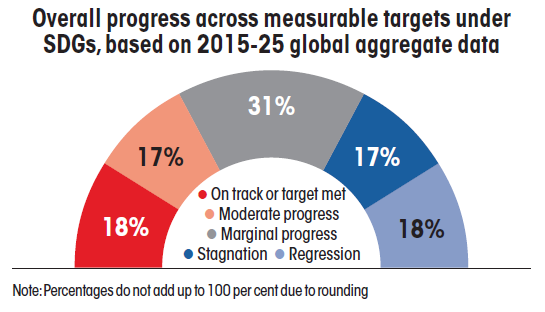
- According to the UN SDG Report 2025, only 35% of targets are on track or making moderate progress;
- Nearly half are advancing too slowly;
- 18% have regressed, especially in areas like hunger, poverty, and climate resilience.
Most Affected Goals
- Persistent Poverty and Water Crisis:
- 800 million people still live in extreme poverty.
- By 2030, 8.9% of the world population may remain in poverty, missing SDG1.
- In 2024, 2.2 billion lacked safe drinking water, 3.4 billion lacked safe sanitation, and 1.7 billion lacked basic hygiene.
- SDG2: Deepening Global Hunger Crisis: Four out of seven targets are regressing.
- 9.1% of the global population (713–757 million) faced hunger in 2023, up from 7.5% in 2019.
- Sub-Saharan Africa recorded the highest hunger rate (23.2%), while Southern Asia had the largest absolute number (281 million).
- 2.33 billion people experienced food insecurity in 2023 — 383 million more than in 2019.
- Drivers include conflict, climate variability, and economic shocks, with 50% of countries facing elevated food prices in 2023 — triple prepandemic averages.
- SDG3 (Good Health and Well-Being) is facing stagnation:
- Key targets on maternal mortality and universal health coverage show no progress.
- Global health systems remain weakened due to COVID-19 fallout, chronic underfunding, and systemic inequalities.
- Education (SDG 4): Nearly 36% of children in lowincome countries are out of school; learning proficiency remains low.
- Water and Sanitation Crisis (SDG 6): 3.4 billion people lack safely managed sanitation;
- 1.7 billion lack basic hygiene services;
- Climate change and infrastructure gaps are worsening water stress globally.
- SDG8: Under SDG8, economic progress remains uneven:
- Half of the tracked targets have stagnated or declined.
- Informal employment rose to 57.8% of the global workforce by 2024.
- Youth unemployment stood at 12.9%, nearly three times the adult rate (3.7%)
- SDG14 (Life Below Water) faces worsening conditions:
- 40% of its targets are regressing;
- Issues include marine pollution, declining fish stocks, and ecosystem degradation.
- Despite its urgency, SDG14 is the least funded SDG, as acknowledged at the third UN Ocean Conference (UN-OC 3).
- Climate Emergency and Funding Gaps Worsen Outlook: 2024 was the hottest year on record, with global temperatures 1.55°C above pre-industrial levels.
- The WMO warns there's an 80% chance that an even hotter year will occur before 2030.
- Development assistance fell 7.1% in 2024, breaking a 5-year growth trend.
- The SDG financing gap now stands at $4 trillion annually, severely impacting developing nations.
Promising Developments
- New HIV infections dropped by 40% since 2010.
- Malaria efforts have saved 12.7 million lives since 2000.
- Social protection now reaches over 50% of the global population — a notable increase over the past decade.
- SDG 7 (Affordable and Clean Energy): 40% of subtargets on track, driven by renewable energy expansion.
- SDG 12 (Responsible Consumption and Production): 36% of sub-targets progressing, especially in sustainable procurement and R&D.
Key Challenges
- Climate Change: Escalating disasters and biodiversity loss are undermining development gains.
- Conflict and Instability: Wars in Ukraine, Sudan, and Gaza have disrupted progress across multiple goals.
- Debt and Financing: Developing countries face the worst economic outlook in a generation, with a $4 trillion annual SDG financing gap.
- Data Deficiency: Many targets lack reliable data, especially in low-income regions.
- Only about 70% of indicators have sufficient data coverage.
- Road Ahead: A Six-Point Acceleration Plan
- Transform food systems;
- Expand energy access;
- Accelerate digital transformation;
- Ensure inclusive education;
- Create decent jobs and social protection;
- Protect climate and biodiversity
- The report urges the adoption of the Medellín Framework for Action to build robust data systems that enable evidence-driven policy and implementation.
International Conference on Financing for Development (FFD4)
Context
- Recently, the Fourth UN International Conference on Financing for Development (FfD4) was held in Seville, Spain, to realign financial systems with sustainable development goals and climate action—especially for the Global South.
Key Highlights from FfD4
- Sevilla Commitment: The conference’s outcome document, the Compromiso de Sevilla, laid out a bold framework to close the SDG financing gap. It emphasized:
- Catalyzing large-scale investment in sustainable development;
- Addressing the global debt crisis;
- Reforming the international financial architecture.
- Debt Relief and Representation: Leaders from developing nations, including Iraq (on behalf of G77 and China), Angola, Kenya, and Nepal, called for:
- Equitable access to finance;
- Sovereign debt restructuring;
- Fair representation in global financial institutions;
- Support for micro, small, and medium enterprises (MSMEs)
- Multilateralism and Trust: UN ECOSOC President Bob Rae stressed the need to rebuild trust and transparency, combat corruption, and reinvest in the pillars of sustainable development.
- FfD4 emerged as both a review of past commitments and a launchpad for transformative action, as the world grapples with rising debt, climate risks, and a staggering $4.2 trillion annual financing gap for developing countries.
Voices from the Global South
- Africa’s Call for Reform: Angola demanded a new financial model and full African participation in decision-making.
- Kenya and Tanzania highlighted unfair credit ratings and the need for national ownership of development strategies.
- Innovative Proposals: Mozambique proposed regional banks for green finance, while Honduras advocated for justice-based financing models.
- Sudan and Nepal emphasized partnerships and bridging digital and trade divides.
Shared Agenda for Reform
- Despite diverse national contexts, FfD4 revealed a strong convergence around key priorities:
- Reforming the IMF, World Bank, and credit rating systems;
- Mobilizing domestic and private resources;
- Promoting inclusive, transparent, and accountable financing mechanisms
What’s Next?
- The Seville Platform for Action now faces the test of implementation. With only five years left to achieve the SDGs, the urgency is palpable.
- FfD4 may have set the stage, but the real work lies ahead—in transforming commitments into tangible change for billions living on the margins of the global economy.
India’s New Epr Framework for Nonferrous Metals
Context
- Recently, the Union government’s updated rules provide ambitious recycling timelines for nonferrous metals with the introduction of a new Extended Producer Responsibility (EPR) framework but provide little clarity on implementation.
Extended Producer Responsibility (EPR) Framework for Non-ferrous Metals
- It was notified under the Hazardous and Other Wastes (Management and Transboundary Movement) Amendment Rules, 2025.
- It is effective from April 1, 2026 — aims to bring aluminum, copper, zinc, and their alloys into the fold of circular economy governance.
What the Framework Promises
- Wide Coverage: The rules apply to a broad spectrum of products—from beverage cans and packaging foils to electrical fittings and furniture—reflecting the pervasive use of non-ferrous metals in daily life.
- Recycling Targets: A phased approach sets recycling targets starting at 10% in 2026–27, gradually increasing to 75% by 2032–33. This timeline gives industry time to adapt while signaling long-term intent.
- Digital Backbone: The Central Pollution Control Board (CPCB) aims to launch a centralized online portal to manage registrations, monitor compliance, and facilitate trading of EPR certificates.
- Stakeholder Inclusion: The framework mandates registration for all actors—producers, manufacturers, recyclers, refurbishers, collection agents, and bulk consumers—creating a formal ecosystem for metal waste management.
Implementation Challenges
- Overburdened CPCB: The CPCB is tasked with developing the portal, issuing guidelines, conducting inspections, and organizing training—all within six months.
- Given its limited capacity, this timeline seems overly optimistic.
- Informal Sector Exclusion: India’s informal recyclers handle a significant share of metal waste.
- The rules offer little clarity on how these players will be integrated into the formal system, risking marginalization of a vital workforce.
- Administrative Complexity: Multiple registration layers and compliance requirements may disproportionately affect small enterprises, potentially stifling participation.
- Unclear Penalty Structures: While environmental compensation is mentioned, the absence of defined calculation methods creates uncertainty for businesses trying to assess compliance risks.
What Needs Strengthening
- Capacity Building: CPCB and state pollution boards need urgent investment in infrastructure and personnel to manage the expanded mandate.
- Inclusion of Informal Recyclers: Structured pathways for informal sector integration—through training, certification, and financial support—are essential.
- Transparency and Accountability: Clear guidelines on penalties, certificate trading, and recycled content requirements will improve trust and compliance.
Unlocking Energy Efficiency of Acs And Water Pumps
Context
- As India races toward its net-zero emissions target by 2070, two everyday appliances—air conditioners (ACs) and water pumps—have emerged as unlikely but powerful levers in the country’s clean energy transition.
Air Conditioners (ACs) Challenge
- India is witnessing a surge in AC adoption:
- Nearly 1 in 10 households now owns an AC—a figure on par with car ownership;
- By 2050, over 1 billion ACs are expected to be in use nationwide;
- Between 2025 and 2035, India will add 130–150 million new room ACs, contributing up to 180 GW to peak electricity demand.
- Raising efficiency standards — such as revising Minimum Energy Performance Standards (MEPS) — could:
- Reduce peak demand by 60 GW;
- Avoid ₹7.5 trillion in grid investments;
- Save consumers up to ₹2.2 trillion.
Pumping Power: Water Pump Puzzle
- India is the largest extractor of groundwater globally, with over 32 million irrigation pumps in use.
- These pumps are essential for climate-resilient agriculture, especially in regions with erratic monsoons and prolonged dry spells.
- Most of the pumps are inefficient, consuming excessive electricity and contributing to grid stress. Upgrading to energy-efficient models could:
- Lower agricultural energy demand;
- Reduce subsidies on electricity for farmers;
- Improve water-use efficiency and sustainability
Energy Efficiency Imperative
- India’s energy consumption rose by 63% between 2012 and 2022, and peak demand is projected to reach 366.4 GW by 2031–32.
- At COP28, India joined over 200 nations in pledging to double the rate of energy efficiency improvements by 2030—from 2% to 4% annually.
- The Bureau of Energy Efficiency (BEE), established under the Energy Conservation Act 2001, is tasked with driving this transformation.
- While appliances like lighting and refrigerators have seen rapid efficiency gains, ACs and water pumps remain key challenges.
Way Forward
- India’s energy consumption rose by 63% between 2012 and 2022, and peak demand is projected to reach 366.4 GW by 2031–32.
- At COP28, India joined over 200 nations in pledging to double the rate of energy efficiency improvements by 2030—from 2% to 4% annually.
- The Bureau of Energy Efficiency (BEE), established under the Energy Conservation Act 2001, is tasked with driving this transformation.
- While appliances like lighting and refrigerators have seen rapid efficiency gains, ACs and water pumps remain key challenges.
Herbicide Tolerant Cotton
Context
- Recently, there were unauthorised herbicidetolerant cotton varieties being circulated in Dhar district of Madhya Pradesh.
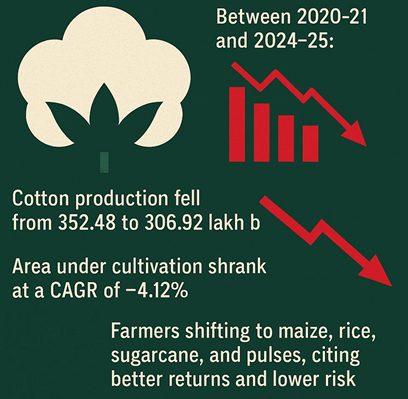
- It is genetically engineered to tolerate glyphosate, a broad-spectrum herbicide.
- The idea is to simplify weed control by allowing farmers to spray glyphosate without harming the crop. However, this approach has downsides:
- Indiscriminate glyphosate use leads to herbicide-resistant ‘superweeds’.
- Glyphosate can contaminate water bodies, harming aquatic life and food chains;
- It affects non-target organisms, including beneficial insects and pollinators;
- Soil health and biodiversity are at risk from repeated chemical exposure.
Ecological Red Flags
- In northwest India, glyphosate use threatens Prosopis Cineraria (Khejri) — a keystone species in desert ecosystems.
- HT cotton could accelerate pest resistance, as seen with Bt cotton.
- Bt-Cotton has failed to protect against evolving pests like pink bollworm and tobacco streak virus (TSV), making cotton cultivation economically unviable.
- Glyphosate’s carcinogenic potential and impact on human health remain controversial.
- Raising efficiency standards — such as revising Minimum Energy Performance Standards (MEPS) — could:
- Reduce peak demand by 60 GW;
- Avoid ₹7.5 trillion in grid investments;
- Save consumers up to ₹2.2 trillion.
Policy and Regulatory Concerns
- HT cotton is not approved for commercial cultivation in India, yet illegal sales have surged:
- Over 75 lakh seed packets sold in 2021, up from 30 lakh in 2020;
- Regulatory bodies like the Genetic Engineering Appraisal Committee (GEAC) have failed to curb unauthorized cultivation;
- Farmers are lured by false promises of doubled yields, despite lack of supporting agronomic data.
Path Forward
- India’s cotton revival depends on:
- Breeding pest-resistant, high-yielding hybrids;
- Diversifying cropping systems;
- Investing in ecological farming and integrated pest management;
- Strengthening regulatory oversight of GM crops
Undamming Europe: Removal of River Barrier
Context
- Europe is undergoing a powerful ecological revolution, known as Dam Removal Europe, to rewilding ecosystems, reconnecting communities, rethinking water governance, and to restore freeflowing rivers.
- In 2024 alone, 542 river barriers were dismantled across 23 countries.
Why Remove River Barriers?
- For centuries, dams, weirs, culverts, and sluices were built to harness water for irrigation, hydropower, flood control, and navigation. But many of these structures are now:
- Obsolete or unsafe;
- Economically unviable;
- Ecologically destructive;
- According to the UN Environment Programme’s Frontiers 2025: The Weight of Time report, nearly 1.2 million in-stream barriers fragment European rivers, disrupting fish migration, sediment transport, water temperature and flow, and habitat quality and biodiversity.
- It warns that by 2030, 89% of global river volume may be moderately to severely fragmented, up from 43% in 2010.
Ecological Benefits of Barrier Removal
- Removing barriers allows rivers to:
- Reconnect with floodplains, restoring natural hydrology;
- Support migratory fish like salmon, eel, and trout;
- Rebuild habitats for insects, birds, and mammals like otters;
- Reduce erosion and flood risk;
- Improve water quality and climate resilience
Continental Efforts
- The EU’s Nature Restoration Regulation, enacted in 2024, sets a target to restore 25,000 km of rivers to a free-flowing state by 2030.
- It aligns with the global Freshwater Challenge, which aims to restore 300,000 km of degraded rivers worldwide.
- The EU has recognized river barriers as a significant environmental stressor since 2000, under its Water Framework Directive.
- Roughly 20% of the EU’s surface water bodies were deemed impaired due to man-made barriers.
Lessons from the US and Beyond
- The United States is advancing dam removal efforts, particularly targeting aging, obsolete, or unsafe structures.
- These initiatives offer opportunities to study ecosystem recovery post-demolition, potentially providing valuable insights for other regions.
- However, in Africa, Asia, and South America, dam construction still far outpaces removals.
- Here, hydropower is often seen as a green energy source for development.
- The UNEP advises that such infrastructure must be strategically designed to minimize ecological disruption while meeting energy demands.
Offshore Sand Mining in India
Context
- Fisher communities in Kollam, Kerala, protest the government's plan to commence offshore sand mining.
- Earlier, the Union government announced the auction of mineral blocks in the offshore areas of Gujarat, Andaman and Nicobar islands and Kerala for extraction of lime mud, polymetallic nodules and sand.
What is Offshore Sand Mining?
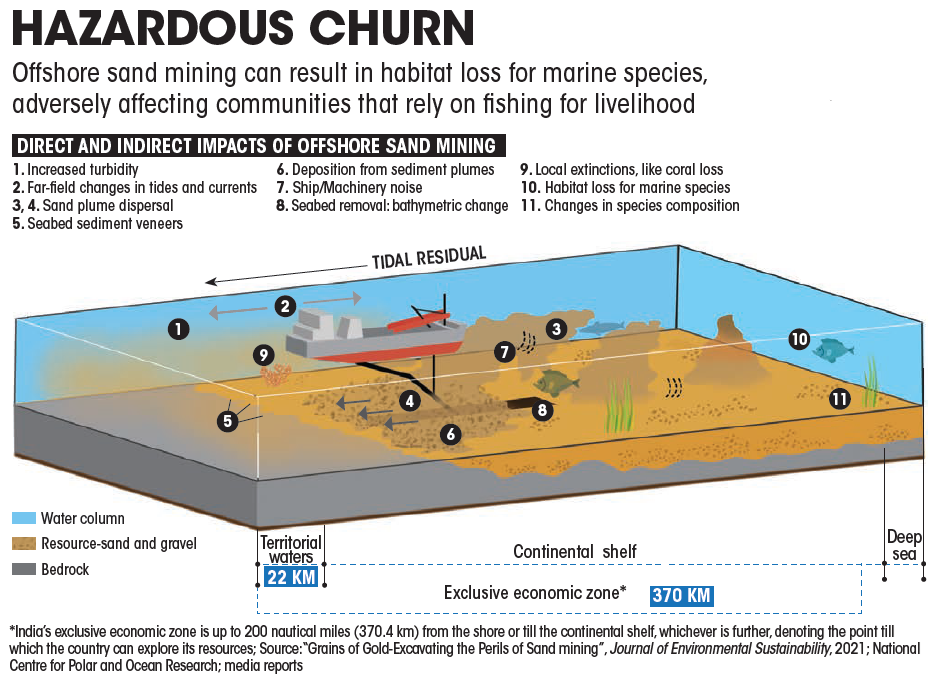
- Offshore sand mining involves dredging sand deposits from the seabed, typically at depths of 22– 45 meters.
- These deposits, formed by marine processes, are considered suitable for construction after desalination.
- According to the Geological Survey of India (GSI):
- Kerala’s offshore region holds 745 million tonnes of construction-grade sand;
- The Kollam coast alone contains over 302 million tonnes.
- The sand is classified as a ‘minor mineral’ under the Mines and Minerals (Development and Regulation) Act, 1957, but offshore mining is governed by the Offshore Areas Mineral (Development and Regulation) Act, 2002, amended in 2023 to allow private participation and 50-year leases.
Why the Government Supports It
- Economic Potential: Offshore sand could meet Kerala’s construction needs for 25 years at 30 million tonnes annually.
- Revenue Generation: Through shipping, trade, and GST collection;
- Environmental Justification: Seen as a sustainable alternative to riverbed and coastal sand mining, which causes erosion and habitat loss.
Ecological and Social Concerns
- Marine Habitat Disruption: Dredging removes sediment habitats, affecting benthic organisms and fish breeding grounds.
- Water Turbidity and Pollution: Sediment plumes can degrade water quality and release toxins.
- Coastal Erosion: Mining may alter tidal patterns and damage rocky reefs that protect shorelines.
- Livelihood Threats: Over 25,000 fishers in Kollam depend on the Kollam Bank, a rich fishing ground now at risk.
Policy and Legal Safeguards
- Environmental Management Plans before production begins;
- Production plans aligned with ecological safeguards;
- Coordination with state authorities and scientific institutions like the National Institute of Oceanography.
A New Age of Challenges for People And Ecosystems: UNEP
Context
- The latest Frontiers report by the United Nations Environment Programme (UNEP), titled ‘A New Age of Challenges for People and Ecosystems’, underscores four urgent and interlinked environmental concerns.
Cryosphere Threats: Melting Ice and Hidden Dangers
- The cryosphere — comprising glaciers, ice sheets, and permafrost — is melting rapidly.
- It may reawaken ancient pathogens. A stark example occurred in 2016 on Russia’s Yamal Peninsula, where thawed permafrost triggered an anthrax outbreak.
Vanishing Arctic Ice and Thawing Permafrost
- Arctic sea ice could disappear seasonally by 2050, while 24–69% of near-surface permafrost may thaw by 2100. These changes could also release antimicrobial resistance genes into the environment.
River Restoration: Removing Barriers to Resilience
- Damaged Waterways: With over 62,000 large dams and millions of smaller barriers, global rivers are under pressure.
- These structures disrupt sediment flows, fish migration, and aquatic habitats.
- By 2030, 89% of global river volume could be fragmented.
- Momentum for Dam Removal: The removal of obsolete or unsafe dams is gaining pace in Europe and North America, improving river health, resilience to climate change, and water quality.
- Nature-Based Restoration: Efforts that involve communities and embrace nature-based solutions — like wetland restoration and reforestation — can accelerate the healing of rivers.
Ageing Populations in a Changing Climate
- Rising Vulnerabilities: Heat-related deaths among people aged 65 and above have surged by 85% since the 1990s.
- A 2°C global temperature rise could lead to a 370% increase in such deaths by 2050.
- Disproportionate Impact: Older adults in low- and middle-income countries face heightened exposure to heatwaves, air pollution, and floods.
- In India, seniors experienced 2.1 to 4 additional heatwave days per person per year between 1986–2005 and 2013–2022.
UN Frontier Report 2025: Floods Unleash Toxic Legacy Chemicals From Sediments
Context
- Recently, the UNEP ‘Frontiers 2025: The Weight of Time’ report revealed that the intensified flooding events are remobilizing long-buried toxic chemicals from river and coastal sediments, exposing ecosystems and human populations to serious health risks.
What Are Legacy Chemicals?
- Legacy chemicals are persistent pollutants that were widely used in the past but have since been banned or restricted due to their toxicity. These include:
- Heavy Metals: Lead, cadmium — toxic even at low concentrations;
- Persistent Organic Pollutants (POPs): Pesticides, industrial by-products, synthetic chemicals.
- These substances do not degrade easily and accumulate in sediments of polluted rivers, lakes, and estuaries.
- Despite regulatory bans, they remain in the environment for decades.
How Floods Mobilize Toxic Sediments
- Floodwaters can:
- Re-suspend and redistribute contaminated sediments;
- Spread pollutants across landscapes and into water bodies;
- Introduce toxins into the food chain, affecting plants, animals, and humans.
- Report cites examples such as:
- Hurricane Harvey (2017): Released mercury and carcinogens into Galveston Bay, Texas;
- Niger Delta floods (2012): Mobilized polycyclic aromatic hydrocarbons (PAHs);
- Pakistan floods (2010): Swept away 2,835 metric tonnes of obsolete pesticides.
Health and Ecological Risks
- Legacy chemicals can cause:
- Neurotoxicity and immunotoxicity;
- Kidney and bone damage;
- Reproductive harm and cancers;
- Endocrine disruption
Climate Change Intensifies the Threat
- Increased rainfall and tropical storms are driving more frequent and severe floods;
- Urbanization and poor waste management exacerbate sediment contamination;
- Millions of tonnes of POP waste remain in global landfills, vulnerable to flood exposure.
UNEP’s Recommendations
- Nature-based solutions: Wetlands, floodplains, riparian buffers;
- Traditional infrastructure: Polders, dikes, retention basins;
- Integrated river basin management: Balancing flood control, conservation, and water use;
- Sediment pollution mapping: Geo-profiling of riverbeds to anticipate contamination;
- Monitoring pollutant pathways: Tracking how toxins travel post-flood;
India Leads South Asia’s Remarkable Progress in Childhood Immunization
Context
- India has made significant strides in child immunization, reducing the number of zero-dose children—those who have missed all vaccinations— by 43% in just one year, according to new data released by WHO and UNICEF.
- In 2023, India recorded 1.6 million zero-dose children. That number has now dropped to 0.9 million in 2024, marking a reduction of nearly 700,000 children.
Regional Immunization Hits Historic Highs
- South Asia, as a region, achieved its highest-ever immunization coverage in 2024:
- 92% of infants received the third dose of the DTP vaccine (DTP3), up from 90% in 2023.
- It surpasses even pre-COVID-19 levels.
Country-wise Highlights
- Nepal: Halved the number of zero-dose children.
- Pakistan: Achieved its highest-ever DTP3 coverage at 87%.
- Afghanistan: Remains a concern with the lowest immunization coverage in the region and a slight decline compared to last year.
Measles Vaccine Uptake
- 93% of infants received the first dose.
- 88% received the second dose.
- Reported measles cases dropped 39% in 2024.
HPV Vaccination Efforts
- Bangladesh vaccinated over 7.1 million girls since launching its HPV program last year.Bhutan, Maldives, and Sri Lanka also reported steady increases.India and Pakistan are set to launch their HPV vaccination campaigns later in 2025.
- Bhutan, Maldives, and Sri Lanka also reported steady increases.
- India and Pakistan are set to launch their HPV vaccination campaigns later in 2025.
Challenges Ahead: 2.9 Million Still Un- or UnderVaccinated
- Despite the gains, over 2.9 million children in South Asia remain either unvaccinated or undervaccinated.
- Health officials stress that reaching these children, particularly in remote and underserved areas, remains a critical priority.
Intense Marine Heatwave in Mediterranean Shocks With 8°c Warming
Context
- The Mediterranean Sea is currently experiencing an unprecedented marine heatwave, with sea surface temperatures soaring up to 8°C above normal.
What’s Happening?
- Peak anomalies of +8°C have been recorded off the coasts of France and Italy, with absolute temperatures nearing 31°C (88°F).
- The western Mediterranean basin, including the Balearic and Tyrrhenian Seas, is the worst affected.
- The deviation from normal sea surface temperatures is six standard deviations—statistically placing it in the realm of near impossibility without global warming.
What’s Causing It?
- The primary driver is a heat dome—a high-pressure system that traps heat and suppresses wind activity, preventing ocean mixing. This leads to:
- Accumulated heat in surface waters;
- Amplified warming due to reduced aerosols and altered atmospheric circulation;
- A feedback loop between atmospheric and marine heatwaves
- Afghanistan: Remains a concern with the lowest immunization coverage in the region and a slight decline compared to last year.
- Ecological Fallout:
- Mass mortalities of fish and invertebrates due to low oxygen levels;
- Coral bleaching and die-offs of seagrass beds;
- Disease outbreaks in mussel farms;
- Threats to endangered species like the noble fan mussel.
- A study published in Aquaculture (July 2024) found that marine heatwaves in the Mediterranean have tripled in frequency and now last 50% longer than they did 40 years ago.
India Reaches 50% Non-fossil Fuel Power Capacity
Context
- In a landmark achievement for clean energy, India has reached 50% of its installed electricity capacity from non-fossil fuel sources, five years ahead of its 2030 target under the Paris Agreement.
Numbers Behind the Milestone
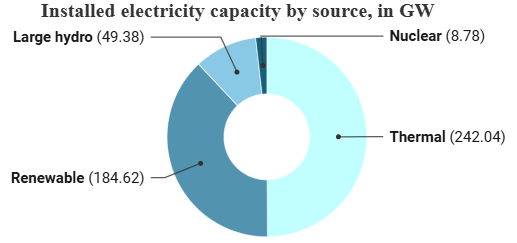
- Total installed capacity: 484.82 GW (as of June 30, 2025)
- Non-fossil fuel sources: 242.78 GW (50.1%)
- Renewables: 184.62 GW (38.08%)
- Large hydro: 49.38 GW (10.19%)
- Nuclear: 8.78 GW (1.81%)
- It fulfills one of India’s Nationally Determined Contributions (NDCs) under the Paris Agreement well ahead of schedule.
Related Efforts & Initiatives
- PM-KUSUM: Promoted solar-powered irrigation and feeder-level solarisation;
- PM Surya Ghar: Muft Bijli Yojana: Targeted rooftop solar for 10 million households;
- Solar Parks & Wind-Solar Hybrid Policy: Enabled large-scale deployment of renewables;
- Bioenergy Expansion: Boosted rural employment and circular economy goals.
What’s Next?
- 500 GW of non-fossil fuel capacity by 2030;
- 45% reduction in emissions intensity of GDP;
- Net-zero emissions by 2070
Revised Guidelines for Waste-toenergy Projects
Context
- Recently, the Ministry of New and Renewable Energy (MNRE) has issued revised guidelines for Waste-to-Energy (WtE) projects under the National Bioenergy Programme, designed to enhance performance monitoring, simplify compliance, and enable faster disbursal of Central Financial Assistance (CFA).
Key Reforms in the Guidelines
- Performance-Based CFA Disbursal: CFA will now be released in two stages:
- 50% upon receiving the Consent to Operate from the State Pollution Control Board, backed by a bank guarantee;
- Remaining 50% after achieving 80% of rated capacity or maximum eligible CFA capacity;
- If a plant fails to reach 80%, pro-rata disbursal will be allowed based on actual output;
- No CFA will be granted if Plant Load Factor (PLF) is below 50%.
- Streamlined Inspections: Joint inspections led by the National Institute of Bio-Energy (SSS-NIBE), along with State Nodal Agencies (SNAs), Biogas Technology Development Centers (BTDCs), or MNRE-approved bodies.
- Developers not seeking advance CFA will require only one performance inspection, reducing delays.
- Simplified Procedures: Reduced paperwork and relaxed approval norms;
- Greater flexibility for MSMEs and decentralized biogas producers;
- CFA claims can be submitted within 18 months from commissioning or in-principle approval— whichever is later.
Significances
- Improve ease of doing business for WtE developers;
- Encourage investment in biogas, compressed biogas (CBG), and power generation from waste;
- Support India’s net-zero emissions goal by 2070;
- Enhance waste management, including stubble and industrial waste utilization
Sectoral Impact
- MSMEs: Will benefit from reduced compliance burden and faster funding;
- Urban and rural waste generators: Gain new opportunities for energy recovery;
- Clean energy ecosystem: Strengthened through performance-linked incentives and transparent monitoring.
Model Rules for Felling of Trees in Agricultural Lands
Context
- Recently, MoEFCC has notified the ‘Model Rules for Felling of Trees in Agricultural Lands’, aiming to simplify tree felling procedures, enhance farmer incomes, and reduce pressure on natural forests, along with supporting India’s climate goals under the Paris Agreement and the SDGs.
Why Do These Rules Matter?
- India imports over $2 billion worth of timber annually. Yet millions of farmers grow trees on agricultural lands without clear legal pathways to harvest or sell them. The new model rules:
- Encourage agroforestry by removing procedural bottlenecks;
- Enable farmers to monetize timber grown on private lands;
- Support climate resilience through increased tree cover and carbon sequestration
Key Features of the Model Rules
- Digital Integration via NTMS Portal: Farmers must register plantations and submit felling requests through the National Timber Management System (NTMS).
- It ensures transparency, traceability, and ease of access.
- Simplified Felling Process:
- For up to 10 trees: Upload photos; system autogenerates No Objection Certificate (NOC).
- For more than 10 trees: Online application, field verification, and issuance of felling permit.
- State-Level Committee (SLC): A multidisciplinary committee — expanded to include agriculture and revenue officials — will oversee implementation, verification, and monitoring.
- Third-Party Verification: Empanelled agencies with forestry expertise will assess plantations and certify eligibility for felling and timber transit.
- Farmer-Centric Record Keeping: Regular updates on species, height, and geotagged photos are required to maintain plantation records.
- Technology-Enabled Monitoring: GPS coordinates, Google Earth imaging, and geospatial tools will be used to verify growth and yield projections.
Ecological and Economic Benefits
- Climate Action: Agroforestry enhances carbon sinks and supports India’s net-zero goals.
- Water and Soil Conservation: Tree-based systems improve soil fertility and water retention.
- Livelihoods: Timber cultivation creates new income streams and employment in rural areas.
- Market Linkages: Connects farmers with woodbased industries, reducing reliance on imports.
Challenges Ahead
- Digital Literacy Gaps: Many farmers may struggle with online systems;
- Portal Development Lag: NTMS is still under construction, risking delays;
- State-Level Variability: As model rules, adoption depends on individual states;
- Risk of Exploitation: Without oversight, timber lobbies may misuse provisions
Mukhyamantri Vrindavan Gram Yojana
Context
- Recently, the Madhya Pradesh government has launched the Mukhyamantri Vrindavan Gram Yojana aimed at developing model villages that blend traditional values with modern sustainability practices.
About Mukhyamantri Vrindavan Gram Yojana
- It evokes the spiritual and ecological ethos of Vrindavan, aiming to create communities rooted in cow protection, organic farming, and green living.
- One village per assembly constituency will be selected;
- Each must have a minimum population of 2,000 and at least 500 bovines;
- These villages will be developed as ‘Vrindavan Grams’, showcasing integrated rural development
Key Development Areas
- Cow Rearing & Dairy Development: Gaushalas, veterinary hospitals, milk collection centers;
- Promotion of cooperative dairy businesses;
- Environmental Sustainability: Organic farming, pasture development, biogas plants;
- Solar-powered water systems and street lighting;
- Social Infrastructure: Schools, health centers, libraries, community halls;
- Public toilets, cremation grounds, cow memorials;
- Livelihood & Entrepreneurship: Craft and skill development centers;
- Small-scale forest produce and agri-based industries;
- Water Conservation & Irrigation: Rainwater harvesting, pond preservation, drip irrigation;
- Roof water harvesting and recharge structures;
- Governance & Digital Access: e-Panchayat services, updated land records, 100% e-KYC;
- Climate-resilient housing and sanitation facilities.
Goals and Vision
- Self-reliance: Empower villages to meet their own economic and social needs;
- Spiritual & Cultural Revival: Preserve religious sites and promote cow-centric values;
- Environmental Stewardship: Reduce chemical use and promote natural farming;
- Inclusive Development: Ensure participation of tribal and marginalized communities.
OECD-FAO Agricultural Outlook 2025- 2034
Context
- Recently, OECD-FAO Agricultural Outlook 2025– 2034 reveals that 27% of global cereal production will be diverted to biofuel and industrial uses by 2034 — up from 23% in 2023.
Key Findings from the Report
- Only 40% of cereals will be consumed directly by humans by 2034;
- 33% will be used for animal feed;
- 27% will go to biofuels and industrial applications.
Who’s Driving the Demand?
- Emerging economies are leading the surge in biofuel consumption:
- India, Brazil, and Indonesia are expected to account for the bulk of growth;
- Biofuel demand is projected to grow at 0.9% annually through 2034, up from 0.6% in previous estimates.
- Despite global concerns over sustainability, firstgeneration biofuels — made from food-based feedstocks like maize, sugar, and vegetable oils — will continue to dominate the market.
Advanced Biofuels Still Lagging
- While cellulosic feedstocks (e.g., crop residues, energy crops, woody biomass) offer a more sustainable alternative, their adoption remains limited:
- High production costs
- Lack of infrastructure;
- Weak policy support
- As a result, food-based biofuels will continue to strain agricultural systems and divert resources from food production.
Agricultural Trends and Pressures
- Global cereal production is expected to grow by 1.1% annually, driven mainly by yield improvements (0.9%) rather than expansion of farmland (0.14%).
- India and Southeast Asia will contribute 39% of global cereal consumption growth by 2034.
- China’s share will decline sharply from 32% to 13%, reflecting changing dietary patterns.
Rising Demand for Animal-Based Foods
- The report highlights a surge in demand for meat, dairy, and eggs:
- Global livestock inventories to grow by 7%;
- Agricultural GHG emissions projected to rise by 6%;
- Per capita calorie intake from animal products increased by 6% globally, and by 24% in lowermiddle-income countries.
Implications for Food Security
- The diversion of cereals to biofuels could:
- Exacerbate food price volatility;
- Undermine efforts to combat hunger and malnutrition;
- Increase environmental pressures from intensified agriculture;
- The report urges policymakers to balance energy goals with food system resilience, and to invest in advanced biofuels that do not compete with food crops.
Mistaken Identity: Wrong Deer Species Selected for Conservation Breeding
Context
- A recent report by the Central Zoo Authority (CZA) has revealed a lapse in India’s wildlife conservation efforts: misidentification of deer species.
Alpine vs Himalayan Musk Deer
- The CZA’s 2024 report, Planned Breeding Programs in Indian Zoos: Assessment and Strategic Actions, highlights a critical error: zoos may have confused the Alpine Musk Deer (Moschus Chrysogaster) with the Himalayan Musk Deer (Moschus Leucogaster) due to their overlapping habitats and similar appearance.
- Alpine musk deer are found in the central to eastern Himalayas, and Himalayan musk deer range from the western to eastern Himalayas;
- Both are Endangered (IUCN); CITES Appendix I.
- Their sympatric distribution has led to misidentification in breeding centers.
- As a result, conservation breeding programs in Uttarakhand and West Bengal may have been initiated for the wrong species, with no recognized zoo currently holding captive Alpine musk deer.
Breeding Program Breakdown
- The Musk Deer Breeding Centre near Chopta, Uttarakhand, and the Padmaja Naidu Himalayan Zoological Park in Darjeeling were believed to house Alpine musk deer—but were likely managing Himalayan musk deer instead.
Regulatory Framework
- The CZA, a statutory body under the Wildlife (Protection) Act, 1972, is tasked with:
- Identifying endangered species for captive breeding;
- Assigning breeding responsibilities to zoos.
- In 2022, the Act was amended to expand the definition of ‘zoo’ to include conservation breeding centers, bringing them under regulatory oversight.
Subjective Questions for Practise
Q1. Do you believe that the targets under the Sustainable Development Goals (SDGs) can be achieved by the 2030 Agenda? Discuss the underlying causes of the current regression and propose strategic measures to accelerate progress.
Q2. Evaluate the objectives and implementation strategy of India’s new Extended Producer Responsibility (EPR) framework for non-ferrous metals. How does the framework aim to promote circular economy principles?
Q3. Discuss the role of air conditioners and water pumps in India’s energy consumption landscape. How can improving their energy efficiency contribute to achieving national clean energy goals?
Q4. Examine the ecological and socio-economic implications of introducing Herbicide Tolerant (HT) cotton in India.
Q5. Analyze the environmental, social, and governance challenges associated with offshore sand mining in India. How can the government balance the demand for construction-grade sand with the need to protect marine ecosystems?
QUICK LINKS

 Call
Call