

Governor's Powers Explained: How the SC Verdict Impacts States
Context:
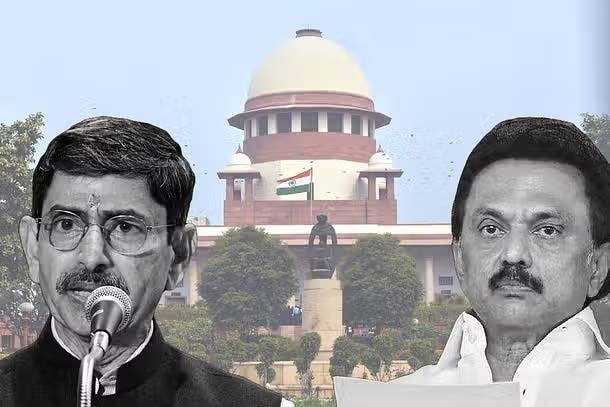
- In a landmark judgment on April 8, 2025, the Supreme Court deemed Tamil Nadu Governor RN Ravi’s refusal to assent to 10 state bills as illegal and unconstitutional.
- The verdict, delivered by Justice JB Pardiwala and Justice R Mahadevan, came in response to a writ petition filed by the Tamil Nadu government challenging the Governor’s prolonged inaction on important bills.
1.
What is the recent case of the Tamil Nadu Governor?
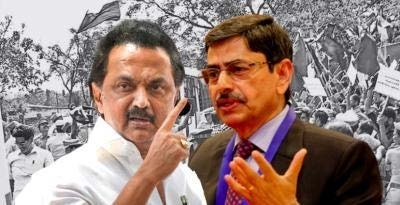
- The case stemmed from a prolonged standoff between the DMK-led Tamil Nadu government and Governor RN Ravi.
- Between November 2020 and April 2023, the state legislature passed 13 bills, of which 10 were either withheld or sent back to the Assembly by the Governor without any communication.
- When the legislature re-approved the bills without any material changes, Governor Ravi still did not assent to the bills but reserving them for the President’s consideration, which the court found unconstitutional.
2.
What did the Supreme Court rule in the Tamil Nadu Governor’s case?
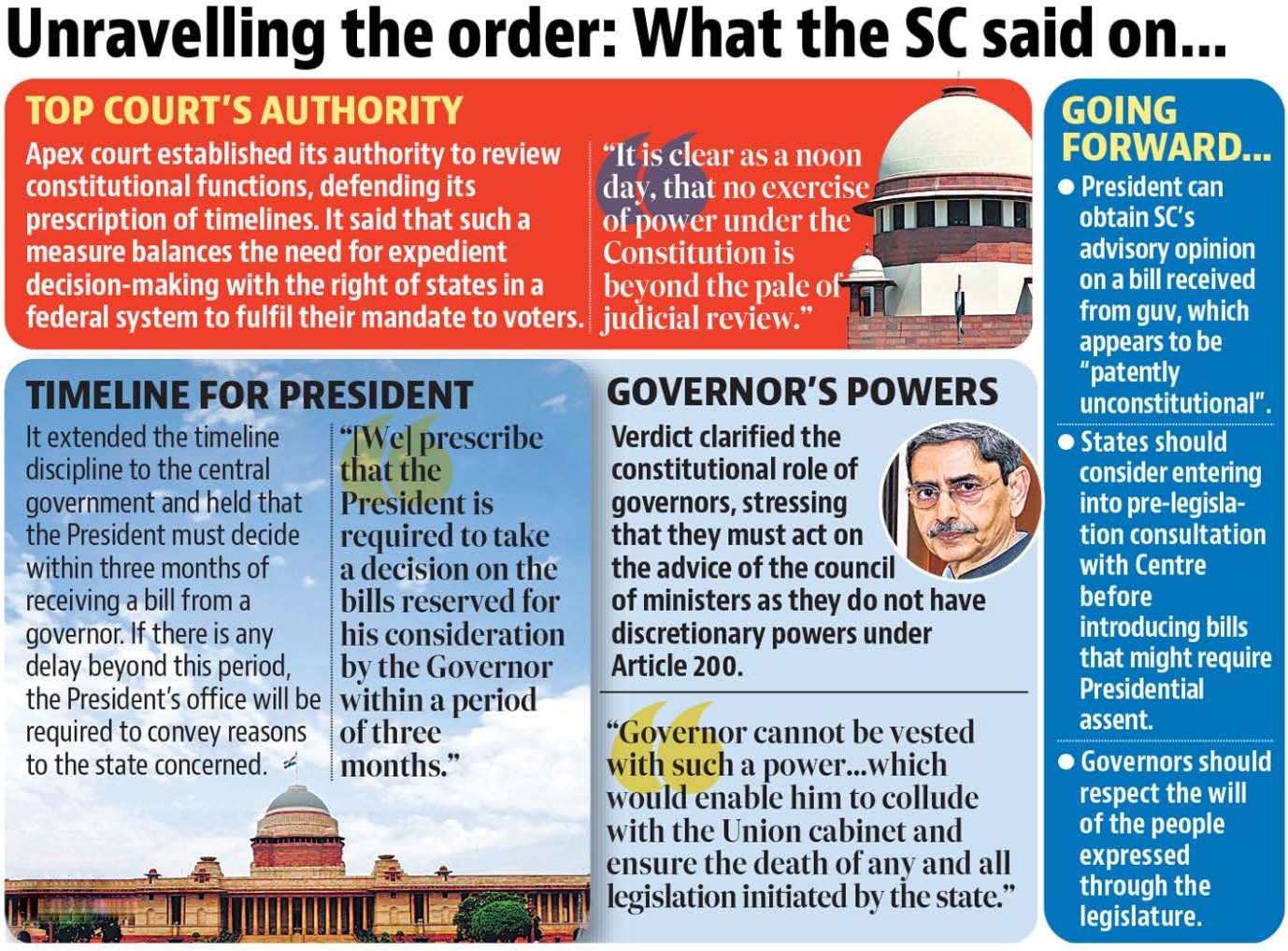
- The Supreme Court held that the Governor’s actions were not only deliberately obstructive but also violated constitutional procedure.
- The court said the Governor lacked ‘bonafide’ (good faith) in his actions and failed to respect the Constitution and the authority of court.
- It is not up to the Governor to reserve a bill for the President after the Assembly has passed the legislature for a second time without any changes.
- The Constitution, in the phrase “shall not withhold assent,” mandates that the Governor must assent to such bills, the SC held, asserting that the conduct of Governor Ravi went against the very principles of parliamentary democracy.
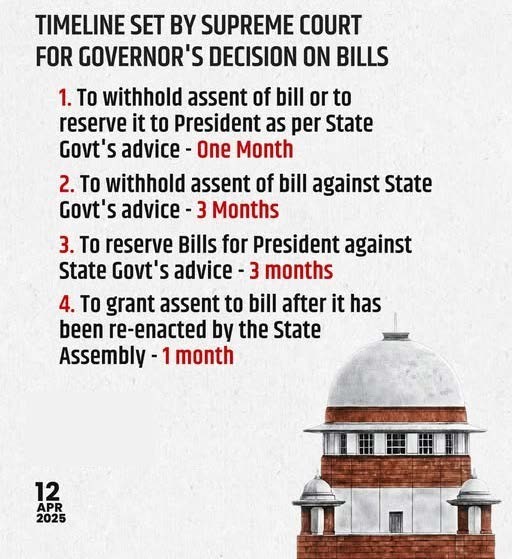
- The Supreme Court laid down time-bound guidelines for Governors under Article 200:
- Assent or reservation (on advice of Council of Ministers): Within 1 month.
- Withholding assent (against Council’s advice): Must return with message within 3 months.
- Reservation (against advice): Must within 3 months.
- Post-reconsideration assent: Must be given within 1 month.
- The State government can approach the competent court with a writ of mandamus if a Governor sits on a Bill for a period exceeding the time limit of three months.
- The State can seek expeditious decision on the Bill through the courts provided the Governor is unable to furnish a sufficient explanation for his delay.
- If a bill is to be reserved for the President’s assent, it must be done at the initial stage.
- Once returned and re-passed, the Governor must give assent and cannot reserve it again.
- The Supreme Court reaffirmed that the Governor is not meant to act as a political agent but as a constitutional figurehead: “He must be the harbinger of consensus and resolution… a catalyst and not an inhibitor.”
3.
What did the Supreme Court rule on the President’s role?
- The Supreme Court also addressed the President’s role under Article 201, which governs the assent of bills reserved by Governors.
- The SC ruled that even the President cannot delay decisions indefinitely and that such inaction is open to judicial scrutiny.
- The Supreme Court underscored that the President does not have a "pocket veto" and has to either grant assent or withhold it.
- The court opined that even where no time-limit is prescribed for the exercise of any power under a statute, it should be exercised within a reasonable time.
- The exercise of powers by the President under Article 201 cannot be said to be immune to this general principle of law.
- Moreover, invoking Article 143, the Court stated if a bill is reserved on grounds of unconstitutionality, the President “ought to” seek the Supreme Court’s opinion though not mandatory, such a reference holds high persuasive value.
4.
What is Article 143?
- Article 143 of the Indian Constitution grants the President of India the authority to seek advisory opinions from the Supreme Court on matters of law or facts that are of significant public importance.
- Under Clause (1), the President may refer such questions to the Supreme Court, which can provide its opinion after necessary hearings.
- Clause (2) allows the President to refer disputes under Article 131 for the Court's opinion.
- The Court acknowledged that its advisory opinion under Article 143 is not binding.
5.
Why doesn't the recent Supreme Court order amount to judicial overreach?
- The Supreme Court affirmed that its direction stipulating a timeline for Governors was not a transgression on part of judiciary, but a necessary interpretation to uphold the spirit of the Constitution and prevent misuse of discretionary powers.
- The court noted that the prescription of a time limit within which the ordinary exercise of power by the Governor under Article 200 must take place, is not the same thing as amending the Constitution.
- The court emphasised that these timelines do not alter Article 200 or its framework but rather ensure it is not rendered ineffective by indefinite delays.
- The court cited three crucial reasons to justify its decision:
| Reasons | Analysis |
|---|---|
| No Distortion of Constitutional Procedure |
|
| Reinforcing Constitutional Urgency |
|
| Avoiding Automatic Consequences |
|
6.
Why does the Supreme Court verdict matter to other states?
- Tamil Nadu is not the only state that has approached the top court against the decisions of their governors.
- While Tamil Nadu moved the court in 2023, so did Punjab and Telangana, and West Bengal and Kerala approached the apex court in 2024.
| States | Issues |
|---|---|
| Kerala |
|
| West Bengal |
|
| Telangana |
|
| Punjab |
|
| Karnataka |
|
7.
What is the view of the Tamil Nadu CM on the recent verdict?
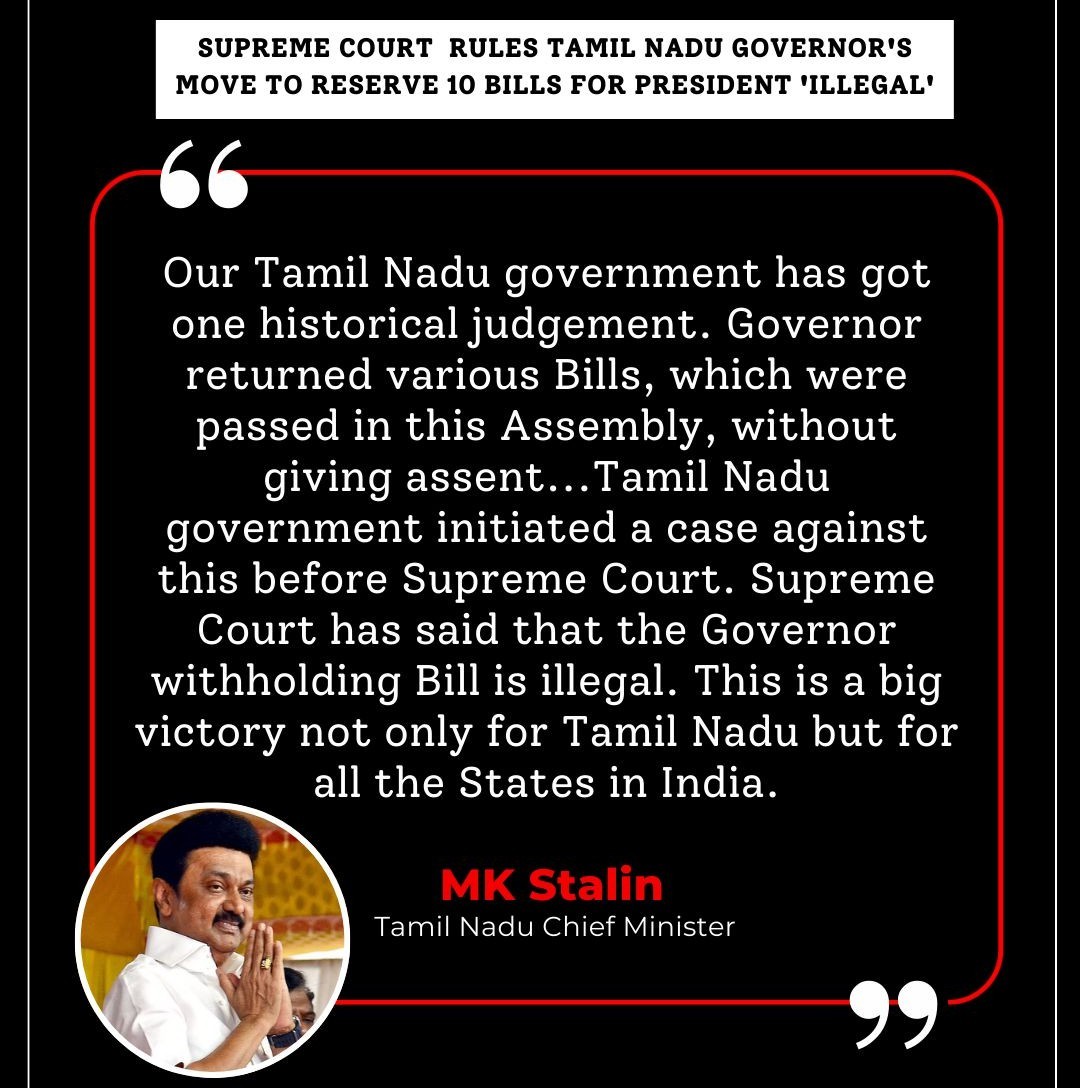
- Tamil Nadu chief minister MK Stalin called the Supreme Court’s ruling on the role of Governors in state bills a “historic” decision and a victory for all state governments in India.
- “The Constitution mandates the Governor to approve the bills once adopted for the second time, but he didn’t...he was also delaying,” Stalin said after the verdict.
- “This verdict is a victory not just for Tamil Nadu but all state governments in India,” the chief minister added.
8.
Mention the evolution of the post of Governor?
- Since 1858, when India was administered by the British Crown, provincial Governors were agents of the Crown, functioning under the supervision of the Governor-General.
- Over the following decades, the Indian nationalist movement sought various reforms from British rule, aiming for better governance.
- These efforts culminated in the Government of India Act, 1935, which came into force in 1937, bringing provincial autonomy.
- Post this, the Indian National Congress commanded a majority in six provinces.
- With the 1935 law, the Governor was now to act in accordance with the advice of Ministers of a province’s legislature, but retained special responsibilities and discretionary power.
- Upon Independence, when the Provisional Constitution of 1947 was adapted from the 1935 Act, the post of Governor was retained but the phrases ‘in his discretion, ‘acting in his discretion, and ‘exercising his individual judgement’, were omitted.
- Under the parliamentary and cabinet systems of governance adopted by India, the Governor was envisaged to be the Constitutional Head of a State.
9.
What aspects of the post of Governor were debated in the Constituent Assembly?
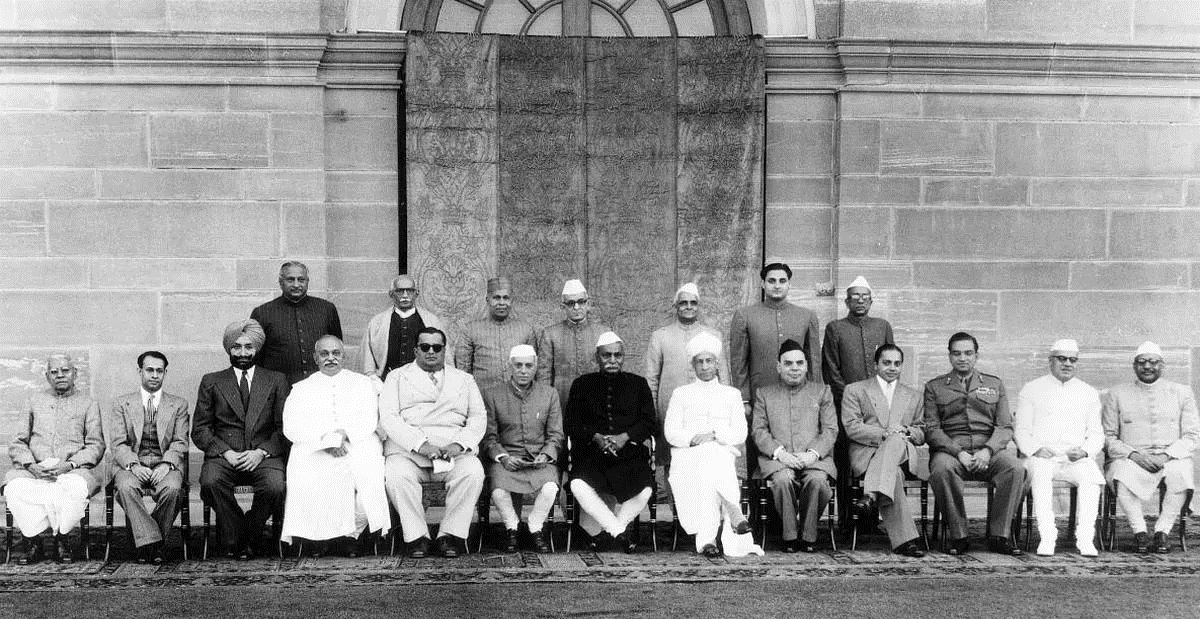
- The post of the Governor was extensively debated in the Constituent Assembly, which too decided to retain it while reorienting its role from the British era.
| Aspects of the post of Governor | Debates |
|---|---|
| Nature of the Governor's Role: Ceremonial vs Real Power |
|
| Appointment of the Governor |
|
| Discretionary Powers |
|
10.
Mention the role and powers of the Governor?
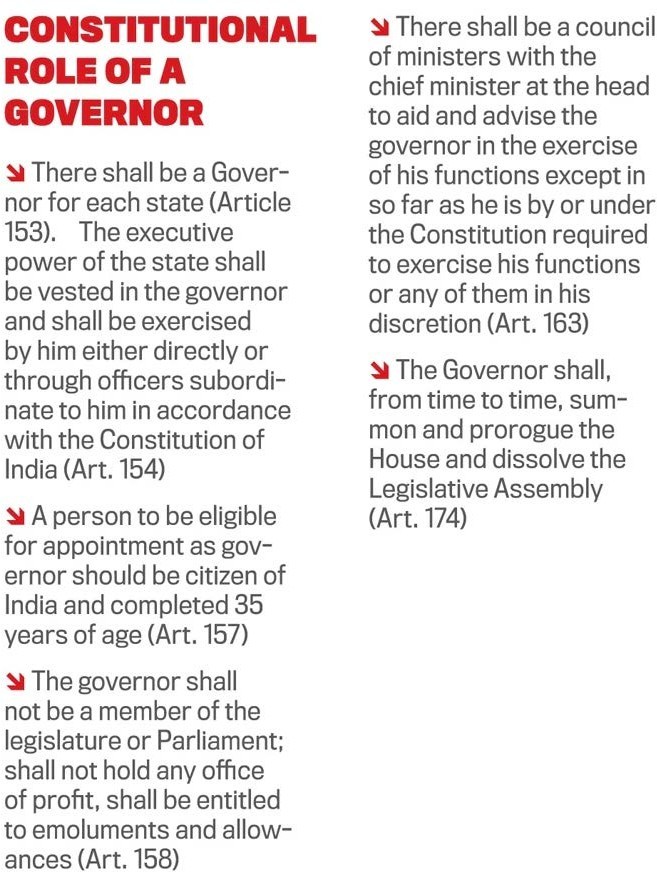
- The Governor’s role is defined in Part VI of the Constitution.
- Article 153 mandates the appointment of a Governor for each state, and Articles 154–162 elaborate on the executive powers of the post.
| Powers of Governor | Description |
|---|---|
| Executive Powers |
|
| Legislative Powers |
|
| Judicial Powers |
|
| Role in Money Bills |
|
| Discretionary Powers |
|
11.
What are the constitutional powers of a Governor with respect to bills?
| Powers | Analysis |
|---|---|
| Article 200 |
|
| Article 201 |
|
| Article 207 |
|
12.
Mention instances where the Governor can reserve a bill for the President's approval?
- A Governor in India can reserve a bill for the President’s consideration under certain circumstances, as provided in the Indian Constitution, particularly under Article 200.
| Circumstances | Analysis |
|---|---|
| If a bill is against the Constitution |
|
| Against the Directive Principles |
|
| Conflict with Union Laws |
|
| Matters outside State Legislature’s Power |
|
| Endangering larger National Interest |
|
| Bills that require prior Presidential Sanction |
|
13.
What are the key concerns related to Governors in India?
| Key Concerns | Analysis |
|---|---|
| Perceived Partisanship and Political Affiliation |
|
| Misuse of Article 356 (President’s Rule) |
|
| Discretionary Powers and Constitutional Overreach |
|
| Interference in State Administration |
|
| Delay or Denial of Assent to Bills |
|
| Lack of Accountability |
|
| Conflict with State Governments |
|
| Disconnect with Local Sentiments |
|
14.
What are the issues with pending bills?
| Issues | Analysis |
|---|---|
| Delay in decision making |
|
| Undermines the democratic process |
|
| Lack of Accountability |
|
15.
Enlist key committees and their recommendations on the position of Governor?
| Committees | Recommendations |
|---|---|
| Sarkaria Commission (1983–1988) |
|
| 2nd Administration Reform Commission (ARC) (2005) |
|
| Punchhi Commission (2007–2010) |
|
16.
Enlist Supreme court cases related to the Governor?
| Supreme Court Cases | Key Concerns & Analysis |
|---|---|
| U.N. Rao v. Indira Gandhi (1971) |
|
| Samsher Singh v. State of Punjab (1974) |
|
| S.R. Bommai v. Union of India (1994) |
|
| Rameshwar Prasad v. Union of India (2006) |
|
| Nabam Rebia & Bamang Felix v. Deputy Speaker (2016) |
|
17.
What measures can be adopted to address Governor-State disputes?
| Measures | Analysis |
|---|---|
| Introduction of a State-Level Impeachment Mechanism |
|
| Limiting Discretionary Powers under Article 163 |
|
| Institutional Mechanism for Oversight |
|
| Codification of Governor’s Role in Government Formation |
|
| Objective Criteria for Recommending President’s Rule |
|
| Strengthening Cooperative Federalism |
|
| Cooling-Off Period for Political Appointees |
|
What is the relevance of the topic for UPSC CSE?
For Prelims: Supreme Court of India, Article 201, Article 143, President, Governor
For Mains: Role of President and Governors in Indian Federalism, Constitutional Provisions Regarding State Bills and Presidential Assent, Powers of the President and the Governor
Some Previous Years Prelims Questions
Q1. Which of the following are the discretionary powers given to the Governor of a State?(2014)
1. Sending a report to the President of India for imposing the President’s rule
2. Appointing the Ministers
3. Reserving certain bills passed by the State Legislature for consideration of the President of India
Making the rules to conduct the business of the State Government Select the correct answer using the code given below:
(a) 1 and 2 only
(b) 1 and 3 only
(c) 2, 3 and 4 only
(d) 1, 2, 3 and 4
Some Previous Years Mains Questions
Q1. Discuss the essential conditions for exercise of the legislative powers by the Governor. Discuss the legality of re-promulgation of ordinances by the Governor without placing them before the Legislature. (2022-15 Marks)
Some Questions from This Year and Previous Years Interview Transcripts
Board Preeti Sudan mam:
- Role of governor in state?
Board Sheel Vardhan Singh sir:
- Does the President of India have pardoning power?
- Do Governors in India have pardoning power?
Board BB Swain sir:
- Should we scrap the office of governor?
- What objective role is he playing right now ?
Board Suman Sharma mam:
- Why are state governments going to the Supreme Court against Governors?
- How can we solve the Governor issue?
Board Dinesh Dasa sir:
- What is the reason for ongoing tussle between governor and state?
Some Questions for QUIZ
Q1. The practice of appointing state governors by the central government in India is borrowed from which of the following countries?
(a) Japan
(b) Canada
(c) Australia
(d) France
Some Questions for POLL
Q1. Do you think the recent Supreme court judgement will resolve Governor-state disputes?
(a) YES
(b) NO
(c) Can’t say
Q2. Should India follow the UK model of appointing a Governor?
(a) YES
(b) NO
(c) Can’t say
 Other Topics
QUICK LINKS

 Call
Call